The three-row Atlas is one of Volkswagen’s most important models—not just today, but throughout the automaker’s history. It’s currently on track to account for roughly one-third of Volkswagen’s US sales despite its age, putting considerable pressure on the second-generation replacement that recently debuted.
The 2027 Volkswagen Atlas modernizes the brand’s best-selling SUV with an all-new exterior and a fresh cabin inspired by the Tiguan. But while the changes are significant, they’re more evolutionary than revolutionary.
The Atlas now rides on an updated version of Volkswagen’s MQB Evo architecture and gets a familiar powertrain with more power than before. Volkswagen hasn’t reinvented the Atlas, but it has changed enough to make the new model worth a closer look.
Pros
Comfortable Ride
Punchy Engine
Well-Appointed Interior
Cons
Very Few Knobs
Finicky Capacitive Temperature Controls
Too Much Piano Black Plastic
Capable Highway Cruiser
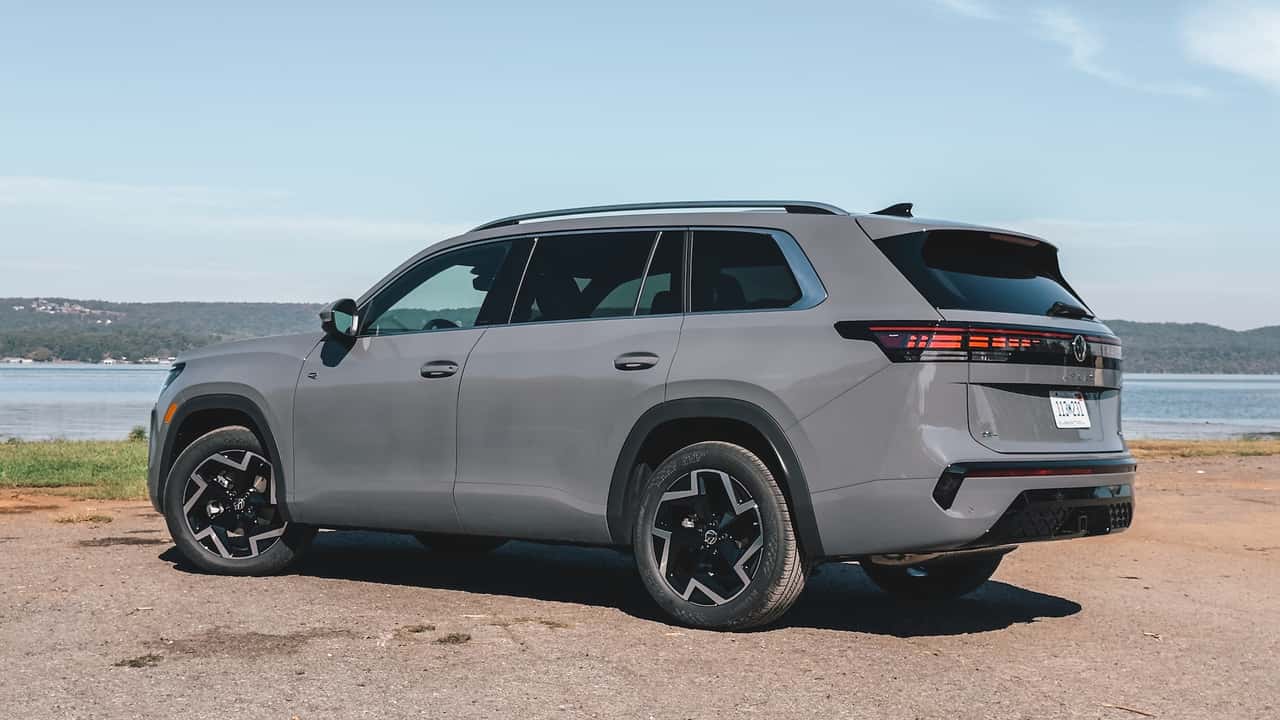
Photo by: Anthony Alaniz / Motor1
On the twisty roads outside Huntsville, Alabama, the Atlas’ 282-horsepower turbocharged 2.0-liter four-cylinder has plenty of power. It accelerates quickly when you need it and makes passing and merging feel effortless. The eight-speed automatic does a good job of keeping the engine in its powerband, too, rarely hunting for the right gear or letting the engine rev unnecessarily.
Switch to Sport mode, and the transmission holds the gear you select, giving you more control when the road gets interesting. The paddle shifters help here too, letting you shift manually when you want.
Front-wheel drive comes standard, while 4Motion all-wheel drive is available for relatively little extra money. If you live somewhere that sees regular snow, it’s probably worth the upgrade.
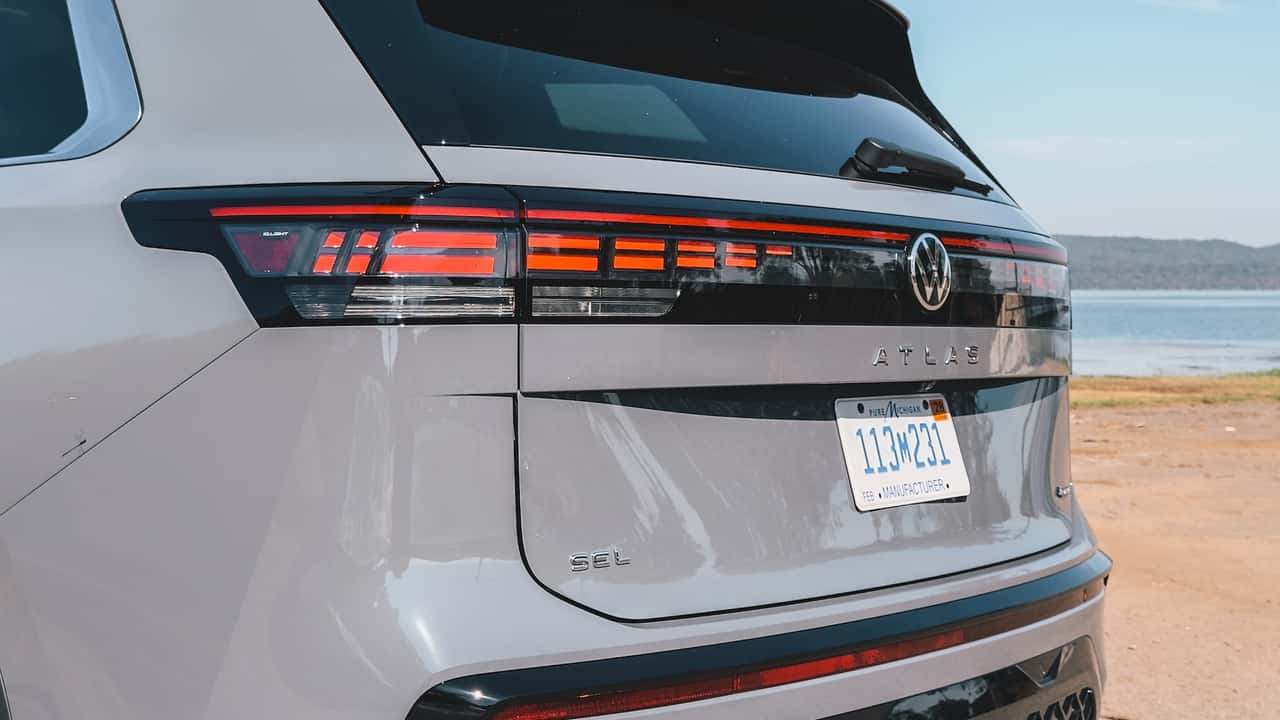
Photo by: Anthony Alaniz / Motor1
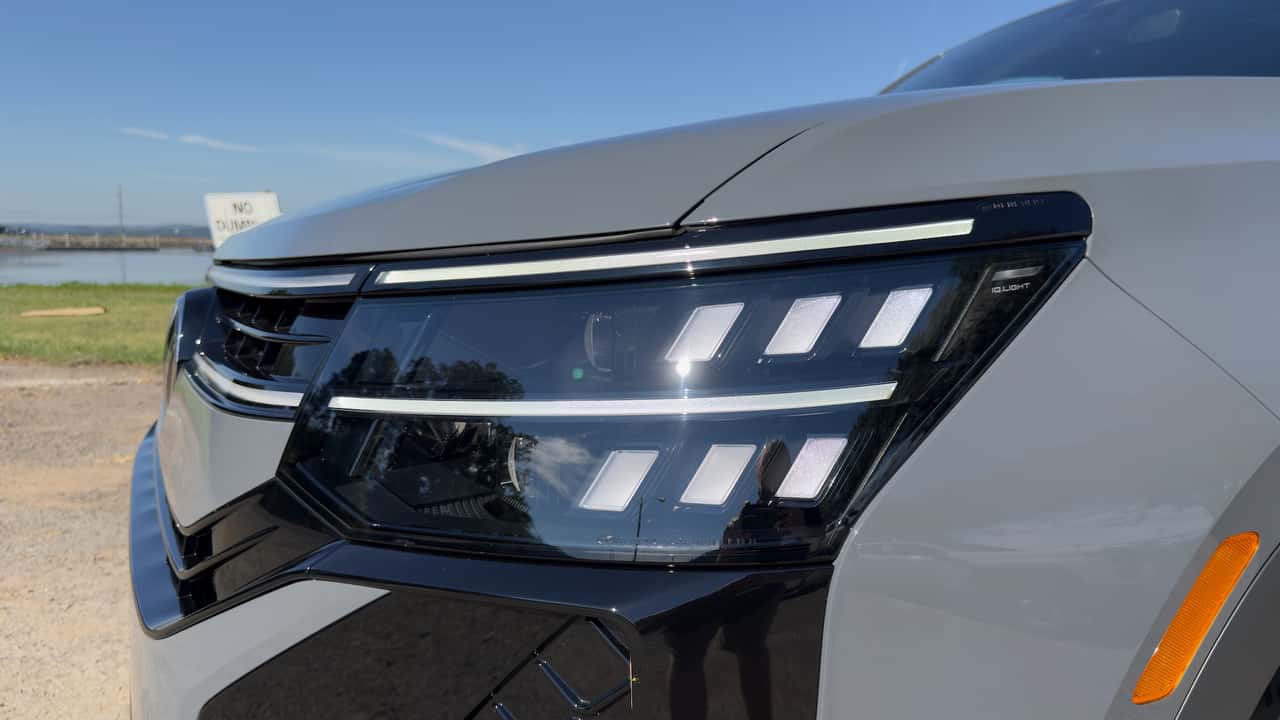
Photo by: Anthony Alaniz / Motor1
Photos by: Anthony Alaniz / Motor1
The ride is firmer than the outgoing model, but never harsh or uncomfortable. The Atlas stays composed through corners, with relatively little body roll for a three-row SUV. It’s not trying to be a sporty SUV, but the tighter suspension tuning gives it a more confident feel when you push it through the curves.
The steering is direct, but it’s also numb and isolated, offering little in the way of feedback. You can point the Atlas where you want it without much effort, but the steering wheel doesn’t tell you much about what the front tires are doing. That’s hardly a dealbreaker for a family SUV, but enthusiasts will probably wish for a bit more connection between the road and their fingertips.
Luxury Veneer
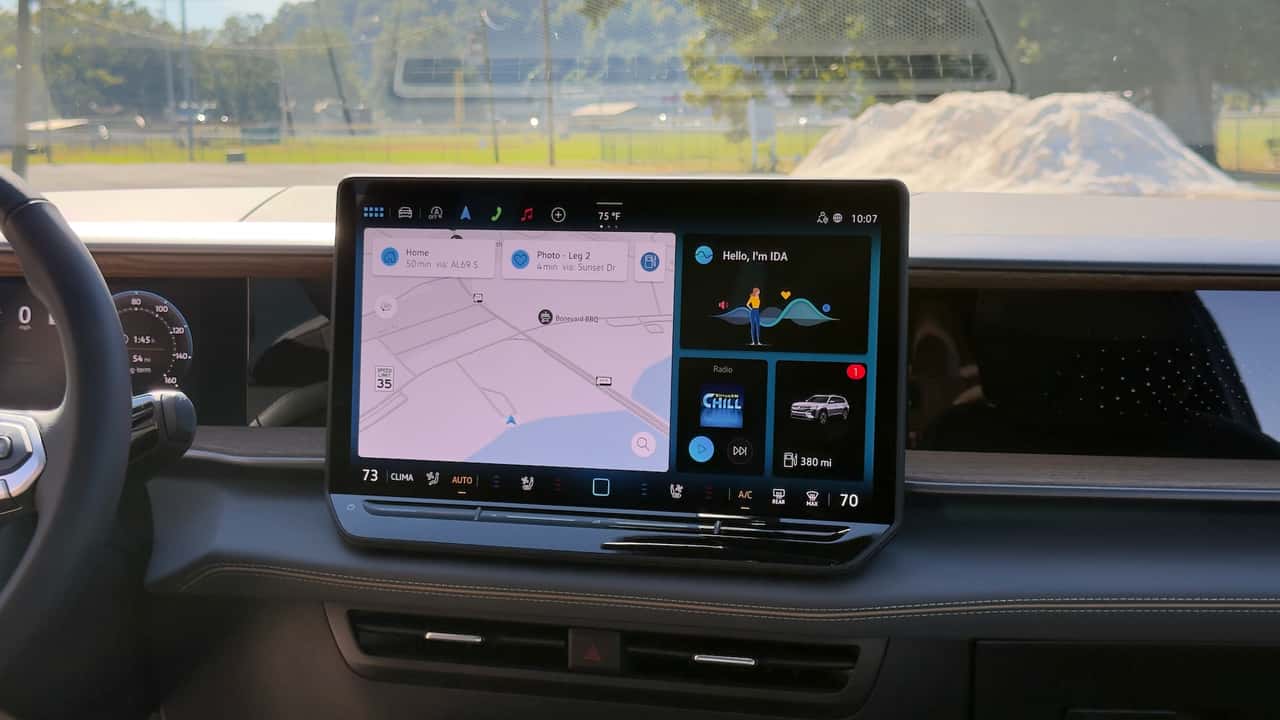
Photo by: Anthony Alaniz / Motor1
The interior of the 2027 Volkswagen Atlas SEL R-Line is a noticeable improvement over the outgoing model. The new materials and updated layout make the cabin look more expensive than it actually is, although that veneer of luxury starts to fade under closer inspection.
The Atlas now gets real wood trim on the dashboard, which looks nice but feels surprisingly thin. There’s also still a considerable amount of piano-black plastic throughout the cabin, and, as expected, it quickly collects fingerprints and dust.
This Atlas is equipped with the larger 15.0-inch infotainment screen, along with capacitive controls for the temperature and volume. I called out the same issue in my Tiguan review: The controls can be difficult to see in direct sunlight, and that problem carries over to the Atlas.
The new materials and updated layout make the cabin look more expensive than it actually is, although that veneer of luxury starts to fade under closer inspection.
Thankfully, the temperature controls are almost foolproof. Raised ridges in the plastic separate them from the volume control, so all you have to do is slide your finger in roughly the right direction to raise or lower the temperature.
It’s not perfect, but it’s also far from the worst solution we’ve seen.
Unfortunately, there are no other physical HVAC controls, so everything else is handled through the touchscreen. Like the Tiguan, the Atlas does have a physical volume knob between the seats, which also doubles as a selector for the drive modes.
Verdict: Better, But Still Not Perfect
Photo by: Anthony Alaniz / Motor1
Three-row SUVs are everywhere, and choosing the right one ultimately comes down to personal preference. The Atlas is quiet, comfortable, and capable, but if you can’t stand capacitive controls, you may want to look elsewhere.
The 2027 Volkswagen Atlas also costs more to get into than several of its competitors. The base SE starts at $43,135, including the $1,525 destination charge. That’s more than the 2027 Chevrolet Traverse ($43,085), 2027 Hyundai Palisade ($41,385), and 2027 Ford Explorer ($40,475), all of which offer more horsepower.
The 2027 Atlas is a significant improvement over the outgoing model, but all the added technology seems to have taken some of the personality out of it. The Atlas feels less special than it once did. Big screens, connectivity features, and increasingly comprehensive safety systems are becoming standard across the industry, making it harder for any three-row SUV to truly stand out.
Volkswagen Atlas Competitors
Ford Explorer
Honda Pilot
Hyundai Palisade
Kia Telluride
Toyota Highlander
The 2026 Honda Pilot Plays It Safe Yet Still Delivers: Review
The 2025 Ford Explorer Is Better (But Angrier): Review
The 2026 Hyundai Palisade Is Better Where It Matters: Review
The 2027 Kia Telluride Flourishes In The Flagship Role: Review
| 2027 Volkswagen Atlas | |
| Engine | Turbocharged 2.0-Liter Four-Cylinder |
| Output | 282 Horsepower / 258 Pound-Feet |
| Transmission | Eight-Speed Automatic |
| Drive Type | All-Wheel Drive |
| Weight | 4,568 Pounds |
| Efficiency | 20 City / 27 Highway / 23 Combined |
| Seating Capacity | 7 |
| Towing | 5,000 Pounds |
| Cargo Volume | 21.2 / 55.9 Cubic Feet |
| Base Price | $43,135 |
| As-Tested Price | $54,426 |