There’s a lot to be said for a car that makes you laugh every time you turn the key. Not because it’s particularly fast, especially powerful, or technologically advanced, but because the entire driving experience feels like someone turned the fun dial up to 11.
The Fiat 500 Abarth is one of those cars.
On paper, a turbocharged 1.4-liter four-cylinder engine making 160 horsepower doesn’t sound particularly exciting. But shove that engine into a tiny Italian-inspired hatchback, give it an absurdly aggressive exhaust note, and suddenly you’ve got one of the most entertaining little cars of the last decade.
The Abarth is noisy, cramped, occasionally frustrating, and completely ridiculous. It’s also proof that you don’t need 400 horsepower or a six-figure budget to enjoy driving.
Why Buy A Used Fiat 500 Abarth?

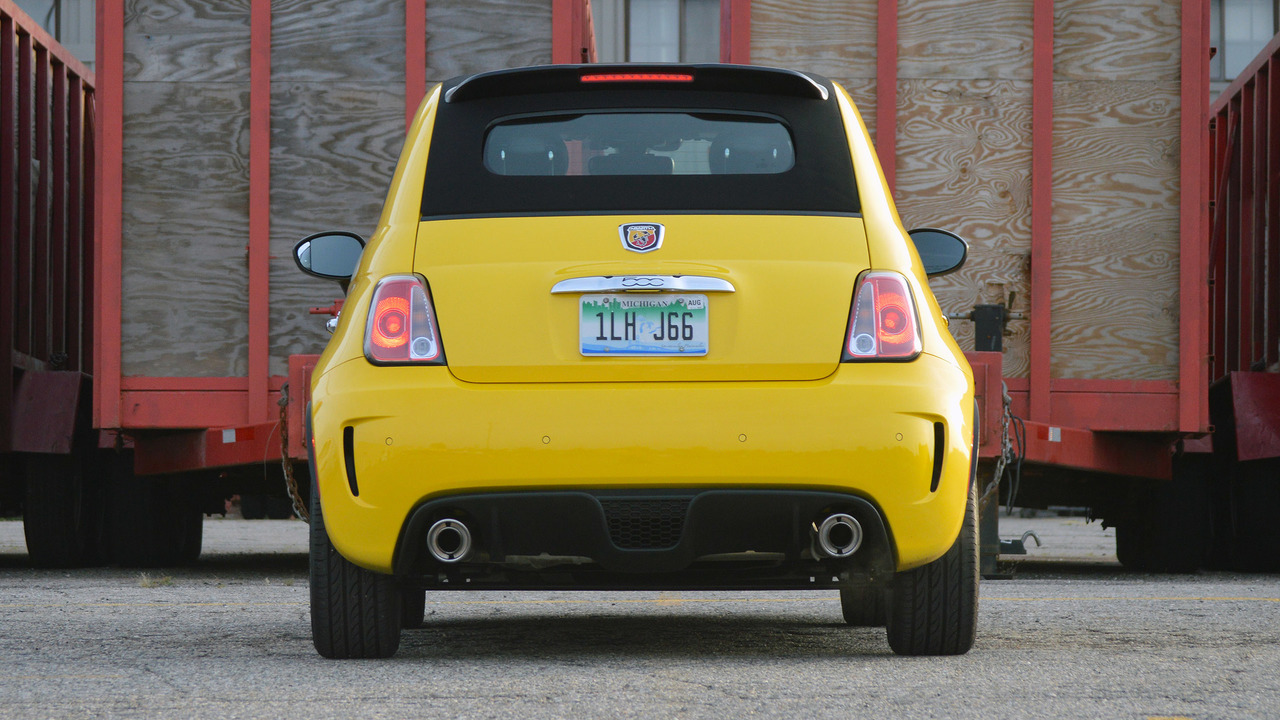
Honestly? It’s mostly because of the exhaust note. Seriously, the noise this little car makes is enough to justify at least taking one for a test drive.
The 500 Abarth features a wonderfully aggressive factory exhaust system that produces an almost comically deep growl for something with only four cylinders. There’s a constant rumble at idle, plenty of turbonoise when you accelerate, and the occasional pop and crackle when you lift off the throttle.
Under the hood sits Fiat’s turbocharged 1.4-liter MultiAir four-cylinder engine, producing 160 horsepower and 170 pound-feet of torque when paired with the standard five-speed manual gearbox.
An optional six-speed automatic, introduced for 2015, produces slightly less horsepower at 157 hp but actually delivers more torque, at 183 lb-ft. Either way, it’s more than enough power for a car weighing around 2,500 pounds.
The Abarth certainly isn’t a rocket ship. Expect a sprint to 60 mph in roughly seven seconds, depending on the version. But the fun comes from the way the little Fiat delivers its performance. There’s noticeable turbocharged punch, a short wheelbase, and the sense that you’re driving something much more aggressive than its dimensions suggest. You can wring out the engine, row through the gears, and enjoy that ridiculous exhaust without immediately finding yourself traveling at license-revoking speeds.
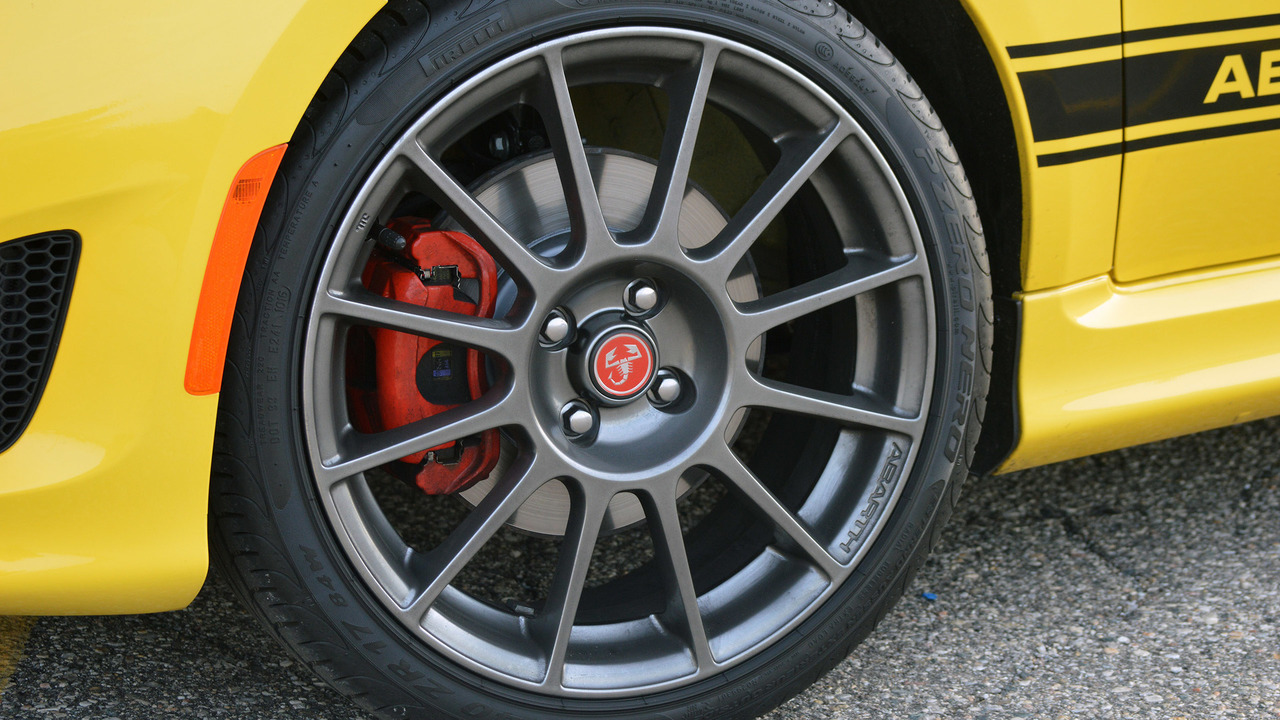
Fiat also made meaningful changes to the standard 500’s chassis. The Abarth gets a sport-tuned suspension, larger brakes, a lower ride height, wider tires, and an electronic torque-transfer system designed to improve traction.
When we reviewed the 2016 Fiat 500C Abarth, we praised its styling, engine, and wonderfully obnoxious exhaust:
‘If you’re into making a statement wherever you drive and park, you could do worse.’
‘It really does feel at home while driving aggressively through grumbling city traffic, where a press of the Sport button and a downshift routinely allowed me to shoot gaps and toast the front tires at stoplights.’
How Much Is a Used Fiat 500 Abarth?
Kelley Blue Book’s Fair Purchase Price puts a typical 2016 Abarth hatchback at approximately $9,300. Older examples can be even more affordable.
2014 Abarth Hatchback: $5,100
2015 Abarth Hatchback: $7,950
2016 Abarth Hatchback: $9,325
2017 Abarth Hatchback: $8,200
2018 Abarth Hatchback: $10,250
2019 Abarth Hatchback: $13,500
Actual prices vary significantly with mileage, condition, location, and equipment.
You can buy a turbocharged, manual-transmission hot hatch with one of the best factory exhaust notes of the modern era for less than the price of some economy cars that are considerably less entertaining.
Granted, the really inexpensive examples will typically have higher mileage, and you should expect some cosmetic wear or deferred maintenance at the bottom of the market.
Clean, low-mileage cars can also command a significant premium over published guide values, particularly when they’re unmodified.
But even spending $10,000 to $15,000 on a particularly nice example makes the Abarth an interesting alternative to more conventional used hot hatches.
The Fiat doesn’t deliver the refinement of a Volkswagen GTI or the outright performance of a Ford Fiesta ST. What it does offer is personality, and tons of it.
Which Fiat 500 Abarth Should You Buy?
The American-market Fiat 500 Abarth arrived for the 2012 model year, with the 500C convertible following for 2013. Both remained available until Fiat discontinued the gasoline-powered 500 in North America after the 2019 model year.
Mechanically, the Abarth didn’t change dramatically during its production run, which makes shopping for one relatively straightforward. The earliest cars are generally the cheapest, and there’s nothing inherently wrong with buying a 2012, 2013, or 2014 model.
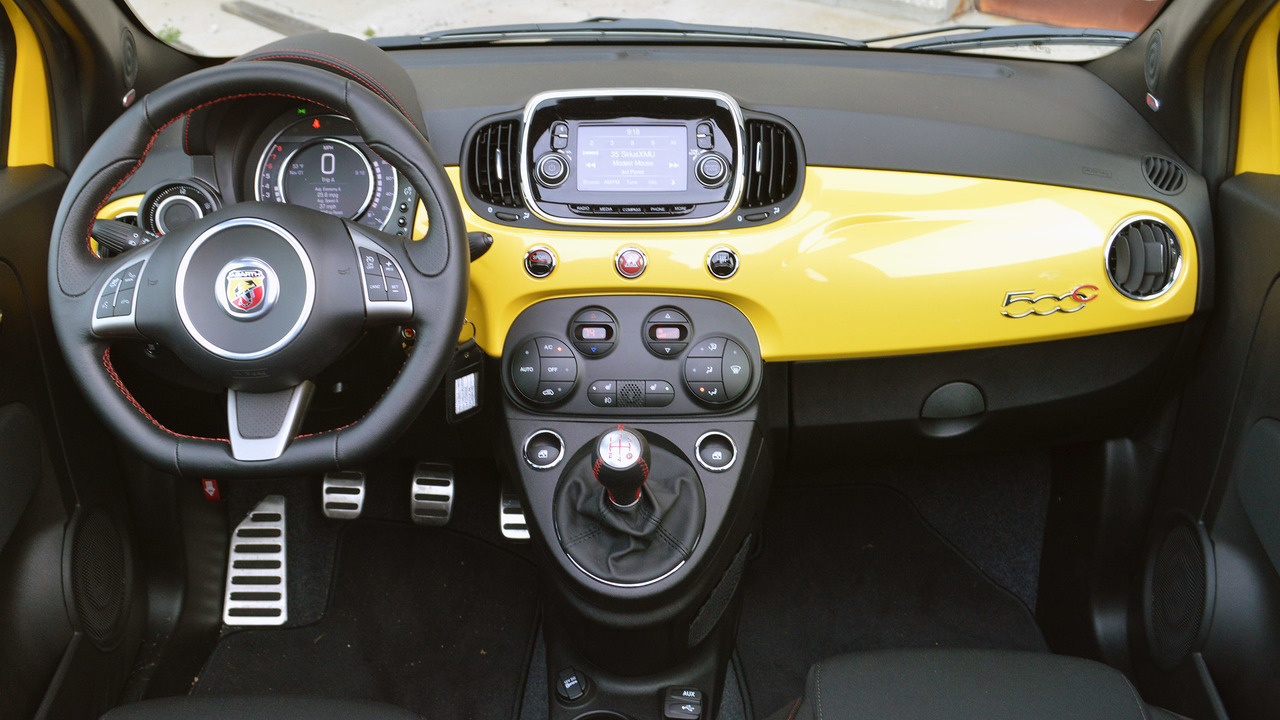
However, the 2015 model year brought a couple of worthwhile improvements. Fiat introduced an updated interior with a seven-inch digital instrument cluster and revised center console. More importantly, it added an optional six-speed automatic transmission for buyers who didn’t want to shift their own gears.
For 2016, Fiat added its Uconnect 5.0 infotainment system, replacing the older audio setup and available add-on TomTom navigation unit with an integrated five-inch touchscreen. The system isn’t particularly sophisticated by modern standards, but it’s a noticeable improvement over the earlier arrangement.
That makes the 2016 Fiat 500 Abarth the sweet spot for used buyers. For an enthusiast, I’d strongly recommend the five-speed manual transmission. The automatic is perfectly acceptable, and its additional torque makes it surprisingly lively. But the manual better suits the Abarth’s character. This is a car built around the driving experience, and shifting your own gears makes it more engaging.
I’d also lean toward the hardtop. As entertaining as the 500C is, the conventional hatchback offers more cargo space, better rear visibility, and one fewer expensive mechanical system to worry about. Plus, the exhaust is already loud enough that you don’t necessarily need to remove the roof to enjoy it.
What Could Go Wrong?

Start with the engine. The 1.4-liter MultiAir turbo is a relatively compact, highly stressed engine, and proper maintenance is particularly important. Look for evidence of regular oil changes, check for oil leaks, and pay attention to any unusual noises or hesitation during acceleration.
Fiat specifies full-synthetic 5W-40 oil. So you should confirm that previous owners used the correct oil. Neglected maintenance can become expensive quickly. The turbocharger and associated plumbing also deserve attention. Inspect hoses and connections for leaks, and ensure boost builds up smoothly without excessive smoke, unusual whistling, or a check engine light.
Be particularly cautious of heavily modified examples. The Abarth has an enthusiastic aftermarket, with owners frequently adding tunes, intake systems, upgraded intercoolers, and other performance parts.
There’s nothing necessarily wrong with a modified car, but an unmodified example with complete service records is a much safer starting point for most buyers.
The manual transmission also deserves a proper inspection. Check for clutch slip under acceleration, unusual noises, and difficulty selecting gears. The Abarth is a car that encourages aggressive driving, and some examples will have led harder lives than others.
Finally, consider parts and service availability. Fiat discontinued the gasoline-powered 500 in the United States after 2019. Replacement parts remain available through various suppliers, but some model-specific components and trim pieces may require extra effort to source.
What Else Could You Buy?
The Abarth isn’t the only affordable performance car worth considering. Perhaps its most obvious rival is the Ford Fiesta ST.
With 197 horsepower, a six-speed manual transmission, and one of the best front-wheel-drive chassis of its generation, the Fiesta ST is objectively the more accomplished performance car. It’s faster, more practical, and more composed when you’re driving aggressively.
The Mini Cooper S is another natural alternative. Like the Fiat, the Mini combines distinctive styling, turbocharged performance, and compact dimensions. It also offers a more sophisticated interior and a better-rounded driving experience, depending on the generation.
But Minis bring their own maintenance considerations, particularly older examples. And while the Cooper S is plenty entertaining, it doesn’t have quite the same unhinged personality as the Abarth.
Then there’s the Volkswagen GTI. For similar money, you can find older examples of Volkswagen’s legendary hot hatch with more power, significantly more interior space, and better overall refinement. The GTI is unquestionably easier to live with every day. It’s also a more serious car, which isn’t always what you want when you’re shopping for something fun.
Ford Fiesta ST
Mini Cooper S
Volkswagen GTI
Why the Fiat 500 Abarth Makes Sense

The Fiat 500 Abarth is a reminder that horsepower figures, acceleration times, and Nürburgring lap records aren’t the only things that matter. Sometimes the best car is the one that makes an ordinary drive feel like an event.
The 500 Abarth makes ridiculous noises, looks like a cartoon version of a rally car, and has just enough horsepower to be genuinely entertaining without demanding superhuman restraint every time you press the accelerator.
It’s not especially practical. The interior is cramped, the driving position is odd, and the suspension doesn’t always deliver the precision suggested by the aggressive styling.
But those compromises are easier to forgive when the whole package costs around $10,000.
Forget The Z06. This Is The Used C7 Corvette You Should Buy
A Used Camaro SS Is Now A Surprisingly Good Deal
A Used Porsche Cayenne Is A Lot Of SUV For The Money: Why Buy?
You Might Finally Be Able To Afford An Aston Martin Vanquish