On a recent trip to China Guy Bird caught up with Shawn Xu, global CEO of Omoda & Jaecoo to find out more about their phenomenal UK sales and expanding product plans.
Across an intense week of exclusive meetings and massive conferences in parent company Chery Group’s HQ city of Wuhu, Omoda & Jaecoo global CEO Shawn Xu not only highlighted the twin brands’ incredible last two years of growth but also outlined its major product plan roll-out within the next few.
After visiting the enormous Beijing Auto Show at the end of April, the huge-scale events in Wuhu were attended by literally 1,000s of invited guests as Xu and other members of his team told the frankly unbelievable story of the two brands’ meteoric rise from a (seeming) standing start after a global launch in April 2023.
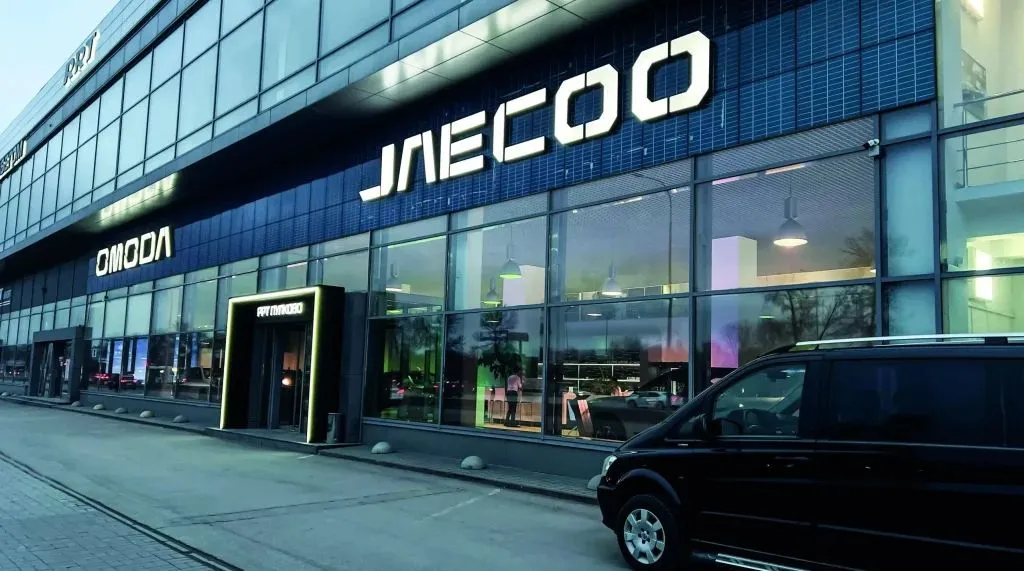
Everyone in the UK automotive industry now knows Chery International’s favourite export-only brands Jaecoo and Omoda. In the first quarter (Jan-April 2026) Jaecoo alone shifted 22,789 units – while alphabetical next-door neighbour Jaguar sold seven. That quarterly figure is approaching the 28,232 Jaecoo managed in all of 2025 (itself an amazing yearly tally for a brand-new brand). Over the same 2026 year-to-date period, Omoda registered a very healthy 12,324, ahead of Citroën (12,142), Dacia (10,250) and Honda (8506).
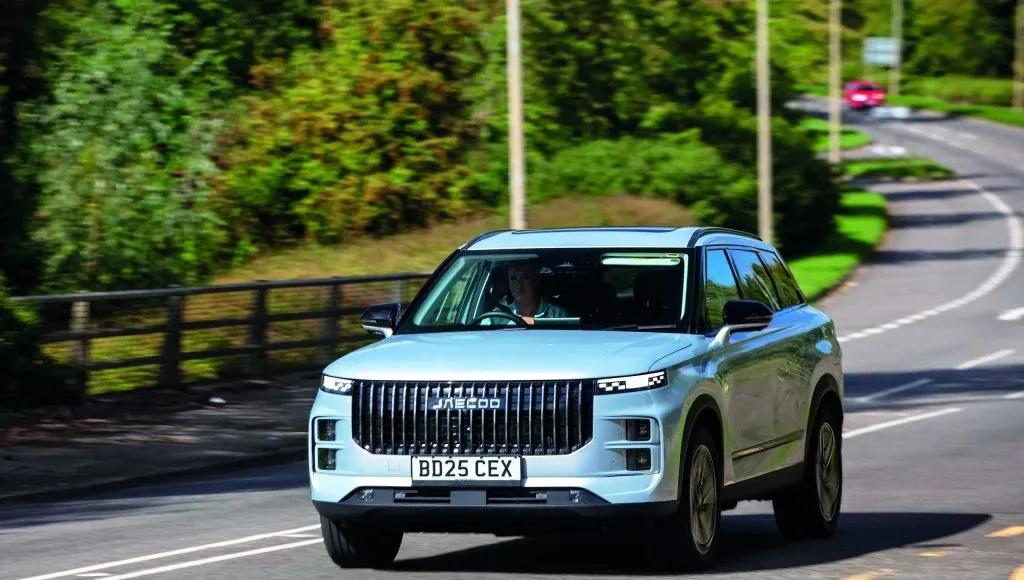
Within those quarterly UK figures the Jaecoo 7 model was the shining star, selling 17,668 and making it a top three UK player, well above the fourth-placed Nissan Qashqai (15,668) and Vauxhall Corsa (12,788, fifth), while only just behind the Kia Sportage (17,835, second) and Ford Puma (20,339, first).
Back in Wuhu in late April, on a massive stage, Xu recounted Omoda and Jaecoo’s early days to the amassed crowd, saying “big dreams start in small rooms.” Then he namechecked early adopting “first believers” on a huge screen – including the UK’s Cambria Automobiles – which is now part of a 1,364-strong global network of dealers with a collective 2026 sales target of one million (480,000 Omoda and 520,000 Jaecoo).
Alongside the self-named Chery brand, Chery International gained a 6.73% UK market share in April 2026, and another brand is soon to join their ranks. This autumn the Lepas brand will be added – via its L8 flagship model – and other brands from the global Chery stable could follow in 2027 and 2028. Out in Wuhu, Chery launched Freelander – a Land Rover model reborn as a standalone brand with a range of six SUVs planned within the next five years, potentially including the UK market – and showed its latest iCar products too. There’s even a Chery robotics brand called AiMoga. And Chery Group chairman Yin Tongyue said robots might become a bit like mobile phones within the next decade – i.e. humans might have one or two each. It was all a bit head-frying, but hugely ambitious and exciting too.
To understand Omoda and Jaecoo’s aims better, away from the big stage, Xu also talked to a very small roundtable of international journalists in a private meeting room – including this representative from Motor Trader – to explain more about new product and pricing, and brand positioning and powertrains.
What models will help boost sales this year and next?
Beyond the Jaecoo 5 and 7 and Omoda 5 and E5, we have the Omoda 7 and Jaecoo 8 this year and the Omoda 4. We are also going to have a Omoda crossover with all-wheel drive, a little bit of a tough crossover [code name T1QC]. This is a new thing. This product is going to be available in the first or second quarter next year. There will also be a big pickup [code name KP31]. These new products in different segments can cover more people. This is very important. Right now, our monthly sales have reached 60,000 units [worldwide], with more market share and markets joining.
How wide are you planning each brand to stretch?
The different brands have different strategies. Some use the highest product as the flagship. Some establish themselves from low segment to high segment. But in this last decade no new brand has established itself (or very few). We try to understand, but there is no good new brand to reference. So we just think about a direction with our target customers [in mind]. Which group can easily accept a unique design or product? With this approach we enter, then gradually expand to different products with different metrics. That’s the strategy. First target the most acceptable segment, then expand from the middle to be smaller and bigger. That is why our Omoda 5 was first. Then we come with the 9, 7 and 2 series.
In your presentation Omoda 2 and Jaecoo 3 small cars look to be coming too. Will they be sub-£20,000?
I couldn’t say exactly the price point because when we send the car to a market, you guys and our partners and dealers survey to [work out] the price. But because the Omoda 2 is a small-segment size, definitely the price will be low.
The Jaecoo 7 has been a soaraway success in the UK in large part because of its design. Do you agree?
In the beginning when we talked about Jaecoo, there were too many different SUVs to think about. So many were tough SUVs, with a square ‘Jeep feeling’. We considered making something very tough, but it’s a small segment, not covering enough of the market. So we went for a square SUV, but with a more elegant feeling. You can say something like a ‘Land Rover feeling’. This design is like an ‘elegant square’. The thing is, we don’t just consider design. We consider the target customer first and always say we serve young fashion people, those who work in the city but also want to enjoy the ‘outside’. With this direction, we cannot make the car just ‘square and tough’. We should also consider this squareness with elegance. Not only for the Jaecoo 7, but the Jaecoo 5, 3 and 8 too. All have this direction. You can say that people buy the car because they like the design, but I don’t think design is the only fact that leads to large volumes. The design point of view and technology point of view all support this car’s good sales.
You currently say you are a ‘new energy vehicle’ (NEV) company. Will you become an all-electric company at some stage and when might that be?
Compared with other carmakers, we can be more flexible, because in each international market, the condition and infrastructure is different. That’s the reason we offer ICE, hybrid and BEV. But since the Middle East conflict happened and petrol prices have increased, we see our hybrid and BEV models gaining more sales. This is a trend, but we cannot say at what time we completely cut ICE [from our line-up]. We still need time, because although ICE market demand will decline, it is still there. But we can say we are more concentrated on NEVs – hybrid and BEV now and in the future – than ICE. Especially super hybrid models, PHEV and HEV, which from the market get very good feedback. From the technology side, we can be one generation ahead of others.