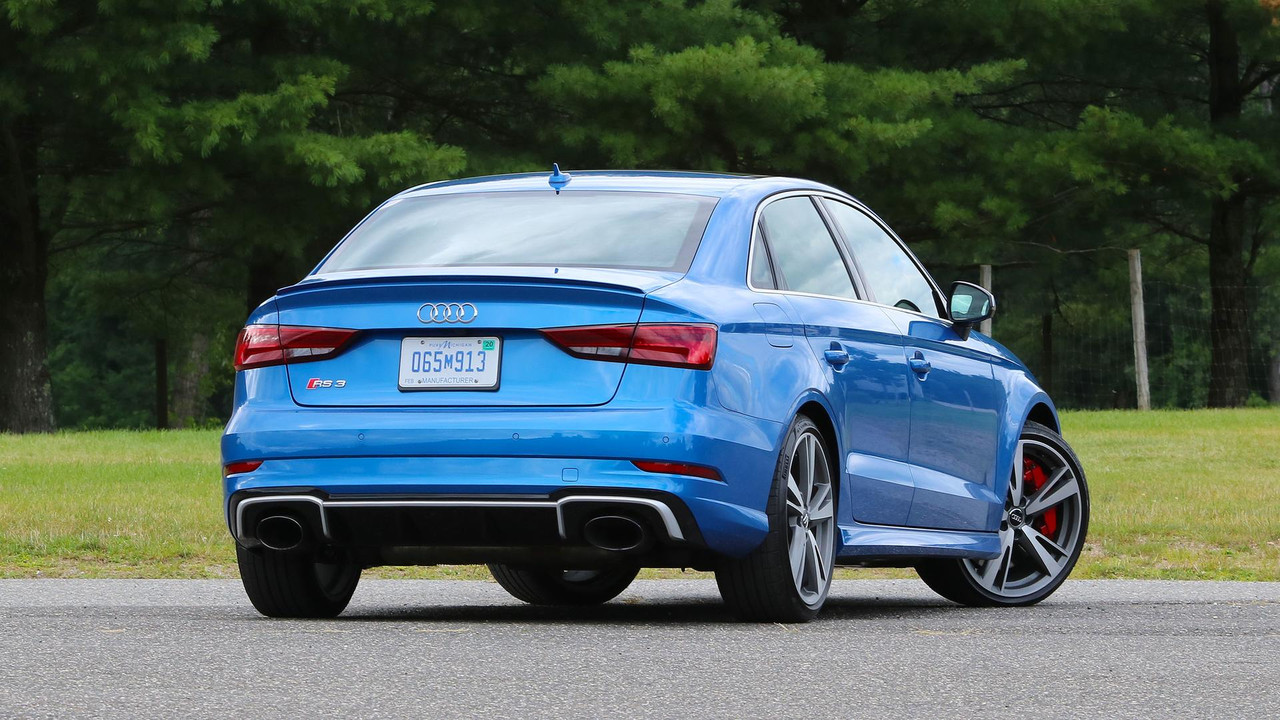
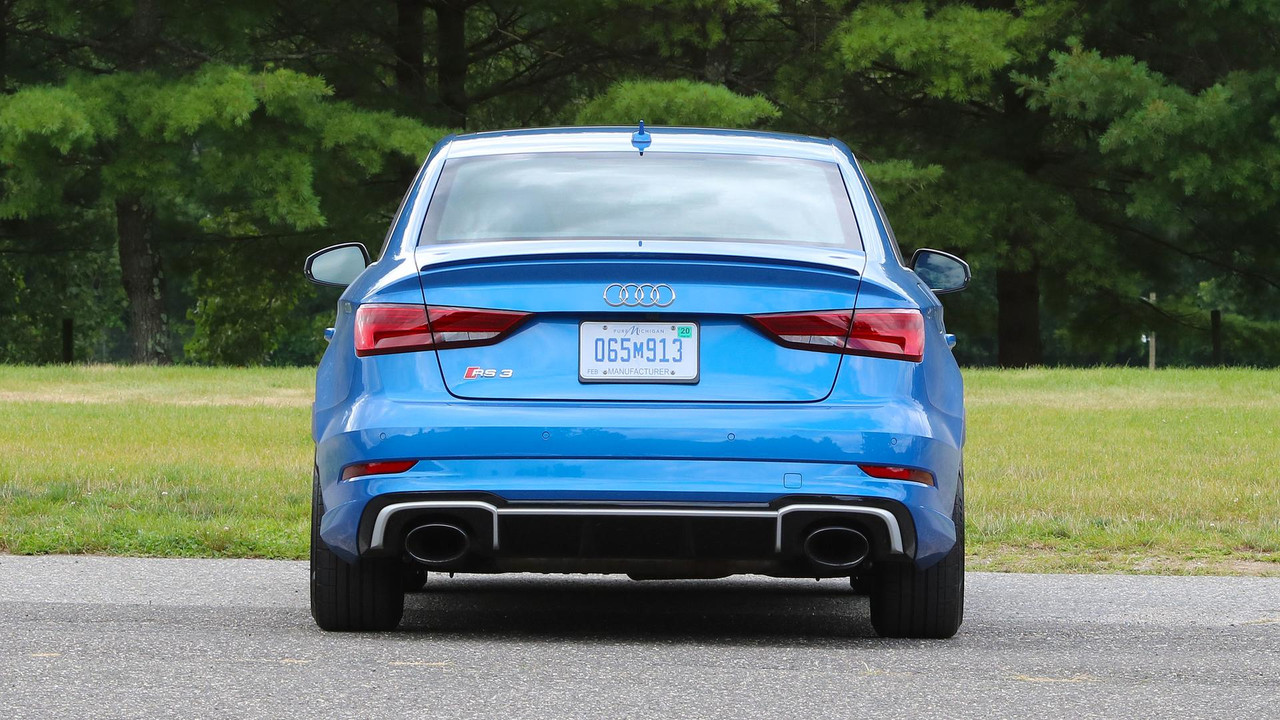
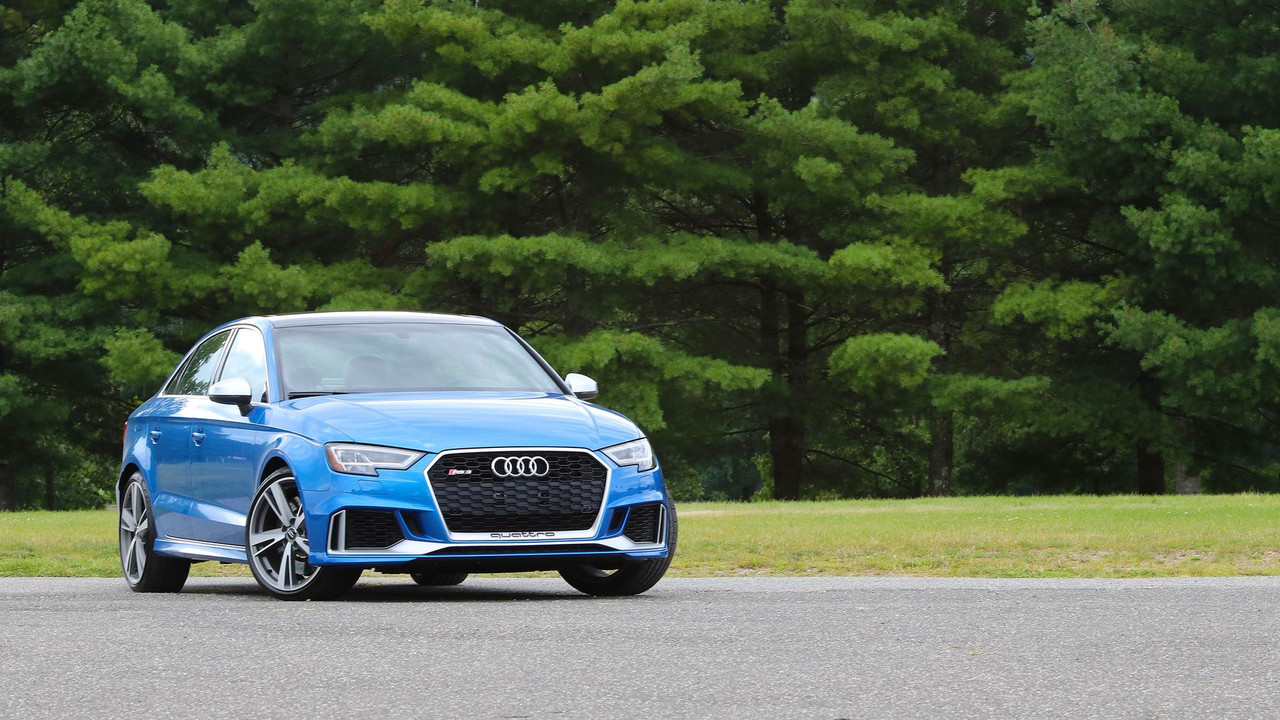
The Audi RS3 has always occupied a strange little corner of the performance-car world. It’s essentially an A3 sedan stuffed with a ridiculous engine, big brakes, all-wheel drive, and enough performance hardware to embarrass significantly more expensive machinery.
That ridiculous engine is a key part of the overall appeal, too. Under the hood is Audi’s turbocharged 2.5-liter inline-five, producing 400 horsepower and 354 pound-feet of torque. It sends everything through a seven-speed dual-clutch transmission and Quattro all-wheel drive. Audi claims a 3.9-second sprint to 60 miles per hour, which was seriously quick when the car arrived—and still is today.
More importantly, the RS3 isn’t just a fast A3. It has personality. The five-cylinder engine delivers a soundtrack unlike practically anything else in this price range, while the compact dimensions make the RS3 easy to live with every day.
Now that early examples have dropped into the low-to-mid-$30,000 range, the original RS3 sedan has become a particularly interesting used performance car.
Why Buy The Audi RS3?

Start with that engine.
The turbocharged five-cylinder is the defining feature of the RS3. It’s an unusual configuration in a world dominated by turbocharged fours and sixes, and it gives the Audi a distinctive offbeat exhaust note to match its performance capability.
When we drove the first generation of RS3 to arrive in the US, we stated that the car is “as potent as performance compacts get.”
‘Diving into turns is huge fun, thanks to the quick ramp-up in steering response off-center, as well as the poised suspension that keeps the car hunkered down to the pavement.’
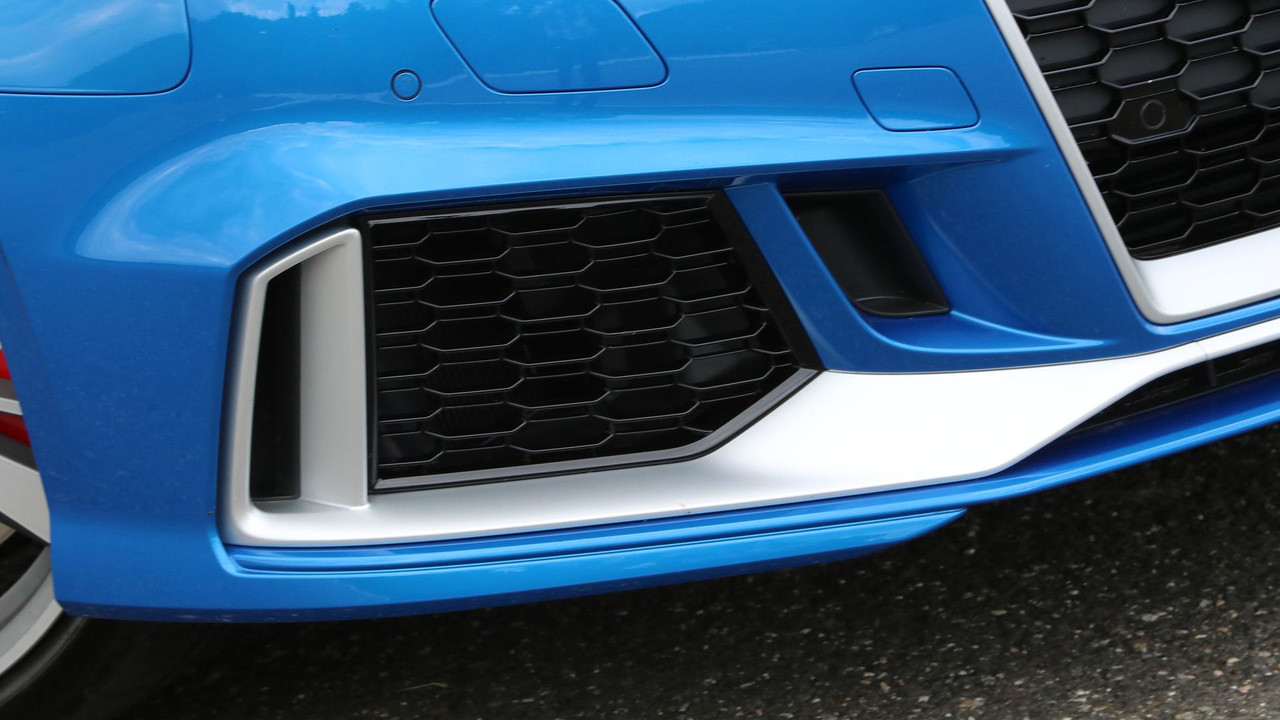
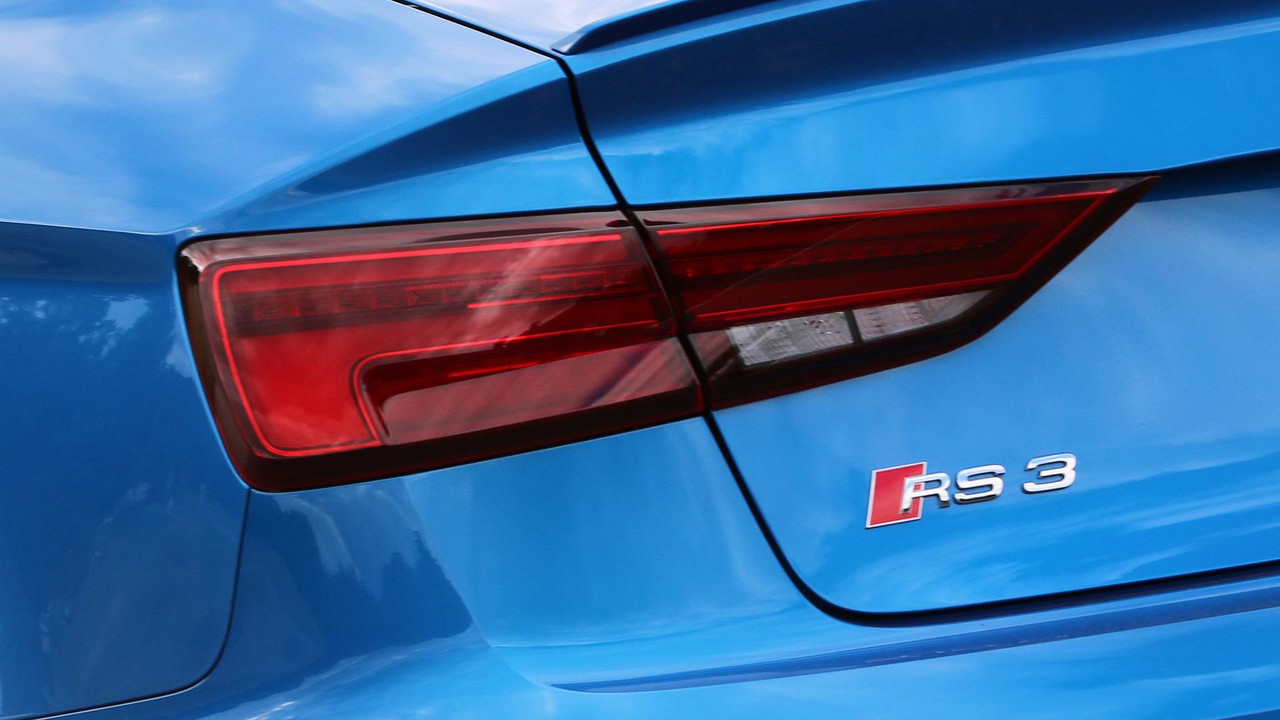
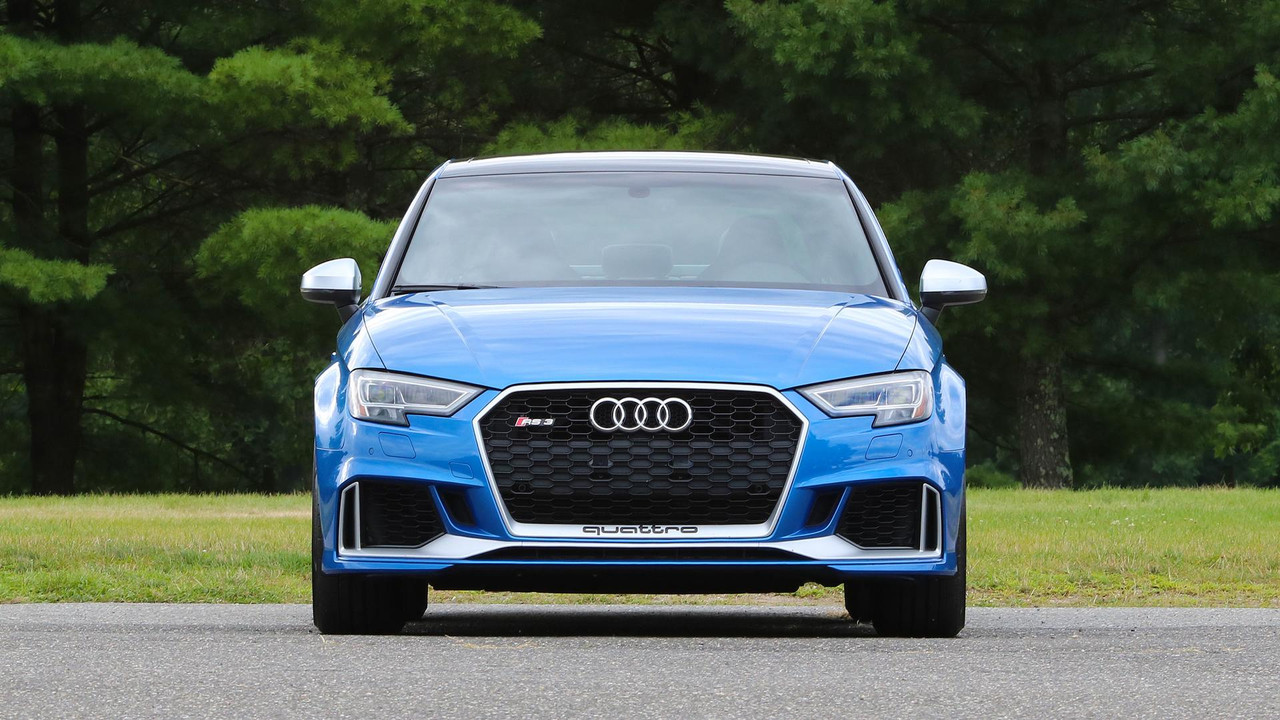
‘Compared to the standard car, the RS3 is widened by 20 millimeters (0.8 inch) in front, to fit the new wheels and stronger, wider front wheel hubs. Add to that standard LED taillights, a trunk spoiler, and new wheel designs, and it has a fair bit more visual punch than a regular S3.’
‘That noise, by the way, is all natural from the intake and exhaust; there’s no artificial sound trickery in this car.’
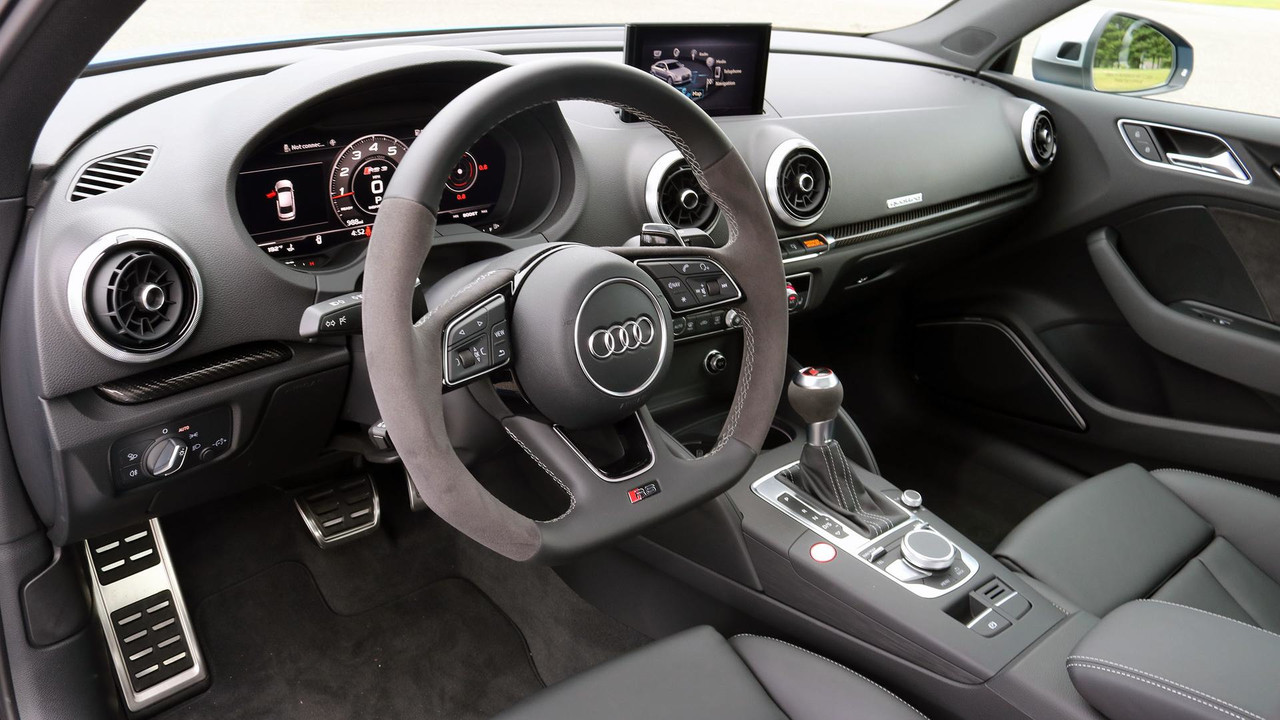
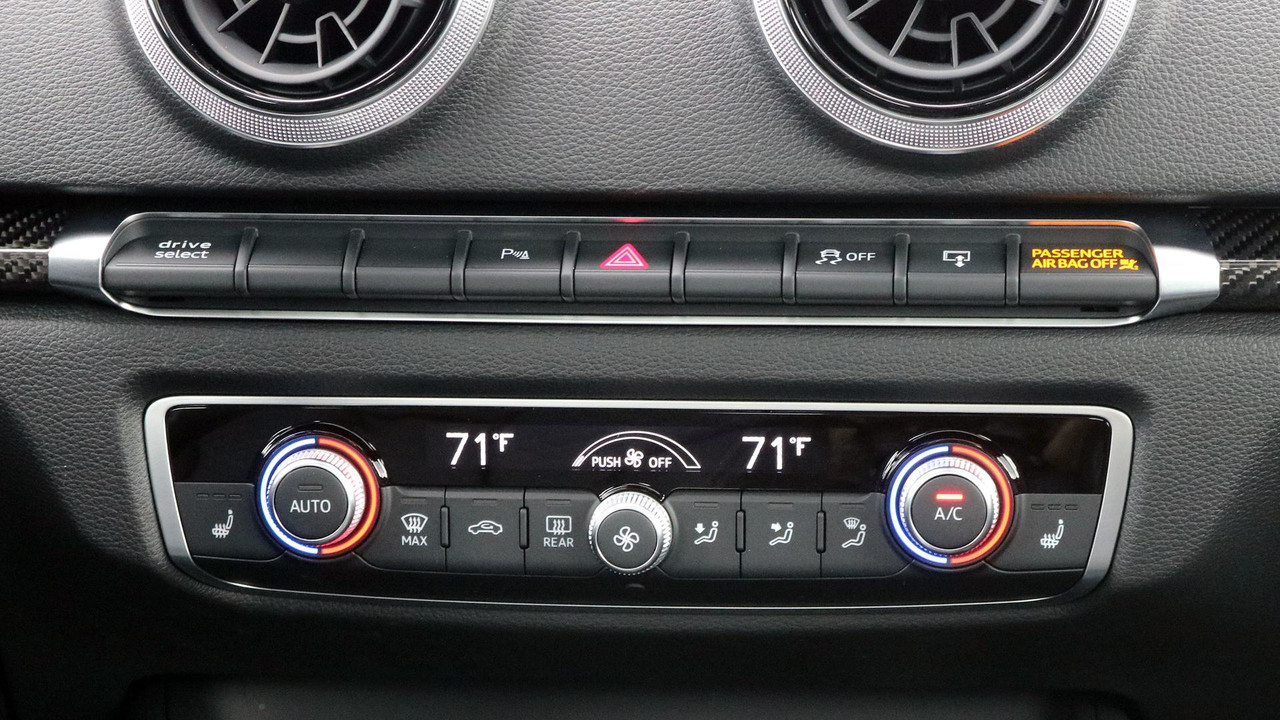
You get four doors, seating for five, a decent trunk, Quattro all-wheel drive, and a cabin that doesn’t constantly remind you that you bought the highest-performance version. The ride is relatively civilized, visibility is good, and its footprint isn’t much larger than a typical compact sedan.
How Much Is A Used Audi RS3?

Kelley Blue Book currently puts Fair Purchase Prices for early RS3 sedans between roughly $33,000 and $40,000, depending on year. That’s a fair bit below their original prices, which started in the mid-$50,000 range.
As of late September 2026, KBB lists the following national-average Fair Purchase Prices:
2017 RS3: $33,200
2018 RS3: $36,500
2019 RS3: $38,100
2020 RS3: $39,400
2020 Nardo Edition: $39,400
KBB’s numbers represent typical dealer purchase prices and can vary considerably based on mileage, condition, options, and location. What’s interesting is how little money separates the model years. Based on KBB’s numbers, there’s only about $6,000 between a 2017 RS3 and a 2020 example.
That means condition and service history should probably matter more than the number on the model-year badge.
Which Audi RS3 Should You Buy?

For most buyers, I’d look hardest at a 2019 or 2020 RS3 with the Dynamic and Technology packages.
The price difference compared with an earlier car isn’t enormous, and you get a slightly newer example while retaining the same basic formula: turbocharged five-cylinder power, dual-clutch transmission, and Quattro all-wheel drive.
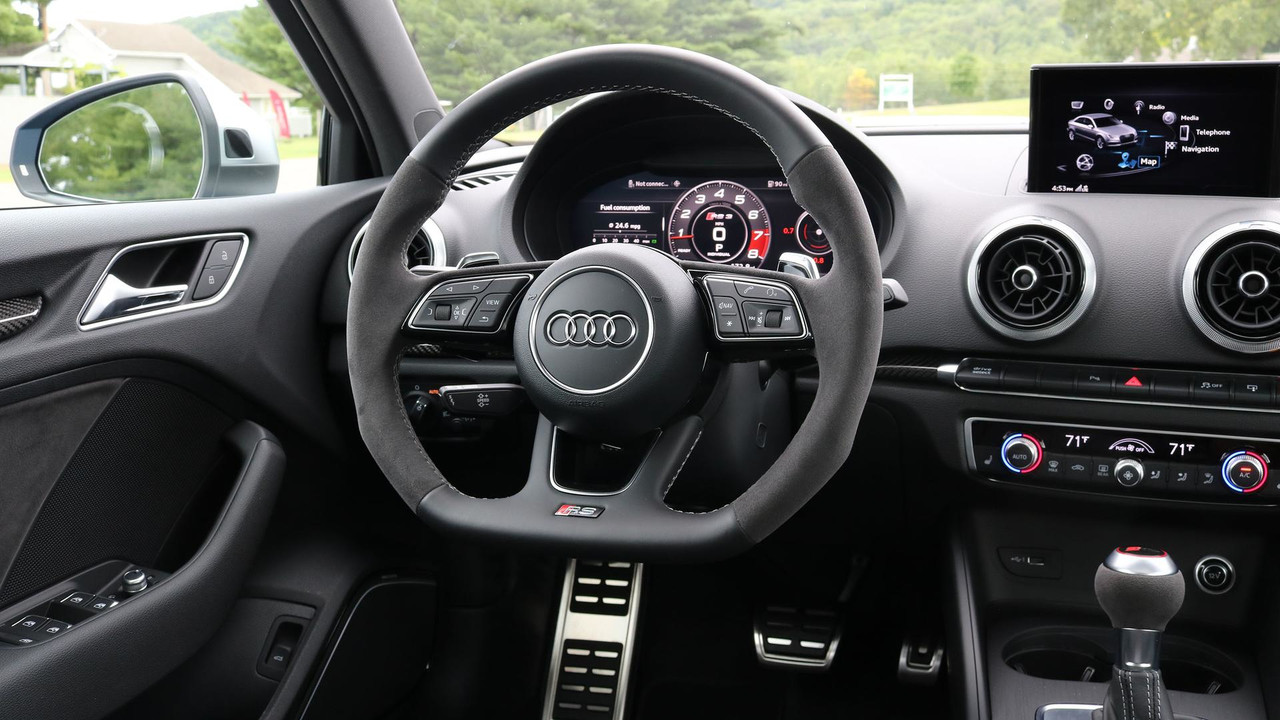
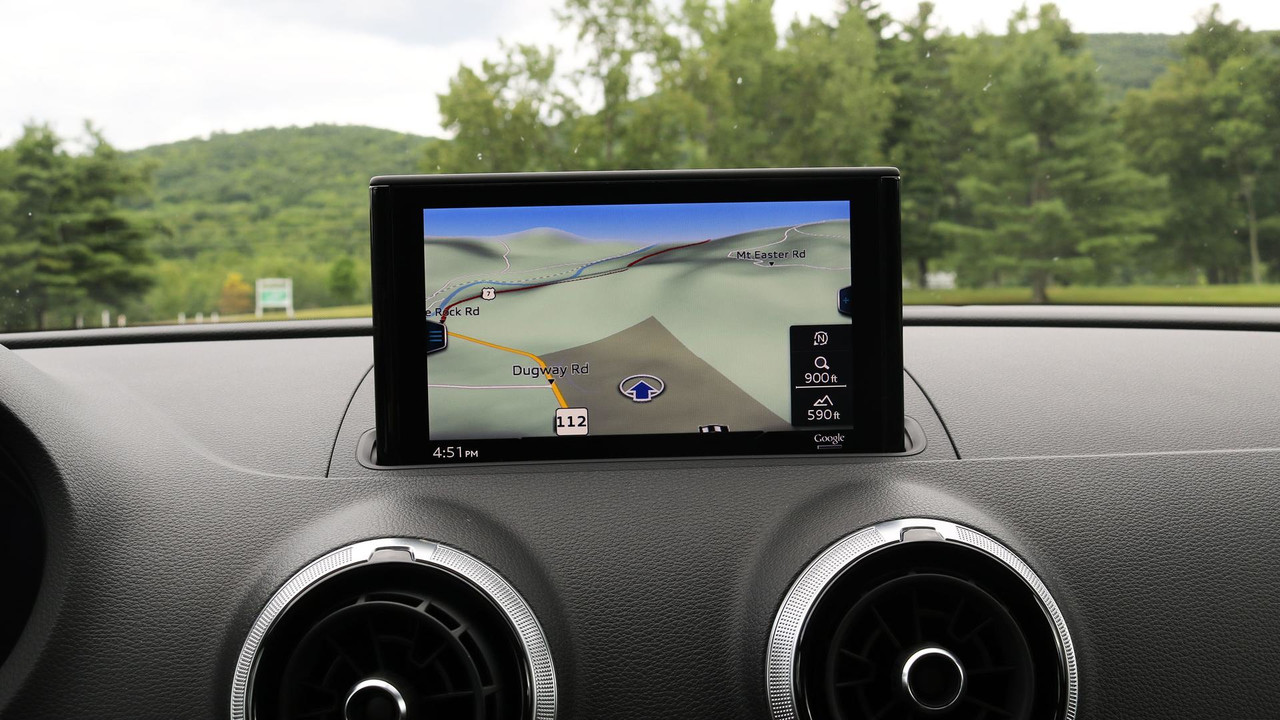
The Technology package is especially desirable because it adds Audi’s Virtual Cockpit digital instrument cluster and upgraded infotainment features. The Dynamic package is another worthwhile find. It includes the sport exhaust and wider front tires designed to help counter the RS3’s front-heavy layout.
There’s one interesting exception. If you want the most hardcore version of the RS3, look for a 2018 with the Dynamic Plus package. This replaces the adaptive Magnetic Ride suspension with a fixed sport setup, adds carbon-ceramic front brakes, and increases the top-speed limiter to 174 mph. Audi discontinued the Dynamic Plus package for 2019.
Those cars are cool, but the ceramic brakes can make a used example significantly more expensive to maintain. Unless you’re specifically hunting for a Dynamic Plus car, the standard steel brakes and Magnetic Ride suspension probably make more sense for daily use.
What Could Go Wrong?

The RS3’s five-cylinder has proven capable of producing serious power, but you’re still buying an aging German performance sedan. Maintenance history matters.
One of the first things to check is the cooling system. Audi issued a technical service bulletin covering coolant loss from the mechanical coolant pump on RS3s from this generation. If the coolant level is low, there’s dried coolant around the engine, or the car has a history of coolant warnings, investigate before buying.
Magnetic Ride deserves attention as well on cars equipped with it. Inspect the dampers for leaks and pay attention to knocking, excessive bouncing, or unusual harshness during the test drive. Replacement electronic dampers aren’t inexpensive.
Then check the maintenance records. Audi’s 2018 factory schedule specifies an AWD clutch fluid change every three years, an S-tronic transmission fluid change every 40,000 miles, spark plugs every 30,000 miles or three years, and brake fluid every two years.
Those records are important because neglecting relatively inexpensive fluid services can turn into expensive drivetrain repairs later.
What Else Could You Buy?

The obvious alternative is the BMW M2. The first-generation M2 offers rear-wheel drive, an available manual transmission, and a more traditional sports-car feel. If driver involvement is your priority, the BMW makes a strong case.
The Mercedes-AMG CLA45 takes a different approach. It has turbo-four power, all-wheel drive, and similarly explosive acceleration in another four-door package, though the Audi’s five-cylinder engine gives the RS3 considerably more character.
There’s also Audi’s own TT RS, which uses essentially the same five-cylinder formula in a smaller and sportier two-door body. It’s arguably the more special driver’s car, but you sacrifice the RS3’s rear-seat access and practicality.
Audi S3
Audi TT RS
BMW M2
Mercedes-AMG CLA45
Why The Audi RS3 Makes Sense
The RS3 occupies one of those rare spots in the used market where the practical choice and the ridiculous choice happen to be the same car. You can commute in it. You can put passengers in the back. You can drive it through bad weather.
And when the road opens up, you have a turbocharged five-cylinder producing roughly 400 horsepower and enough traction to hit 60 mph in less than four seconds. Nearly a decade later, there’s an even stronger argument to buy one: You can find one for around $35,000.
Look for a clean example with complete maintenance records, preferably one that hasn’t spent its entire life chasing more boost. The RS3 might be one of the most interesting performance-car bargains available today.
A Used Mercedes-AMG S65 Doesn’t Make Sense. Here’s Why You Should Buy One Anyway
A Used Lexus LS 500 Is A Luxury Bargain. Here’s Why You Should Buy One
The Acura NSX Finally Makes Sense As A Used Supercar. Here’s Why You Should Buy One
Why Buy A Jeep Grand Cherokee Trackhawk? It’s A 707-HP Family SUV For Around $60,000
| Audi | |
| Engine | Turbocharged 2.5-liter Inline-Five |
| Output | 400 Horsepower / 354 Pound-Feet |
| Transmission | Seven-Speed Dual-Clutch |
| Drive Type | All-Wheel Drive |
| Speed 0-60 MPH | 3.9 Seconds |
| Maximum speed | 155 MPH / 174 MPH With Dynamic Plus |
| Weight | 3,593 Pounds |
| Efficiency | 19 City / 28 Highway / 22 Combined MPG |
| Seating Capacity | Five |
| Base Price | $55,875 |