If you grew up around cars in the 2000s, chances are you remember Scion. Toyota’s youth-focused brand sold some of the most interesting affordable cars on the road, from the boxy xB to the sporty tC and, eventually, the rear-wheel-drive FR-S. Scions were inexpensive, customizable, and deliberately different from the conservative Toyotas sitting next to them on dealer lots.
Then, almost as quickly as it arrived, Scion disappeared.
Toyota announced in 2016 that it would kill the brand after roughly 13 years, folding its remaining cars into the Toyota lineup. The FR-S became the Toyota 86, the iM became the Corolla iM, and the iA became the Yaris iA. The tC simply disappeared.
So what happened to Scion? The short answer is that Toyota accomplished what it set out to do—but the brand eventually stopped making much sense.
Scion Was Supposed To Be Different
Toyota launched Scion in the United States in 2003 as something of an automotive laboratory. The idea was to figure out how to attract younger buyers without forcing Toyota itself to abandon its traditional image.
The strategy was simple: Scion cars were designed to be affordable and distinctive, while Toyota experimented with a no-haggle buying process, personalization options, unusual marketing, and products that looked nothing like the typical Camry or Corolla.
The xA and especially the xB immediately established Scion’s identity. The xB was essentially a rolling box; it was practical, cheap, and unapologetically weird at a time when most automakers were trying to make small cars look as conventional as possible.
The formula worked. Toyota says Scion sold more than 1 million vehicles during its existence, and 70 percent of those cars were purchased by customers who were new to Toyota. Half of Scion buyers were under 35.
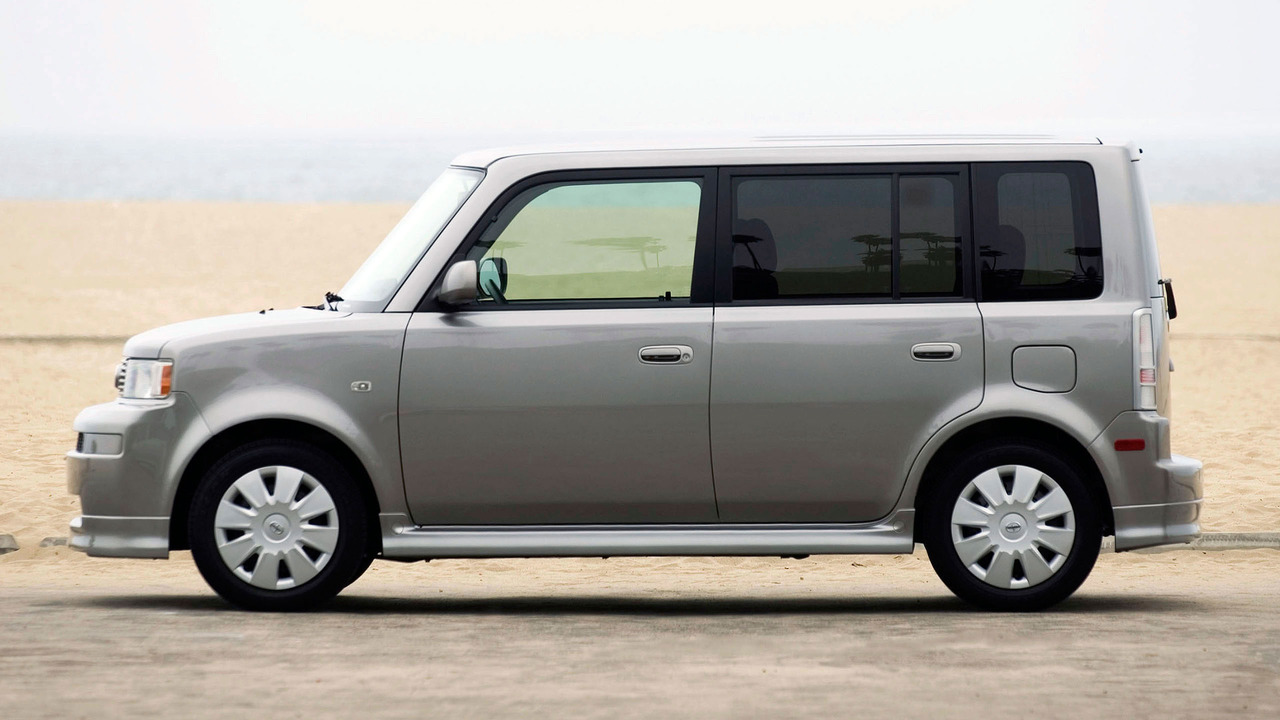
First-Generation Scion xB
And Then Scion Got Too Normal
The problem was that Scion’s success didn’t last. Sales peaked at 173,034 vehicles in 2006. By 2015, Scion sold just 56,167 cars in the US—roughly one-third of its peak volume.
There were several reasons for the decline. The original Scion lineup was built around small, quirky cars, but American buyers were increasingly moving toward crossovers and SUVs. Scion didn’t have a big SUV in its lineup.
At the same time, the young buyers Toyota had originally targeted were getting older. And as they aged, many were simply buying Toyotas instead.
That’s arguably the biggest irony of Scion’s story. Toyota created a separate brand to attract young buyers, and it worked so well that those buyers eventually had little reason to stay with Scion.
Meanwhile, Scion’s newer products weren’t quite as distinctive as the cars that made the brand famous. The iM and iA were perfectly reasonable small cars, but they didn’t have the same visual personality as an xB or tC.
By the middle of the 2010s, Scion was caught between two worlds: It wasn’t weird enough to stand out like it once did, but it wasn’t broad enough to compete with Toyota’s increasingly popular lineup.
The FR-S Wasn’t Enough To Save It
Scion did have one major ace up its sleeve: the FR-S.
Introduced for 2013, the FR-S was developed alongside the Subaru BRZ and gave Scion something it had never really had before—a legitimate enthusiast sports car. It was rear-wheel drive, lightweight, relatively affordable, and powered by a naturally aspirated four-cylinder engine.
The FR-S became easily the most memorable car Scion ever produced, and we even dubbed it a “modern classic.” But a sports car couldn’t carry an entire brand.
Scion’s most popular model was still the tC, while the company was simultaneously dealing with declining demand for small cars and a rapidly changing American market. Toyota ultimately decided that keeping a separate brand alive wasn’t worth it.
And importantly, Toyota didn’t consider Scion a failure.
When the company announced the shutdown in 2016, it explicitly described Scion as having achieved its goals. Toyota had learned how to attract younger customers, experiment with new products, and develop new ways of selling cars.
In other words, Scion had done its job.
Toyota Didn’t Really Kill The Cars
The Scion name disappeared, but several of its cars didn’t.
For the 2017 model year, the FR-S became the Toyota 86, while the iM became the Corolla iM and the iA became the Yaris iA. The tC received a final special edition and ended production in August 2016.
The 86, in particular, arguably benefited from the change. It had always been sold as a Toyota 86 in other markets, so bringing that name to America gave the sports car a stronger connection to Toyota’s global performance heritage.
The Scion experiment was over. But its influence wasn’t.
Wait, Is Scion Coming Back?
Nearly a decade after Toyota killed Scion, the name returned in 2025—not on another small hatchback or sporty coupe, though, but on an off-road side-by-side.
At the 2025 SEMA Show, Toyota unveiled the Scion 01 Concept. It’s a high-performance side-by-side powered by a turbocharged four-cylinder hybrid system derived from Toyota’s truck lineup. Toyota says it produces more than 300 horsepower and even has an EV-only Silent Mode for quiet trail driving.
And Toyota isn’t pretending this is the same Scion that disappeared in 2016. The company describes the Scion 01 as an experimental project, essentially returning to the original idea of Scion as a creative test bed. It isn’t currently a production vehicle, either.
Whether that ultimately results in a production vehicle remains to be seen.
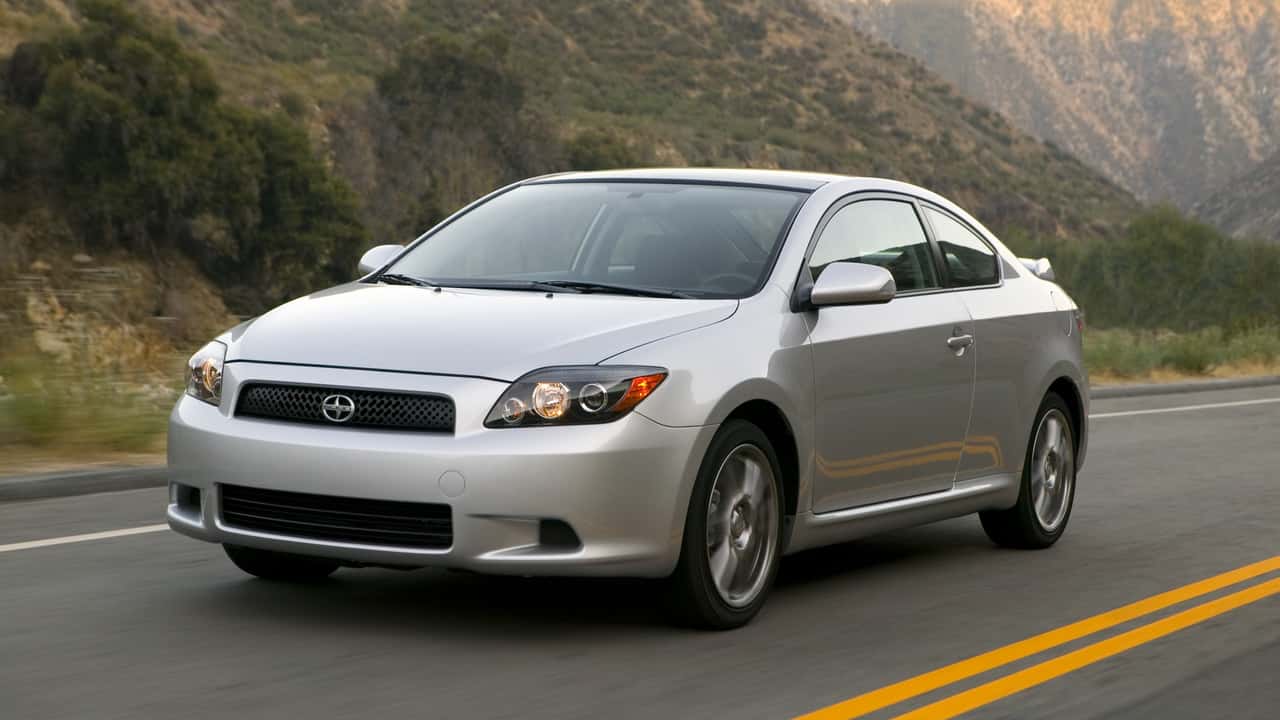
First-Generation Scion tC
Photo by: Scion
Scion Wasn’t Really A Failure
It’s easy to look at Scion’s demise and call it another failed automotive brand. But that’s not really what happened. Scion wasn’t killed because Toyota couldn’t sell cars. It was killed because Toyota had learned what it needed to learn.
The brand introduced more than a million people to Toyota, attracted a younger customer base, and gave the automaker a place to experiment with vehicles, marketing, and retail strategies.
The irony is that the better Scion performed at its original mission, the less necessary Scion became.
Today, Toyota has plenty of products aimed at younger enthusiasts, from the GR86 and GR Corolla to the increasingly adventurous side of its SUV lineup. It doesn’t need a separate brand to prove that Toyota can build something interesting.
Why Some Cars Have Different Colored Brake Calipers
Why Do Cars Have Model Years?
What Is The ‘Death Wobble?’ And Why Does It Happen?
Why Are Racing Tires Smooth?