You’ve probably heard the term “JDM” a lot. It’s everywhere: on car listings, at meets, in tuning videos, on social media, and in conversations about legendary cars like the Nissan Skyline GT-R, Toyota Supra, Honda Civic Type R, and Mazda RX-7.
But JDM doesn’t simply mean Japanese car.
The acronym stands for “Japanese Domestic Market,” and its original meaning is much more specific than the way enthusiasts often use it today. A car can be Japanese-built, sold by a Japanese automaker, and still not technically be JDM. So what exactly qualifies?
JDM Originally Meant Something Very Specific
JDM stands for Japanese Domestic Market. In the strict automotive sense, the term refers to vehicles, parts, and equipment intended specifically for sale in Japan rather than export markets.
That means the most important question isn’t necessarily where the car was built. It’s where the car was originally intended to be sold. For example, a Toyota manufactured in Japan and exported to the United States isn’t technically a JDM vehicle. It’s a Japanese-built car designed for the US market.
Likewise, a Japanese-market model might have completely different equipment from its export counterpart. Automakers have historically changed engines, transmissions, trim levels, safety equipment, emissions systems, and styling depending on the country where a vehicle was going to be sold.
That’s what makes the term useful in the first place. JDM isn’t really a statement about how cool a car is. It’s a description of which market the vehicle was built for.
So, Is Every Japanese Car JDM?
No—and this is probably the biggest misconception surrounding the term. A Honda sold new in the United States isn’t automatically JDM just because Honda is a Japanese company. The same goes for Toyota, Nissan, Mazda, Subaru, Mitsubishi, and other Japanese manufacturers.
The distinction becomes particularly interesting when the same basic car was sold in multiple countries. The Nissan Silvia is a classic example. Japan received the Silvia, while the closely related U.S.-market version was sold as the 240SX. Enthusiasts may casually lump both into the JDM world because of their shared heritage, but the U.S.-market 240SX isn’t technically a JDM car.
The same issue comes up with cars such as the Acura NSX, which was essentially the North American-market version of the Honda NSX. Calling the U.S.-market car “JDM” isn’t technically correct, even though its Japanese counterpart is.
This distinction can sound overly technical, but it’s part of what makes authentic Japanese-market cars so interesting to enthusiasts.
Why Did JDM Become Such A Big Deal?
The term might have started as a market classification, but it eventually became shorthand for an entire automotive culture.
Japan produced an extraordinary range of performance and specialty cars during the 1980s, 1990s, and early 2000s. Some were never officially offered in markets such as the United States, making them exotic to enthusiasts who could only see them in magazines, video games, or movies.
Cars such as the Nissan Skyline GT-R R34, Toyota Supra A80, Mazda RX-7, Honda NSX, Mitsubishi Lancer Evolution, Nissan Silvia, and Honda Civic Type R helped turn JDM from a technical term into a global enthusiast identity.
Video games such as Gran Turismo, Initial D, Need for Speed, and later The Fast and the Furious franchise exposed millions of people outside Japan to these cars. Their combination of performance, distinctive styling, tunability, and relative rarity created an enormous following. And that cultural meaning eventually became almost as important as the original definition.
Not All Right-Hand-Drive Cars Are JDM
Another common misconception is that a right-hand-drive car is automatically JDM. Most Japanese-market cars are indeed right-hand drive because Japan drives on the left, so right-hand drive can be a strong clue that a vehicle was originally intended for Japan. But the position of the steering wheel alone is not what makes a car JDM.
The defining factor is the vehicle’s original market, not simply which side of the car the steering wheel is on. A right-hand-drive vehicle sold in another country isn’t automatically JDM, just as a Japanese-market vehicle’s JDM status isn’t determined solely by its steering position.
Authentic JDM cars can also have differences that aren’t immediately obvious. Depending on the model and era, Japanese-market versions could feature different:
Engines and power outputs
Transmission choices
Trim levels and equipment
Lighting and safety equipment
Interior specifications
Body styles and model names
Those differences are a big part of why enthusiasts seek out original Japanese-market cars and parts.
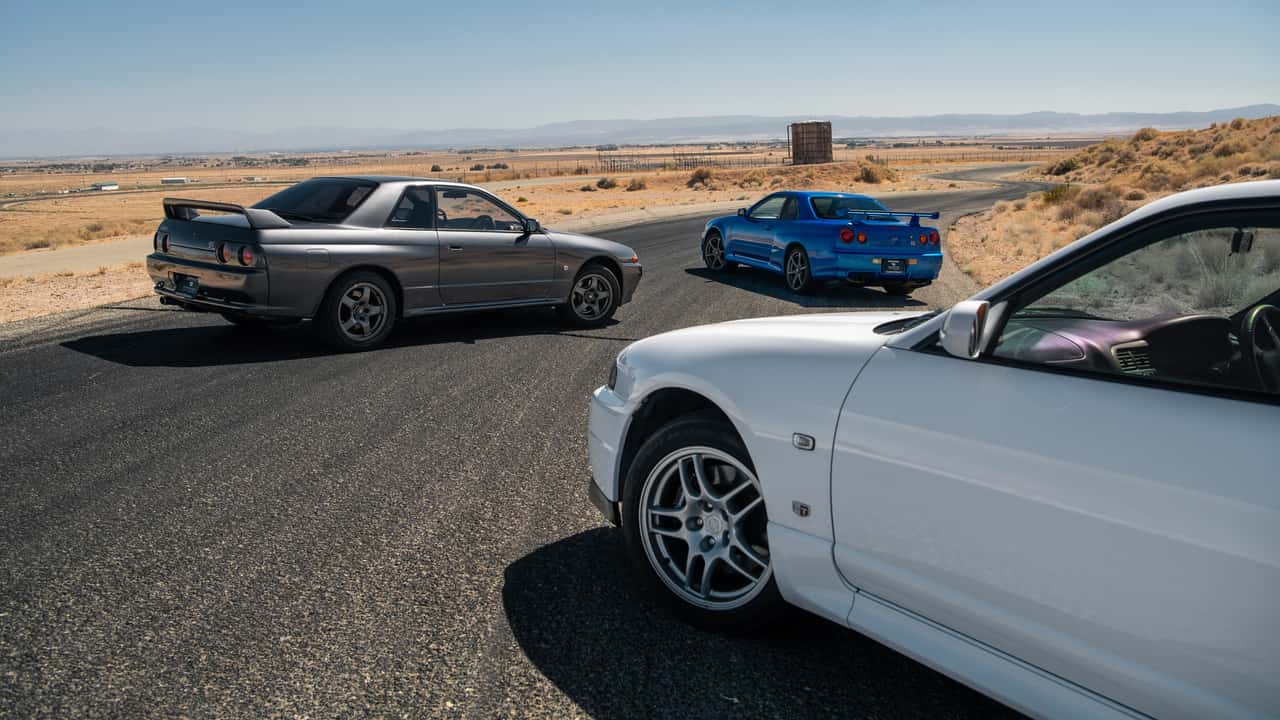
Photo by: Robin Trajano | Motor1
Fans Still Can’t Agree On What JDM Means
If you want to start an argument among car enthusiasts, ask whether a particular Japanese car is actually JDM.
Reddit has been having this debate for years. In a 2026 r/CarsAustralia discussion, one user asked why people routinely call locally delivered Toyota 86s, Mazda MX-5s, and Supras “JDM” when they weren’t originally built for the Japanese market. The top response stuck closely to the literal definition: JDM means a vehicle built specifically for sale in Japan, regardless of whether the manufacturer is Japanese.
A similar discussion in r/JDM asked for the “actual definition” of the term. Commenters pointed out that a car sold new in Japan can be considered JDM even if the same model was also available in other countries. In other words, a Japanese-market version of a globally sold model can be JDM, while an export-market version of that same car isn’t.
The debate gets even messier with cars such as the Acura NSX. Redditors have repeatedly pointed out that the NSX was built in Japan, but the Acura-badged version was intended for the U.S. market, making it technically USDM rather than JDM. That distinction hasn’t stopped enthusiasts from casually grouping it into the broader JDM scene.
And that’s probably the main takeaway from Reddit: the technical definition and the cultural definition aren’t always the same thing. Enthusiasts may use JDM to describe Japanese performance cars, Japanese tuning culture, or simply cars associated with Japan, while purists tend to stick much more closely to the original meaning.
The Meaning Of JDM Has Changed
Here’s where things get a little messy. Ask enthusiasts what “JDM” means, and you’ll probably get slightly different answers. The strict definition is straightforward: Japanese Domestic Market means something intended for Japan’s domestic market.
But in everyday car culture, the term has become much broader. People routinely use “JDM” to describe Japanese performance cars, Japanese-inspired builds, Japanese aftermarket parts, or even a particular style of tuning. MotorTrend notes that enthusiasts frequently apply the label to Japanese-branded cars that aren’t technically JDM, while Kelley Blue Book similarly points out that the term has expanded beyond its strict definition.
That’s why you can have a technically correct argument about whether a particular car is JDM and still have everyone understand what someone means when they call it JDM. The word has effectively developed two meanings: a precise automotive-market definition and a much broader cultural one. And that’s probably why the term has survived so well.
JDM started as a simple way to describe cars intended for Japan. But somewhere along the way, it became a badge for an entire generation of Japanese automotive culture.
The Real Reason Why Sally From ‘Cars’ Is A Porsche
Most Engine Cylinders Aren’t The Same Size. Here’s Why
What Does OEM Mean For Cars?
What Happened To Scion?