Modern cars can tell you the speed limit without you ever touching a map. Some can even warn you when you’re driving too fast or automatically adjust the cruise-control setting. But how does the car actually know whether that road is 30, 50, or 70 miles per hour?
The answer isn’t one single piece of technology.
Depending on the vehicle, speed limit detection can involve a forward-facing camera, GPS positioning, digital map data, and software that combines all of that information. And surprisingly, your car doesn’t actually need to “see” a speed-limit sign to know what the limit is.
Your Car Can Read Speed-Limit Signs With A Camera
The most obvious way a modern car knows the speed limit is by looking at the road just like you do.
Many vehicles equipped with traffic-sign recognition use a forward-facing camera, often mounted near the top of the windshield. The camera continuously scans the road ahead, while software identifies signs and determines what they mean. Speed-limit signs are one of the most common things these systems are designed to recognize.
The system is not simply taking a photograph and showing it on the dashboard, either. Image-processing software has to locate the sign, identify its shape and markings, and classify what it means. Once the system recognizes a speed-limit sign, the information can appear in the instrument cluster or head-up display.
That can be particularly useful if you missed a sign while driving. The car can keep displaying the most recently recognized limit instead of relying entirely on the driver to remember it.
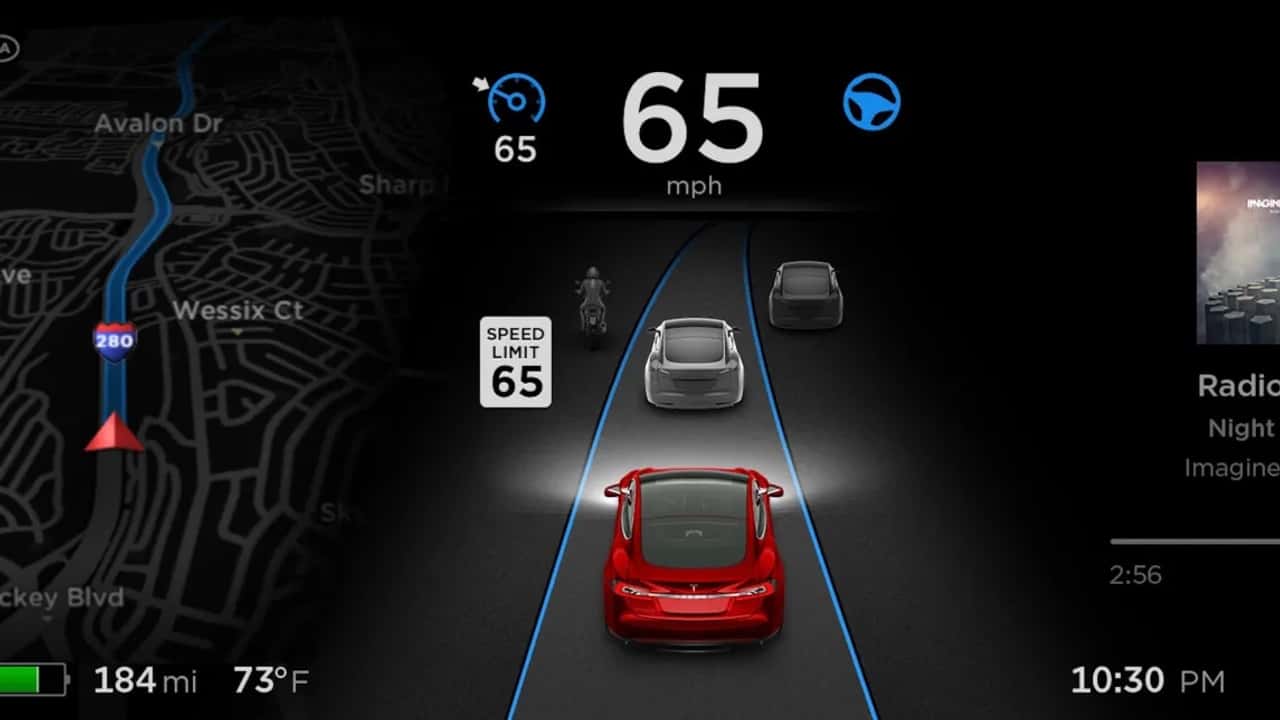
Tesla Autopilot Speed Limit Detection
Photo by: Tesla
GPS And Maps Can Tell The Car The Limit, Too
Here’s where things get more interesting: your car may know the speed limit even when it hasn’t seen a sign.
GPS tells the vehicle where it is, and digital map data can associate particular roads or road segments with their applicable speed limits. NHTSA describes intelligent speed-assistance systems as using either GPS combined with digitally mapped speed-limit data, vehicle-based sign recognition, or a combination of the two.
That’s why a car can sometimes display a speed limit almost immediately after you turn onto a new road. The navigation system already knows where you are and can retrieve the corresponding information from its map database.
The catch is that maps aren’t perfect. Speed limits can change, temporary restrictions can appear, and databases can become outdated. That’s one reason newer systems increasingly combine map information with what the vehicle’s camera is actually seeing. TomTom, for example, describes systems that fuse camera-based sign recognition with digital map data and GPS positioning.
Your Car May Use Both Sources At Once
Modern speed-limit systems work best when they don’t have to rely on a single source of information. A camera can see what’s happening right now, while map data can provide information about the road beyond the camera’s view.
Google says its own speed-limit data can be built from government information, imagery, AI-based sign recognition, GPS positioning, and other sources. That data can then be used by automakers for driver-assistance systems.
This combination matters because each method has weaknesses. A camera can struggle with things such as poor visibility, blocked signs, or unusual sign placement. Map data can struggle when a limit has recently changed or when a temporary restriction is not reflected in the database.
That’s why the car may effectively ask two questions: “What does the map say the limit should be here?” and “What does the camera say the sign actually says?”
Can My Car Still Get Speed Limits Wrong?
The simple answer is yes. Even though the technology can seem remarkably clever, the speed displayed on your dashboard is no guarantee that the car has correctly identified the legal limit.
There are several reasons the system can get confused:
A sign can be blocked: Trees, trucks, construction equipment, or other vehicles can hide a speed-limit sign.
Weather can interfere: Rain, snow, fog, glare, or dirty camera glass can make signs harder to recognize.
Temporary limits can be tricky: Construction zones and temporary restrictions may not be represented correctly in older map data.
Map data can be outdated: A road’s speed limit may have changed since the database was created or updated.
Conditional limits are complicated: Some limits apply only at certain times, in certain weather, or to particular vehicles.
Signs can vary by country: Recognition software has to understand different shapes, layouts, symbols, and units.
NHTSA specifically notes that intelligent speed-assistance systems need both accurate digital maps and reliable sign-recognition technology, highlighting why neither source is perfect on its own.
Drivers Have Seen Plenty Of Cars Get The Speed Limit Wrong
Online users have had plenty of firsthand experience with the technology behind modern speed-limit recognition. In a recent r/ex30 discussion, one owner described a Volvo EX30 suddenly displaying 30, 40, or 50 mph limits on a motorway, including one instance where the car apparently picked up a 40-mph sign on an overpass and applied it to the road below.
Another recent r/TeslaFSD discussion gets into the difference between what the camera sees and what the map says. One user noticed the car recognizing a new speed-limit sign on its display but continuing to use the previous limit for its driving behavior. The poster suspected the vehicle was relying more heavily on map data than the camera recognition in that situation.
When the system doesn’t work, the number on the dashboard can occasionally be very different from the actual roadside limit. That’s why you should always double-check the speed limit by looking at the actual road signs.
Your Car Is Not Guessing—It’s Combining Data
When your car suddenly changes the speed-limit number on the dashboard, there’s usually a lot more happening than it might seem.
The vehicle may be using GPS to determine exactly where it is, pulling a speed limit from digital map data, checking that information against a camera reading of a roadside sign, and then deciding what information to show the driver. Some advanced systems can also pass that information to other driver-assistance features.
That’s also why the technology is becoming increasingly important. In Europe, for example, Google’s documentation notes that new vehicles registered after July 2024 are subject to General Safety Regulation requirements involving intelligent speed assistance that displays the legal speed limit and warns drivers when they exceed it.
But there’s an important distinction: your car’s displayed speed limit is an assistance feature, not the final authority. If the screen says 50 but the roadside sign says 30, the sign and applicable road rules are what matter. Your car does not magically know the speed limit. It’s essentially building its best answer from cameras, location data, maps, and software—and doing all of that in the background while you drive.
Why Do Modern Cars Have Those Giant Plastic Engine Covers?
Why Do EVs Make That Weird Noise At Low Speeds? It’s Actually A Safety Feature
Why EVs Lose So Much Range In Cold Weather
Those Grooves In Your Tires Do A Lot More Than You Think