The Rivian R2 is one of the most important EVs introduced in the past few years. It takes everything that’s great about Rivian—its battery and powertrain tech, off-road prowess, and impressive driving dynamics—and shrinks it into a smaller, more affordable package. It’s the car that should help the brand reach a more mainstream audience than its much more expensive R1 models ever could. And as our own tests have shown, Rivian pretty much nailed the assignment.
It takes some impressive engineering to create such a car, engineering that’s well worth digging into for nerds like us.
In a recent video from Munro Live, you get to see the R2’s innards up close and hear from Greg Dachner, Rivian’s senior vehicle program director, and Matt Wolfe, VP of vehicle engineering hardware. Dachner explains the battery, its rigid structure, and even the suspension components that make the R2 such a compelling package.
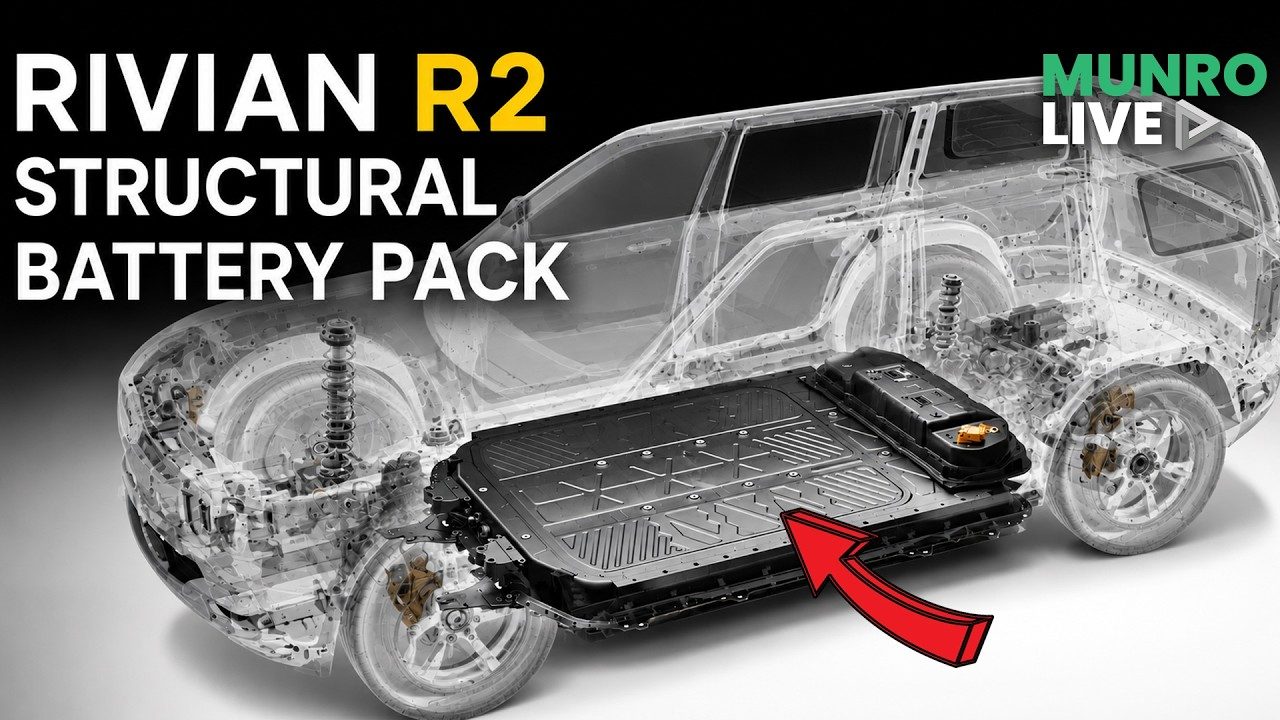
Many EV companies now incorporate their battery packs into the chassis structure, so that isn’t groundbreaking here. What is interesting is just how far Rivian went with it. Seeing the longitudinal solid sections of the battery that correspond with mounting brackets on the perimeter show how crash frontal crash impacts will be absorbed through the entire battery pack without damaging the cells. Also, the inverted tub-style battery pack, which is wider at the bottom but narrows toward the top, helps Rivian to create side structure to protect it. Even the seats sit on top of the battery and are bolted right to it.
Rivian also went to painstaking lengths to engineer the R2’s powertrains and subframes. Since the R2 ditches the R1’s air suspension and hydraulic anti-roll bars in favor of coil springs and rigid anti-roll bars, it was a challenge to make it ride and handle as well without being too heavy. Rivian needed to make it cheaper, too, as the R2 is its entry-level car. (Rivian says the R2 costs about half as much to build as an R1.) So the front subframe is made of stamped steel, rather than expensive aluminum, which is traditionally heavier. But Rivian’s team was able to cleverly engineer it in such a way that it’s almost 50% cheaper than the R1’s, while being about 10% lighter.

You can tell that a massive amount of effort was put into making the R2 a successful second act. It’s impressive to see the little details that play such a big part in the R2’s success but that few owners will ever know about.