Electric cars have plenty of advantages, but there’s still one question that makes prospective owners nervous: How long does the battery actually last?
It’s an understandable concern. An EV’s battery pack is one of the most expensive components in the entire vehicle, and we’ve all watched the lithium-ion batteries in our phones and laptops lose capacity over time.
Fortunately, an EV battery lives a very different life. And the data suggests most modern packs should last a long time… potentially longer than the vehicle around them.
So, How Long Does an EV Battery Last?
There isn’t a universal expiration date, but 12 to 15 years is a reasonable expectation for a modern EV battery in a moderate climate. In more extreme climates, that estimate drops to roughly eight to 12 years, according to modeling cited by the US Department of Energy.
That doesn’t mean your battery suddenly stops working on its 12th birthday, either.
EV batteries gradually lose their ability to store energy as they age, a process known as battery degradation. Your 300-mile EV might eventually become a 280-mile EV, then a 260-mile EV, while otherwise continuing to work normally.
And so far, degradation looks relatively modest.
Geotab analyzed battery data from more than 22,700 EVs across 21 models and found an average degradation rate of about 2.3 percent per year. At that rate, the average battery would retain roughly 81.6 percent of its original capacity after eight years.
That’s a very different scenario from needing an entirely new battery.
Photo by: InsideEVs
Battery Failure Is Actually Pretty Rare
There’s another important distinction: A degraded battery isn’t necessarily a failed battery.
Recurrent analyzed more than 30,000 EVs and found that outright battery replacement remains uncommon, especially on newer vehicles. Excluding major recalls, its data show replacement rates of around 8.5 percent for first-generation EVs, 2 percent for second-generation models, and just 0.3 percent for EVs from the 2022 model year onward.
Granted, those newer cars haven’t had decades to age yet. But improvements in battery chemistry, cooling systems, and battery-management software have made modern packs significantly more sophisticated than what manufacturers were installing in the earliest Nissan Leafs and Tesla Model S sedans.
Owners seem to be seeing the same thing in the real world.
A recent discussion on r/electricvehicles asked longtime owners how much battery degradation they’d experienced. Responses included a Ford Mustang Mach-E owner who reported no discernible loss after three-and-a-half years, a Kia Niro owner reporting no noticeable degradation after five years, and another owner with 90,000 miles who said the difference was still difficult to detect.
What Makes an EV Battery Wear Out Faster?
Not every EV battery ages at the same rate.
Heat is one enemy. Charging habits are another.
Geotab’s latest analysis found that vehicles that frequently use high-power DC fast chargers above 100 kW experience degradation of around 3 percent per year. Vehicles relying primarily on lower-power charging averaged closer to 1.5 percent.
Hot climates added roughly another 0.4 percent per year of degradation compared with mild climates.
That doesn’t mean you should be afraid to use a fast charger. They’re there for a reason. But if your car sits in your garage every night, a Level 2 home charger is generally easier on the battery than relying exclusively on high-power DC charging.
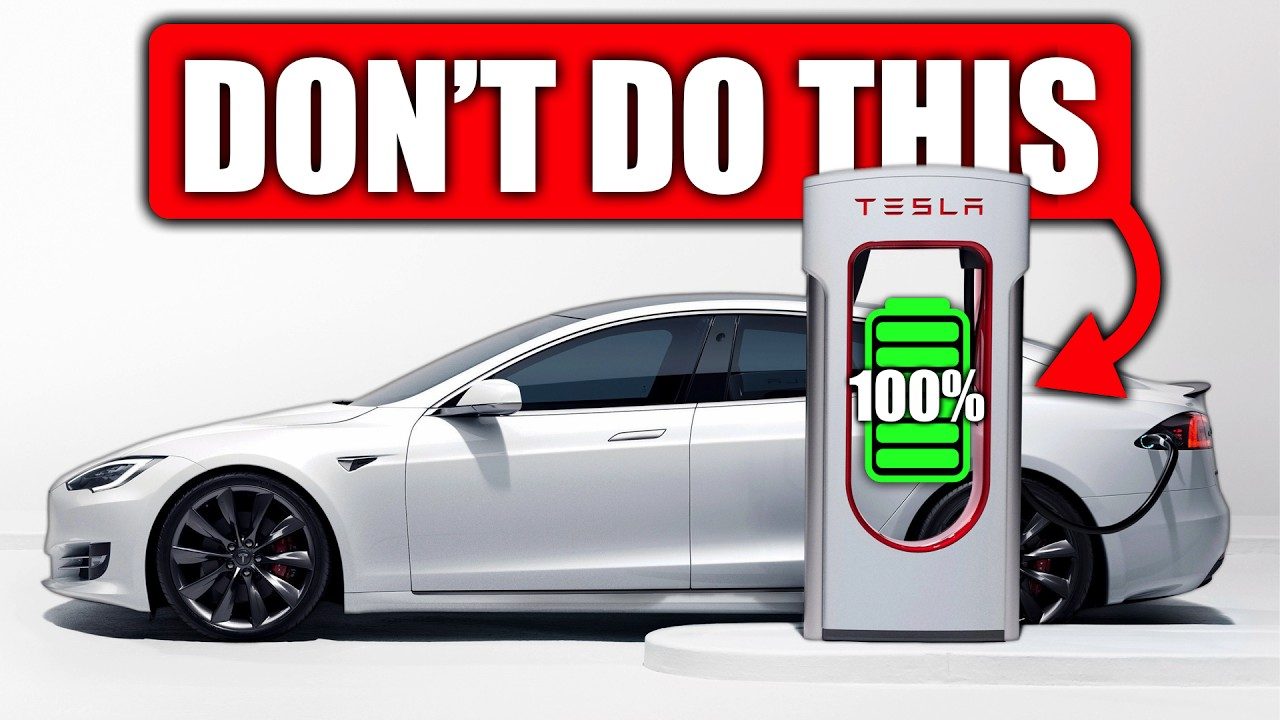
The same applies to charge level. Modern battery-management systems protect the pack from the true extremes of 0% and 100%, but regularly leaving certain battery chemistries at or near 100% or 0% for extended periods can accelerate wear.

What About the Battery Warranty?
Automakers know buyers are nervous about battery life, which is why EV battery warranties tend to be considerably longer than traditional bumper-to-bumper warranties.
The Department of Energy says many manufacturers offer eight-year/100,000-mile battery warranties, with some offering even longer coverage depending on the vehicle and state.
The fine print matters, though.
A warranty doesn’t necessarily guarantee that your battery will retain 100 percent of its original capacity for eight years. Manufacturers typically define a certain amount of acceptable degradation before warranty coverage applies, so it’s worth checking the specific policy before buying.
Should You Worry About Replacing an EV Battery?
No. At least not in the way you might worry about replacing the battery in your phone.
An EV battery will degrade. That’s unavoidable. But losing some range and experiencing a complete battery failure are two very different things.
Current data suggests modern EV batteries can reasonably last well beyond a decade, while outright replacements remain exceptionally rare among newer vehicles.
In other words, if you’re buying a new EV today, there’s a good chance the battery won’t be the component that ultimately sends the car to the junkyard.