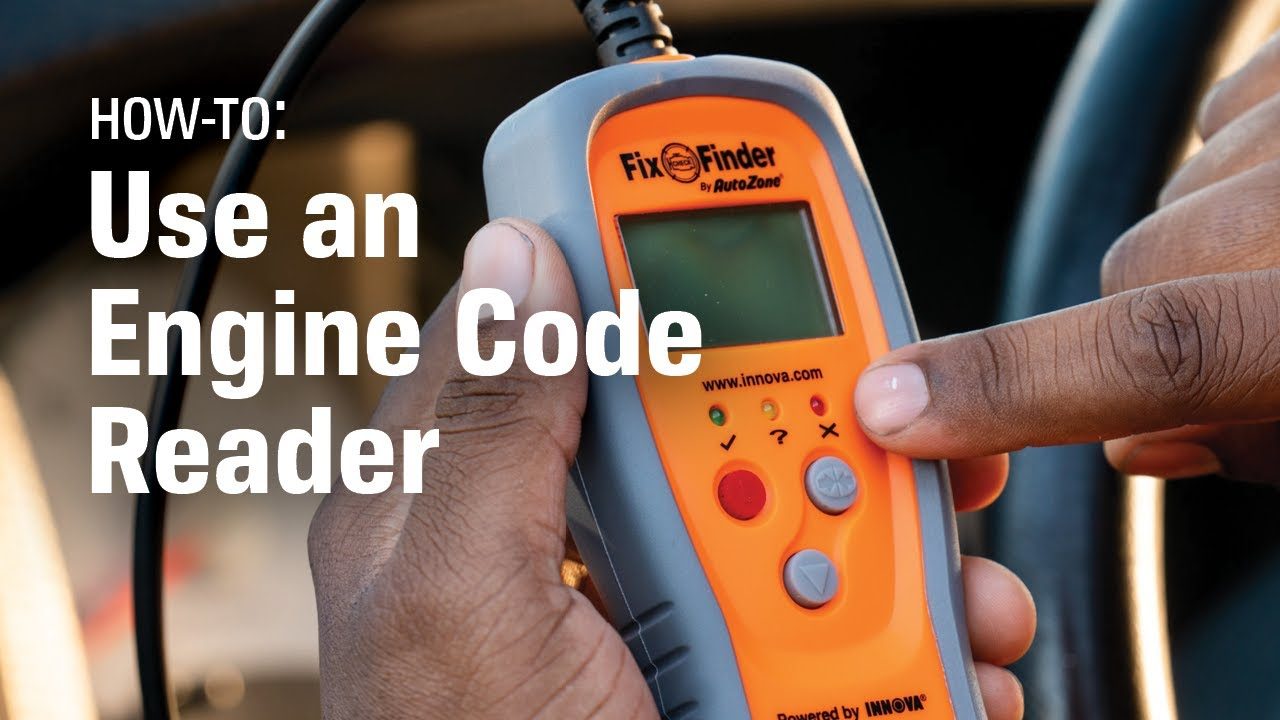
That glowing orange light doesn’t necessarily mean an expensive trip to the mechanic. Your local parts store might tell you what’s wrong at no charge.
Few dashboard warnings create anxiety quite like the check engine light. It could mean something relatively minor, like an emissions-system fault. Or it could be the first warning of a much more expensive problem.
But before paying a shop to investigate, there’s a surprisingly easy first step: Head to your local auto parts store.
Major chains including AutoZone, Advance Auto Parts, and O’Reilly Auto Parts offer free check engine light scanning for compatible vehicles. AutoZone calls its service Fix Finder, while O’Reilly uses its VeriScan system. Advance also advertises free engine code scanning for most OBD-II-equipped vehicles.
And the whole process usually takes just a few minutes.
Your Car Already Knows Something Is Wrong
Since the 1996 model year, vehicles sold in the US have broadly used the standardized OBD-II diagnostic system. When your car’s computers detect something operating outside of the expected range, they can store a Diagnostic Trouble Code, or DTC.
That’s what the parts store is looking for.
The employee (or, at some stores, you) plugs a scanner into the OBD-II port, typically located underneath the dashboard near the driver’s knees. The scanner communicates with the vehicle’s computers and retrieves any stored trouble codes.
At AutoZone, for example, you can borrow its Fix Finder scanner, connect it to the car, retrieve the data, and bring the scanner back inside. The store then generates a report showing the codes and potential fixes. AutoZone says the actual scan can take less than a minute.
O’Reilly’s VeriScan works similarly, providing a report with possible causes and fixes.
And it costs nothing.
But A Trouble Code Isn’t A Diagnosis
Here’s the important part: Don’t immediately buy whatever component appears on the printout.
An OBD-II code indicates where the car detected a problem, but it doesn’t necessarily identify which part is broken.
Imagine the scanner finds a cylinder misfire. The problem could be a worn spark plug, a failing ignition coil, a fuel injector, a vacuum leak, or something more serious. Replacing the first part mentioned on a generic diagnostic report could simply waste money.
O’Reilly specifically notes that its VeriScan report doesn’t replace a complete mechanical inspection.
That’s also one of the better points raised in a discussion on Reddit’s r/LifeProTips. Commenters note that the free scan can point DIYers in the right direction, but the same trouble code can sometimes have several different causes.
In other words, think of the free scan as step one of the diagnosis, not necessarily the final answer.
Why Do Parts Stores Do It For Free?
There’s an obvious business reason.
If the scanner suggests your car needs spark plugs, an oxygen sensor, an ignition coil, or another relatively simple component, you’re already standing inside a store that sells exactly those things.
Free diagnostic scanning gets you through the door and potentially helps the store sell you the parts required for the repair.
But there’s no requirement that you buy anything. You can take the code and report home, research it further, or bring that information to your mechanic.
For someone facing an unexpected check engine light, that’s useful information to have before spending any money.
Don’t Ignore A Flashing Check Engine Light
There is one major exception to the “drive over to the parts store” advice.
If your check engine light is flashing, or the car is shaking, overheating, losing power, making unusual noises, or otherwise running badly, don’t assume it’s safe to keep driving just to get a free scan.
A flashing check engine light can indicate a more serious fault that needs immediate attention. O’Reilly specifically warns that ignoring a solid or flashing light can potentially lead to additional repairs or a breakdown.
But if the car feels completely normal and you’ve simply discovered a steady orange check engine light staring back at you from the dashboard, a free scan is a pretty sensible place to start.
It might not tell you exactly what needs fixing.
But at least it’ll tell you where to start looking.