Even though station wagon sales peaked in the US in 1973, you could argue the wagon reached the height of its popularity in 1964, with 47 different options roaming America’s roads. That’s right, forty-seven. Today? That number is down to a measly nine or 10, depending on what you classify as a “wagon.”
Given that automakers have all but decimated the affordable wagon in the US, it’s hard to gauge exactly what America’s desire for longroofs is today. The few high-priced options that remain suggest there is some audience, pointing toward the early stages of a potential comeback, but it’s not exactly the mass-market revolution fans were hoping for.
At least, not yet.
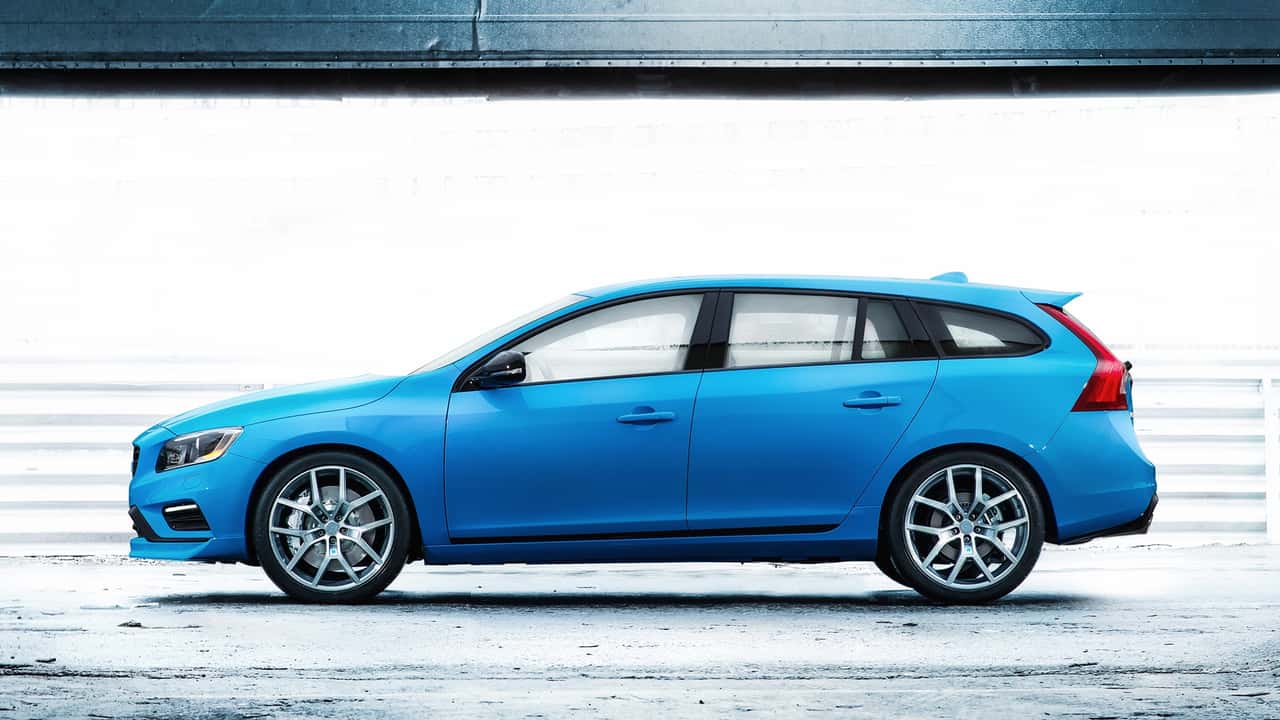
Volvo V60 Polestar
Photo by: Volvo
Americans looked to crossovers and SUVs in the 1990s in search of larger, and by association, safer vehicles for their families (also, The Sopranos probably played a little bit of a role). Bigger, taller vehicles offer a better view of the road, and more metal does a better job of protecting occupants in collisions—in theory.
But according to the International Institute for Highway Safety (IIHS), bigger isn’t always better.
IIHS research shows that the occupant benefit largely levels off once a vehicle exceeds the fleet’s average weight, while the danger posed to everyone else continues to rise. Larger SUVs also give up the inherent on-road performance of cars sitting closer to the ground.
Americans also sought out SUVs for their all-around ease of use; they were easier to get in and out of, they were easier to load little ones into, and they could easily fit all your luggage with a boat in tow for a weekend up to the lake. A Ford Focus couldn’t do that.
Given that automakers have all but decimated the affordable wagon in the US, it’s hard to gauge exactly what America’s desire for longroofs is today.
The rise of SUV popularity also coincided with some of the lowest gas prices in modern US history relative to income.
Between 1995 and 2000, gas prices in the US averaged just $1.50 while Americans were taking home an average of $34,076—2.7 percent more than the previous year. Gas prices wouldn’t crest $2.00 until 2005—still well within the first major SUV boom.
But with SUVs getting bigger and gas prices getting higher ($4.40 at the time of writing), Americans are finally starting to rethink their vehicle choices. And you know what’s more efficient yet offers nearly as much cargo space? That’s right, a wagon.
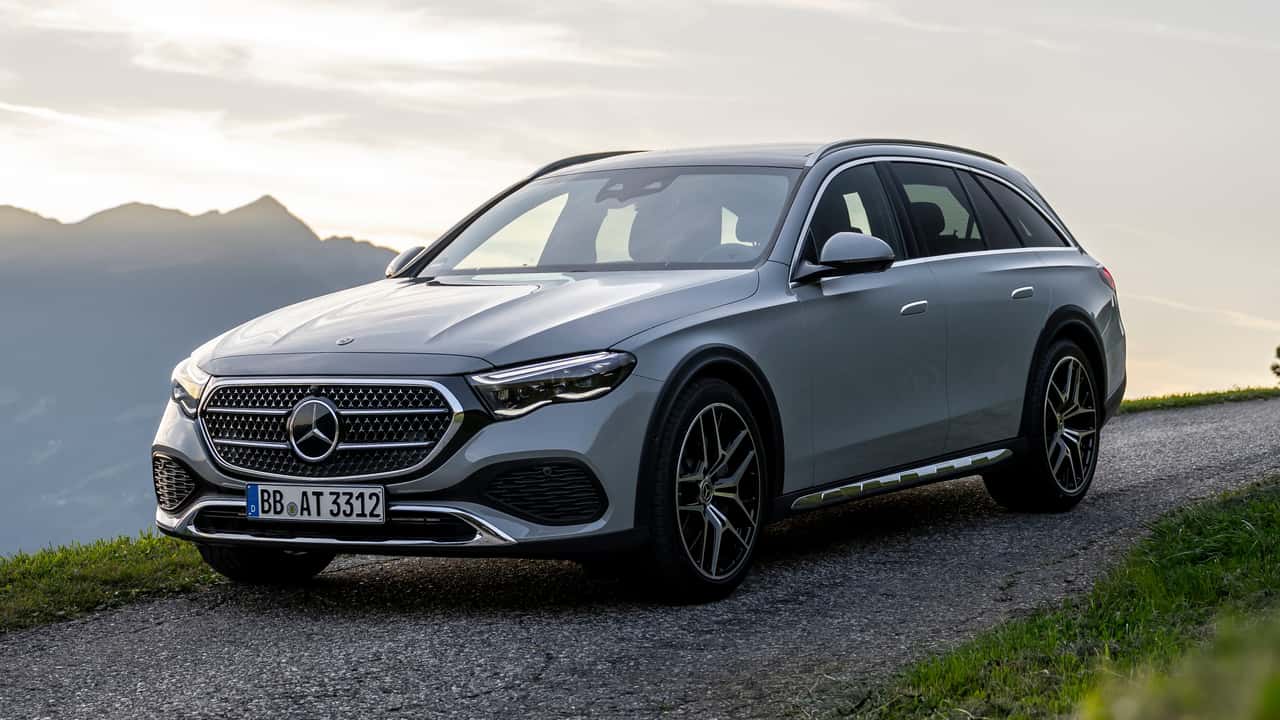
Mercedes-Benz E-Class All-Terrain
Photo by: Mercedes-Benz
Take the 2027 Mercedes-Benz E450 All-Terrain and its GLE450 sibling, for example. The wagon weighs 4,575 pounds and has 33.1 cubic feet of cargo room behind the rear seat. The GLE, meanwhile, clocks in at a whopping 5,203 pounds and delivers 33.3 cubic feet of cargo room behind the second row.
The GLE ultimately provides more maximum cargo room—74.9 cubic feet compared with 64.6—and can tow 7,700 pounds. But for everyday five-passenger use, the wagon provides nearly identical cargo space while carrying 628 fewer pounds.
You can find similar comparisons across other lineups—Audi, BMW, and Subaru included.
But with SUVs getting bigger and gas prices getting higher ($4.40 at the time of writing), Americans are finally starting to rethink their vehicle choices.
The ongoing size creep from the earliest 90s SUVs also meant more complex equipment, more costs up front, and potentially more reliability issues down the line. Automakers are now forced to fit their massive SUVs with complex adaptive air suspension systems, torque vectoring axles, rear-axle steering, and ever more complex systems just to get them to drive as a smaller vehicle (ie, a wagon) does naturally.
But mounting evidence suggests that buyers are finally becoming fatigued by the endless sea of crossovers lining dealer lots. Especially younger buyers. A 2026 study polling more than 1,000 teenagers found that just 31 percent of them are interested in SUVs (aka, the boring thing their moms and dads drive). And some automakers are finally taking notice.
Volvo has a rich history with station wagons—most recently with the V60 and V90, and well before that, the Amazon, the 1800ES, and others. Recently, the Swedish automaker has been the loudest voice proclaiming the return of the longroof as nigh.

Volvo V90
Just a few weeks ago, Volvo presented its strategy through 2030, promising new “low” body style vehicles for the US. That means sedans and wagons. Before that, Volvo CEO Håkan Samuelsson told us that the company is strongly considering bringing wagons back to the US lineup:
‘I think for various reasons, we need the lower cars. So air resistance is one, because we talked about range, and, of course, if you have a lower front area, it’s easier. Everything is easier.’
Samuelsson sees the evolution of the SUV (and CUV, by extension) and says he believes a ‘generational change lies ahead’. And Volvo isn’t alone.
Audi continues to develop the oh-so excellent RS6 Avant. There’s also a new A6 Allroad set to arrive in 2027. Mercedes currently offers a pair of E-Class-based wagons, one in faux off-road guise and the other as a quasi-AMG offering. Plus, a new E63 wagon is rumored to make its debut in the not-too-distant future. And BMW has found great success with its M5 Touring, which at one point was outselling the sedan.
The M5 Touring especially proves Americans will buy the right wagon. It does not prove they will buy just any wagon. A 717-horsepower, $125,000 BMW is a halo product aimed at enthusiasts—not a substitute for the affordable family wagons that disappeared.

BMW M5 Touring
Photo by: BMW USA
There is an obvious problem with this supposed renaissance: The companies predicting it aren’t necessarily putting their money behind it.
Volvo’s CEO believes buyers will return to lower, more aerodynamic cars, yet Volvo has discontinued both of its US-market wagons. Porsche is abandoning its two Taycan wagon variants, too. Automakers might believe the wagon has a future, but recent product decisions suggest that future remains highly uncertain.
Meanwhile, Subaru, which has long been one of the best-selling automakers in the wagon space, also appears to be changing course. The Outback has morphed from a pure wagon to something closer to a CUV. That’s a shame since Subaru has dominated wagon sales for quite some time now.
In fact, 10 years ago, around 230,000 wagons were sold in the US. Of that total, nearly 183,000 were the Subaru Outback. Last year, the estimated number of wagons sold was around 190,000, and the Outback accounted for nearly 160,000 of those vehicles.
There is an obvious problem with this supposed renaissance: The companies predicting it aren’t necessarily putting their money behind it.
From 2017 to 2025, wagon sales have fallen by about 20 percent.
That’s not purely the wagon’s fault. Automakers didn’t pivot exclusively because customers demanded it. Crossovers can command higher prices, generate stronger margins, and fall into a different federal regulatory category than conventional wagons. The industry has spent decades giving shoppers more SUVs, advertising more SUVs, and gradually removing the alternatives.
The larger problem is that America hasn’t been given a proper test case. Nearly every remaining wagon is an expensive luxury or performance model. Once Volvo’s remaining inventory disappears, there won’t be a conventional wagon anywhere near the heart of the new-car market.
Americans can’t reject an affordable wagon if nobody offers them one.
Granted, we probably will never return to the days of 47 different wagons. But the category doesn’t need to dominate the market to succeed. One genuinely affordable model from Volkswagen, Toyota, Subaru, or Volvo could determine whether Americans have actually rejected the wagon—or whether automakers simply stopped giving them the choice.