Dodge Viper fans have been waiting nearly a decade for a new-generation model to arrive. Production ended in 2017, closing the book on one of America’s wildest sports cars after a 25-year career.
But with Dodge once again leaning heavily into performance—and SRT back in the game—the question naturally returns: Will Dodge build a new Viper?
The short answer, based on what Dodge’s leadership is saying today, is probably not. But that doesn’t mean the spirit of the Viper is gone.
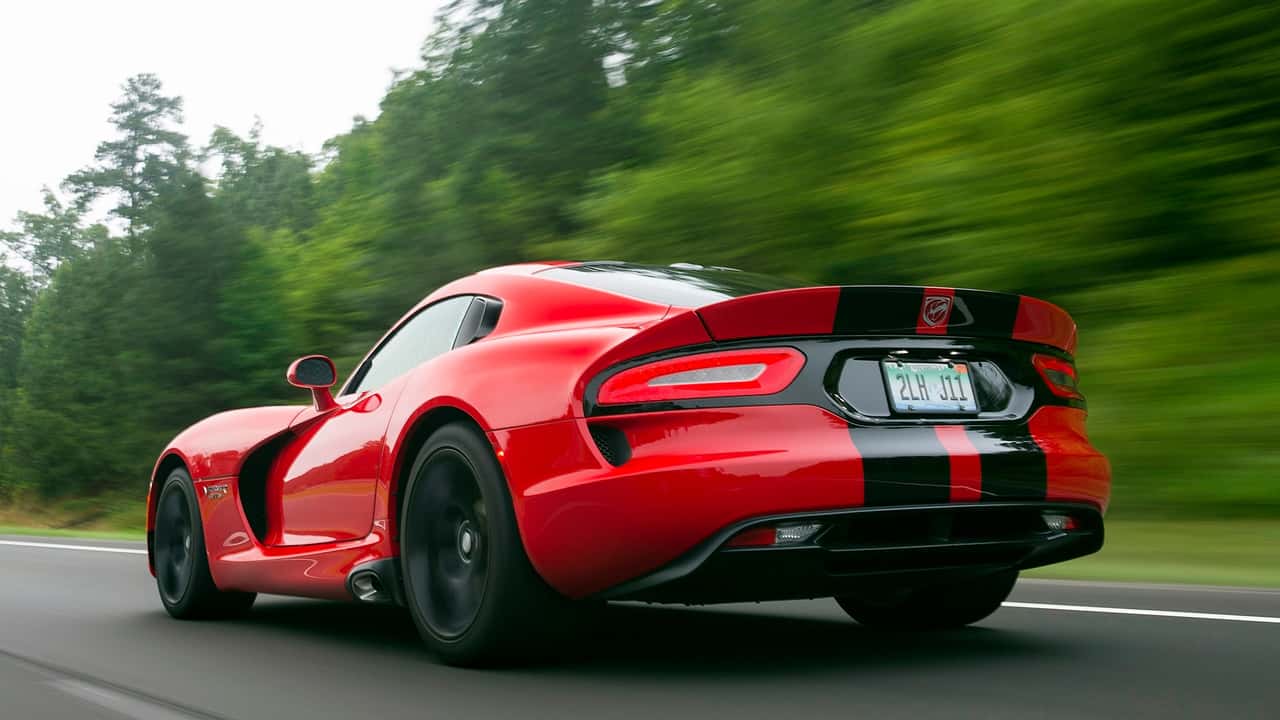
Dodge Viper GTS
Photo by: Dodge
Dodge Has Closed The Door On A Viper Comeback
The latest word comes directly from Tim Kuniskis, the longtime Dodge and SRT executive who now oversees Stellantis’ American performance efforts.
Asked recently whether the Viper still makes sense, Kuniskis told The Drive that the car had “reached the end of its life cycle.” That’s a significant statement because Kuniskis is hardly an outsider when it comes to the Viper. He has been closely associated with Dodge’s performance strategy for years.
That’s not surprising since the original Viper was unlike almost anything else on the market and bringing it back with the same DNA is extremely difficult in today’s market. The Viper combined outrageous styling with a naturally aspirated V-10, rear-wheel drive, a manual transmission, and remarkably little interest in making life easy for its driver.
The final-generation car used an 8.4-liter V-10 producing 645 horsepower. Production ended at Dodge’s Conner Avenue facility in Detroit in August 2017. Dodge’s own website still lists the Viper as discontinued and confirms that 2017 was its final model year.
So, if you’re waiting for Dodge to simply announce a sixth-generation Viper that picks up where the old car left off, there’s currently no indication that is happening.
But Something Viper-Like Is Coming
Here’s where things get interesting. Dodge has revived SRT, the performance organization originally created around projects including the Viper. In 2025, Stellantis announced the return of SRT under Kuniskis, with the division tasked with developing high-performance vehicles across several American brands.
And Dodge is working on something that could occupy some of the territory once associated with the Viper. It’s called the Copperhead.
According to current reporting, the Copperhead is being developed as a high-performance “hyper muscle car,” rather than as a direct Viper replacement. Its name is an obvious nod to the snake-themed history of the Viper, but Dodge is not positioning it as a sixth-generation Viper.
That distinction matters. The Viper was a purpose-built sports car. The Copperhead is expected to occupy a different part of Dodge’s performance lineup, with the sort of power and handling capability necessary to take on today’s extreme Mustang and Camaro derivatives.
In other words, Dodge appears to be moving forward, but not by simply bringing the Viper back.
The Viper’s Formula Would Be Difficult To Recreate
Part of the reason a modern Viper is such a complicated proposition is that the automotive world has changed dramatically since the last one left the factory. The old Viper’s formula was wonderfully simple: huge engine, rear-wheel drive, two seats and very little compromise.
Building a modern version would require Dodge to satisfy today’s safety, emissions, and engineering requirements while preserving the character that made the original special. Several aspects of the old formula would be particularly challenging to reproduce today.
A huge naturally aspirated engine: The Viper’s V-10 was one of its defining characteristics, but today’s performance cars increasingly rely on turbocharging, electrification, or both.
A manual transmission: The Viper’s three-pedal setup was central to its character, yet manual transmissions have become increasingly rare in high-performance cars.
Low-volume economics: Developing a dedicated two-seat sports car requires significant investment for a vehicle that would likely sell in relatively small numbers.
Modern regulations: Safety and emissions requirements make it considerably harder to build a car around the simple, mechanical philosophy of the original Viper.
A changing performance market: Today’s quickest performance cars can use sophisticated electronics, hybrid systems and all-wheel drive to deliver levels of acceleration the old Viper could never match.
The final Viper was already an increasingly unusual proposition in a market dominated by sophisticated electronics, turbocharging, hybridization and increasingly stringent regulations. Its sales never approached the levels Dodge had achieved with the car during stronger periods of the 1990s and early 2000s.
And that’s before considering the economics of developing a low-volume, two-seat sports car from scratch.
Could The Viper Name Return Anyway?
Never say never—but right now, the evidence points elsewhere. Dodge clearly understands the value of the Viper name. The company continues to maintain a dedicated Viper section on its website, and the car remains an important part of Dodge’s performance heritage.
There’s also no question that the brand is once again interested in halo-level performance. The revived SRT organization is intended to push Dodge and other Stellantis brands toward more extreme performance products, while the upcoming Copperhead shows that Dodge is willing to develop something considerably more ambitious than another conventional muscle car.
But a halo car doesn’t necessarily need to be called Viper. That’s arguably the most important takeaway.

Fans Are Still Debating Dodge’s Viper Successor
The Viper question is still generating plenty of discussion among Dodge enthusiasts. In a recent r/Dodge thread about the Copperhead, some commenters immediately asked whether the new sports car could become a Viper successor, while others argued that its positioning and potential pricing could make it something quite different.
Another r/Dodge thread takes an even different view, with commenters discussing whether the Copperhead could instead be positioned closer to cars such as the Toyota GR86 and Mazda MX-5 Miata. That would make it less of a Viper replacement and more of an accessible, driver-focused sports car within Dodge’s broader performance lineup.
The reaction is not universally in favor of moving on from the Viper, either. In r/cars, a Copperhead discussion drew a blunt response from one commenter: “Can we just get a new gen Viper instead?” Other commenters noted that recreating the original’s two-seat, V10, manual-transmission formula would be difficult with a modern car.
The Viper May Be Dead, But Its Ideas Aren’t
The Viper’s legacy could ultimately live on through a completely different kind of Dodge.
A modern Dodge halo car could have an aggressive, low-slung shape, enormous power and serious track capability without being a literal Viper. It could also take advantage of technologies that simply weren’t available when the fifth-generation Viper was developed. That’s essentially what the Copperhead represents.
And while Kuniskis’ comments close the door on the idea of a straightforward Viper revival, they don’t suggest Dodge is finished building cars that make enthusiasts talk. So, will Dodge build a new Viper?
For now, the answer is no. The man in charge of SRT says the Viper has reached the end of its lifecycle, and Dodge’s upcoming performance flagship is being developed as something different. But if the Copperhead succeeds in carrying the Viper’s rebellious spirit into a new era, Dodge may not need the Viper name to bring some of that magic back.
And considering what the original Viper accomplished, that’s probably the more interesting story anyway.
Your Car’s Tiny Spare Tire Has A Very Specific Job
Your Old Car Battery Doesn’t Get Thrown Away At O’Reilly
Rear-Hinged Doors Used To Be More Common. So Why Did They Disappear?
The Clever Technology That Makes Your Windshield Wipers Start By Themselves