Turbocharged engines produce a few sounds that are almost impossible to miss. There’s the whistle as the revs climb, the whoosh when you lift off the throttle, and sometimes that distinctive flutter coming from the intake. To anyone unfamiliar with turbocharged cars, it can sound like something is leaking—or like the engine is about to launch a small spacecraft.
But most of those noises are simply the sound of air moving through a turbocharged engine.
A turbocharger is essentially an air pump: exhaust gases spin a turbine, which drives a compressor that forces more air into the engine. So why does that process sometimes sound so dramatic?
A Turbo Is Moving A Lot Of Air Very Quickly
The easiest way to understand the whoosh is to think about what a turbocharger is actually doing.
Exhaust gas spins the turbine wheel, which is connected by a shaft to the compressor wheel on the intake side. The compressor draws in outside air, compresses it, and sends that denser air toward the engine. More air allows the engine to burn more fuel and produce more power.
That compressor can also spin incredibly fast. Garrett says its turbochargers can operate at tens of thousands of revolutions per minute, with some of its smallest units exceeding 300,000 rpm.
All that rapidly moving air creates pressure changes and airflow noise. Depending on the turbo, intake system, airbox, intercooler plumbing, and exhaust setup, you might hear anything from a subtle whistle to a very obvious whoosh.
And modern cars often try to make these systems quieter, which is why some turbo engines barely make a sound while others seem determined to announce every throttle input.
That Whoosh Often Happens When You Lift Off The Throttle
Here’s where things get particularly interesting. You’re accelerating, the turbo is producing boost, and then you suddenly lift off the throttle. The throttle closes, but the turbocharger is still spinning, and the compressed air in the intake system is still moving toward the throttle body.
That pressure needs somewhere to go. This is where a blow-off valve or bypass valve comes into play. Garrett describes the blow-off valve as a pressure-relief device designed to prevent the compressor from entering surge when the throttle closes.
Some systems vent the excess air to the atmosphere, while recirculating systems send it back toward the compressor inlet. If the system vents that air into the atmosphere, you can hear the familiar whoosh.
That’s why modified turbo cars can sometimes sound dramatically louder when the driver lifts off the accelerator. Changes to the intake and blow-off-valve setup can make airflow noises much more noticeable than they are on a factory car.
Not Every Turbo Sound Means The Same Thing
This is where turbo noises can get confusing. A whistle, whoosh, flutter, and hiss aren’t necessarily describing the same event.
Whistle: Often comes from the turbocharger’s compressor and the airflow through the intake system. The exact character depends on the turbo and surrounding hardware.
Whoosh: Commonly associated with pressurized intake air being released or redirected when the throttle closes.
Flutter or “chirp”: Can be associated with compressor surge, where airflow through the compressor becomes unstable. Garrett says surge can occur when the throttle is rapidly closed after boosting.
Wastegate noise: The wastegate controls turbo speed by allowing some exhaust gas to bypass the turbine. Depending on the setup, its operation can produce another distinctive sound.
Hissing: Can be normal airflow noise, but an unexpected or suddenly louder hiss can also point to a boost or intake leak.
That last distinction matters. A turbocharged engine making some noise is not automatically a problem. But if a familiar sound suddenly changes—especially alongside lost power, smoke, unusual boost behavior, or other symptoms—it’s worth investigating.
Why Some Turbo Cars Sound Much Louder Than Others
Two turbocharged cars can use essentially the same basic technology and sound completely different. That’s because the turbocharger is only one part of a much larger system. The design of the compressor housing, intake piping, air filter, intercooler, throttle body, exhaust, valves, and sound insulation can all influence what reaches your ears.
The vehicle’s calibration matters, too. Some manufacturers deliberately engineer turbo systems to keep induction and valve noises subdued, while enthusiast-oriented cars may leave more of that mechanical character audible.
Aftermarket modifications can amplify it further. A less restrictive intake, different charge piping, or an atmospheric blow-off valve can make sounds that were previously muffled much easier to hear.
That doesn’t necessarily mean the louder system is producing more boost or more power. Sometimes you’re simply hearing the same airflow more clearly.
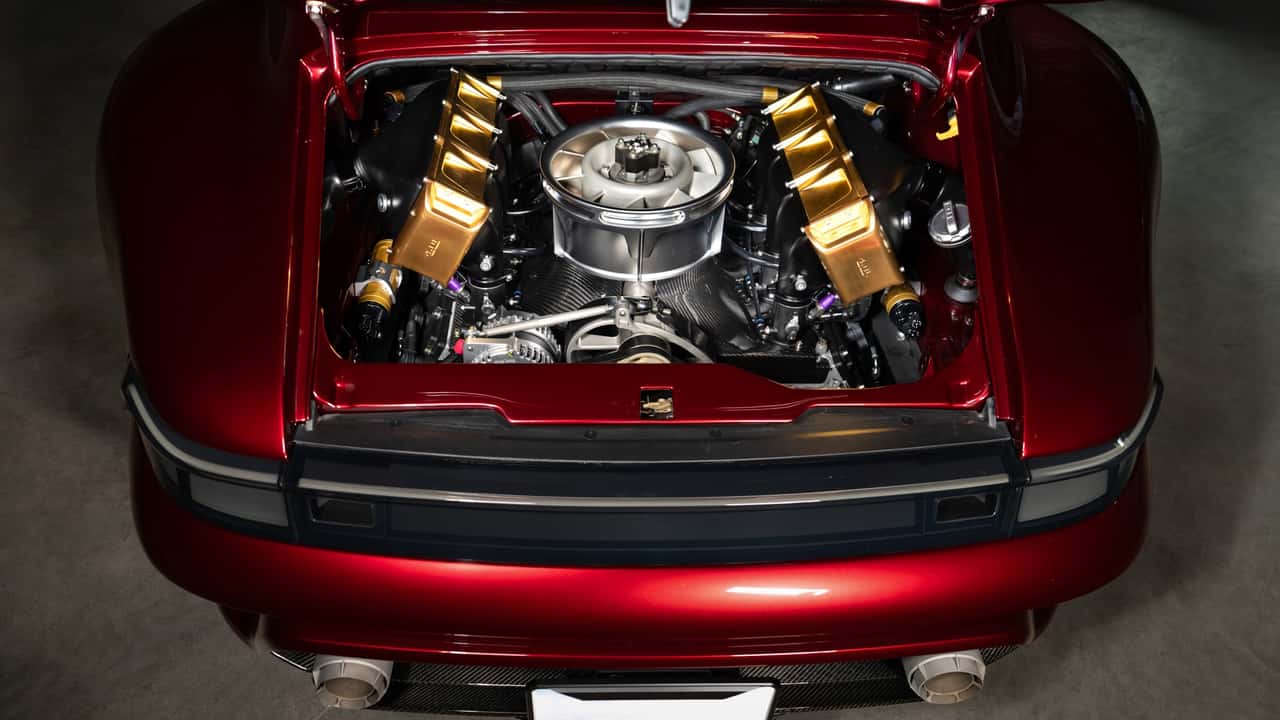
Gunther Werks Project Endgame Turbo Speedster
Photo by: Gunther Werks
Drivers Know That Not Every Turbo Whoosh Is The Same
Reddit has plenty of turbo owners trying to figure out exactly where those noises are coming from. In one r/cars discussion, a user asked about the famous “stutututu” sound. Commenters explained that the noise is associated with compressor surge, where pressurized air is pushed back through the compressor when airflow is suddenly restricted.
Another r/CarTalkUK discussion breaks down the sounds in simpler terms. One commenter explains that a blow-off valve produces the familiar “pssh” as it releases boost, while turbo flutter produces the more distinctive “stustustu” sound.
But Reddit users also point out that a new or unusually loud whoosh can be a warning sign. In a 2024 r/MechanicAdvice thread, a VW GTI owner described a loud hiss while building boost along with a noticeable loss of power. Commenters recommended checking for a boost leak rather than assuming the sound was normal turbo noise.
A similar discussion involved a Ford Focus diesel making a progressively louder rushing-air noise under acceleration, accompanied by suspected loss of power. That combination had commenters looking toward a possible boost or intake leak.
Essentially, a whoosh can be completely normal, but context matters. If the sound suddenly changes or arrives alongside lost power, warning lights, or other unusual behavior, it may be worth checking the intake and boost system rather than simply enjoying the noise.
That Whoosh Is Basically Your Turbo Breathing
The next time you hear a turbocharged car make that satisfying whoosh as the driver lifts off the throttle, you’re hearing the consequences of a surprisingly complicated airflow system doing its job.
The turbo has been using exhaust energy to spin a compressor, the compressor has been forcing air toward the engine, and then the throttle closes. The resulting pressure change has to be managed, and depending on how the vehicle is designed, some of that process becomes very audible.
There’s also a reason engineers care about what happens during that moment. Compressor surge is a region of unstable airflow, and Garrett notes that prolonged operation in surge can create heavy thrust loading and potentially contribute to premature turbocharger failure.
So that whoosh is not just automotive theater. It’s the audible side of a turbocharger moving, compressing, and managing a huge amount of air in a very short amount of time. And honestly, the fact that it sounds cool is just a nice bonus.
Why Do EVs Make That Weird Noise At Low Speeds? It’s Actually A Safety Feature
Why Do Modern Cars Have Those Giant Plastic Engine Covers?
Those Grooves In Your Tires Do A Lot More Than You Think
Why EVs Lose So Much Range In Cold Weather