Take a look at a lineup of performance cars, and you’ll notice something besides the giant wheels and questionable number of exhaust tips: The brake calipers aren’t always the same color.
Some are red. Others are yellow, blue, black, silver, or even orange. And while brightly colored calipers have become a familiar part of the performance-car aesthetic, there’s more to the story than simply making a car look cool.
So, why do some cars have different colored brake calipers?
It Started With Performance
Brake calipers are one of the most important parts of a car’s braking system. They clamp the brake pads against the rotors, creating the friction needed to slow the car down.
On high-performance cars, the braking hardware is often larger and more sophisticated than what you’d find on an ordinary commuter car. Automakers and brake suppliers began using color as a way to make that expensive hardware stand out.
Ferrari helped make red brake calipers particularly famous. Brembo, which supplies braking systems for countless performance cars, also played a major role in turning colorful calipers into a recognizable visual cue.
Eventually, red calipers became associated with performance even when the color itself didn’t necessarily indicate anything specific about the hardware.
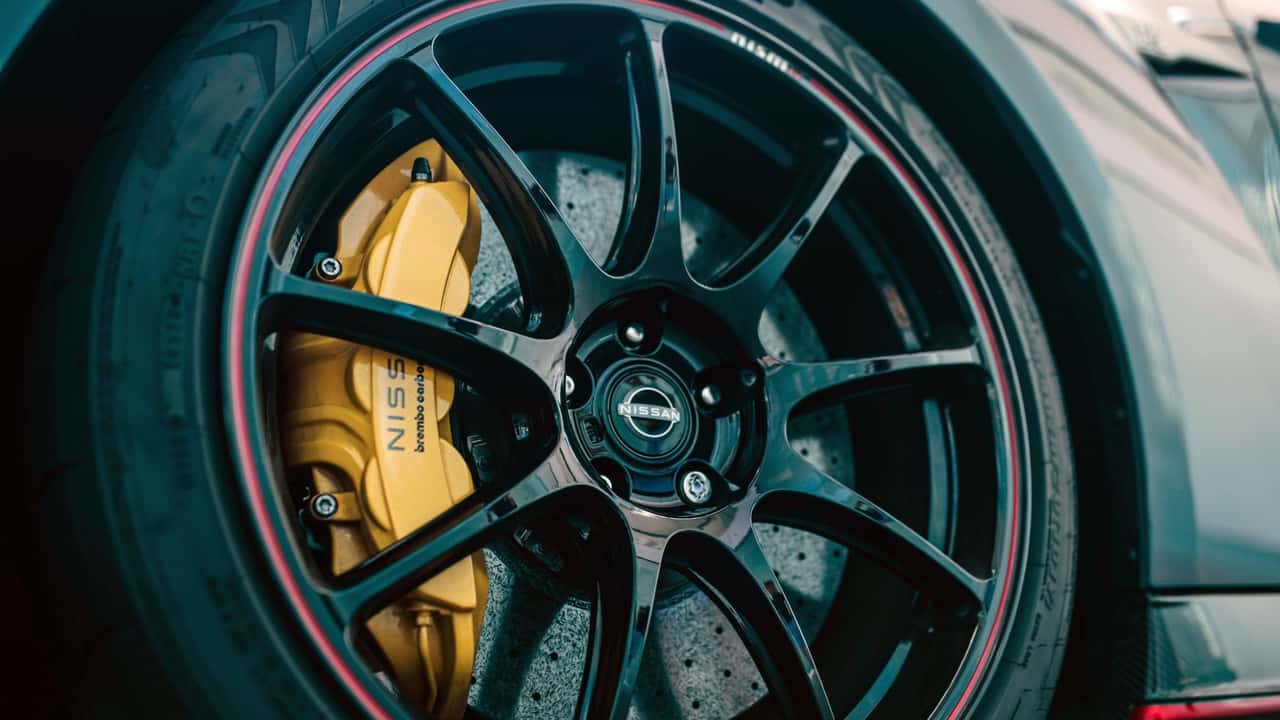
Nissan GT-R Nismo Brakes
Photo by: Nissan
Does Caliper Color Actually Mean Anything?
Sometimes. Sometimes not.
There’s no universal industry standard saying that a red caliper has to mean one thing and a yellow caliper has to mean something else.
One manufacturer might use red to identify its performance brakes, while another might offer red simply as an appearance option. A third could use yellow, blue, or black for an entirely different reason.
In other words, you can’t reliably determine how powerful a car’s brakes are simply by looking at the color of the calipers.
The physical hardware matters much more.
Things such as the number of pistons, caliper design, rotor size, pad material, cooling, and overall braking-system specifications are far better indicators of performance.
So Why Red?
Red is popular largely because it looks fast.
There’s also a practical reason it became so recognizable. A brightly painted caliper stands out behind a large wheel, turning what would otherwise be a mostly functional component into a piece of visual branding.
Once enough performance cars started wearing red calipers, the color itself became associated with speed and expensive hardware.
It’s similar to the way carbon fiber, giant exhaust tips, and aerodynamic wings became visual shorthand for performance. The component may serve a legitimate engineering purpose, but manufacturers also know that customers like seeing that engineering.
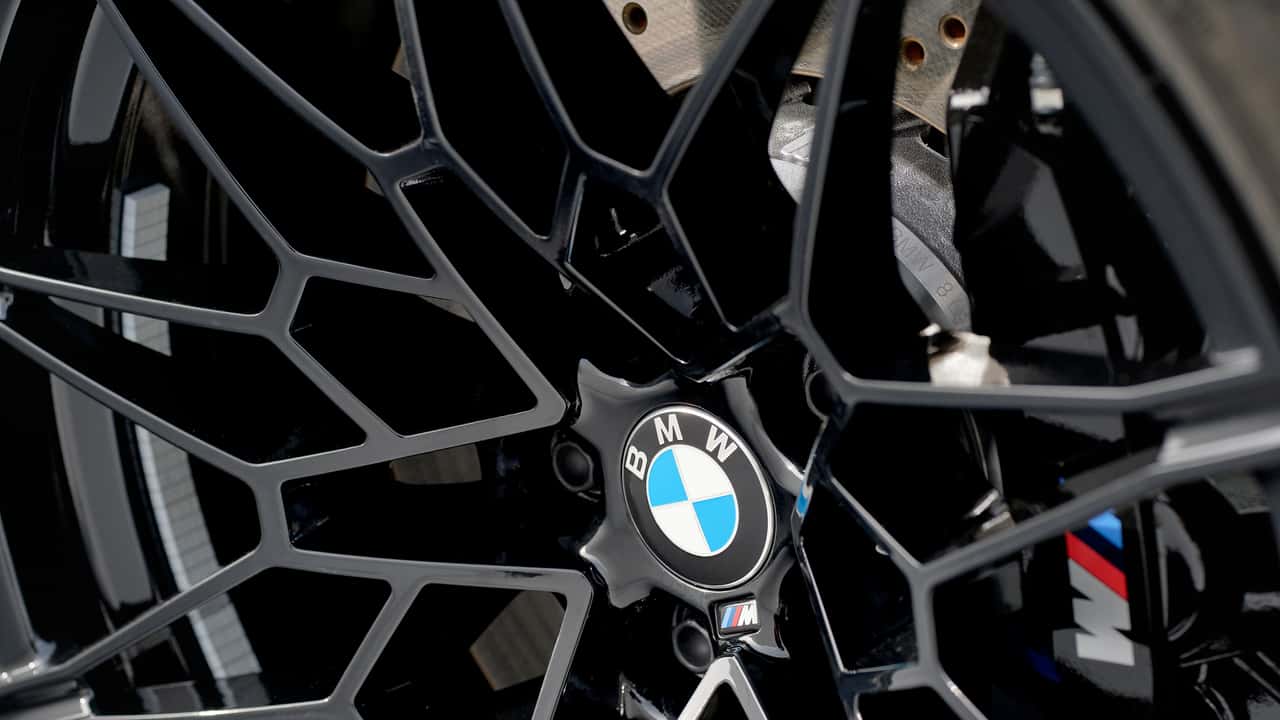
BMW M3 Brakes
Photo by: BMW
What About Yellow, Blue, And Orange?
Different colors can be associated with particular brands, brake suppliers, or performance packages.
Porsche, for example, has famously used yellow calipers for its ceramic-composite brakes, making yellow a particularly recognizable part of the company’s high-performance braking hardware. Nissan also uses different colors to differentiate its vehicles.
Other manufacturers use colors such as blue or orange to distinguish specific brake systems or performance variants.
But again, there isn’t a universal color code.
A yellow caliper on one car doesn’t necessarily mean the same thing as a yellow caliper on another.
That’s why it’s worth checking the vehicle’s specifications instead of assuming a particular color tells you exactly what’s underneath.
Some Are Painted. Others Are Coated.
Color isn’t necessarily just paint slapped onto a caliper.
Manufacturers can use different finishes and coatings designed to withstand the extreme temperatures and harsh conditions brake components experience.
Calipers can get extremely hot during repeated hard braking, while also being exposed to water, road salt, brake dust, and other contaminants. Whatever finish is used needs to survive all of that without quickly deteriorating.
For that reason, the finish serves a practical purpose as well as an aesthetic one.
And because calipers are relatively easy to see through modern alloy wheels, they’re an obvious place for automakers to add a little visual drama.
The Internet Has Some Strong Opinions About Caliper Colors
If you want proof that brake-caliper colors have become more than just an engineering detail, spend a few minutes on Reddit. Enthusiasts have surprisingly strong opinions about which colors belong behind which wheels.
In one r/AudiTT discussion, owners debated everything from red and yellow to blue, green, and silver. One commenter summed up a common enthusiast preference pretty simply: black wheels with yellow calipers, or silver wheels with red calipers. Others argued that painted calipers look best when they’re attached to a genuinely large brake system.
A similar discussion in r/Mazda3 started when an owner painted their calipers red after surface rust began to appear. The owner admitted that red felt a little overdone, but commenters still suggested red, yellow, orange, silver, and black as alternatives.
Can You Just Paint Your Own Calipers?
Technically, yes. Plenty of owners customize their cars by painting or powder-coating their brake calipers.
But there’s a big difference between a professionally finished caliper and simply spraying paint onto whatever is visible behind the wheel.
Brake components operate in a very harsh environment, so the wrong coating or improper preparation can cause problems. You also don’t want paint contaminating friction surfaces or interfering with moving components.
That’s why enthusiasts who want to change their caliper color generally use products and processes specifically designed for high-temperature brake components.
And, of course, changing the color doesn’t make the brakes perform any better.
Bigger Brakes Matter More Than Brighter Brakes
A set of red calipers might look fantastic behind a set of 21-inch wheels, but the color itself doesn’t stop the car.
The important stuff is what’s inside and around the caliper.
A larger rotor can provide more leverage and thermal capacity. Additional pistons can help distribute clamping force across the brake pad. Different pad compounds can change stopping performance and fade resistance. Better cooling can help the system survive repeated hard stops.
Those are the things that actually make a difference.
The color is mostly there to make sure you notice all that expensive hardware.
Why Automakers Keep Doing It
There’s a simple reason colored brake calipers have stuck around: **they work as marketing.**
Cars are emotional purchases, particularly performance cars. A buyer might never push the brakes hard enough on a public road to notice the difference between two sophisticated braking systems, but they can see a brightly colored caliper every time they walk up to the car.
It tells a visual story.
Big brakes suggest performance. A bright caliper makes those brakes impossible to miss. And once customers started associating certain colors with high-performance braking systems, automakers had another way to differentiate their more expensive models and options.
So the next time you see a sports car with a set of giant red, yellow, or blue brake calipers, remember: the color probably isn’t making the car stop any faster.
It’s making sure you know that the brakes are there.
What Is The ‘Death Wobble?’ And Why Does It Happen?
Why Are Racing Tires Smooth?
How The Ford Mustang Got Its Name
What Happened To Pop-Up Headlights?