When French automaker Darracq built its first 100-horsepower vehicle, it was monumental. Factory driver Paul Baras, on a stretch of road in western Belgium, would hit 104.5 miles per hour—a new benchmark for land speed worldwide.
More than 120 years later, there isn’t a single new car sold in the US with less than 100 hp. Huge strides in modern combustion engineering and the breakneck pace of battery-electric development mean that not even America’s cheapest, slowest vehicles are that dreadfully underpowered.
But therein lies the problem—horsepower has never been more attainable than it is today. Head to any Dodge dealership and you can plunk down $80,000 for an SUV with 700 horsepower and room for the whole family. A little further down the road, Tesla will sell you an otherwise ordinary sedan with more power than most supercars. The same goes for Lucid and Porsche.
A Motor1 analysis of EPA data shows that new cars in the US are roughly 15 percent more powerful than they were a decade ago—with the average output having increased by about 35 horsepower. That number has risen by as much as 26 percent since 2006, with cars adding roughly 55 hp on average.
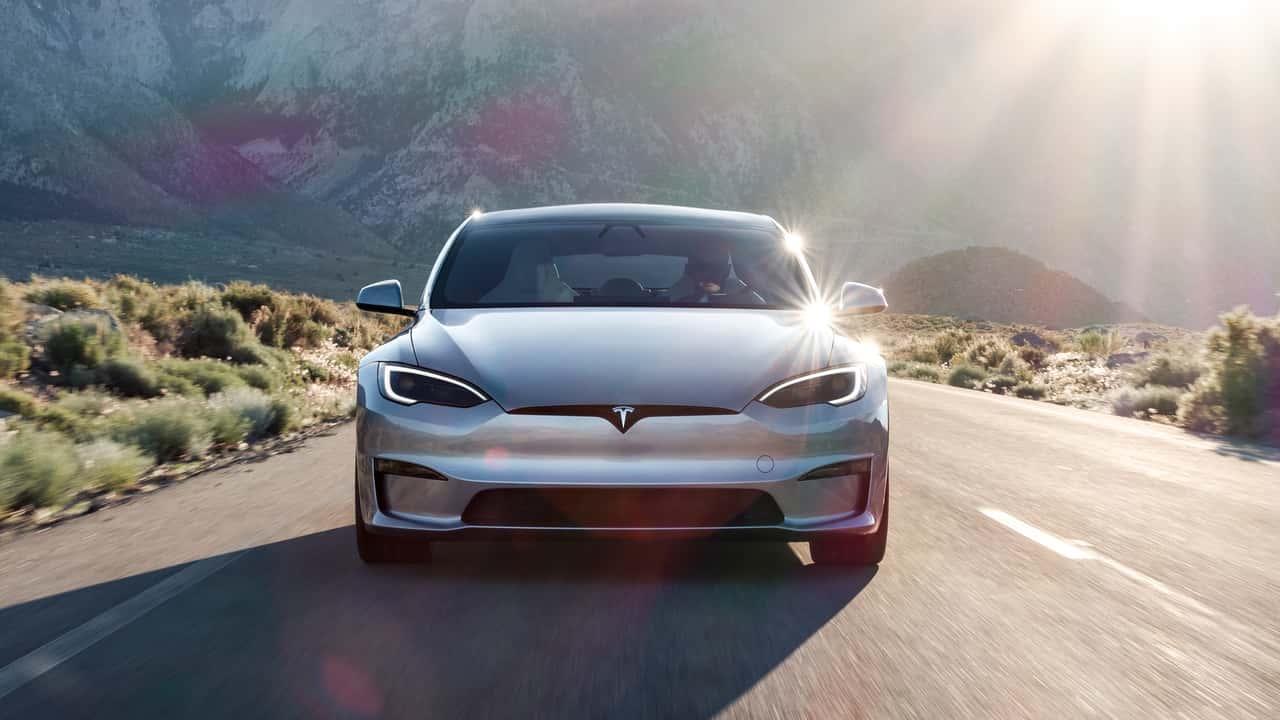
Tesla Model S Plaid
The question is, where do we go from here? For some, the answer is pretty simple: more power. Take the biggest gas engine or battery pack you can find, strap on a few upgrades, and make sure your number is bigger than the next guy’s.
Up until recently, though, it wasn’t that easy. From Darracq’s record-breaking, earth-shattering 100-hp runabout, it took human beings another century still to reach 1,000 hp on a mass scale, relatively speaking. But once we did, it opened the floodgates.


In just 20 years since the original Veyron, hypercar horsepower has already doubled—and even tripled. Right now, there’s a real, actual production car puttering around with 3,000 hp on the dash. Most of the biggest developments have been on the EV side—and more specifically, in China.
Lotus (now owned by China’s Geely) is recognized as the first mass manufacturer to hit 2,000 hp with the Evija hypercar. Elsewhere, BYD’s Yangwang U9 Ultra has an absurd 3,000 hp—a car you can (theoretically) buy with enough Yuan in your offshore bank account. And for so many EV makers—especially startups looking to make a splash—adding as much power as possible has become the default solution.
In just 20 years since the original Veyron, hypercar horsepower has already doubled—and even tripled.
Of course, there’s no denying the fact that the technology behind these vehicles is impressive. Nearly all of these cars have huge battery packs and ludicrously powerful electric motors, giving them respectable four-figure outputs and 0-60 mph times once reserved for rocket ships. Past a certain point, though, all that power is mostly useless.
On real roads with things like speed limits, stoplights, and pedestrians, you’ll be lucky to put down a fraction of the U9’s available output. Meanwhile, brakes have to get bigger, tires have to get better, and traction control has to be more clever. With that much added technology shoved into a single vehicle, weight becomes a serious issue.
Take the Yangwang U9, for example. In its most powerful form, the Chinese supercar weighs as much as a modern half-ton pickup—about 5,460 pounds. The 1,914-hp Rimac Nevera is no lightweight either, tipping the scales at around 5,100 pounds. But the tides are starting to turn.

YangWang U9
Caterham, a brand notorious for its lightweight, flingable sports cars, forayed into the EV space in 2023 with its first prototype: Project V. At just 2,623 pounds, it’s only a few lbs shy of a Mazda Miata—and that’s with a decent-sized battery pack and a rear electric motor giving it 268 hp.
The production version still hasn’t hit the road, but a recent showing at CES proves the project is still very much alive. Better yet, Caterham says it’s actually coming to America, with promises that the company is going to take the US ‘very seriously.’
Another UK automotive upstart aims to do the same thing. Longbow was founded in 2023 by former Lucid and Tesla exec Daniel Davey, alongside former BYD and Lotus vet Mark Tapscott—guys who know a thing or two about the high-performance EV space. Together, now with former McLaren CEO Mike Flewitt leading the charge, Longbow aims to revitalize a lagging segment with its featherlight, fabulous-looking sports cars.
Cleverly named the Roadster and Speedster, Longbow is aiming for a curb weight of just around 2,200 pounds for the coupe and even less for the convertible—below even that of a modern ND Miata. The two cars are still very far from production, admittedly, but co-founders Davey and Tapscott are confident that, with the technology readily available, they can make their lightweight dreams become a reality.

Longbow Speedster Concept
Photo by: Longbow
“All the ingredients that you need to deliver a lightweight electric vehicle are there,” Davey tells me.
Of course, Longbow could easily follow in the footsteps of BYD, Rimac, and so many others before it—slapping an electric motor onto every wheel, each one producing around 1,200 hp, and letting ‘er rip. But that’s not the point. Longbow’s answer to the Neveras and U9s of the world is smaller batteries, fewer pieces, and ultimately, less weight.
“It’s a scope creep, right? If you’ve got a 600-horsepower motor, you need more cooling, you need more torsional stiffness—everything in the car needs to scale to meet that number,” Davey says. “If you bring it down, everything’s lighter. You need less cooling, you need less powerful batteries, and that means lighter batteries. It’s just a matter of saying ‘this is enough.'”
“It’s the Colin Chapman thing: being light makes you faster everywhere,” Davey continues. “The trickery and wizardry you need in assistance features to compensate for weight and power isn’t needed if the car is light. If the car’s heavy, it’s trying to get out of the corner. If it’s lighter, it’s not. The weight’s not trying to escape. And then when you put the weight in the center of inertia in the right place, it’s assisting you in going around the corner.”
“The only other electric sports car on the road is a ton heavier than us, which means its stopping distances are 60 percent longer. And so you don’t need special wizardry in your brakes in your traction control settings—physics stops you in 40 percent of the distance of the other car. The weaponization of power adds weight, and then you have to do things to compensate for the physics. Removing it means physics is in your corner and, you know, the immutable laws of physics—it’s good to have that in your corner, right?”
‘All the ingredients that you need to deliver a lightweight electric vehicle are there.’
It’s foolish to argue against physics. If you’ve ever driven a Miata, you know that lightweight cars often deliver a better overall driving experience than ultra-heavy, high-horsepower EVs. Less mass improves nearly every aspect of performance: acceleration, braking, and agility. Instead of relying on massive horsepower to overcome their own curb weights, lightweight cars use physics to their advantage.
That’s largely at the core of what Longbow aims to accomplish. The company is so entrenched in the idea of lightweighting, in fact, that it wants to create an entirely new segment of EV dubbed the “Featherlight EV”—or “FEV” for short.
“[An FEV] needs to be under a ton—1,000 kilos,” Tapscott notes. “The future is going to be one for a strategy of lightweighting and miniaturization. That is actually the direction that everything should head in. That’s where I think manufacturers are going to win by developing that product—make it smaller, lighter, and more efficient. You could just throw lots of power and batteries at something and make it go very far and very fast, but is that really what people are looking for?”
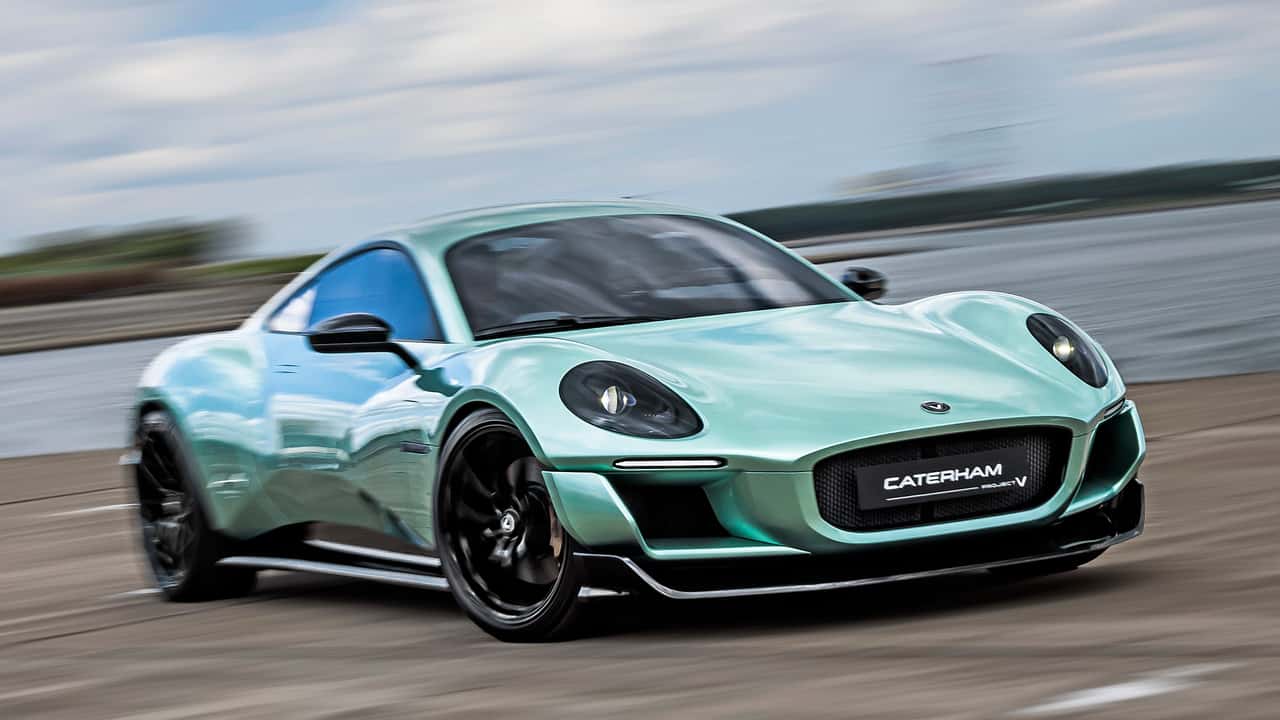
Caterham Project V Concept
Photo by: Caterham
It’s a fair question: Do people just crave bigger numbers? Or is there legitimately a market for lightweight, flingable electric sports cars?
Recent evidence suggests that powerful electric sports cars aren’t exactly a hot commodity. Rimac founder and former CEO Mate Rimac said previously that buyers are no longer interested in electric hypercars. Koenigsegg CEO Christian von Koenigsegg said the appetite for electric hypercars is ‘extremely low.’ Chevrolet has also stated explicitly that it won’t build an electric Corvette right now because the company doesn’t believe there’s a market.
The reality is that we’re not running out of ways to make cars more powerful—companies like Chevrolet and Koenigsegg could easily do so—we’re running out of reasons to. With excess weight, complicated electronics, and usability issues surrounding so many of these high-horsepower vehicles, a focus on lightweighting and simplification would make a lot of sense for the next generation of performance EVs.
Companies like Caterham and Longbow, chasing smaller batteries, lower mass, and balanced dynamics, could offer a reprieve from the bloated supercars and hypercars that have become all too common these days. In a world where adding power is easy, restraint becomes the real engineering challenge.
Waymo Won’t Go Where Americans Need It Most. But Why?
The Rise, Fall, And Meme-ification Of The Nissan Altima
How The Rich Are Ruining Classic Car Ownership For The Rest of Us
AI, Affordability, And America: What Will The Auto Industry Look Like In 2026?