The new Audi RS5 being 5,192 pounds made me realize something: Almost every performance car is absurdly heavy these days. It isn’t just the RS5 or the BMW M5—two cars that got a lot of flak—but every single super sedan since the dawn of the hybrid era has become grotesquely overweight.
It got me thinking: How the hell do they actually weigh that much? Well, I decided to break it down into pieces to help me (and you) understand a bit better.
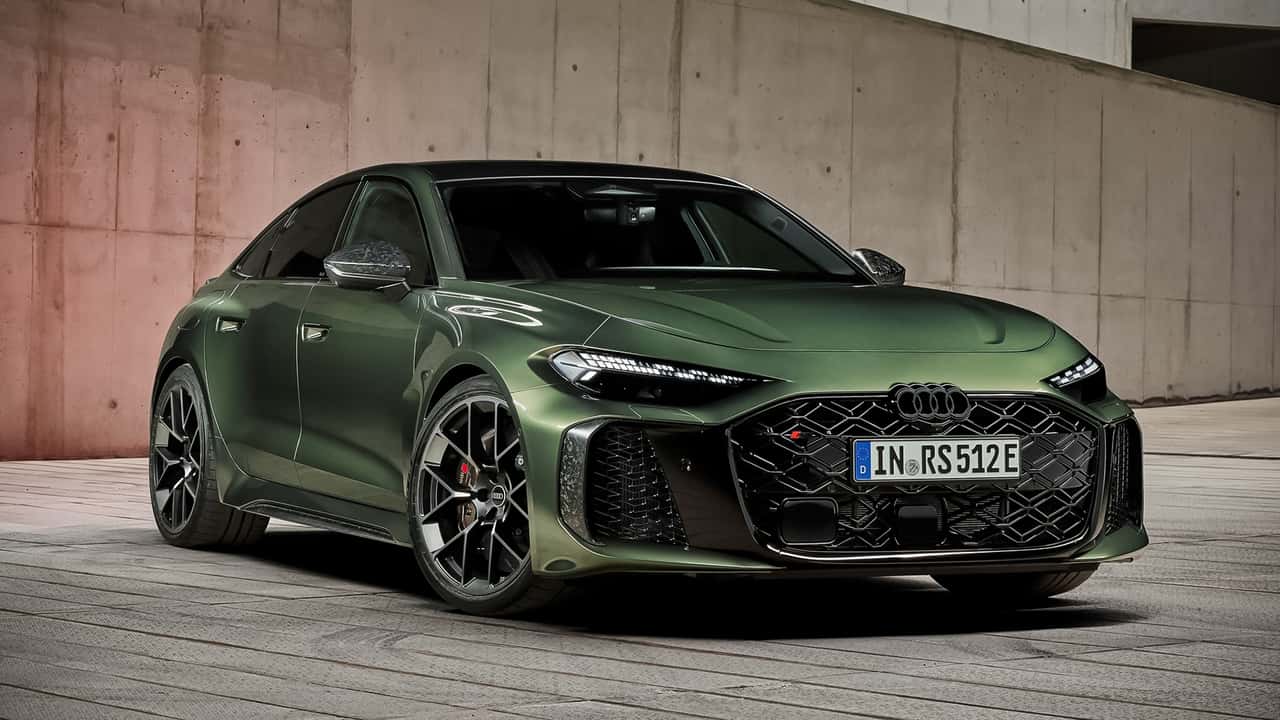
2026 Audi RS5
Photo by: Audi
First, we need to establish a baseline.
Among the German hybrid super sedans and wagons, all of them are over 5,000 pounds. The Mercedes-AMG GT63 S E Performance 4-Door is 5,247 pounds. The Mercedes-AMG E53 wagon, which has an inline-six instead of a V8, is 5,437 pounds. The BMW M5 is a well-publicized 5,368 pounds. Then, we have the new RS5 sedan’s 5,192 pounds.
The new RS5 is a technical enigma like the rest: twin-turbo V6, Quattro all-wheel drive, a plug-in hybrid system, and it makes 630 horsepower. It is a full 1,100 pounds heavier than a base A5, and around 1,400 pounds heavier than the previous RS5.


To understand where all that weight is going, I’m going to try to estimate what each major part and system weighs. Of course, Audi doesn’t publish per-part weight figures, so this is mostly speculative, but I can at least make educated guesses on major subsystems like the engine, transmission, driveline, wheels, brakes, chassis, and interior/electronics.
Body, Interior, & Electrical
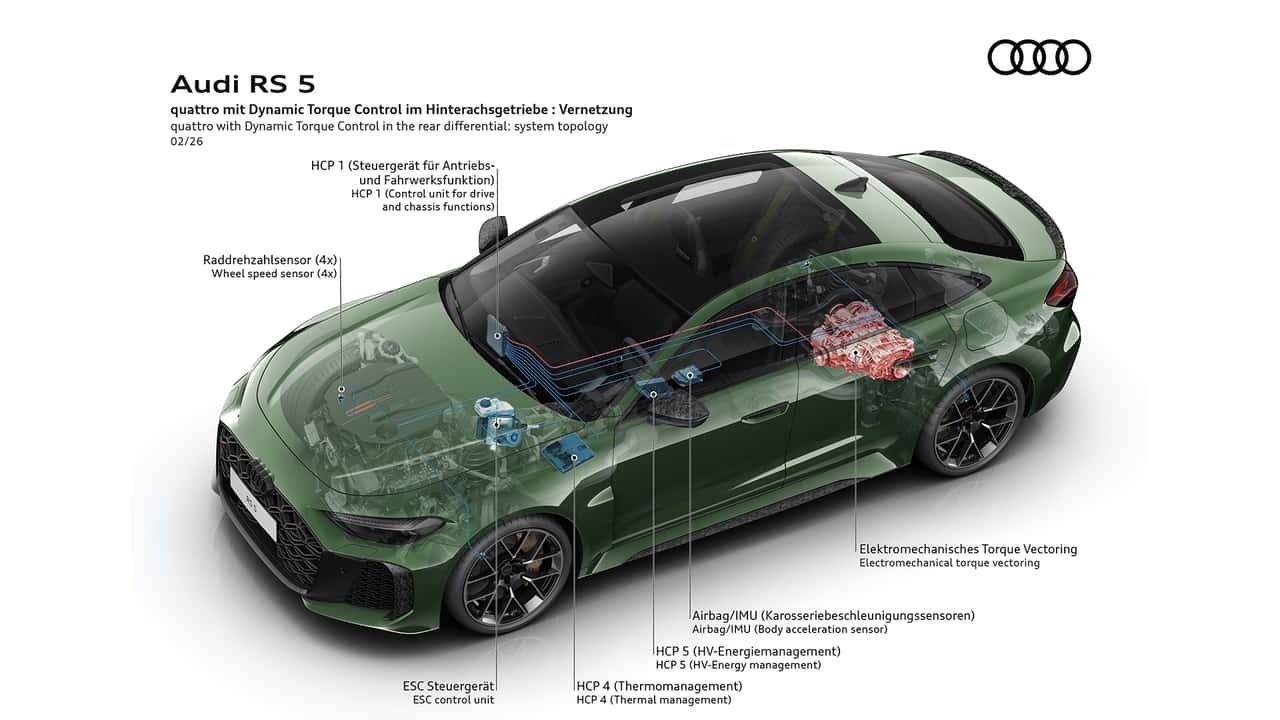
Photo by: Audi
Let’s start with some big ones: body, interior, and electrical.
On average, the body-in-white—meaning the actual metal that makes up the chassis—is around 20 to 30 percent of a car’s overall weight. It’s a significant structure in modern cars due to crash safety and performance demands. Where older cars were a bit… bendy, new cars are incredibly rigid and crash-worthy, and that comes with added weight.
For a steel-bodied car, expect that number to be closer to 30 percent or more. Cars with aluminum chassis or panels are much lighter, and Audi is known to use extensive aluminum. So let’s say that 25 percent of the RS5’s weight is the body—that’s 1,100 pounds. This includes crash structures, and that’s probably a slightly light estimate.
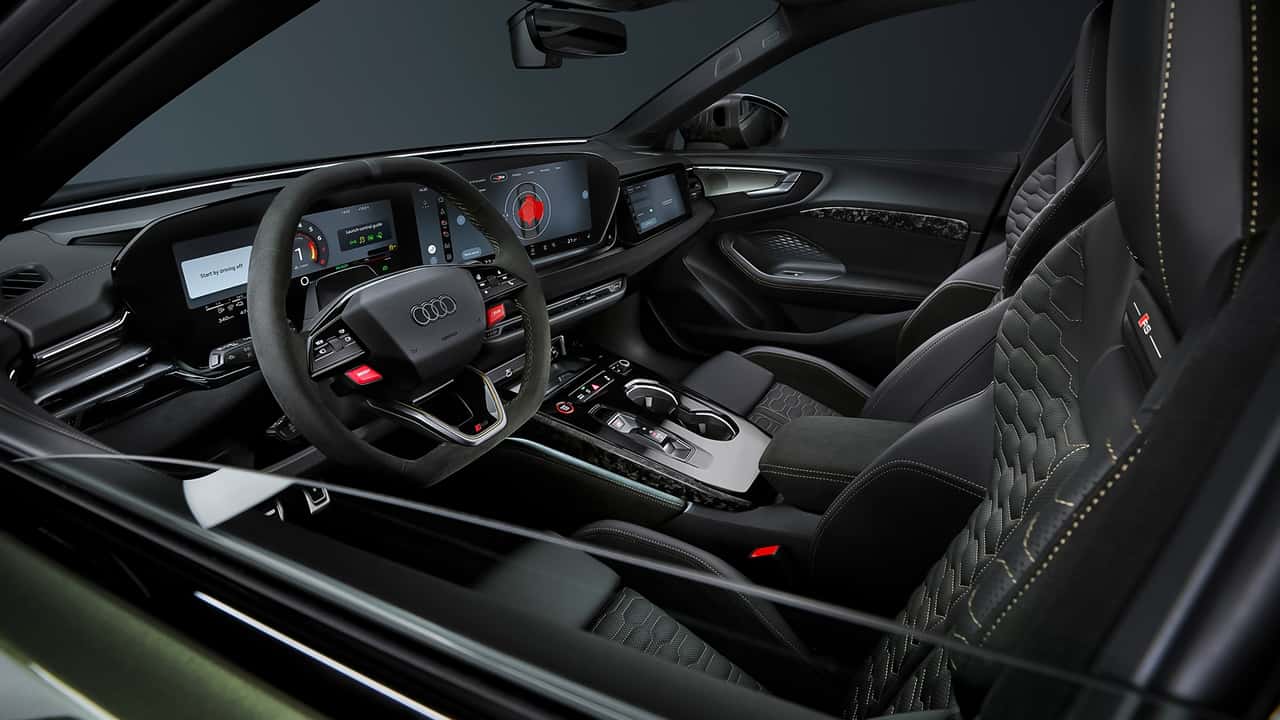
Audi RS5 Interior
Photo by: Audi
Then there’s interior, insulation, electronics—and all the other stuff that gives customers a great experience.
In modern luxury cars, seats are surprisingly heavy. They often have massaging, cooling, heating, and 18-way power adjustability with leather upholstery. A single seat can be around 80 pounds, so that’s 160 pounds just in front seats.
Then the rest of the interior panels, rear seats (which are also heated and sometimes motorized), the infotainment, door panels, glass, and acres of sound insulation contribute a ton of weight as well. Call it around 750 pounds, plus 160 for the seats.
So just in body and interior, we’re up to 2,010 pounds, and we haven’t really gotten to the heavy stuff.
Wheels, Tires, & Brakes
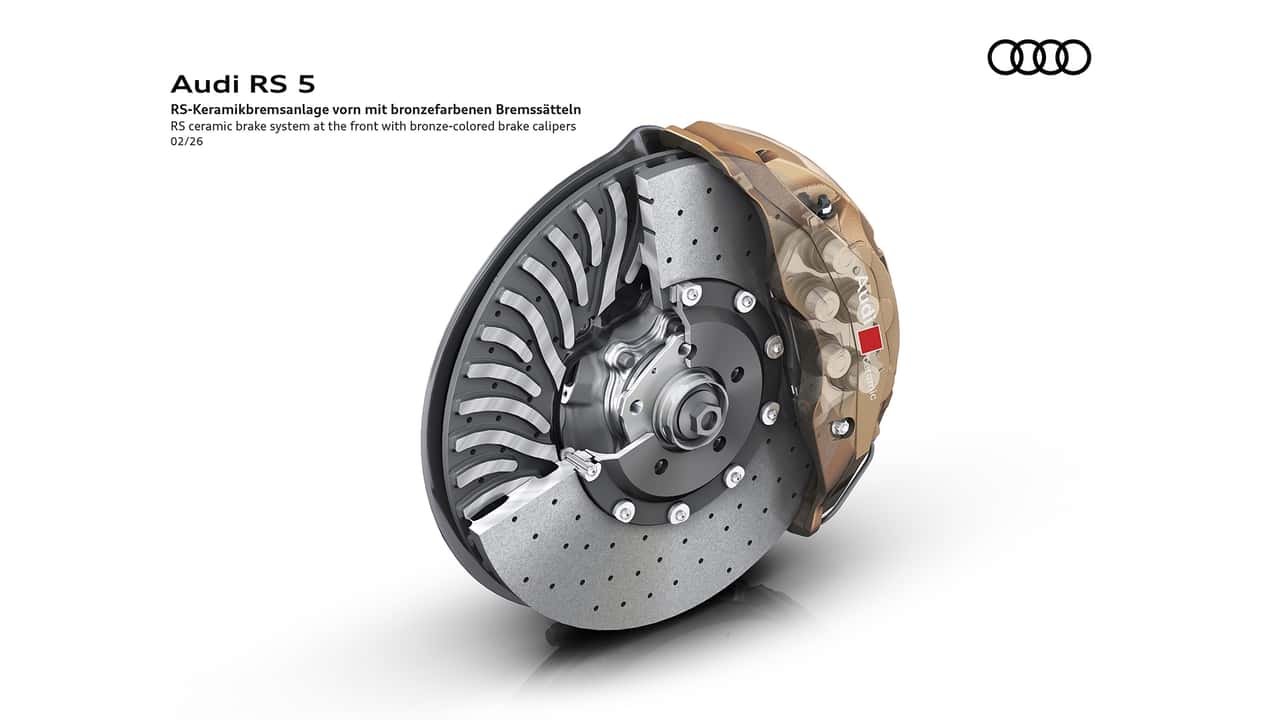
Photo by: Audi
Have you ever considered how much a 20-inch wheel and tire setup weighs? Well, it’s probably around 60 pounds a corner; 30ish for the wheel and 30ish for the tire. That’s 240 pounds total.
Brakes are also heavy, even with carbon ceramics. Each front disc is likely around 20 pounds, with rear discs around 16 pounds. 72 pounds total. Then the front ten-piston forged aluminum brake calipers are gonna be around 15 pounds each, with the rear steel calipers likely around 10 pounds each. 50 pounds.
Wheel, tire, and brake total: 362 pounds or so.
Suspension
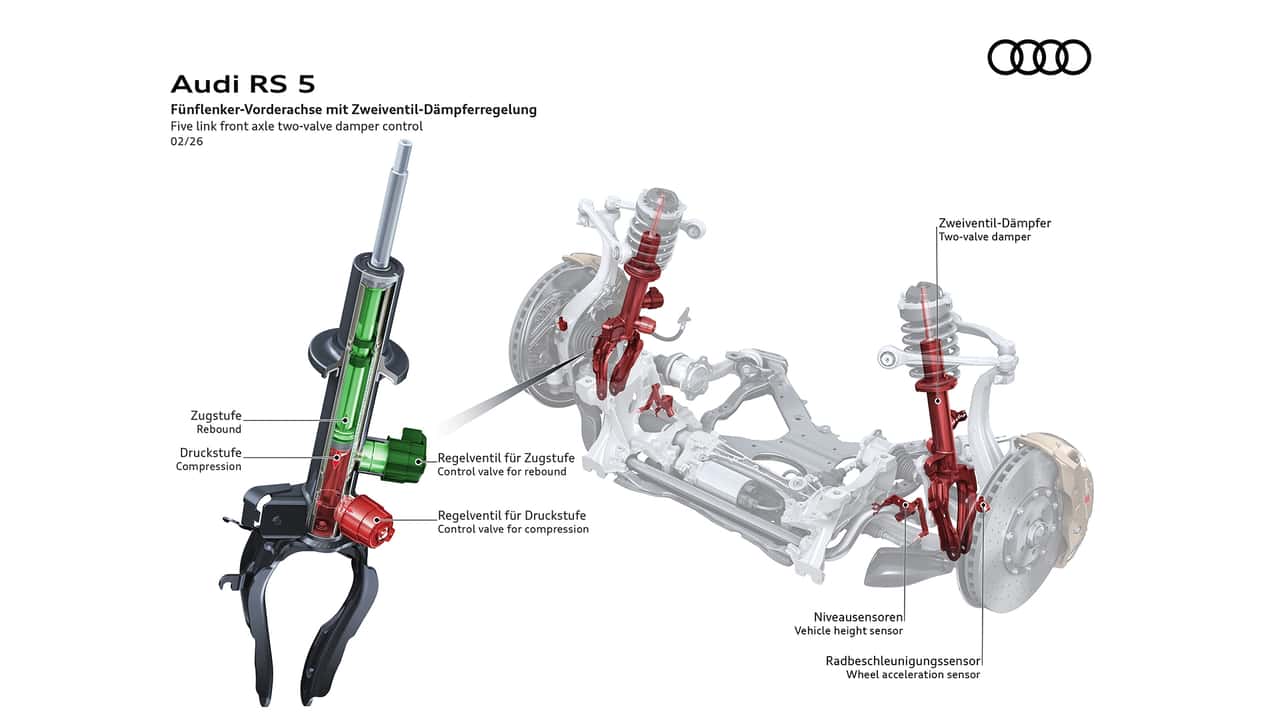
Photo by: Audi
Then we can talk suspension. If the RS5 uses swanky air suspension, each corner of that (damper, spring, and ancillaries) will weigh about 40 pounds, so there’s another 160 pounds. Coil springs will be a shade lighter, with an overall weight reduction due to the lack of an air compressor and tank. The aluminum control arms, front and rear, of which there will be five per corner, should all weigh around 5 to 10 pounds each, considering the weight and load capacity of the RS5. Call it 150 pounds.
Then there’s the extra stuff like rear-wheel steering, active sway bars, and important stuff like the subframes, the steering rack, and wheel bearings. Call it around 700 pounds total for the suspension, and I suspect I’m being kind there. That number can easily inflate due to the RS5’s overall weight, which requires even beefier hardware.
We now have an entire Subaru BRZ plus driver’s worth of weight in the RS5 without the engine, hybrid system, or drivetrain. 2,972 pounds. And now, this is where it gets heavy.
Hybrid System & Drivetrain
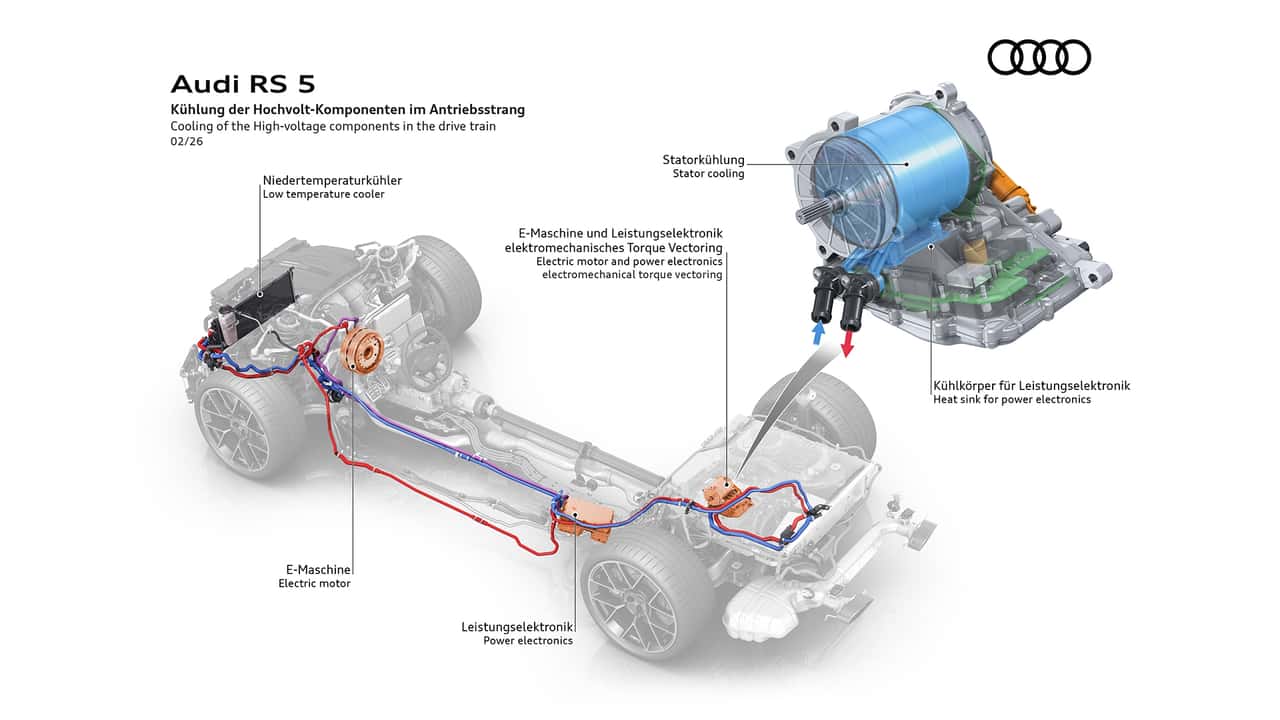
Photo by: Audi
Audi doesn’t say how much the RS5’s hybrid system weighs exactly, but we can estimate it from other similar cars. The BMW M5’s hybrid system is 880 pounds according to BMW M itself, though that’s likely a rounded number. The M5 uses a 22.1-kilowatt-hour battery, while the RS5 uses a 25.9-kilowatt-hour battery, so the battery would be heavier.
The M5 also uses a single electric motor in the transmission, while the RS5 uses two motors: One in the gearbox and another smaller motor in the rear axle. Every kWh of capacity is heavy, around 13 pounds per kWh. The RS5’s battery should weigh about 340 pounds.
Then the electric motors, which should contribute 130 horsepower, plus all ancillaries like the inverters and cooling systems, should contribute about 200 pounds to the operation—but there’s the complication of the gearbox integration for both.
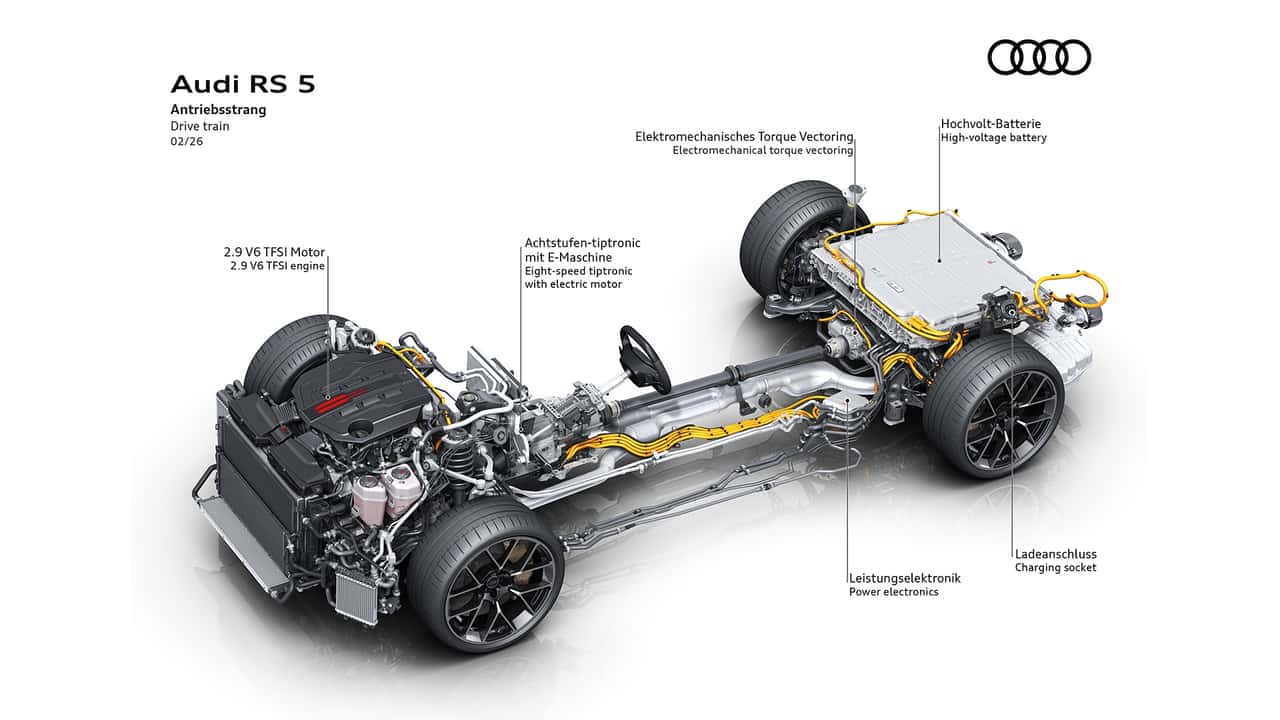
Photo by: Audi
Normally, electric motors get their own gearbox, which would result in a higher overall weight—around 250 to 300 pounds. If we count the eight-speed transmission in this situation, the motor and ancillaries, plus the transmission, should weigh about 350 pounds.
Since the Audi is all-wheel drive, there’s also a transfer case, driveshaft, and rear differential to consider. Rear diffs are often around 100 pounds, plus Audi’s torque vectoring hardware, which includes two clutch packs and a worm gear. A transfer case to send power to the front is also necessary, and that should be about 70 pounds.
Then the front and rear Quattro driveshafts are going to easily be another 60 pounds combined, plus another 80 for the half-shafts going to all four wheels. 310 pounds in drivetrain components.
Engine & The Rest
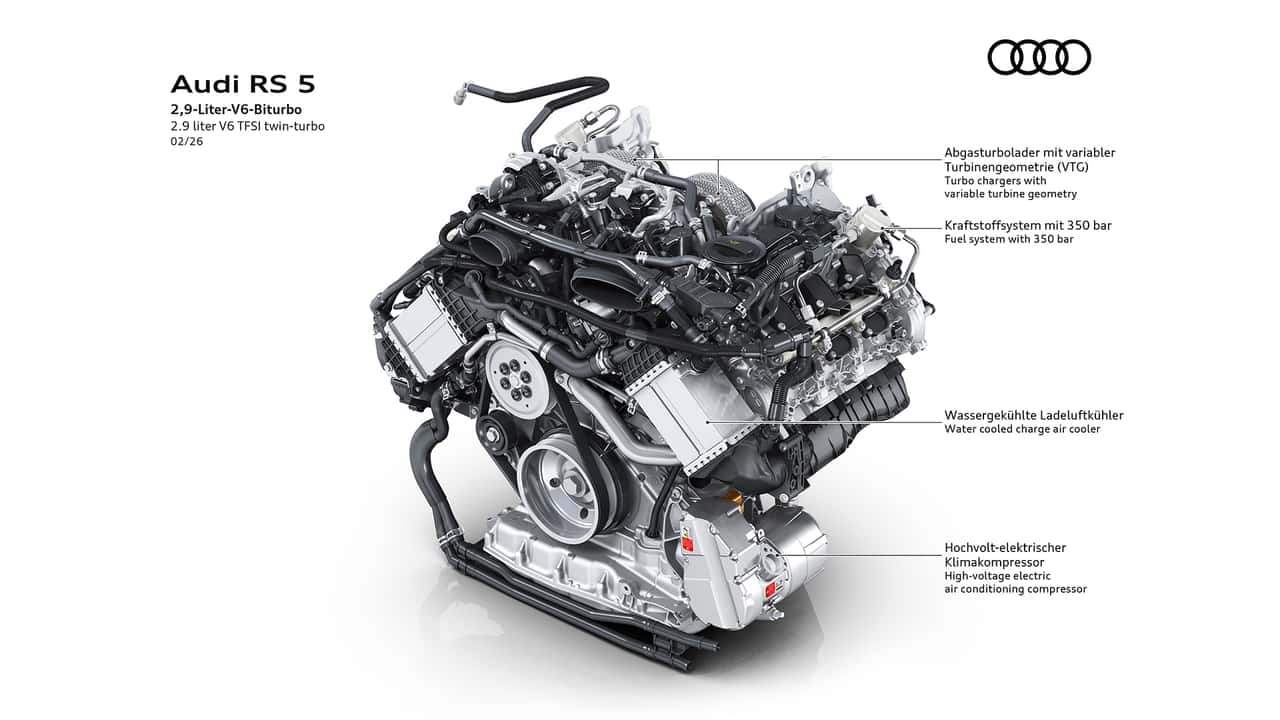
Photo by: Audi
Now, we’re up to 3,592 pounds, which leaves just enough room for the rest of the car. The twin-turbo V6 engine, fully dressed with air conditioning, 48-volt starter-generator, cooling, intake and exhaust manifolds, turbochargers, fuel system—basically everything it needs to run—should be about 1,000 pounds.
Then there’s stuff we never think about, like the weight of the various hoses, lines, wiring harnesses, headlights, tail lights, bumper skins, bracketry, bolts, and fluids, which can easily make up the last 390 pounds for our total weight of 5,192 pounds.
It’s an interesting lesson in the run-on effects of heavy cars, because the suspension, brakes, wheels, and tires all contribute 1,000 pounds, which is a consequence of needing the durability to withstand 5,192.
The Raw Numbers
Of course, this was a slightly unscientific experiment, considering I don’t know the specifics of each system’s weight in the RS5, but these guesses are highly educated. I could even see the body being heavier, and the balance of these weights depends heavily on Audi’s engineering methods. Just to recap:
Body — 1,100 Pounds (est.)
Hybrid + Powertrain — 1,070 Pounds (est.)
Engine — 1,000 Pounds (est.)
Interior — 750 Pounds (est.)
Suspension + Steering — 700 Pounds (est.)
Cooling, Lines, + Supporting Ancillaries — 460 Pounds (est.)
Wheels, Tires, + Brakes — 362 Pounds (est.)
Total — 5,192 Pounds
It all adds up, folks. It’s still shocking to consider the bloat of modern cars, but at least I’ve answered my own question. Now, if we can make this whole shebang lighter, I’d be much happier.
Why Jeep’s New Hurricane Four Turbo Engine Is Actually Insane
The Clever Engineering That Makes The Toyota GR GT So Special