If you showed a time traveler from the 1700s an electric car and a gas car, then asked them to guess which one was heavier, they’d probably point at the gas one. A motorized vehicle that uses petroleum, explosions, and a million moving metal parts versus one that runs on the same stuff that powers tiny computers in everybody’s pocket? Of course, the combust-y one is heavier, right? Wrong.
As most people, even those mildly into cars, probably already know, EVs are significantly heavier than their gas equivalents. The reason why is simple: batteries, batteries, and more batteries.
But how much heavier are EVs really? What makes batteries so hefty? And how does it affect driving dynamics, maintenance, and road safety? Motor101 is here to explain.
1,000-Pound Penalty
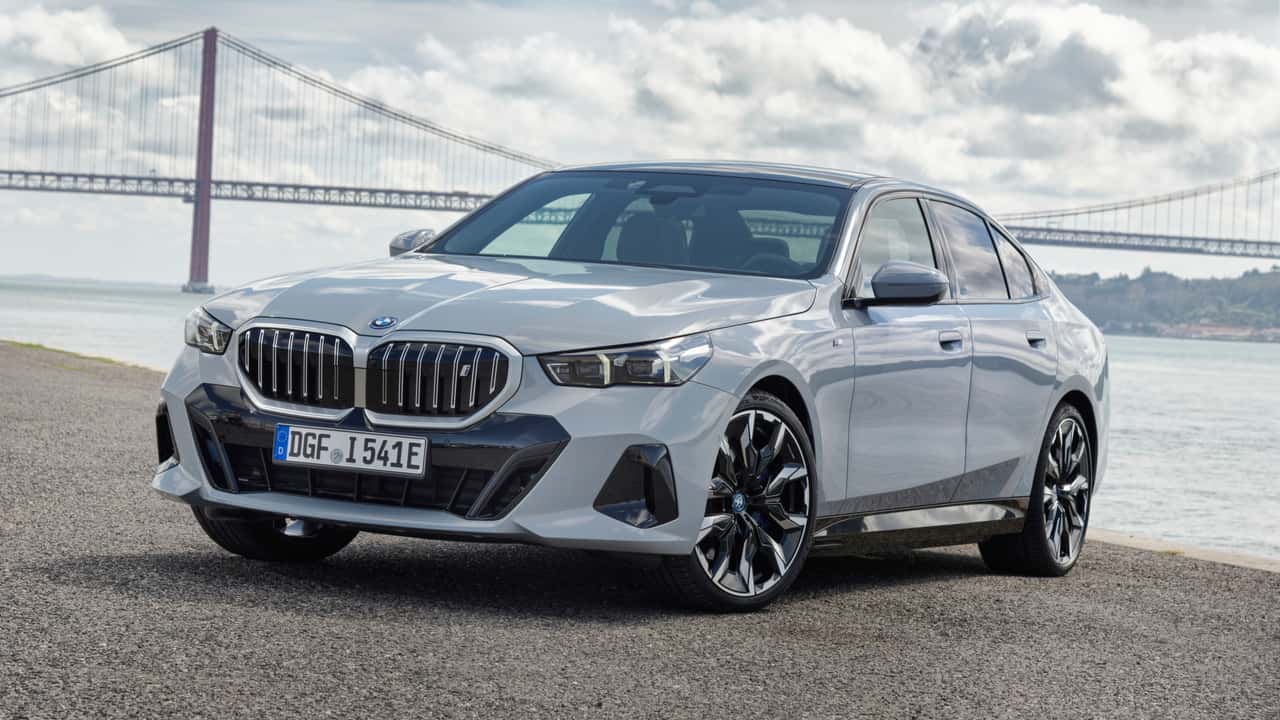
BMW i5
As anyone who’s lugged a regular car battery through an AutoZone parking lot or held a simple Duracell D in their hand will know, batteries are much heavier than they look. Typically arranged in a big, flat “skateboard” platform making up the bottom of the car, the lithium-ion packs that power EVs are no different, and the commonly quoted weight penalty of an EV over a comparable gas vehicle is about 1,000 pounds.
As a real-world example, the current, four-cylinder BMW 530i sedan weighs 4,041 pounds, whereas its electric twin, the i5 eDrive40, weighs 4,916 pounds—an 875-pound difference. The delta increases to 1,089 pounds when comparing the all-wheel-drive equivalents.
On the bulkiest end of the market, this has resulted in electric trucks and SUVs that have made headlines on weight alone. The most infamous offender, the GMC Hummer EV, weighs more than 9,000 pounds, while even more reasonable examples like the Rivian R1T pickup weigh 7,000 pounds. For comparison, most trims of the gas-powered Chevrolet Suburban come in at less than 6,000 pounds.


‘They’re Lithium!’
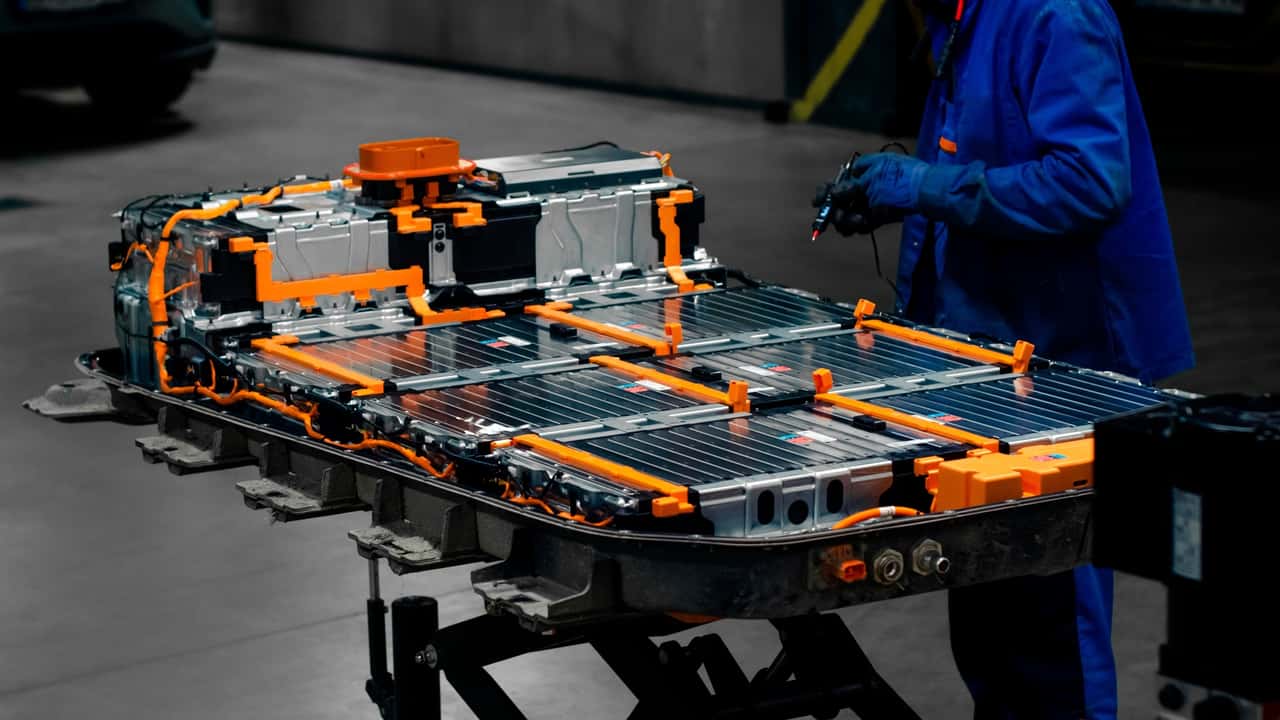
Photo by: Warrantywise
An in-depth, chemical dissection of the lithium-ion battery could probably take up an entire college course. But on a high level, batteries are heavy because of three things: a lot of the active materials inside the cathode, like nickel, cobalt, and iron, are inherently heavy; more of those materials generally means more energy capacity; and storing as much energy in as compact a form as possible is the entire game.
In the case of electric cars, the desire for more range feeds into a bit of a vicious cycle. To address range anxiety, automakers pack in more battery. The more battery there is, however, the more mass there is for the batteries to move around.
What’s more, it’s not as if automakers can simply throw a bunch of cells in the floor and call it a day. To make sure EVs are safe and don’t drive like complete boats, the structures and systems surrounding them all have to be adapted to meet both safety regulations and driver expectations, often adding even more weight. The battery needs a casing that will survive and contain the cell-level substances in the event of a crash. Suspension parts, meanwhile, have to be heavier-duty to deal with the increased loads.
And even then, the laws of physics can only be bent so much—two common EV criticisms are indeed the notably heavier driving feel and battery fire concerns, crash-related or otherwise. On that last point, EV evangelists will point out that yes, gas cars catch fire too, but EV battery fires are notoriously more difficult to extinguish.
Why Does Weight Matter?

2026 GMC Hummer EV
Photo by: GMC
Because cars don’t exist in a vacuum, there are other considerations—even if you accept the tradeoffs—when it comes to EV driving feel and fire mitigation. Everything else being equal, a heavier vehicle simply poses more of a threat to pedestrians and other road users.
A 2011 National Bureau of Economic Research study concluded that “baseline fatality probability” jumps by 47 percent for every 1,000 extra pounds the car you get hit by weighs. That means heavier EVs, on average, could be more deadly.
Everything else being equal, a heavier vehicle simply poses more of a threat to pedestrians and other road users.
In 2023, a Lower Manhattan parking garage built in 1925 collapsed, triggering discussion among city officials as to whether older parking structures can safely accommodate modern EVs and SUVs en masse.
There’s also the fact that EVs chew through tires quicker than gas cars, something that caught many owners off guard, according to a 2024 J.D. Power study. Higher curb weights are, of course, the main culprit here, but it’s exacerbated by the more aggressive torque delivery typical of electric cars.
Will EVs Get Lighter?

Donut Lab Ring Motor
Photo by: Donut Lab
In the grand scheme of things, electric cars are still in the relatively early stages. EV technology is poised to improve, with the next big breakthrough likely being solid-state batteries. In addition to being quicker to charge and more resistant to extreme temperatures, they’re said to deliver more capacity and driving range in smaller and lighter packages.
Finnish brand Donut Labs, for example, recently unveiled a solid-state battery apparently good for an energy density of 400 Wh per kilogram, which translates to a 100.0-kilowatt-hour unit weighing about 550 pounds—way lighter than what one would weigh using current lithium-ion tech.
EV technology is poised to improve, with the next big breakthrough likely being solid-state batteries.
For now, though, EVs remain significantly heavier on average than traditional gas cars, mostly due to the battery and everything that surrounds and supports it. That weight can still often be felt behind the wheel, despite automakers’ best efforts, and the downstream effects on tires, infrastructure, and public safety are all conversations worth having.
If or when solid-state batteries become mainstream, however, hopefully those conversations will become things of the past.
FAQs
EVs are typically heavier mainly because of their battery packs. Lithium-ion batteries (used in most EVs) are dense and can weigh 1,000–2,000+ pounds on their own. For example, the Tesla Model S has a large battery pack that significantly contributes to its overall weight.
On average, EVs can be 10–30% heavier than comparable internal combustion engine (ICE) vehicles. For instance, a compact EV may weigh similar to a midsize gas car.
Yes—but not always negatively. Pros: Better traction, lower center of gravity (battery is usually under the floor), improved stability. Cons: Longer braking distances, increased tire wear, and slightly reduced agility in tight handling.
It can. Heavier vehicles require more energy to move, which can reduce efficiency. However, EVs are designed with regenerative braking and efficient motors to offset this.
In many cases, yes. Heavier vehicles can offer better crash protection for occupants.
The low center of gravity reduces rollover risk. However, increased weight may pose greater risk to lighter vehicles or pedestrians in collisions.
Every Toyota Supra Generation, Explained
What Even Is Drivetrain Loss?
Do You Need Carbon Ceramic Brakes?
Why 0-60 MPH Is The Standard For Measuring Car Acceleration