- The Rivian R2 brings the automaker’s unique charm and cutting-edge software at a lower price than the R1 models.
- It launches with the high-end Performance trim, which costs nearly $60,000, but there’s a cheaper variant coming next year.
- For $45,000, the R2 Standard has tough competition and falls short in one key area.
Rivian has released pricing and specifications for the R2, and we now know a lot more about the long-awaited $45,000 base model, which will appeal to a far broader audience than the nearly $60,000 Performance trim that’s launching first.
But there’s a catch. Compared to rivals like the Tesla Model Y, Hyundai Ioniq 5, and Chevy Blazer EV, the entry-level R2 falls short in one critical area: driving range.
That entry-level variant is called the R2 Standard. It’s rear-wheel drive, with a single motor producing 350 horsepower and 355 pound-feet of torque, enough to hit 60 miles per hour in 5.9 seconds. That’s nowhere near as bananas as the 656-horsepower dual-motor Performance trim arriving at launch, but it should be more than sufficient for most buyers.
EMBARGO 3/12 11 am ET DNP
Photo by: Patrick George
Rivian hasn’t confirmed the R2 Standard’s battery size, but it’s estimating “275+” miles of range. For the same $45,000 price, the Tesla Model Y Premium Rear-Wheel Drive comes with 357 miles of EPA range.
The Hyundai Ioniq 5’s top Limited trim gets 318 miles of EPA range—also for the same price as the base R2. Toyota’s new EVs also undercut the R2 Standard and can drive further on a single charge. And a growing list of sub-$40,000 EVs from Nissan, Kia, and Chevrolet all trump the R2 in the range department, too.
To be sure, Rivian is positioning the R2 as a more premium product than a Hyundai or a Toyota, so the higher price makes sense. It could have a better interior or other charming features that set it apart from the Model Y. (It’s definitely a lot fresher feeling than the Tesla, which has been on the market for quite a while without a full overhaul.) And there’s an RWD Long Range version of the Standard trim rated at 345 miles. That costs about $3,500 more, coming in at $48,490 before destination.
It’s also worth keeping the R2’s design in context. Unlike the teardrop-shaped aerodynamic shapes of most of its competitors, the R2 rocks a classic two-box SUV design. That comes with an inherent aerodynamic penalty, which explains some of the range gap.
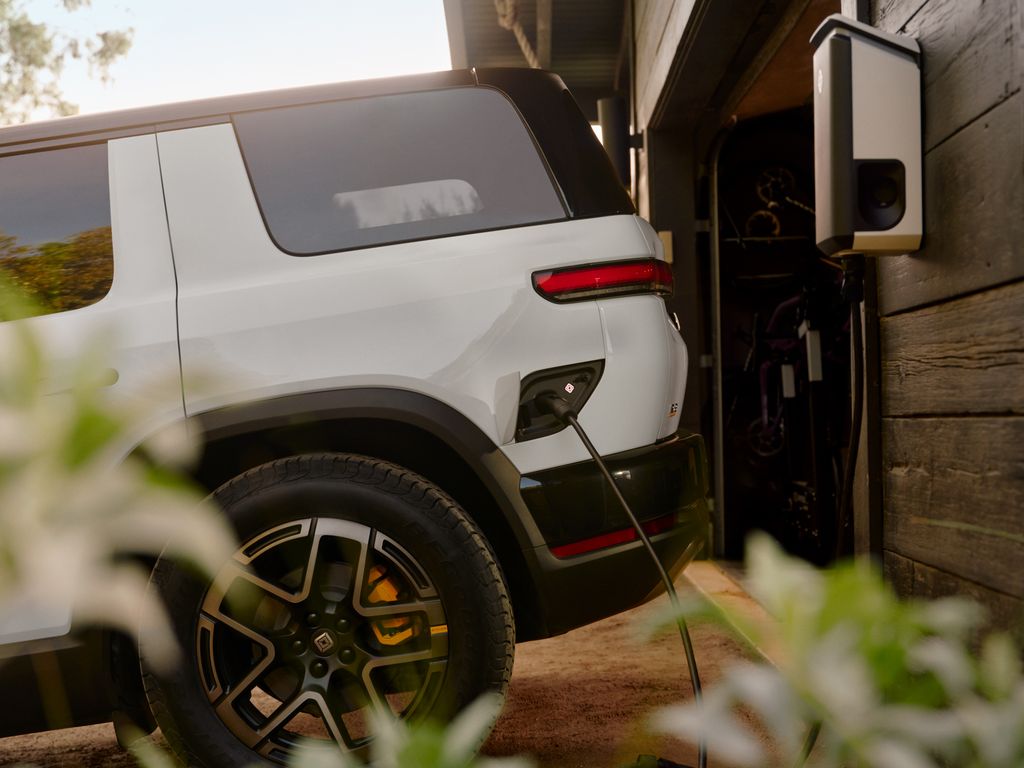
Rivian R2
Photo by: Rivian
Whether that trade-off is worth it depends entirely on the buyer. For plenty of people, it will be. With Rivian’s excellent built-in route planner, combined with America’s rapidly expanding charging network, road trips on the R2 Standard with 275 miles of range should be more manageable than the number suggests on paper.
That said, here’s what the R2 Standard includes from the factory:
- Silver exterior
- Black interior
- Heated front seats and a heated steering wheel
- 12-way power driver seat with lumbar adjustment, 8-way power passenger seat
- Standard audio (5 speakers, 2 midwoofers, 525W)
- Drive modes: All-Purpose, Conserve, Snow, and Sport
- 19-inch machined graphite all-season wheels
If you want more punch, you can opt for the Standard with dual motors and all-wheel drive. That will bump its output to 450 hp and 537 lb-ft, a meaningful upgrade for those who want sharper performance without stepping all the way up to the Performance trim.
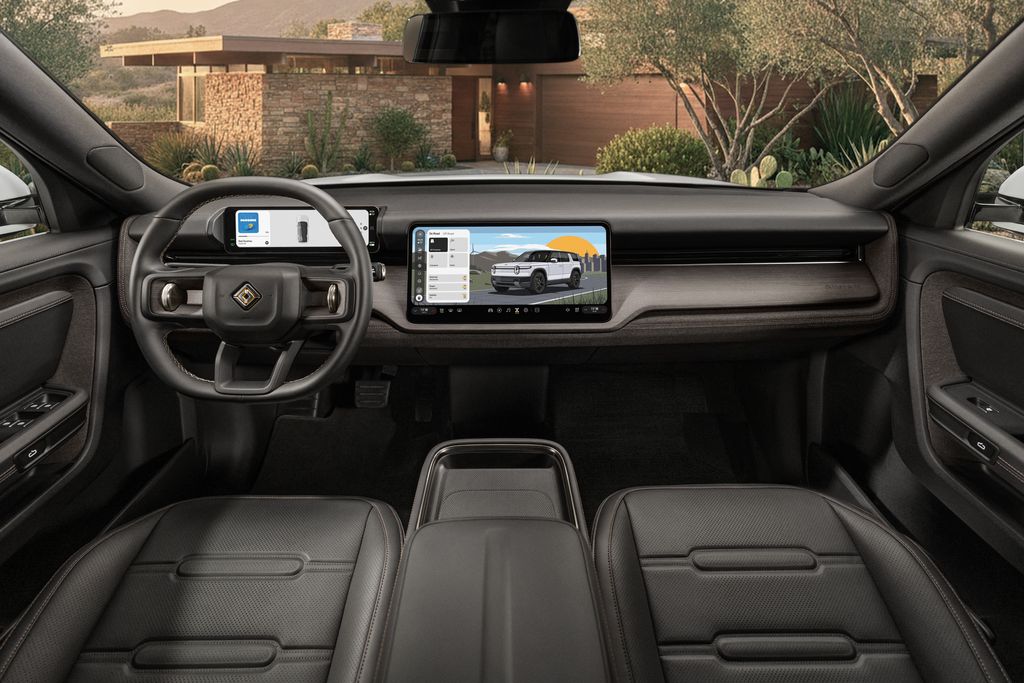
2026 Rivian R2
Photo by: Rivian
Rivian’s Autonomy+ advanced driver assistance system (ADAS) is also available as an add-on, either at $50 per month or a one-time $2,500 fee. That unlocks hands-free driving on most major highways in the U.S. and Canada. And the system will continue to improve via over-the-air updates as Rivian pushes toward higher levels of autonomy. Other options include fancier colors, nicer wheels, and a Tow Package that adds 4,400 pounds of towing capacity.
To hit that $45,000 price point, Rivian made some cuts. The R2 Standard skips several features that come standard on the Premium and Performance trims. There’s no semi-active suspension (which adjusts damping stiffness based on drive mode), drop-down rear glass, Matrix headlamps, and a flashlight in the driver’s door. The audio system is also a step down from the pricier trims.
Some of those omissions sting more when you stack them against the competition. The similarly priced Model Y includes Matrix headlamps as standard. The Ioniq 5 pulls off a 10-80% charge in just 20 minutes on a 350-kilowatt charger, courtesy of its 800-volt architecture. And it comes with Bose audio and wireless Apple CarPlay and Android Auto, all at the same price. The R2 is based off of a 400-volt architecture, which helped Rivian cut costs.
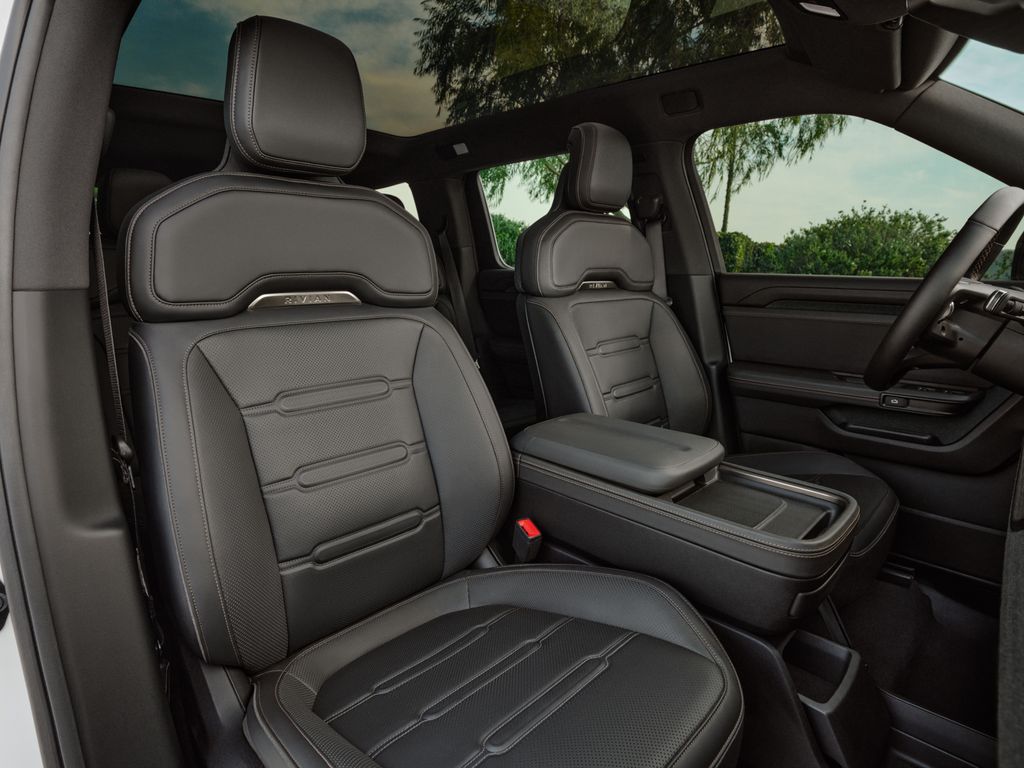
2026 Rivian R2
Photo by: Rivian
But the spec sheet doesn’t tell the whole story. Rivals like the Model Y and Ioniq 5 have been around a lot longer and gone through multiple iterations. The R2 looks to be more charming than virtually anything in its class, and Rivian’s software chops remain a genuine differentiator. And unlike most of its rivals, except the Model Y, the R2 is a truly software-defined vehicle.
It gets a zonal architecture with the ability to meaningfully improve the car over time through OTA updates. Rivian has also confirmed the R2 will gain a lidar sensor by the end of this year, pointing toward higher levels of autonomy down the road.
The timing, though, is the harder sell. The R2 Standard isn’t expected to reach customers until late 2027, with the Long Range version landing a few months earlier in early 2027. If you want an R2 sooner, the $57,990 Performance trim arrives this spring, and the $53,990 Premium is slated for later this year.
Contact the author: [email protected]