The year of the Fire Horse – which started 17th February 2026 – is signified in Chinese culture as one that is fast-moving and high energy. It certainly reflects the intensity of many Chinese car brands’ UK sales pursuits in 2026.
But with so many of them barely known beyond their own shores – or indeed recently created from scratch – this feature will attempt to sieve the wheat from the chaff by asking key questions of already established players (BYD, MG); those that made a big impact in 2025 (Jaecoo, Omoda, Chery and Leapmotor) and finally, those aiming to get serious in 2026 (Aion, Changan, Geely and more).
After collectively securing nearly 10% of the market in 2025, including the likes of MG – which although firmly British in origin has massive influence from and manufacture in China – the indicators from our questionnaire suggest that passenger car sales from Chinese brands in 2026 could easily surpass their nearly 197,000 figure in 2025 (9.7% of the 2,020,520 total). Indeed, a rough – and in many instances conservative – tally of the various sales targets reported to Motor Trader suggests a Chinese brand sales contribution closer to 245,000 in 2026. Which in the overall market – predicted by Autotrader to increase slightly to 2,035,000 – would equal a circa 12% market share for Chinese brands.
While the more mature Chinese brands within the 2025 UK market like BYD (51,422 units) and MG (85,155) acted a little coy when asked directly by Motor Trader about their 2026 sales aspirations their joint upward direction of travel was clear. “While we don’t disclose specific targets, we aim to sell more than that in 2026,” says a BYD UK spokesperson, citing the roll-out of its premium brand Denza in the UK in addition to significant BYD product upgrades. MG responded along similar lines saying, “we have no public declared sales aspiration for 2026, but safe to say we expect to increase that [2025 figure] with the significant amount of new product we launched in 2025 and in the first two months of 2026.”
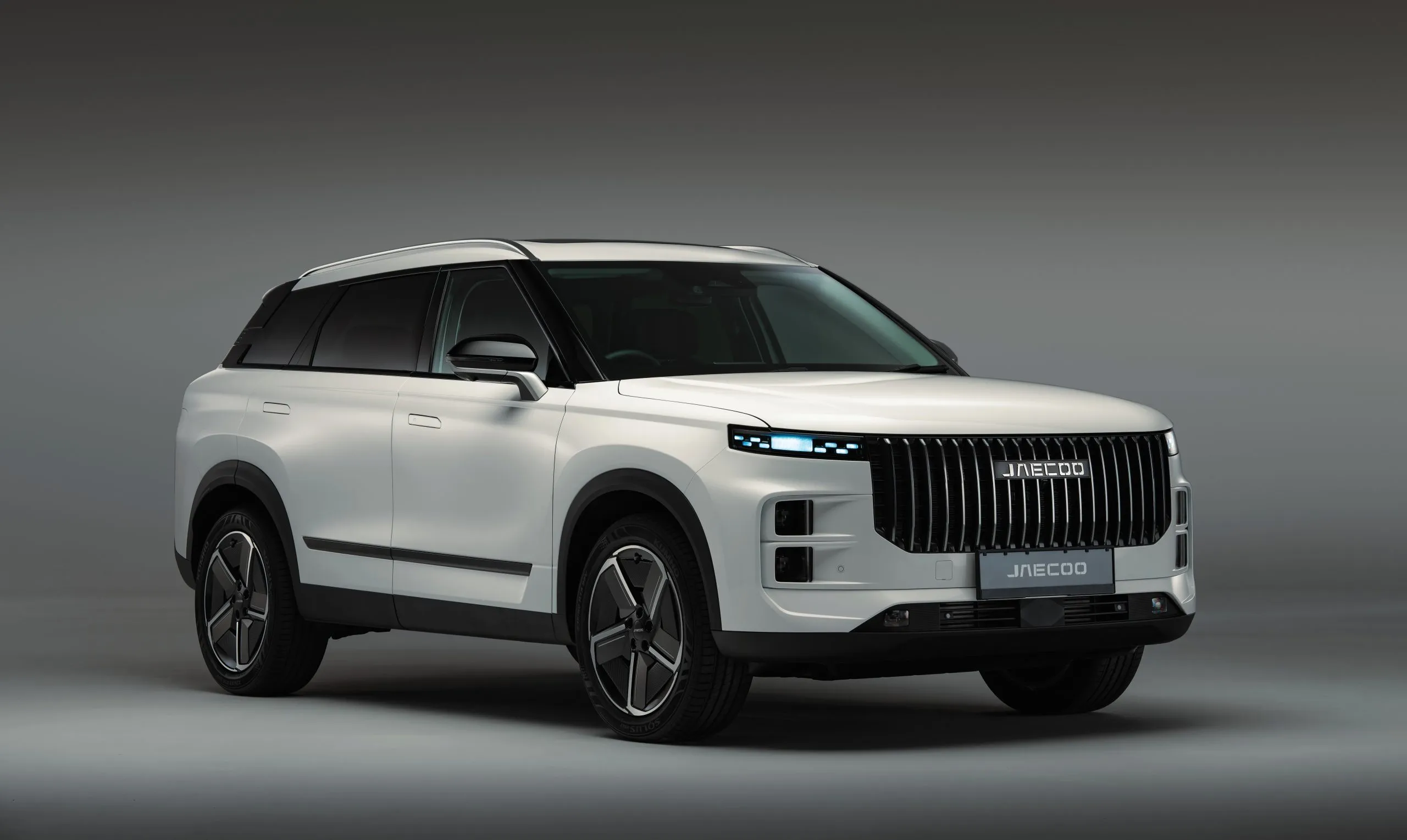
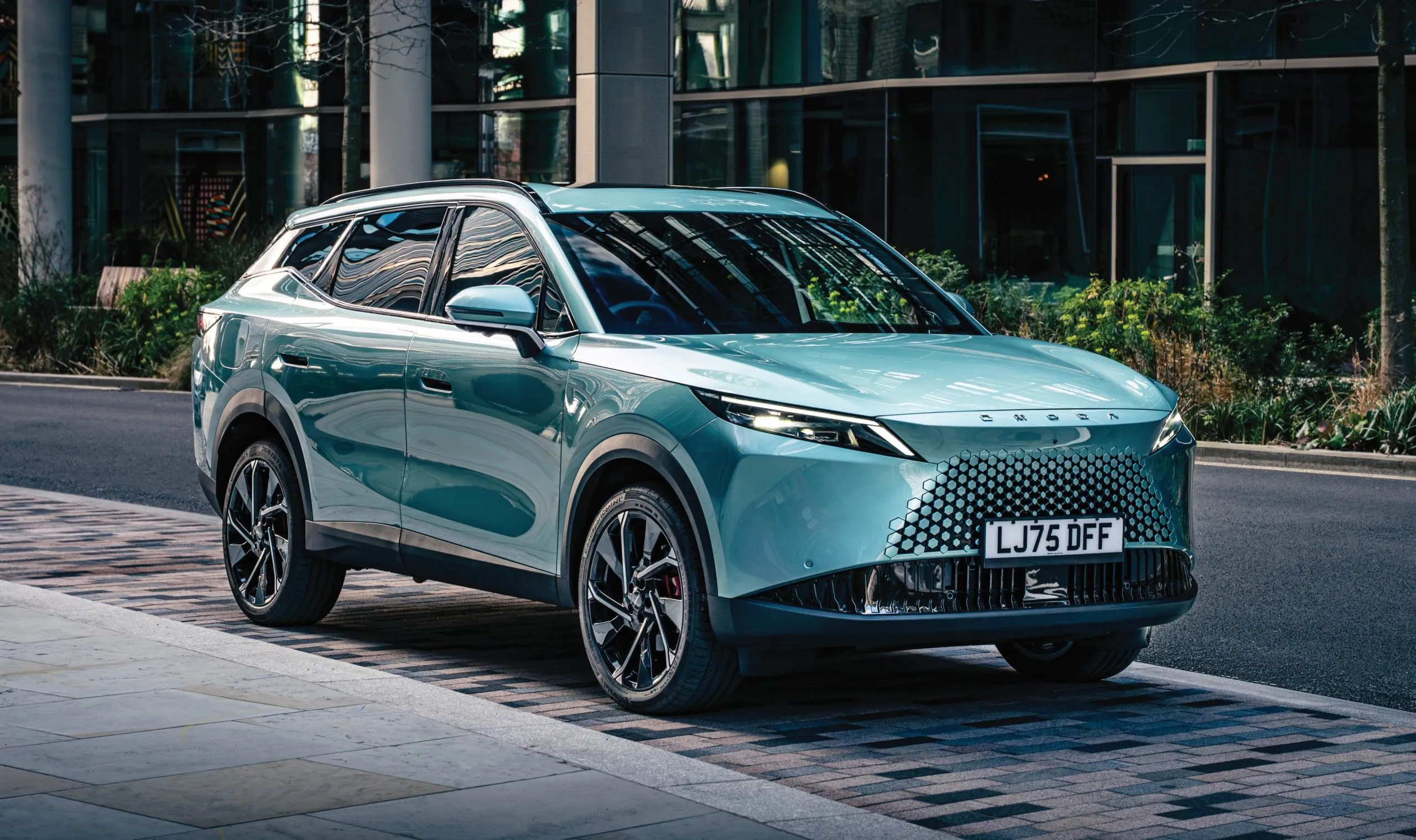
This caution is understandable for already higher-selling brands where increases are more likely to be incremental than major, but more recent entrants who made big strides from almost nowhere last year are suggesting similarly sized repeat successes in 2026. Good examples are the Chery International brands Jaecoo, Omoda and Chery, which respectively sold 28,232, 19,855 and 5517 units in short order in 2025. Indeed, the Jaecoo 7 is now one of the most recognisable and commonplace new Chinese cars on UK roads – albeit with strong Range Rover exterior design overtones – selling 26,048 of its individual brand’s total (and 70% of that model’s tally powered by a plug-in hybrid powertrain). “2025 was a foundational year focused on establishing brand awareness and retail infrastructure in the UK,” said a spokesperson. “We anticipate continued sales growth in 2026, supported by network expansion and an extended product range.” Jaecoo and Omoda act as one ‘brand house’ and have 122 retailers, with Chery on 58 outlets at the end of 2025 and the wider group’s product portfolio set to expand further this year with the launch of the slightly more upmarket Lepas brand in the autumn.
 For some of those brands starting nearly from scratch, sales ambitions are even higher. Geely Auto is well-known to most UK dealers for sharing the same name as its parent company Geely Holding Group – which already has many premium Western brands in its stable including Volvo, Polestar and Lotus – but now it wishes to put a stamp on the mainstream part of the UK market with its own name. “We sold just under 500 cars in 2025 with one model [the EX5 BEV] and had [only] been selling for two months, one of which was December,” explains a Geely Auto UK spokesperson. “Our sales aspiration for 2026 is 20,000 units – we have just launched a PHEV, the Starray EM-i and will launch an electric city car later this summer.”
That’s a massive jump which Geely Auto intends to help enable by doubling its 2025 dealer network from 51 to more than 100 this year. Stellantis’s Chinese partner brand Leapmotor is almost as bullish, with 71 dealers in place at the end of last year and 100-plus planned by the end of 2026. “2025 was our first year, we started taking orders in late March 2025 and registered 4,273 vehicles,” says UK md Damien Dally. “2026 will see us launch the B10 (B-SUV), B05 (C-Hatch) and later, B03X (B-SUV) so we expect to grow very significantly this year.”
Changan aims for a bigger 2026
Even those Chinese brands whose UK sales either shrank in 2025 (Great Wall Motors) or didn’t really get started (Aion, Changan and Skywell) are planning for bigger totals in 2026. Changan falls into the latter category but has a longer local history than many recent UK entrants, making its first jeep in 1959, routinely selling well over a million vehicles a year worldwide and with a long-established Birmingham, UK R&D facility. “As 2025 marked our UK market entry, sales volumes reflected a launch-phase aligned with dealer network expansion and putting important foundations in place to support brand awareness and customer fulfilment,” says Nic Thomas, md of Changan UK.
“For 2026, Changan’s objective is to significantly increase volumes as network coverage expands, targeting round 60 by the end of Q1 and in total 80 sites in operation or under contract to ensure nationwide coverage.”
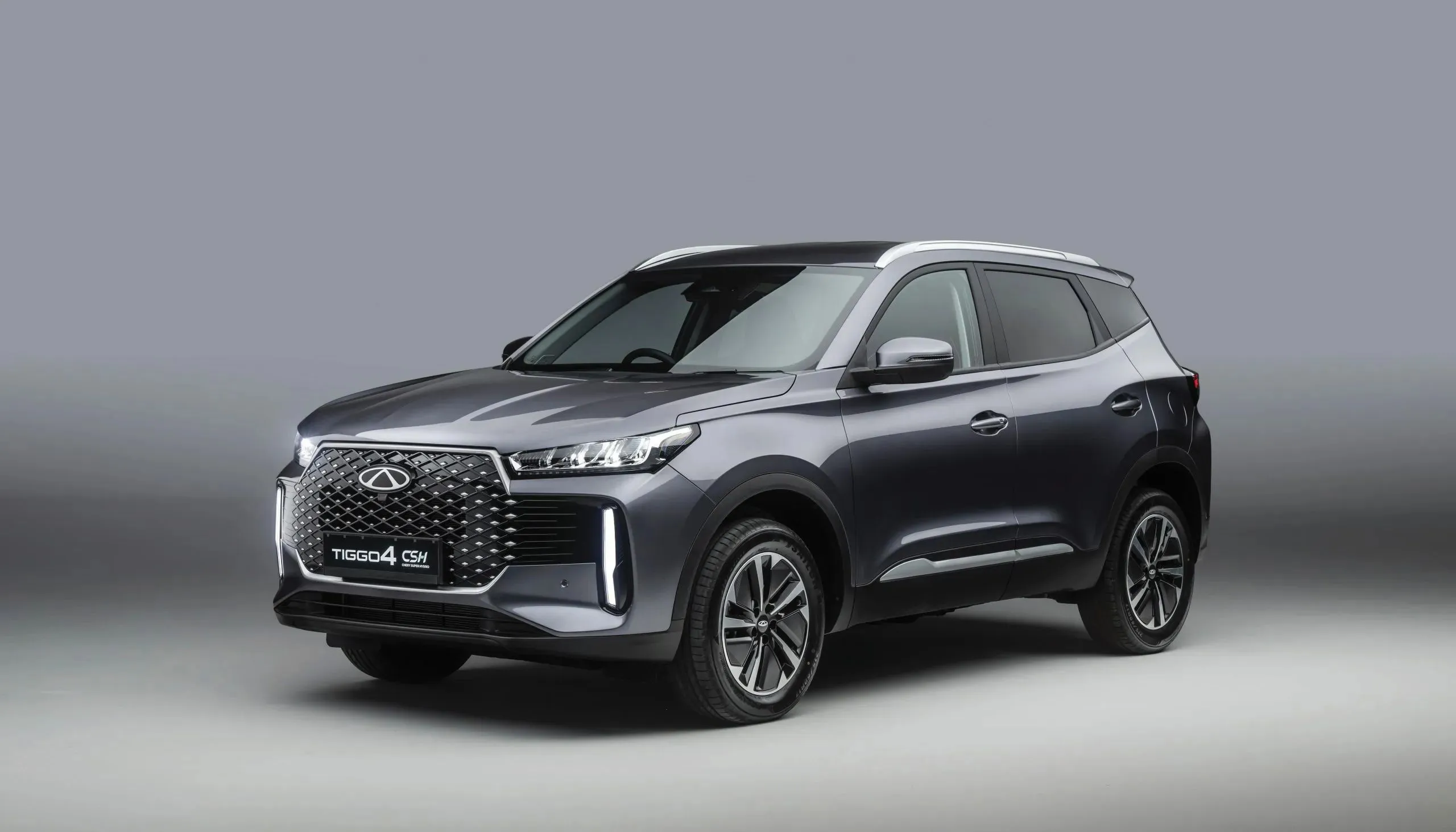
For Great Wall Motors (GWM), 2025 was a period of regrouping from an early but ultimately less than successful start in the UK in 2022. It now has three brands – Ora (EV small cars), Haval (HEV SUVs) and Poer300 (diesel pick-ups) – which collectively registered 629 units last year across 26 dealer sites.
 A mainstream Chinese brand with no backstory in the UK but due to launch here in Q2 of 2026 is Aion, backed by GAC, one of the biggest and longest-established Chinese automotive groups and with historic joint ventures with Honda and Toyota. Aion has no dealers officially signed up at the time of writing but is opening order books in April for its Aion V full-electric C-segment SUV and the B-segment Aion UT soon after. “We’re aiming for 100 retail sites by 2030,” says Alex Key, Aion Auto UK’s marketing director. “It’s a very interesting process; we want to hear what they have to say about traditional brands and some newer entrants, too. What’s clear is that the need for a genuine relationship based on honesty, trust and a shared goal is now greater than ever.”
Many of these new entrants’ plans are bold but what will make these brands genuinely stand out, to both dealers and customers? Aion’s Kay believes that being steady is the way to go for its UK sales approach. “Car retailers in the UK are navigating a fast-paced, rapidly evolving business landscape. With established brands pulling out of some areas, there is a bewildering range of retail models from franchise to direct and many hybrid versions in between,” he continues.
“There are demands from some brands for big investments to meet stringent brand guidelines, amid heightened competition, the transition to hybrids and EVs, confusing government policies and a confused car buyer. We’re doing things differently because we’re starting from a clean sheet with trusted products from an established Chinese brand, backed by powerhouses that are looking for long-term sustainable growth, not a flash in the pan.”
Leapmotor is similarly leaning on its backing from a stable parent group. “[With] minimal set-up and leveraging of trusted and experienced systems and staff, there’s a peace of mind in being part of Stellantis (the fourth largest automaker),” continues Leapmotor UK md Dally, before adding strongly, “not all these new entrants will survive [but] we will.”
Geely Auto also points to the “financial strength, proven engineering capability and long-term commitment to the UK market” of its parent group but doesn’t just signal that detail alone. “Alongside that backing, our approach is both ambitious and disciplined,” says its UK spokesperson. “We have a clear product roadmap, a structured network plan and a collaborative working model with our retail partners. We are scaling at pace, but with a focus on sustainable profitability, brand integrity and long-term partnership rather than short-term volume.”
 Less bold – or at least clear-cut – is the level of real product differentiation or genuine unique selling points from these newcomers. Many brands cite market-competitive electric ranges or recharging speeds and decent-length warranties, but not so many mention design or technology definers. Two exceptions are Jaecoo which touts its “premium design” and BYD its “unique position to design and produce its own technology, including the Blade Battery.”
Fellow UK market ‘big seller’ MG talks up the breadth of its product mix, where many other brands still only have one or two options. “Firstly, we offer a range of cars that stretch from B-segment petrol supermini right through to a dramatic electric two-seater convertible so over 85% of the UK market segments are covered by an MG product,” says a spokesperson.“ Secondly, we have one of the youngest product ranges in the industry – the oldest car in our range is a car we launched in April 2024, the MG3. We offer a simple product line-up with an incredibly high specification for a very competitive price and a seven-year warranty – a major reason for our huge recent growth and consecutive top 10 finishes in the last two years.”
It’s notable that the Chinese brands with the biggest 2025 UK sales figures – MG, BYD, Jaecoo and Omoda – also offer a wide range of powertrains, realising that a full EV-only policy does not cover enough of the market – especially the mainstream lower-price part. All the brands that responded to Motor Trader’s questions saw the value of a retail sales focus but most also had the desire – and set-up – to seek success in the fleet and Motability segments to gain a greater foothold across the UK market. Benefit-in-kind (BIK) changes – which will see favourable tax breaks for plug-in hybrid company car drivers gradually reduce by 2028, should over time also change the business car sales mix of these entrants.
Having product with comparable (or better) tech to legacy brands for lower prices will work for a while, but perhaps to avoid a race to the bottom, many new or recent Chinese brands are also investing in brand-building and affiliation marketing – from sport to fashion. BYD (Manchester City Football Club and the Glasgow 2026 Commonwealth Games), MG (Arsenal FC), Jaecoo (European Professional Club Rugby, EPCR) and Omoda (2026 London Fashion Week) are all high-profile examples.
‘Here to stay’ approach
 A few of these brands have started engaging with the National Franchised Dealer Association’s Dealer Attitude Survey as well, suggesting a ‘here to stay’ approach to selling cars in the UK. BYD and Omoda both participated in the Summer 2025 survey for the first time and placed a creditable third and fourth overall (albeit on low response rates below 25%).
Of course, recent history has taught us that some Chinese automotive brands have been very ambitious with sales targets, network coverage and new product plans that they subsequently didn’t come anywhere near reaching. Brand mergers or market departures in the next five to ten years are probable, not helped by the Chinese Government’s latest 2026-2030 Five-year Plan which no longer includes New Energy Vehicles (NEVs) as a ‘strategic industry’, so future outside investment in Chinese EV brands may decline.
Meanwhile, the UK Government’s current lack of punitive tariffs on Chinese-made cars (compared to the EU’s stance) and its sticking with the Zero Emission Vehicle Mandate and its associated sales stipulations of increasing year-on-year full EV percentages within each brand’s total should favour newer Chinese brands with mainly electrified product. It should also move those brands towards a greater proportion of battery-electric vehicles (BEVs) within their sales mix more quickly.
The key for dealers, while looking to capitalise on all this flattering Chinese brand interest in the UK market, is to keep their eyes as wide open to the potential pitfalls of such alliances too – especially from those carmakers touting the more unlikely sales growth figures. Some but not all, will win.