Much like Japanese automakers in the 1970s, Chinese brands see America as the next great frontier. Geely, one of China’s largest automotive groups, has already made a name for itself in Europe and recently announced plans to enter Canada by 2027.
The US could be next, but breaking into the market won’t be easy. Government regulations, import costs, and fierce competition present major hurdles. Still, Geely has a few things going for it, including a growing reputation for building affordable, well-equipped vehicles.
I recently got behind the wheel of three models that could make their way to North America: the tiny E2 electric hatchback, the E5 electric SUV, and the Starray EM-i plug-in hybrid. All three have their strengths and weaknesses, but one stands out as a particularly good fit for American buyers.
Driving Impressions: E2 | E5 | Starray EM-i
Geely’s International Success
Geely has come a long way in a relatively short time. The automaker sold around 500,000 vehicles in 2017. This year, Geely is on track to sell more than 4 million cars, including roughly 800,000 outside China. Its reach now spans more than 100 countries, from Australia to Spain.
Geely hasn’t confirmed which models it plans to bring to North America, but there are likely candidates.
The E2 (also known as the EX2 in some markets) is the company’s best-selling model. It’s a tiny electric hatchback that costs the equivalent of roughly $10,000 to $12,000 US dollars in China. Think of it as China’s answer to the Chevy Bolt, only cheaper. Earlier this month, Geely built its one-millionth E2 just two years after production began.
This year, Geely is on track to sell more than 4 million cars, including roughly 800,000 outside China.
Then there’s the E5, or EX5, a compact electric SUV that’s quickly gaining traction. The model reached 250,000 new homes this year and is on track for record sales. More than 80 percent of its sales have come from the UK, where it’s become one of the country’s most popular SUVs.
Both models could make sense for Canada, where electric vehicles still have a stronger foothold. But the US might be a different story. That’s where the third model comes in: the Geely Starray EM-i.
Unlike the E2 and E5, the Starray is a plug-in hybrid. It’s also larger than the E5, measuring closer to a Kia Sorento in overall size. Of the three, it feels like the one most likely to appeal to North American buyers, especially in the US.
To get a better idea of what Geely could bring to this side of the Atlantic, I got behind the wheel of all three.
The Cheerful E2
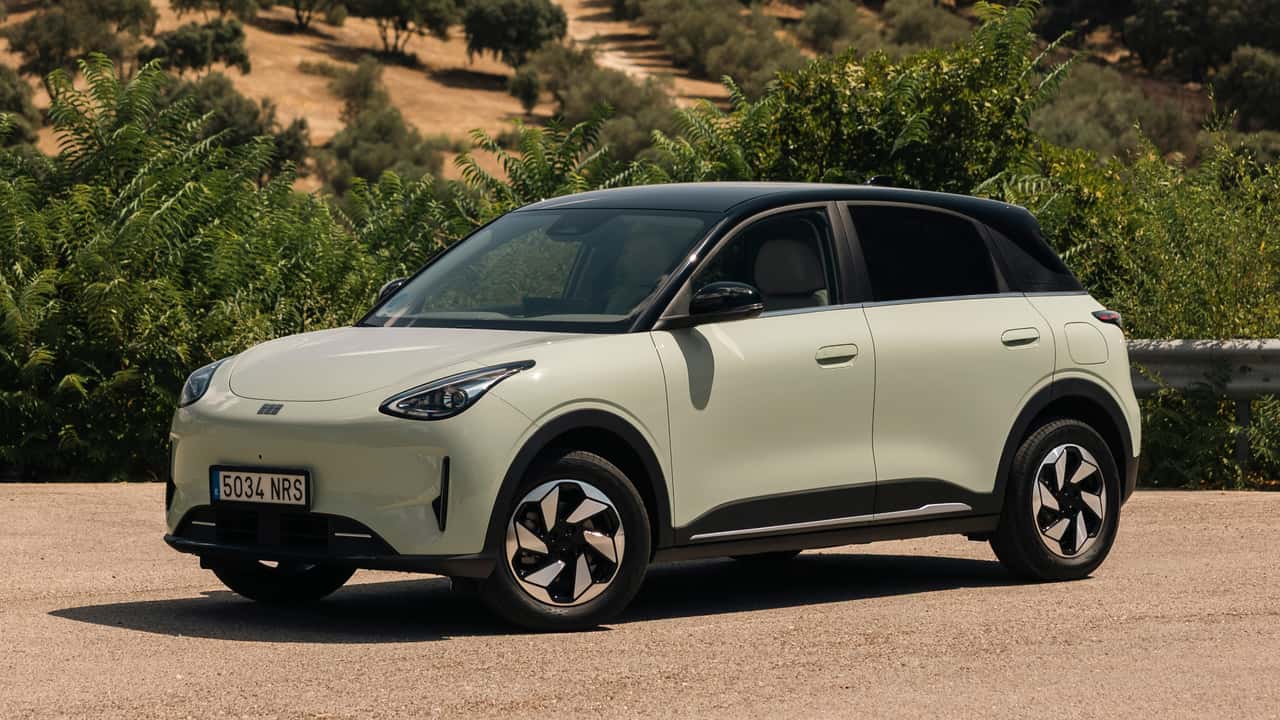
Photo by: Geely
I’m a big fan of the Chevy Bolt and affordable cars in general, so I was excited to try the E2. At an equivalent price of around $10,000 to $12,000, you’d expect Geely to cut a few corners inside. Surprisingly not.
The cabin is nicer than you’d expect from such a cheap car, especially compared with some of the most affordable models sold in the US. A 14.6-inch touchscreen dominates the dashboard. I didn’t have much time to explore the infotainment system, but it looked polished and responsive on initial pokes.
The seats are comfortable, the materials feel decent, and there’s plenty of room up front. Sure, you’ll find hard plastics throughout the cabin, but that’s hardly a dealbreaker at this price. The E2 isn’t a luxury car—it’s just a very nicely equipped little hatchback.
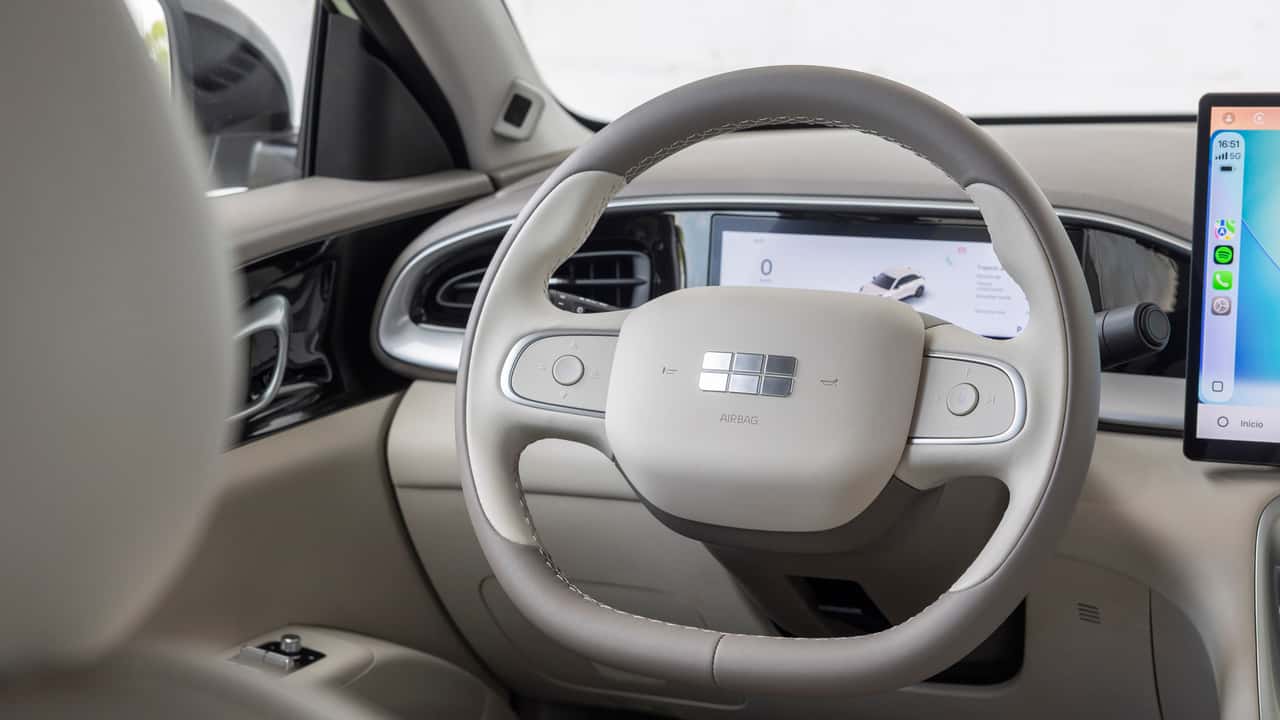
Photo by: Geely
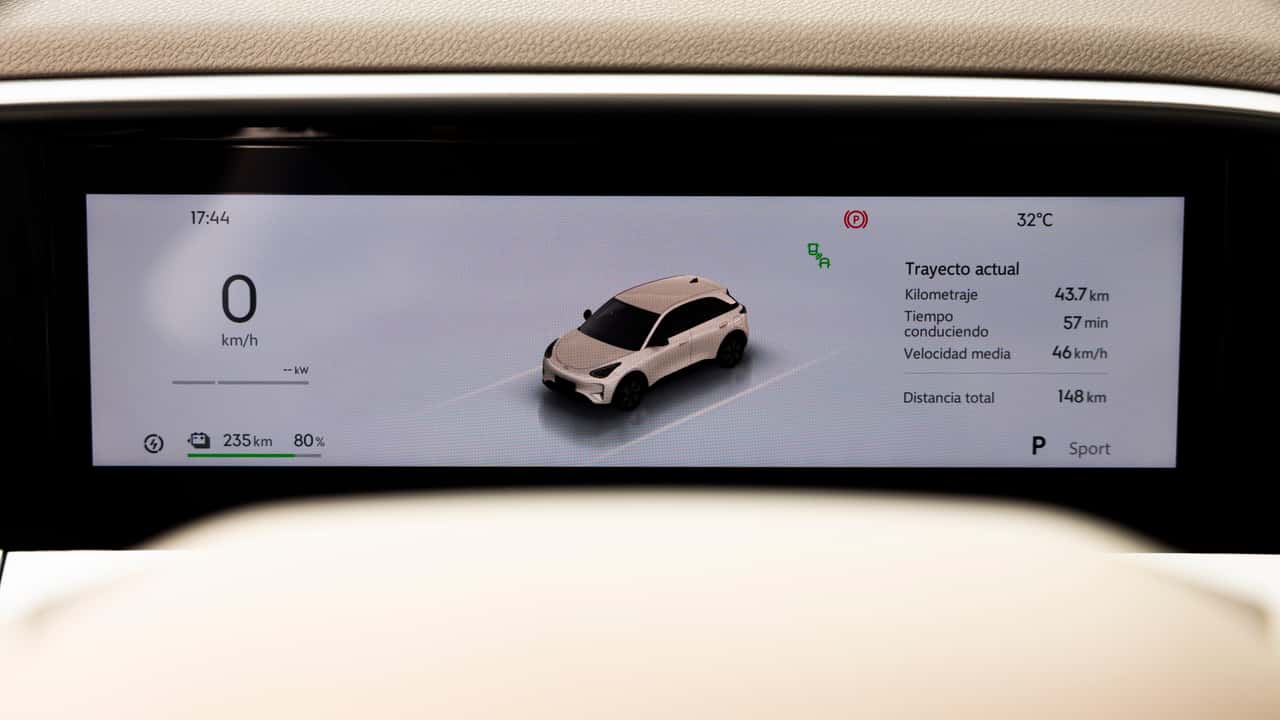
Photo by: Geely
Photos by: Geely
The E2 isn’t a luxury car—it’s just a very nicely equipped little hatchback.
My time behind the wheel was short, but a quick run through a slalom course left a good impression. The E2 feels light on its feet, with quick steering and a friendly chassis. Its electric motor produces 114 horsepower and 110 pound-feet of torque, which is enough to make it feel lively without being particularly quick.
There’s also more room inside than the E2’s tiny exterior would suggest. At six feet tall, I had no trouble getting comfortable in either front seat, with plenty of headroom and legroom.
There are a couple of drawbacks. The rounded, cutesy styling might not appeal to everyone; ask companies like Nissan and Mitsubishi how far cute styling goes in the US. The cabin also relies heavily on the touchscreen, with very few physical controls to note.
Still, the E2 is a perfectly reasonable little electric car. It won’t blow you away, but it nails the basics and offers the kind of equipment you’d expect from something considerably more expensive. Think Chevy Bolt or Nissan Leaf, but with a lower price tag.
The Mainstream E5
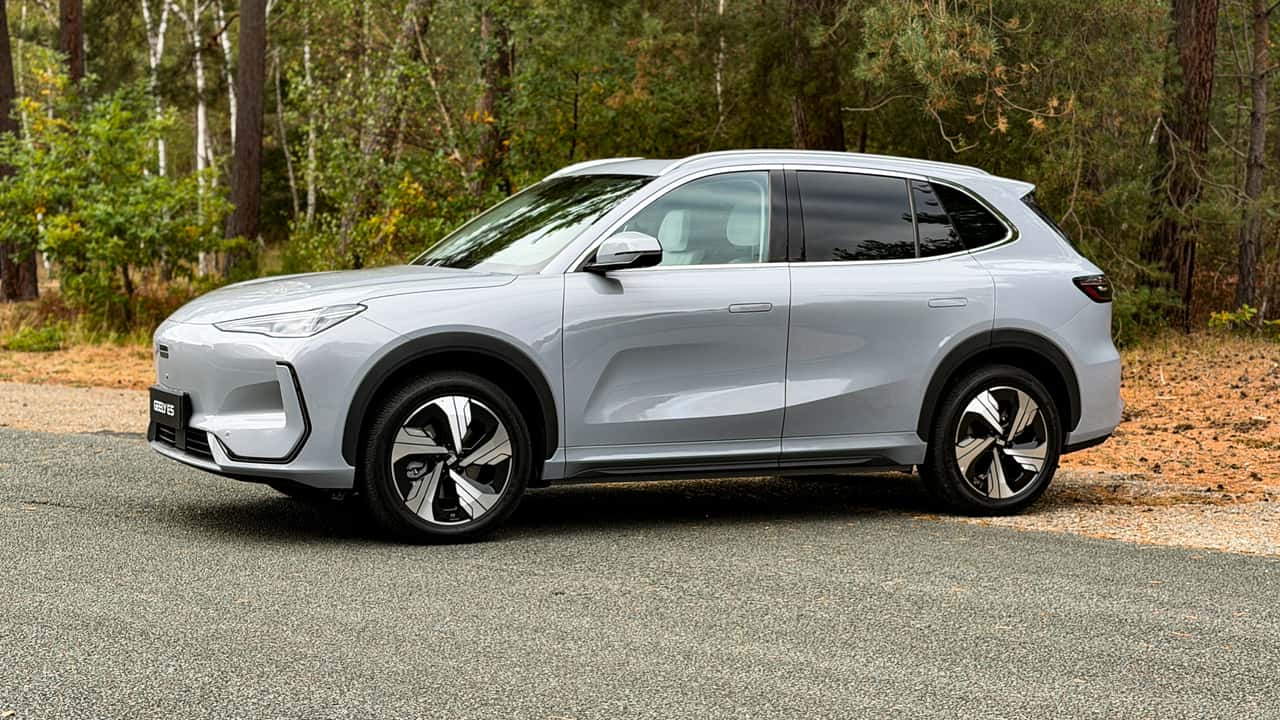
Photo by: Geely
If the E2 is Geely’s answer to affordable electric hatchbacks, the E5 is aimed squarely at the compact SUV crowd. Think Tesla Model Y or Toyota RAV4, at least in terms of the buyers Geely hopes to attract.
The interior is nicer than you’d expect. The E5 gets a large 15.4-inch touchscreen, along with better-than-average materials for the class. Soft-touch surfaces and quality-looking accents give the cabin a more premium feel than you’d expect from this segment.
Power comes from an electric motor producing 214 horsepower and fed by a 68.4-kilowatt-hour battery pack. It’s not especially quick, but it doesn’t feel underpowered, either. Put your foot down, and the E5 gets moving without much fuss.
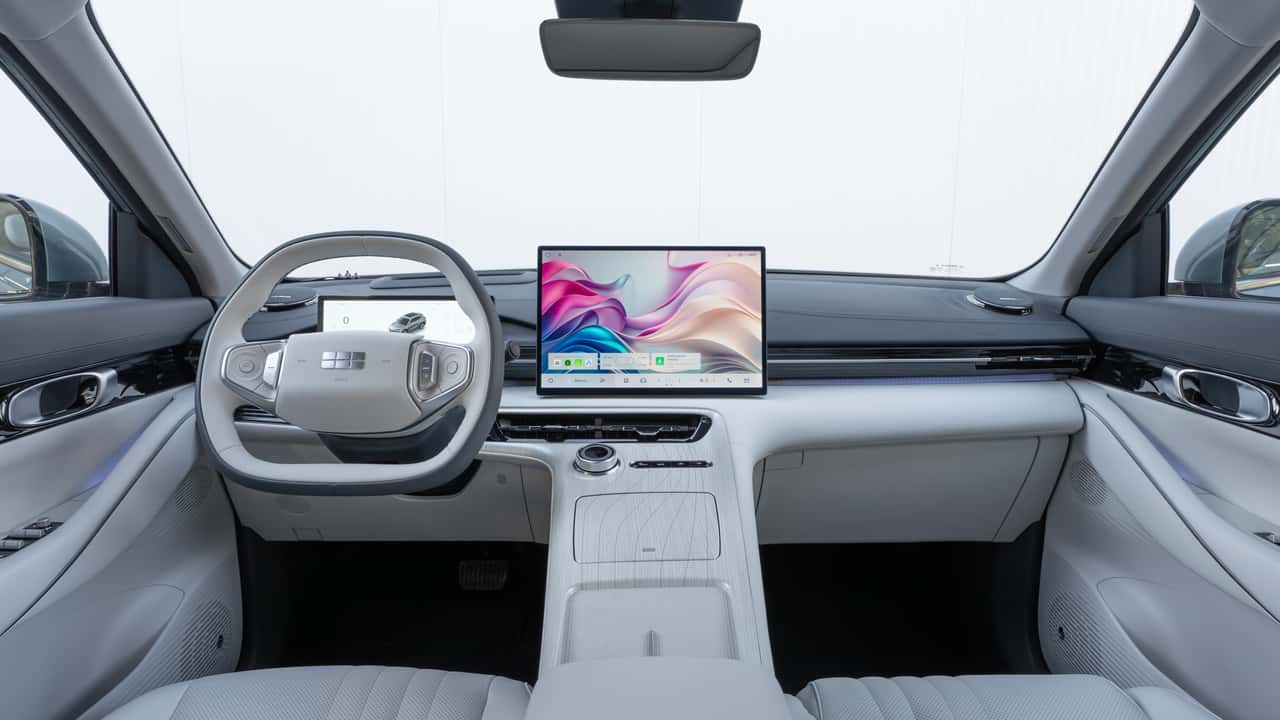
Photo by: Geely
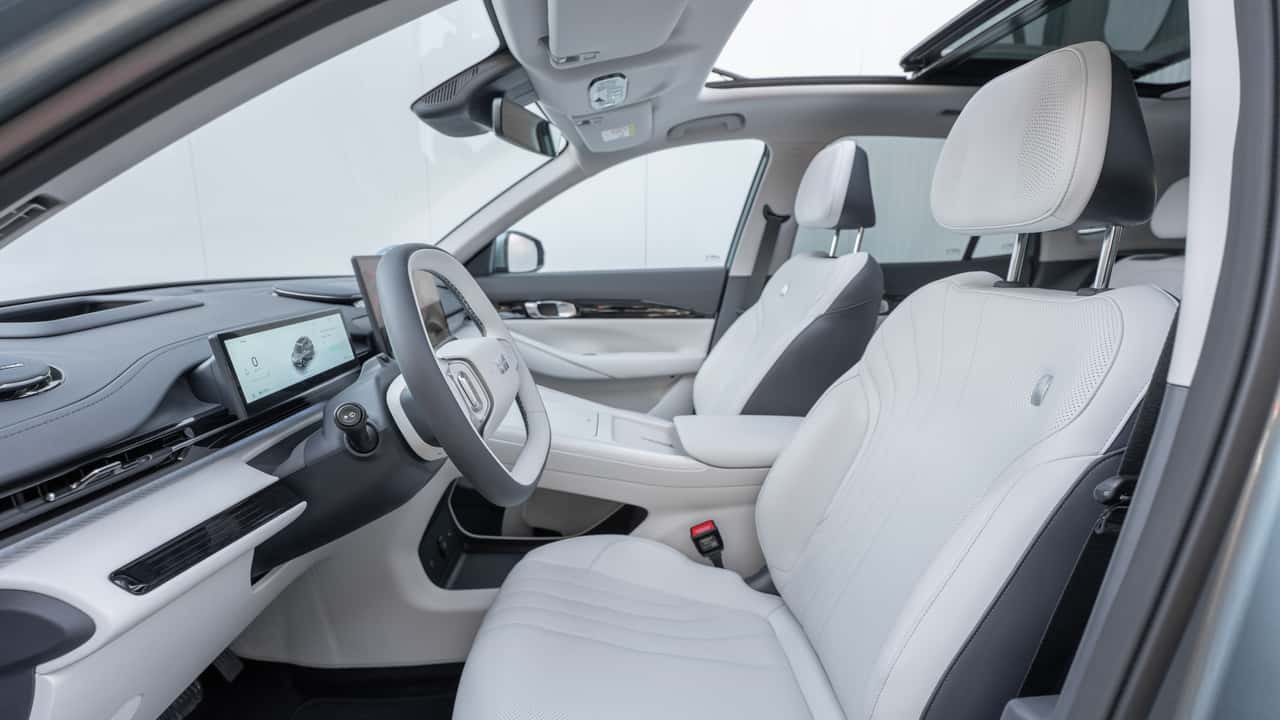
Photo by: Geely
Photos by: Geely
If the E2 is Geely’s answer to affordable electric hatchbacks, the E5 is aimed squarely at the compact SUV crowd.
The steering is responsive enough, but the chassis doesn’t feel all that eager to go around corners. There’s a lot of body roll, and the SUV leans heavily into corners, tossing its weight around when pushed hard.
It’s a little surprising, given that the E5 is relatively light for an electric SUV, weighing 3,836 pounds in its heaviest trim. That’s less than a Tesla Model Y, yet it isn’t nearly as nimble.
Of course, most people shopping for a compact electric SUV aren’t planning to spend their weekends attacking a slalom. For everyday driving, the E5 seems perfectly capable. It’s comfortable enough, has a nice interior, and delivers reasonable performance.
My time with it was brief, so I’d want more miles on regular roads before making a final judgment. But based on my experience, the E5 feels like a solid, if unremarkable, entry in an increasingly crowded segment.
The Likable Starray EM-i
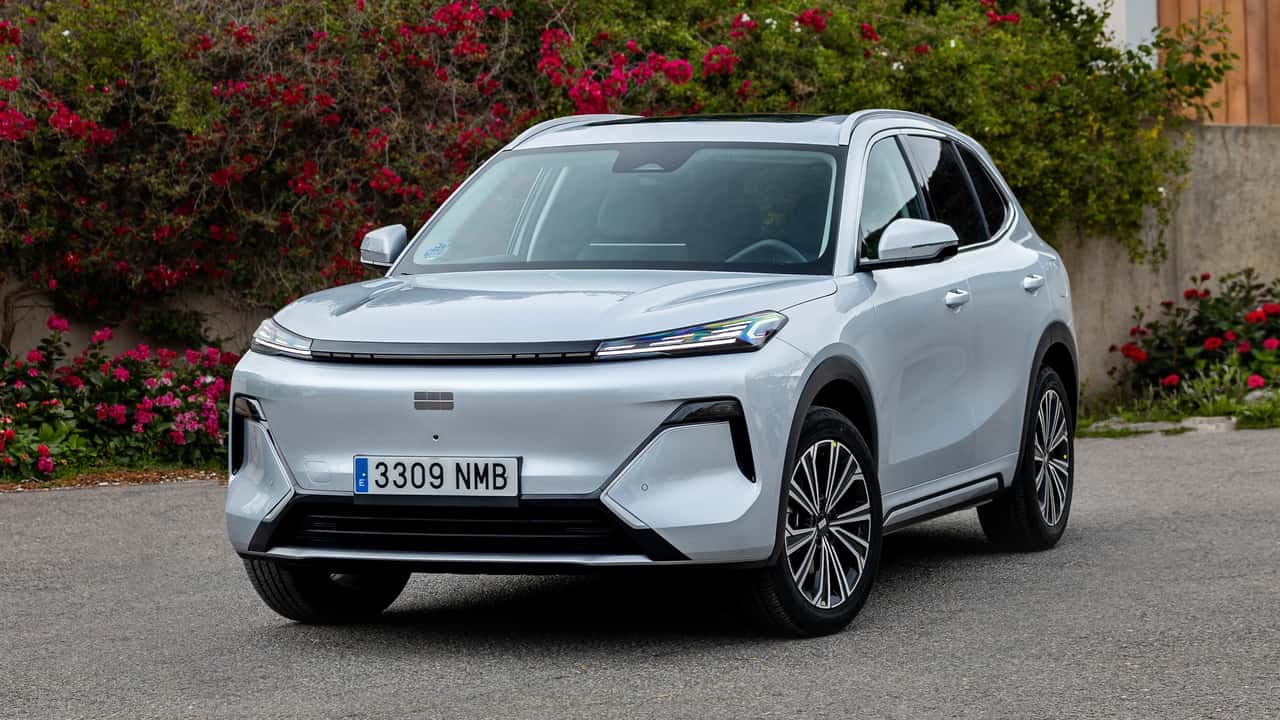
Photo by: Geely
The E2 and E5 are both… fine. The Starray feels like something North American buyers would truly, genuinely like.
Rather than fully electric power, the Starray pairs a gasoline engine with an electric motor. The plug-in-hybrid system produces a combined 260 horsepower, giving it a useful bump over the E5.
Depending on the version, the Starray gets either an 18.4- or 29.8-kilowatt-hour battery. That’s enough for a claimed 83 or 136 kilometers (roughly 52 or 85 miles) of electric driving under the WLTP test cycle. Add the gasoline engine, and Geely quotes a total range of up to 1,055 kilometers (about 656 miles).
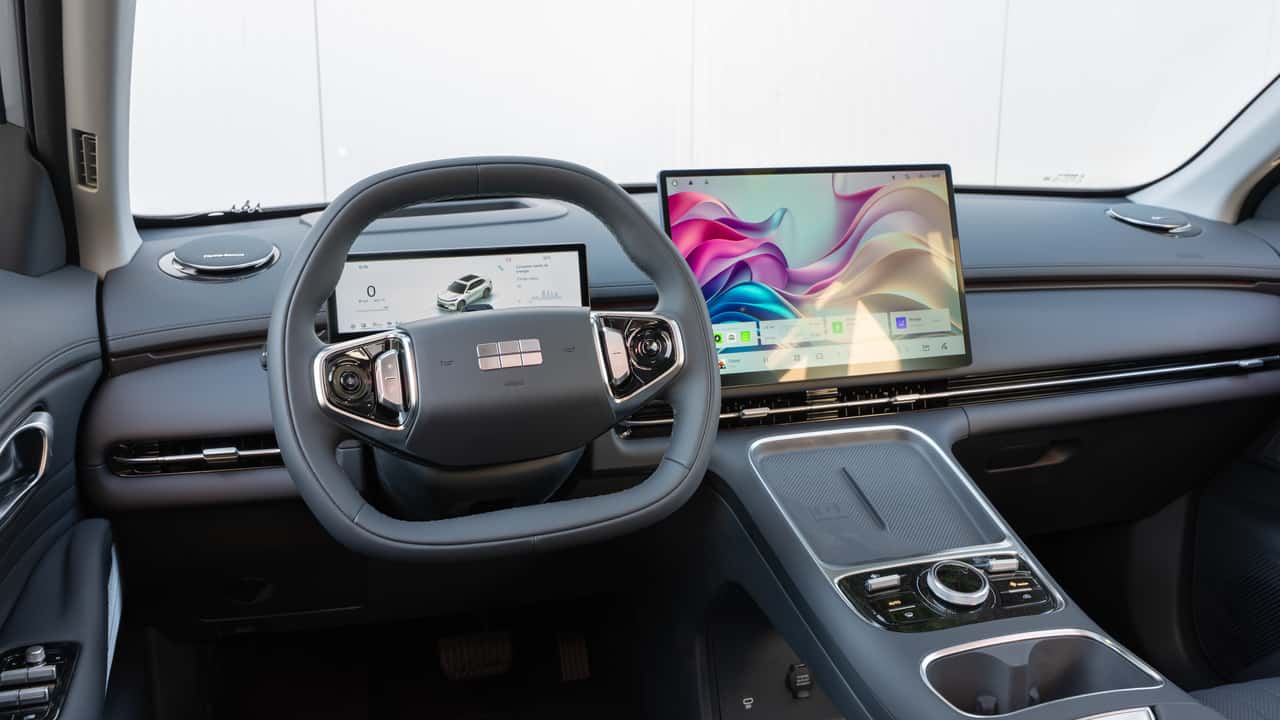
Photo by: Geely
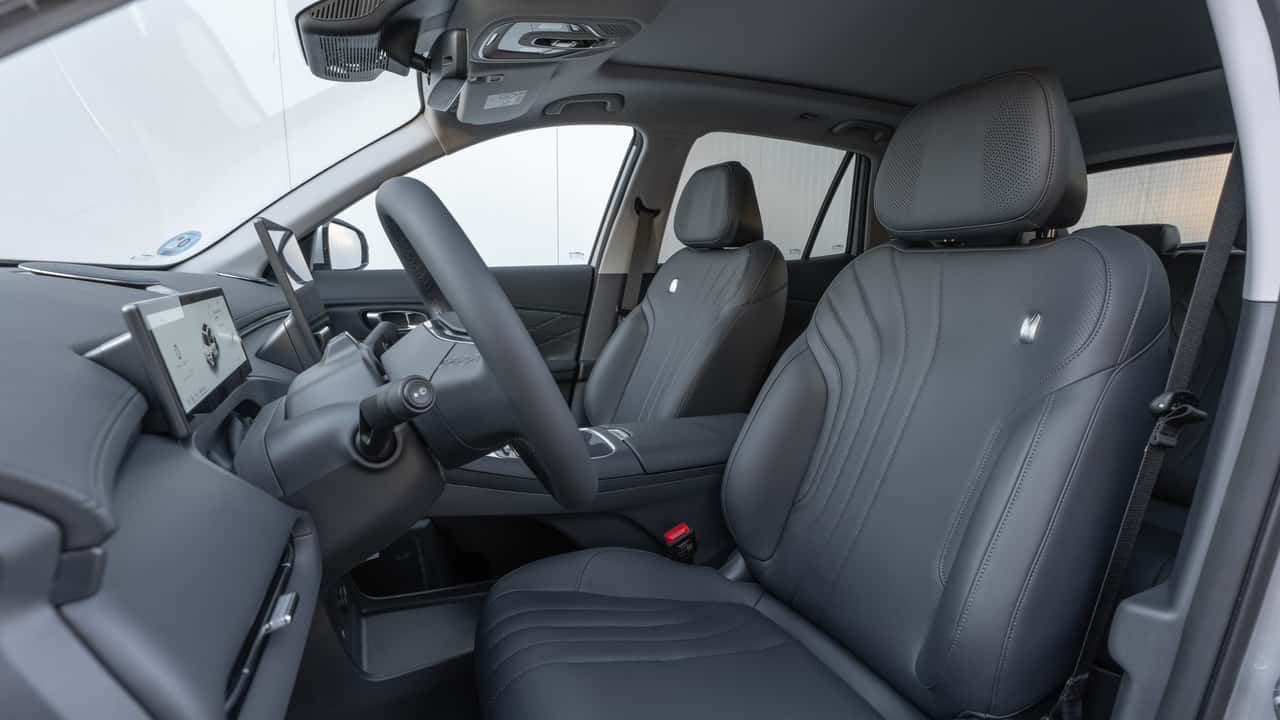
Photo by: Geely
Photos by: Geely
The Starray feels like something North American buyers would truly, genuinely like.
Those are solid numbers, especially for people looking to drive purely on electric power. The driving experience is good, too, with smooth delivery and a mostly seamless transition between electric and gasoline power.
The steering feels natural, the ride is comfortable, and the chassis handles corners better than the E5. It feels composed and predictable, much like the mainstream SUVs already sold in North America.
The interior is another step up. Geely positions the Starray above the E5, and the cabin reflects that. Fancy faux leather covers much of the center console and door panels, while a large 15.4-inch touchscreen takes pride of place on the dashboard. There’s also plenty of room for passengers.
Nothing about the Starray is particularly radical—it’s just very good. Of the three models I drove, this one is the one that feels most ready for the North American market. Whether Geely can bring it here at the right price is another question.
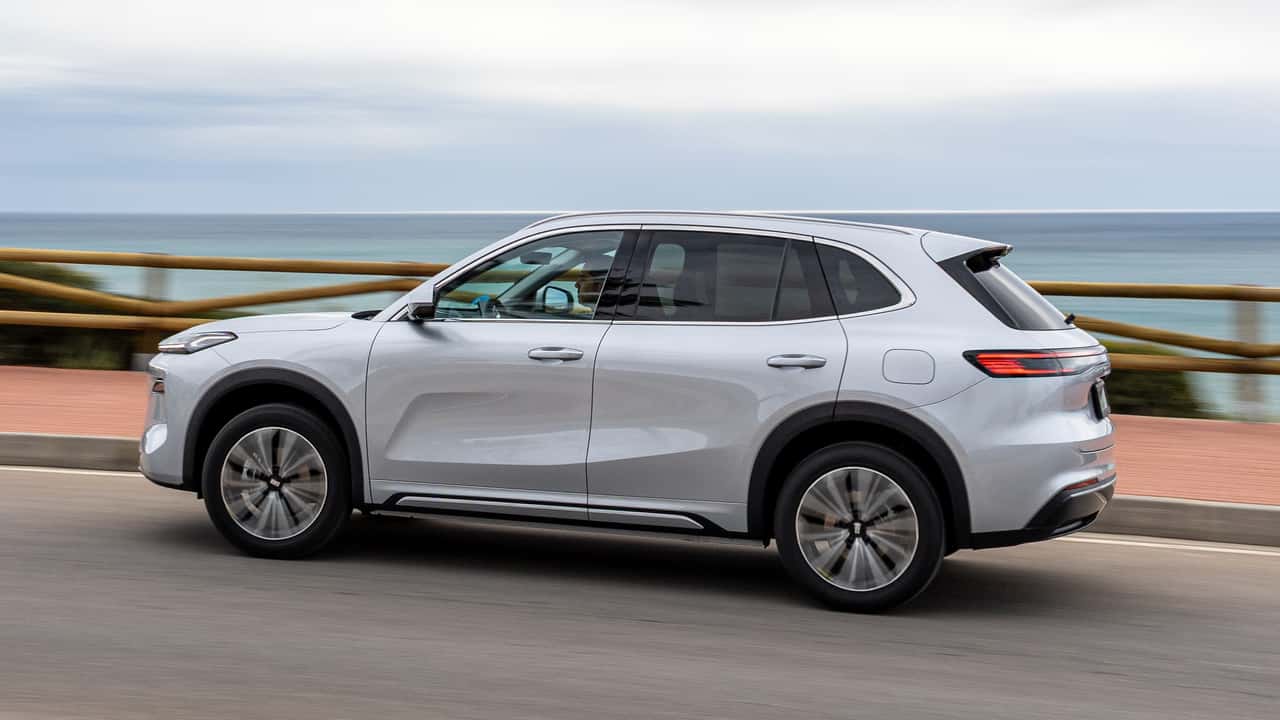
Photo by: Geely
Would America Embrace Geely?
With car prices still a major headache for Americans, the idea of an affordable, well-equipped Chinese car is pretty appealing. Geely has already proven its merit in Europe. But not everything feels like a natural fit for the US.
Small electric hatchbacks have never really caught on here, and the E2 probably isn’t going to change that. The E5 has a better shot, thanks to America’s love of SUVs, but it’s still an electric vehicle entering a market packed with established competitors.
The Starray EM-i, on the other hand, feels like Geely’s best bet. Its plug-in-hybrid powertrain is what most Americans are after these days. Add a roomy cabin and a comfortable ride, and you’ve got the makings of an SUV that could appeal to plenty of American families.
Of course, getting the cars here is only half the battle. Tariffs, import restrictions, and the cost of building a dealer and service network could all drive prices up. And if a Geely ends up costing about as much as a comparable Tesla or Toyota—especially the E2 and E5—convincing buyers to take a chance on a Chinese brand could be tough.
For now, Geely’s future in North America is still up in the air. But after driving the E2, E5, and Starray EM-i, I think there’s some potential here. The Starray, especially. Now Geely just has to figure out how to bring it across the border.
China’s Zeekr Brand Wants To Give BMW And Mercedes A Run For Their Money: Interview
China Teases A New Luxury Sedan To Rival Rolls-Royce
China Could Fully Stop Production Of Cars With Hidden Door Handles
China’s BYD Is Close To Outselling Ford In Europe