The original Volkswagen Golf GTI has plenty of reasons to be remembered. It helped popularize the hot hatchback, delivering sporty performance in a practical package long before high-powered compact cars became commonplace.
But among its many recognizable features, one of the smallest is also one of the most unusual: a gear shifter designed to look like a golf ball. It’s an odd detail at first glance, but there’s actually a good reason it became part of the GTI’s identity.
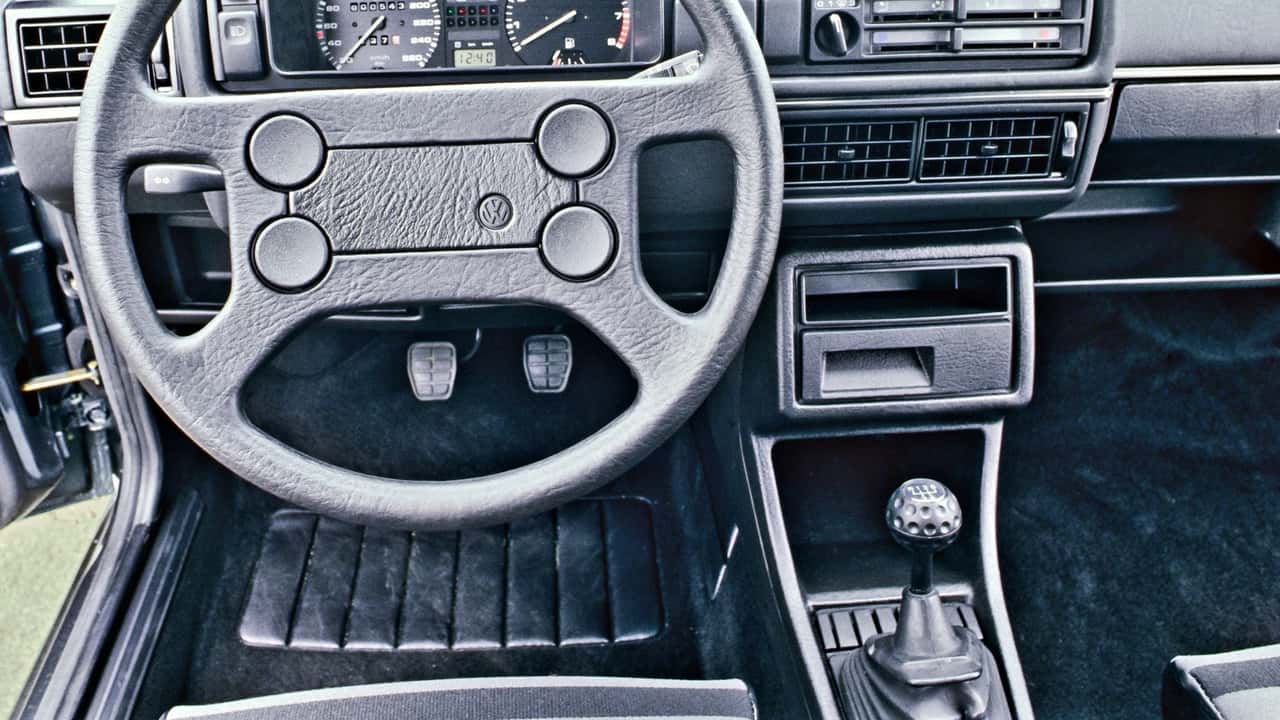
Photo by: Volkswagen
The Golf Ball Was A Clever Play On The Car’s Name
First introduced in 1976 on the Golf GTI Mk1, the dimpled gear knob has become a signature feature of Volkswagen’s performance hatchback. The golf-ball shifter was a clever idea that made the Golf GTI memorable.
So, how did a golf ball find its way into one of the world’s most famous hot hatches?
The most obvious explanation for the golf-ball gear knob is the name of the car itself. Volkswagen’s Golf wasn’t originally named after the sport; its name is commonly associated with Golfstrom, the German word for the Gulf Stream. Nevertheless, the connection between the car and the game of golf was too good to ignore.
The golf-ball-style shifter allowed Volkswagen to turn that coincidence into a distinctive design feature. Instead of using an ordinary round gear knob, the company opted for one with the unmistakable dimples of a golf ball.
It was a simple idea, but it worked. The detail helped the GTI stand apart from the standard Golf while adding a playful touch to an otherwise restrained interior. It also became an easy way for enthusiasts to recognize the performance model without needing to look at its badges.
A Designer Helped Turn It Into An Icon
The story of the golf-ball shifter is closely associated with Herbert Schäfer, Volkswagen’s chief designer during the era when the GTI was establishing its identity. A keen golfer, Schäfer signed off on the golf ball shifter for the car’s interior.
But it was Gunhild Liljequist, an interior detailing specialist working for Volkswagen at the time, who actually had the idea to put the golf ball in the GTI: “That was a completely spontaneous idea! I just expressed my sporting and golf associations out loud: ‘How about a golf ball as the gear knob?’”
The original Golf GTI was developed as a more exciting alternative to the everyday family hatchback. Its formula combined a relatively lightweight body, a spirited engine, and a chassis tuned for enthusiastic driving. The interior needed to reflect that character without becoming overly extravagant.
The golf-ball gear knob fit the brief perfectly. It was inexpensive, recognizable, and connected the car’s name to a physical object in a way that felt natural rather than forced. It also complemented other defining GTI details, including red accents around the grille and tartan seat upholstery. Together, these features gave the original GTI a personality that was sporty without being excessive.
It Was More Than Just A Styling Gimmick
Although the golf-ball shape is best known for its visual appeal, the gear knob is also a component the driver interacts with every time they change gears. Its rounded form fits comfortably in the hand, while its dimpled surface provides a distinctive texture.
That doesn’t necessarily make it superior to every other gear knob, and there is little reason to assume the dimples alone improve shifting performance. The real appeal lies in the combination of usability and character.
The golf-ball shifter also reflects what made early GTIs special: thoughtful details that enhanced the driving experience without adding unnecessary complexity. Here are a few reasons the design has endured:
Recognizable styling: The golf-ball shape is instantly associated with the Golf GTI.
A tactile connection: The rounded knob gives drivers a distinctive physical point of contact with the car.
A link to the past: It connects modern GTIs with the original 1976 model.
Understated personality: It adds a playful detail without compromising the car’s practical interior.
Enthusiast appeal: It is one of those small touches that longtime GTI fans immediately recognize.
In a world where many interiors look increasingly similar, a detail like this can make a surprising difference.
The Golf-Ball Shifter Became Part Of GTI Heritage
Volkswagen has updated the Golf GTI repeatedly over the decades, adding more power, improved suspension systems, advanced safety features, and increasingly sophisticated infotainment technology. Yet the model’s appeal has always extended beyond performance figures.
The GTI is also about the relationship between driver and machine. Its compact dimensions, everyday practicality, and engaging driving character have helped it maintain a loyal following across generations.
The golf-ball shifter became part of that story. For drivers familiar with older GTIs, it evokes the era when manual transmissions were central to the hot-hatch experience. For newer enthusiasts, it is a reminder of the model’s origins.
Not every generation or transmission configuration necessarily features the traditional knob as standard, and Volkswagen has continued to evolve the GTI’s interior. Still, the golf-ball design remains one of the model’s most recognizable historical signatures, even if it has no direct effect on performance.
What GTI Owners Say About The Golf-Ball Shifter
The Volkswagen Golf GTI’s golf-ball gear knob has earned a special place among enthusiasts, as discussions on Reddit’s r/GolfGTI community reveal. In a thread titled “Pour one out for the golf ball shifter,” owners expressed disappointment over losing the traditional design, with one describing it as a reason for buying a manual GTI in the first place.
Others have debated aftermarket alternatives, weighing the appeal of heavier shift knobs against the charm of the original design. One Reddit user called the golf-ball shifter a “perfect example of fine German humor,” highlighting how a simple detail can give a performance car some personality.
These discussions show that the golf-ball shifter means more to GTI owners than its practical function. It’s a link to the model’s heritage, a playful nod to its name, and a reminder that the smallest design details can make a car memorable. For many enthusiasts, that’s reason enough to miss it when it’s gone.
Could Electrification Spell The End Of The Golf Ball?
Volkswagen’s transition toward electric vehicles raises an interesting question about the future of the traditional GTI interior. Electric powertrains don’t need manual gearboxes, meaning a physical golf-ball gear knob may no longer have the same functional purpose in future performance cars.
That doesn’t mean Volkswagen has to abandon the idea entirely. Automakers regularly borrow styling cues from their heritage to give new models a stronger connection to their predecessors. The golf-ball motif could potentially survive as a decorative detail or inspire a different interior control. On the new VW ID. Polo GTI, however, the golf ball motif is nowhere to be found inside the cabin.
For now, the traditional golf-ball shifter remains closely associated with the manual-transmission GTI experience. It represents an era when driving engagement came from physical controls, mechanical feedback, and a direct connection between the driver and the car.
Nearly five decades after the original Golf GTI arrived, that little dimpled knob remains proof that the smallest details can sometimes become the biggest automotive icons.
Remember When Saab Put The Ignition Key Between The Front Seats?
This German City Exists Because Of Volkswagen
What Makes Chinese Cars So Popular?
Your Car’s Tire Repair Kit Isn’t The Easy Fix You Might Expect