For decades, buyers looking for a new car typically turned to familiar names from Japan, South Korea, Europe, or the United States. But the global automotive landscape is changing rapidly, and Chinese manufacturers such as BYD, Geely, Chery, and SAIC are becoming increasingly difficult to ignore.
From affordable electric hatchbacks to premium SUVs loaded with technology, these brands are challenging established automakers in markets around the world. Their appeal is not just about price; Chinese carmakers have invested heavily in battery development, manufacturing capacity, software, and modern vehicle design.
Their growing presence in Europe, Southeast Asia, Latin America, and the Middle East reflects a broader shift in the industry. Yet the United States remains a major exception, with steep trade barriers and regulatory challenges making it much harder for Chinese-built cars to compete here.

Geely Galaxy Cruiser 700
Photo by: Geely
Chinese Cars Often Offer More For The Money
One of the biggest reasons Chinese vehicles are attracting buyers is their combination of competitive pricing and equipment. Depending on the market and model, buyers can find touchscreen infotainment systems, panoramic roofs, advanced driver-assistance features, premium-looking interiors, and long equipment lists without necessarily paying luxury-car prices.
Chinese manufacturers also benefit from enormous domestic production capacity and extensive supplier networks. That can help them control costs and bring new models to market quickly. Intense competition at home has encouraged companies to improve their products while keeping prices competitive, although not every Chinese vehicle is inexpensive and savings vary by country.
The International Energy Agency has identified growing price competitiveness as an important factor behind the expansion of Chinese electric vehicles, particularly in emerging markets. In countries where a new EV from a traditional brand remains expensive, a competitively priced Chinese alternative can make electric driving more accessible.
China Has Become An EV Manufacturing Powerhouse
China’s rise is not simply a story about inexpensive cars. It’s also about how quickly its manufacturers have developed electric-vehicle technology and production capabilities.
Chinese companies have invested heavily in batteries, electric motors, power electronics, and vehicle software. Battery manufacturing is particularly important because batteries represent a major part of an EV’s cost. The International Energy Agency reported that China accounted for nearly 75% of global electric-car production in 2025, highlighting the scale of its manufacturing base.
Brands such as BYD have built businesses around electric vehicles and plug-in hybrids, while other manufacturers offer a mix of gasoline-powered, hybrid, and fully electric models. This variety matters because not every market has the same charging infrastructure, electricity prices, or government incentives.
Chinese manufacturers can therefore target different customers with different powertrains instead of relying exclusively on fully electric cars. In markets where charging remains inconvenient or expensive, hybrids can provide an alternative while still offering improved fuel efficiency in suitable driving conditions.
Buyers Outside The U.S. Have More Chinese Cars To Choose From
Chinese automakers have expanded overseas by tailoring their products and business strategies to individual markets. In Europe, they compete with established manufacturers on electric-car technology and equipment. In Southeast Asia and Latin America, competitively priced vehicles and hybrids can appeal to buyers seeking modern features without the cost of some established alternatives.
According to the International Energy Agency’s Global EV Outlook 2026, Chinese electric-car exports doubled in 2025 to more than 2.5 million vehicles. More than half of Chinese electric-car sales overseas were recorded in markets outside Europe and the United States, with particularly strong growth in Southeast Asia, the Middle East, and Latin America. Several factors help explain why these vehicles are finding customers in different regions:
Competitive pricing: Chinese brands often target buyers looking for modern vehicles at accessible prices.
Extensive standard equipment: Large infotainment screens, digital displays, and driver-assistance features can make their models appealing to technology-focused customers.
A wide choice of powertrains: Gasoline vehicles, hybrids, plug-in hybrids, extended-range electric vehicles and battery-electric models allow manufacturers to address different local needs.
Rapid product development: Shorter development cycles can help brands introduce updated models and new technologies quickly.
Expanding local presence: Dealerships, service networks, partnerships, and overseas assembly plants can make Chinese brands easier to buy and maintain.
However, success is not guaranteed. Brand recognition, parts availability, resale values, dealer coverage, and long-term reliability perceptions can all influence whether buyers are willing to move away from familiar automakers. For many buyers, Chinese cars remain a gamble when it comes to durability, servicing, and resale values.
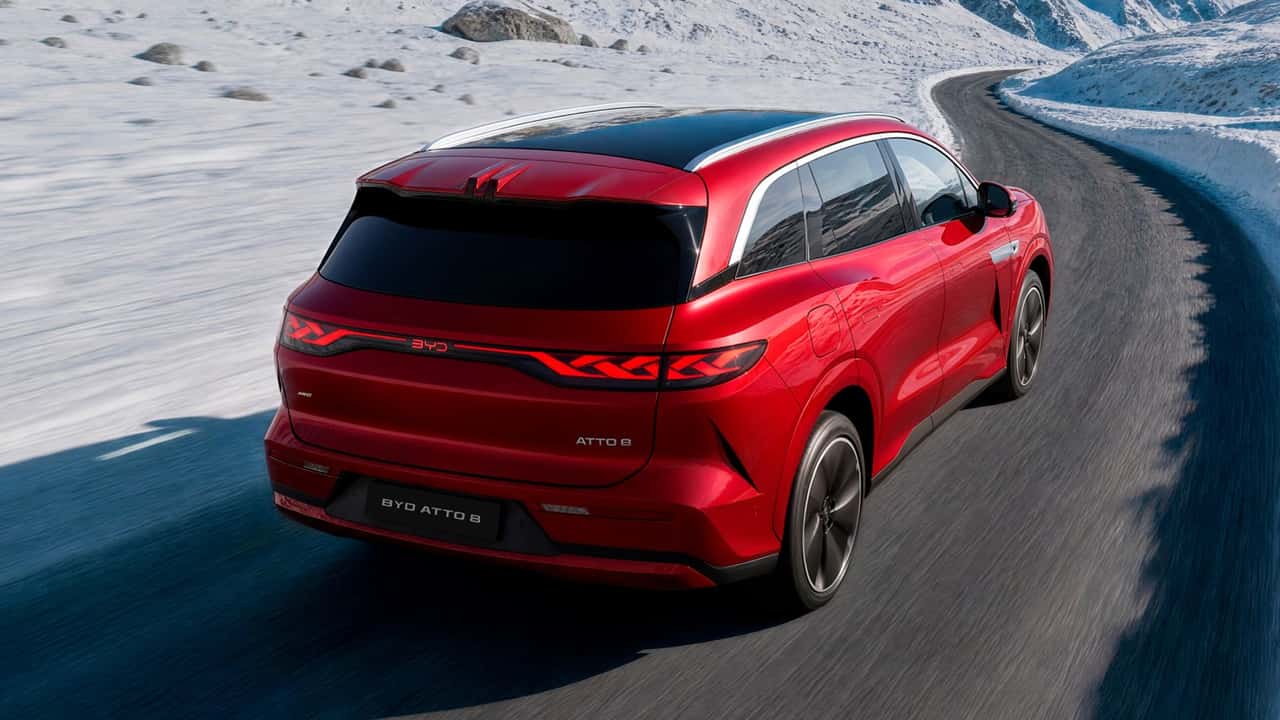
BYD Atto 8
Photo by: BYD
Why Is The U.S. Different?
The United States presents a much tougher environment for Chinese automakers, particularly those selling electric vehicles. Trade policy is a major factor: in 2024, the U.S. government announced an increase in the Section 301 tariff on Chinese electric vehicles from 25% to 100%. Other trade and regulatory restrictions also complicate market entry.
These barriers make it difficult for a Chinese-built EV to compete on price with vehicles assembled in the United States or imported from countries facing different tariff treatment. Automakers must also consider U.S. safety and certification requirements, consumer expectations, dealership networks, and the political scrutiny surrounding Chinese automotive technology.
There are additional questions about connected-car software, data security, and potential access to sensitive information. U.S. restrictions targeting certain connected-vehicle technologies and suppliers add another layer of complexity to the business case for entering the market.
That doesn’t mean Chinese vehicles are absent from the American automotive ecosystem. Some established global manufacturers have production or supply-chain links to China, and Chinese companies participate in the wider industry through components and other business relationships. But selling a Chinese-branded vehicle directly to American consumers is a different challenge.
For now, Chinese automakers have more room to expand in markets where trade conditions, regulations, and consumer demand make their products easier to sell.
What Do Drivers Think About Chinese Cars?
Reddit discussions suggest that competitive pricing and technology are major reasons Chinese cars are attracting attention overseas. In this r/cars thread about Chinese EVs in Europe, users discuss changing perceptions of Chinese brands, with some highlighting the importance of affordability and others pointing to limited brand recognition and lingering quality concerns.
Price is another recurring topic. In this r/CarTalkUK discussion about why BYD cars are so cheap, users debate how BYD can offer well-equipped vehicles at competitive prices, raising questions about manufacturing costs, quality, and whether the brand can sustain its pricing as it grows. The conversation illustrates why value can attract buyers while trust remains important.
The U.S. market is a key part of the debate, too. In this r/electricvehicles thread about Chinese EVs spreading globally but not in America, users discuss trade barriers and the potential consequences for global competition.
Can Chinese Automakers Keep Growing?
Chinese brands have gained attention by combining competitive prices with rapid product development and increasingly sophisticated technology. But maintaining that momentum requires more than launching attractive new vehicles.
Reliability, crash safety, customer service, warranty support, software updates, and parts availability will matter just as much as a long list of standard features. Buyers also need confidence that a brand will remain in their market long enough to support a vehicle throughout its ownership life.
Trade policy could be another major obstacle. The European Union has introduced additional duties on Chinese-made battery-electric vehicles, while manufacturers have explored local production and other ways to remain competitive. These measures illustrate how the expansion of Chinese automakers is creating both opportunities for consumers and pressure on established manufacturers.
For buyers, increased competition can mean more choice, new technology, and pressure on prices. For established automakers, it creates an incentive to develop more affordable EVs and improve the value of their own products.
How Do Traffic Lights Know When Cars Are Waiting?
Premium Gas Isn’t Always Better For Your Car. Here’s What It Actually Does
Red Fire Trucks Have A Surprising History Most People Don’t Know
Cold-Air Intakes Promise More Power. But Do They Really?