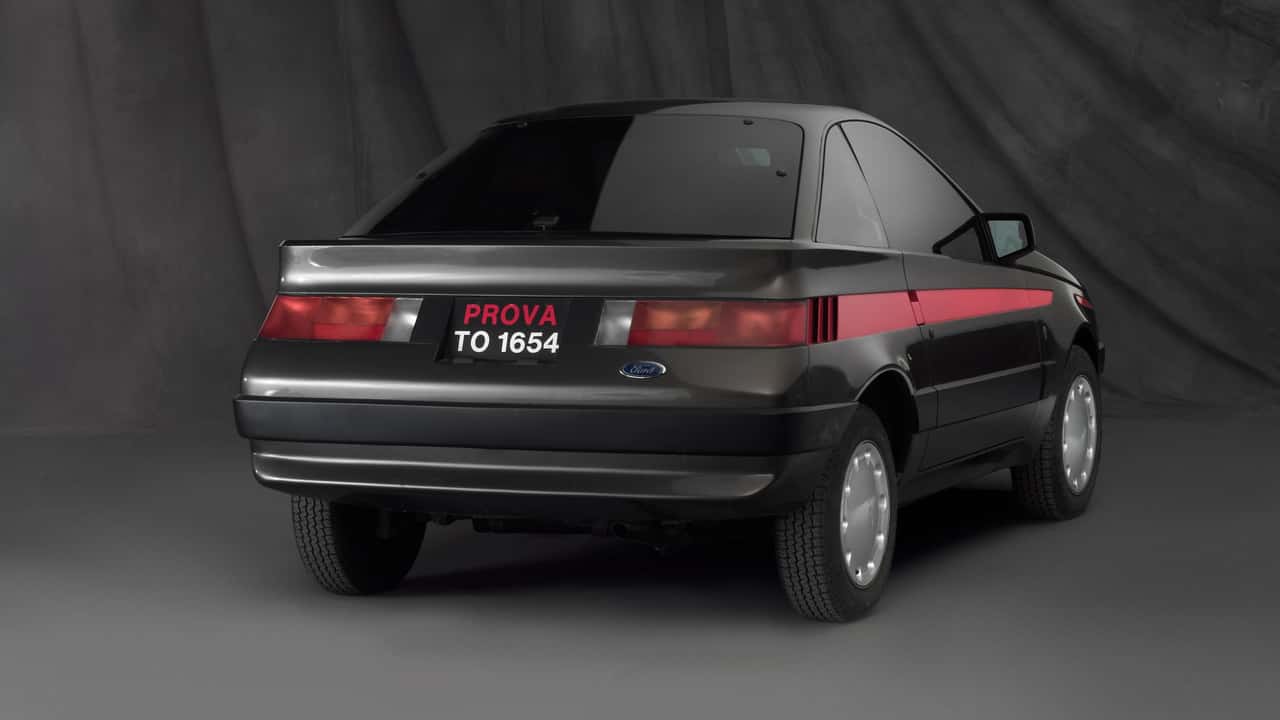
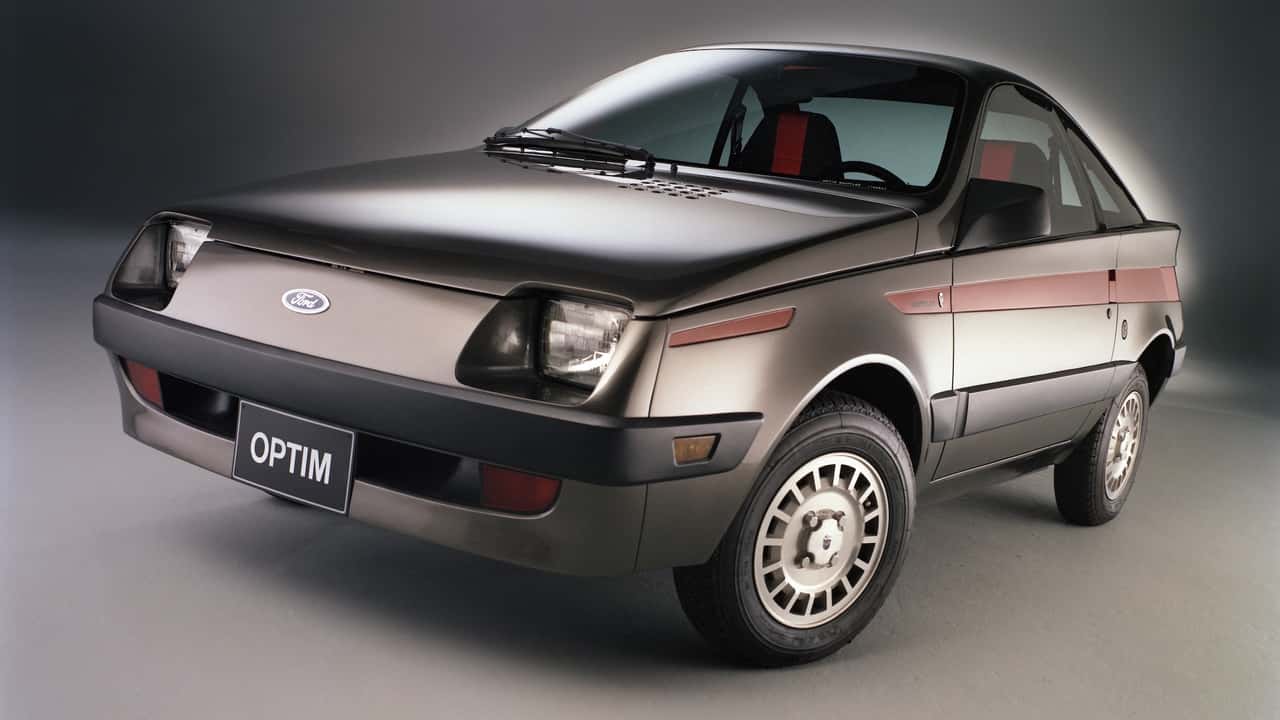
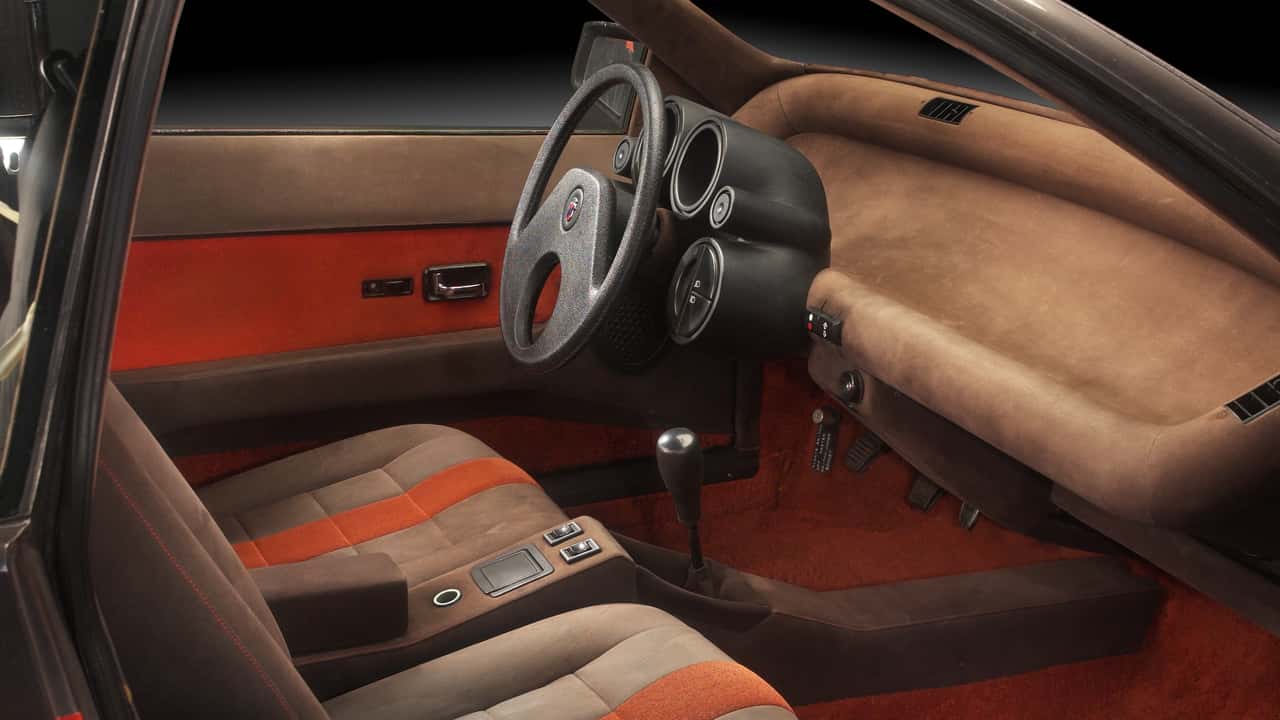
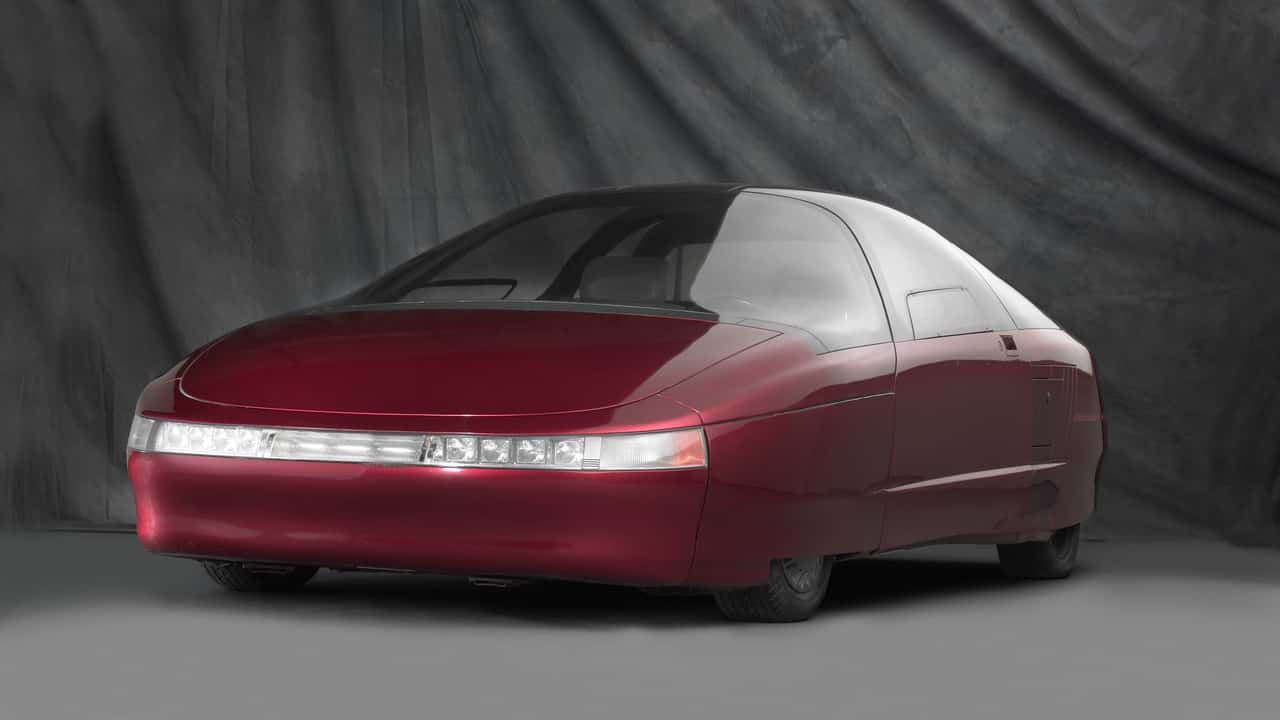
Concept cars are inherently weird. Sometimes they preview future models; other times, they’re merely a showcase of what a company is capable of. But almost always, there’s something that puts them in the realm of the uncanny valley—a car, but not quite as you know it.
Ford has a rich history of weirdness when it comes to concept cars. The Blue Oval has been building automobiles for more than a century, and that century-plus of experimentation has yielded some truly odd vehicles.
You can go as far back as 1955 in the Ford vault to find some of the company’s wildest creations: futuristic two-wheelers, nuclear-powered highway cruisers, and 2,000-horsepower electric vans. Credit where credit is due: Ford has never been afraid to think outside the box.
With that, here are the 27 weirdest concept cars Ford has ever built, according to us.
1955 Ford La Tosca
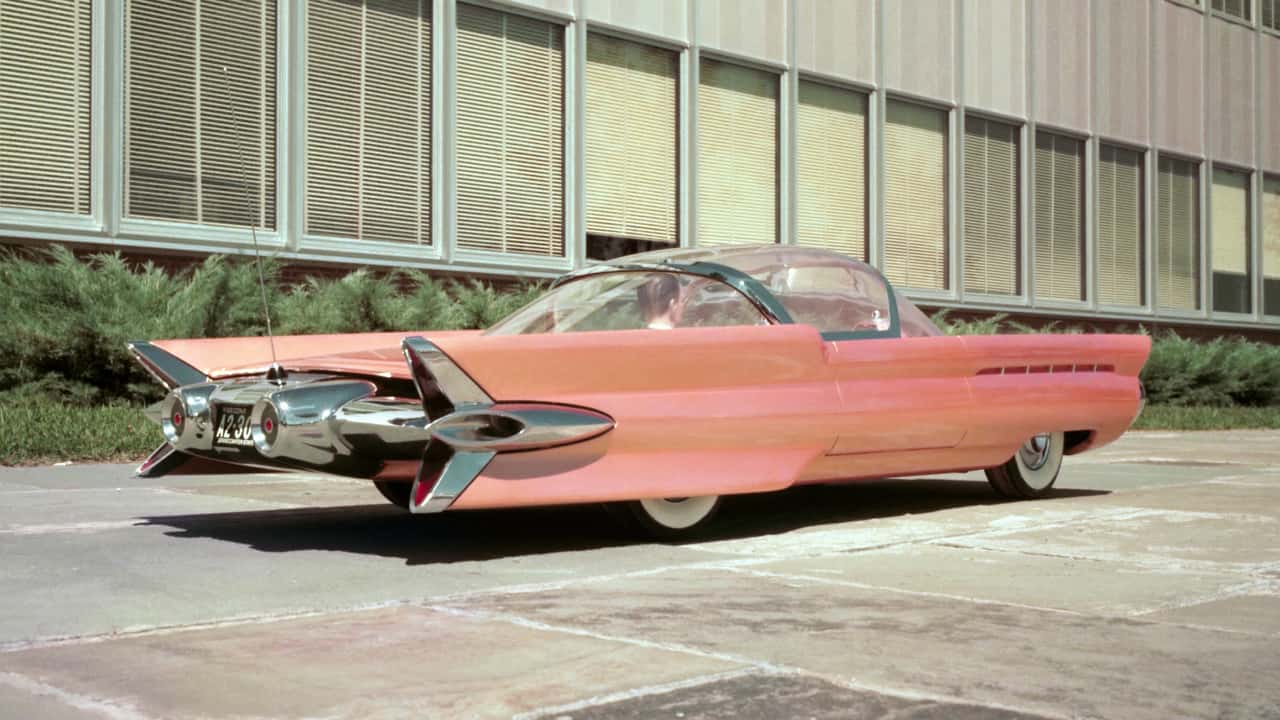
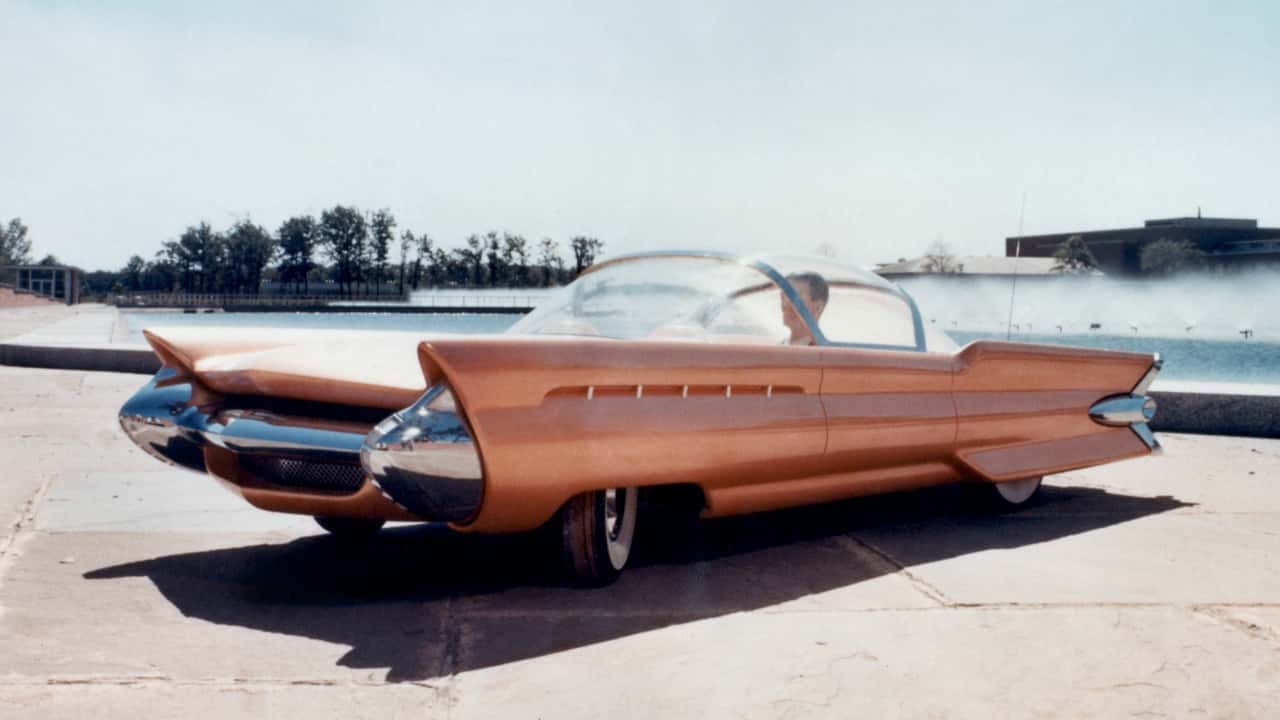
The 1955 Ford La Tosca looked like something straight out of The Jetsons—not all that surprising for the era. Its wildest features included canted rear fins, a Plexiglas canopy, retractable headlights, and taillights designed to look like jet exhausts. It was Jet Age excess at its finest.
Oddly, the La Tosca never existed as a full-size vehicle. Ford built a 3/8-scale model with a remote-controlled chassis, allowing designers to steer it from a distance. The concept also experimented with interchangeable body shells, and some of its styling eventually influenced the 1958 Lincoln Continental.
1958 Ford X-2000
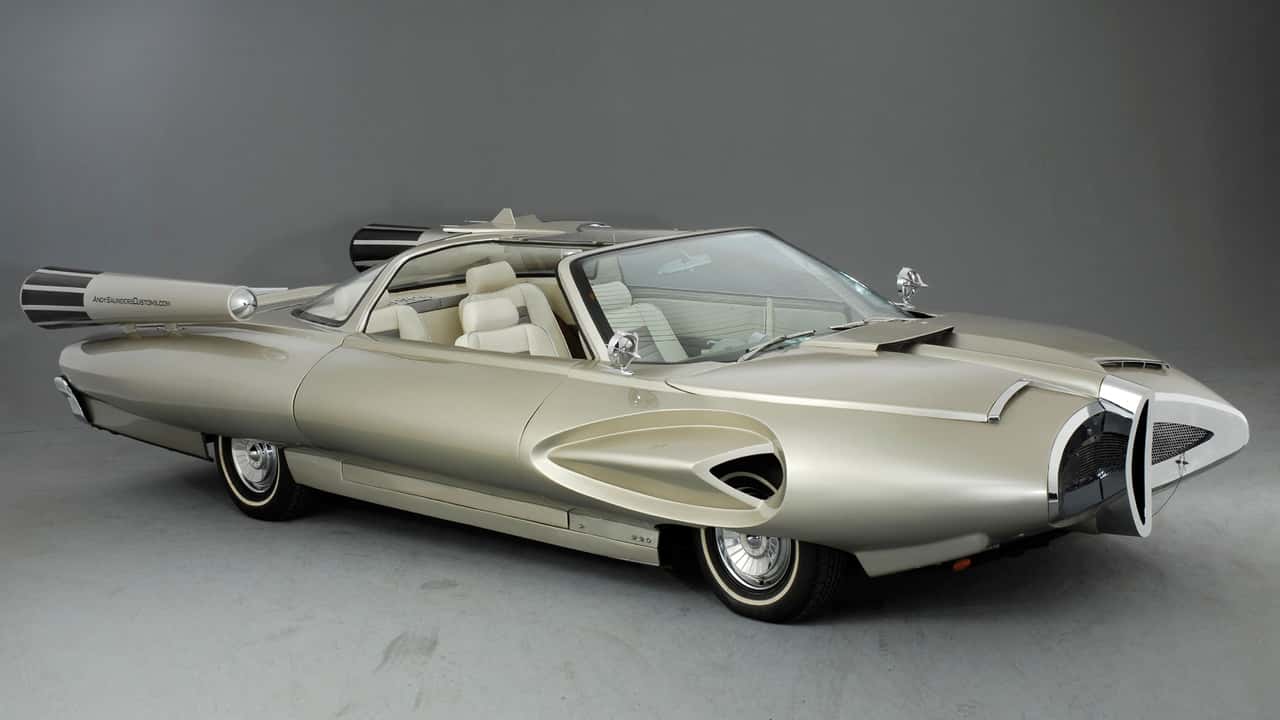
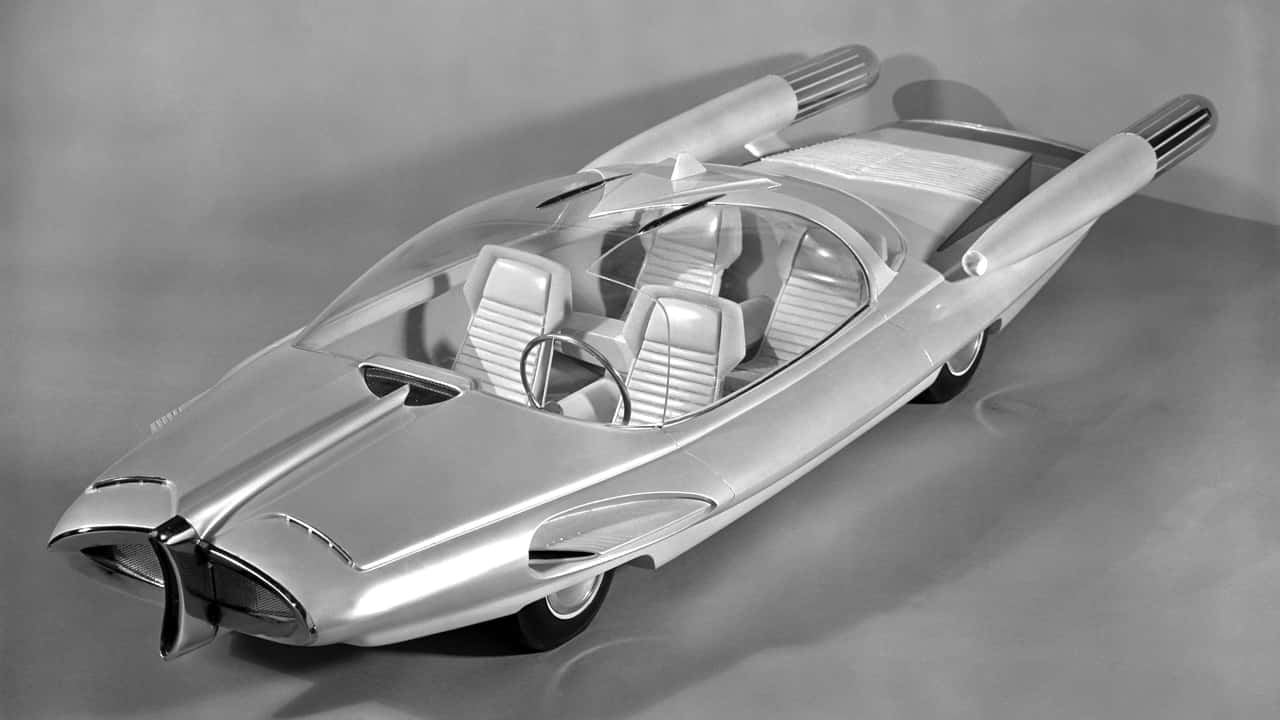
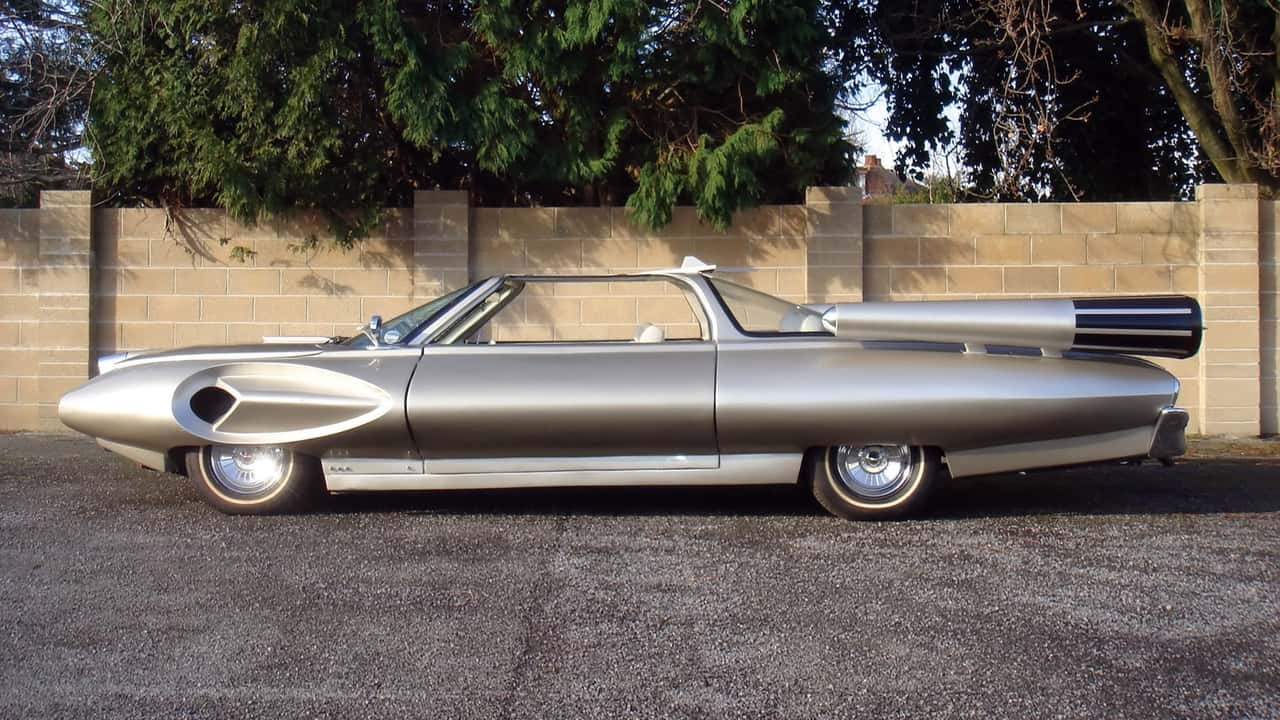
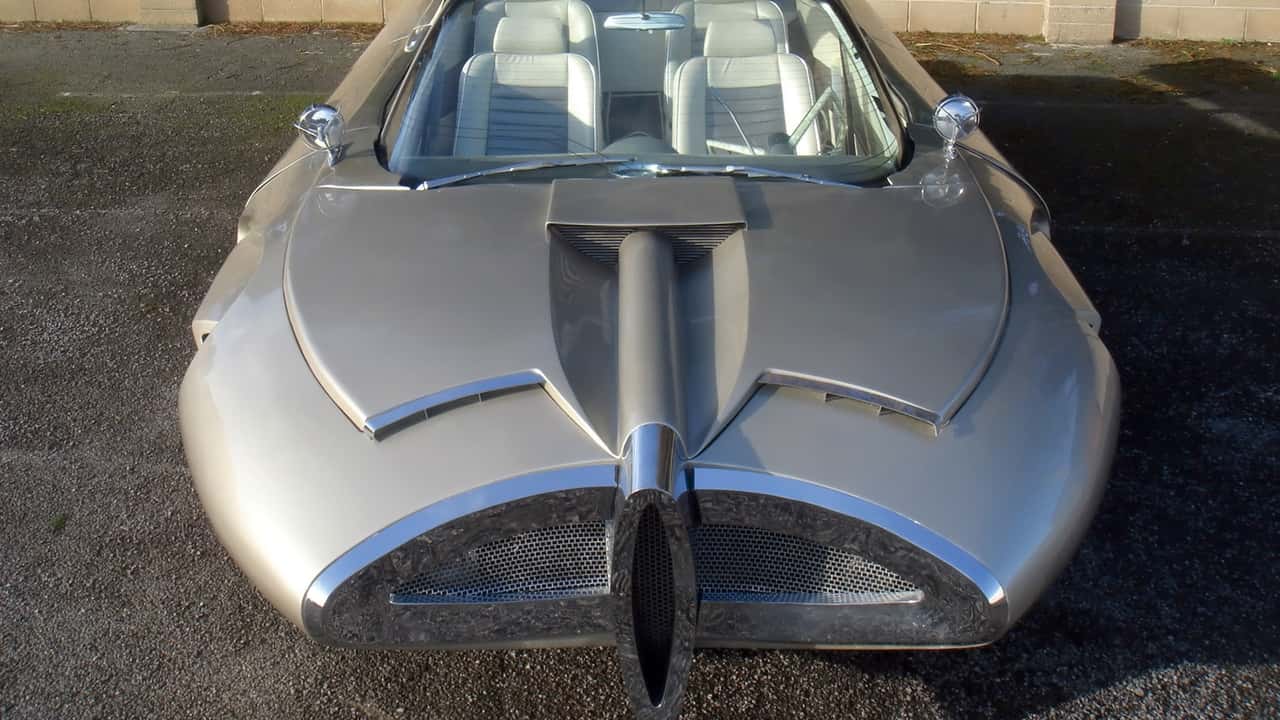
The X-2000 was Ford’s attempt to predict what cars might look like at the turn of the millennium. Spoiler alert: It was way off. Designed by Alex Tremulis and Bill Balla, the X-2000 was appropriately outrageous, with a bubble-like passenger compartment, enormous tail fins, and jet-inspired taillights.
Despite its futuristic name, the X-2000 never became a full-size model. The original was merely 3/8-scale, while plans for a full-size version were scrapped before it ever reached the road. Decades later, British enthusiast Andy Saunders built a full-size recreation based on a 1962 Mercury.
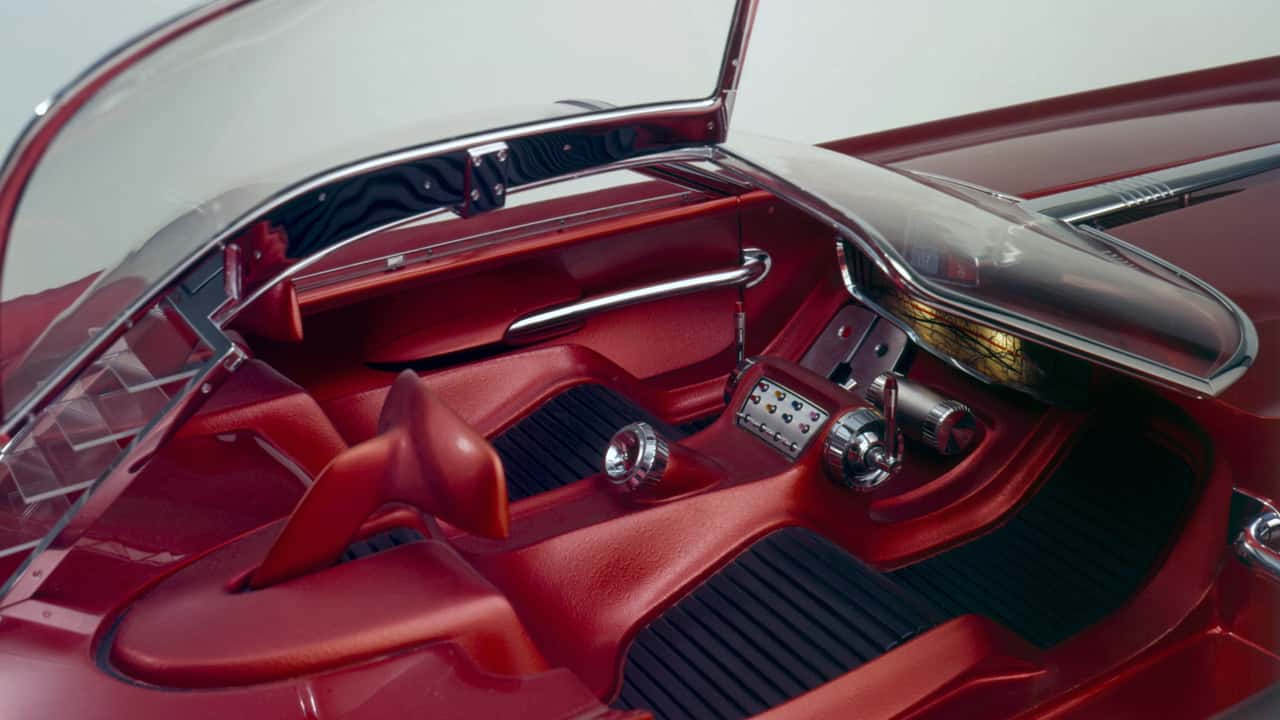
1961 Ford Gyron
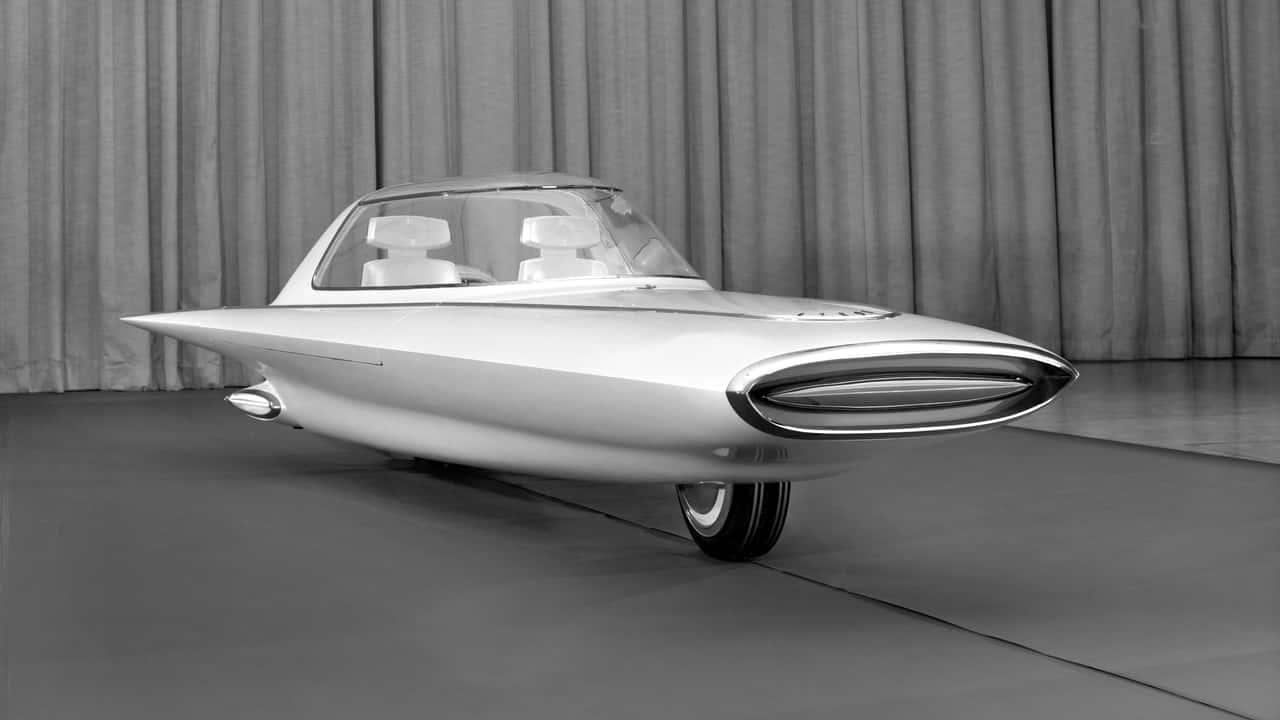
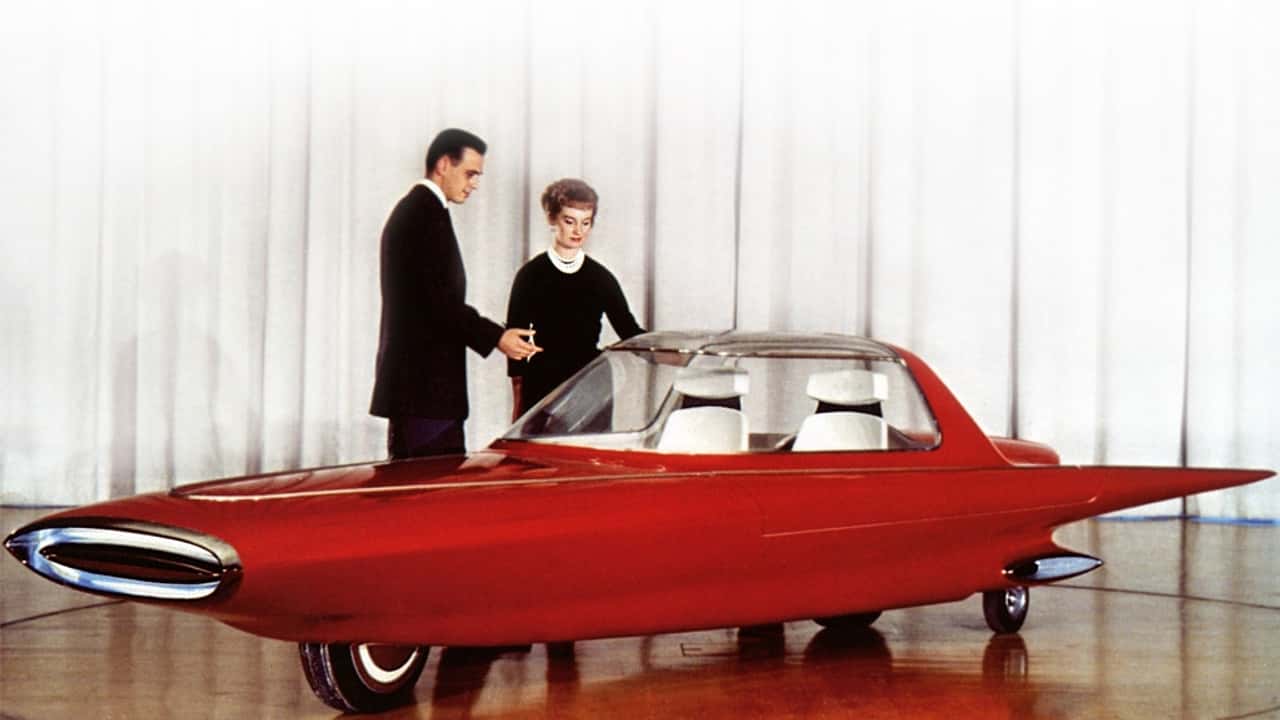
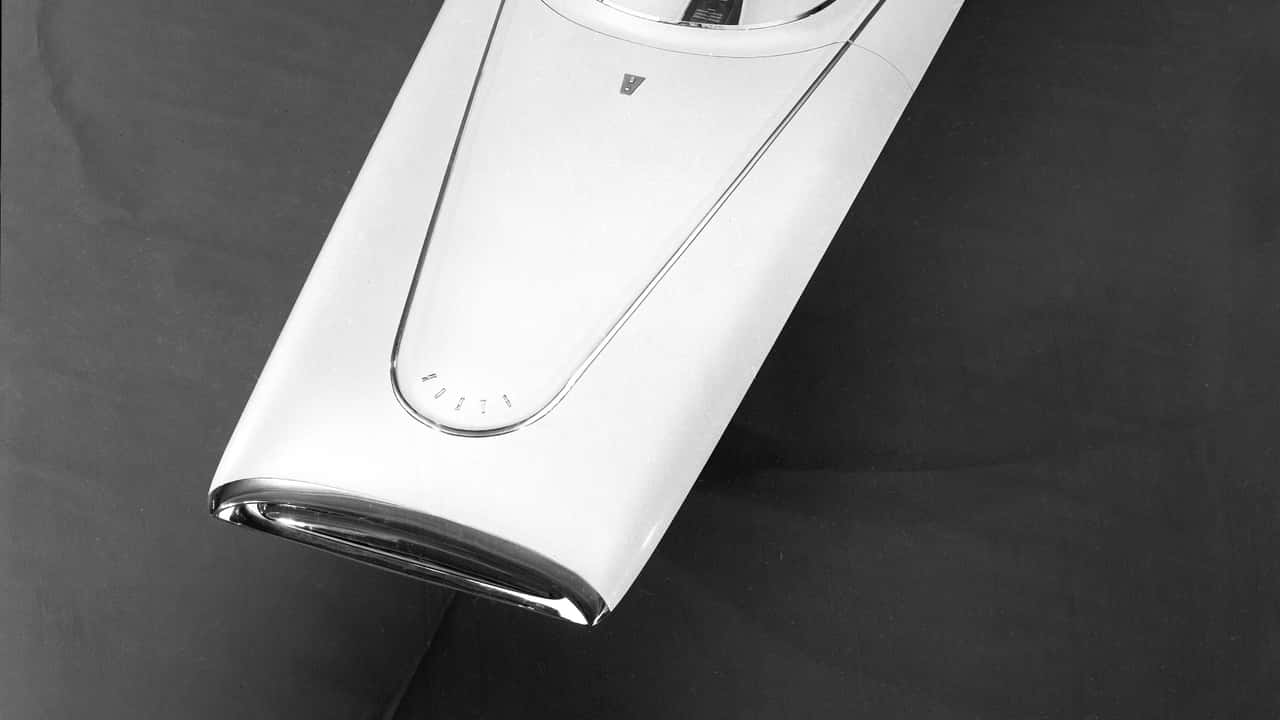
Even among the earliest concepts on this list, the Gyron might be the most literal example of Ford designing a car for the future. Instead of four wheels, it had two, arranged front-to-back like a motorcycle. Gyroscopes would (theoretically) keep the car upright while moving, while small support wheels would drop down to keep it balanced at a stop.
Designed with help from Syd Mead and Alex Tremulis, the Gyron would carry two occupants beneath a huge glass canopy, with an interior filled with futuristic controls and displays. Unfortunately, the show car wasn’t actually capable of operating as a gyroscopic two-wheeler. I know, shocking.
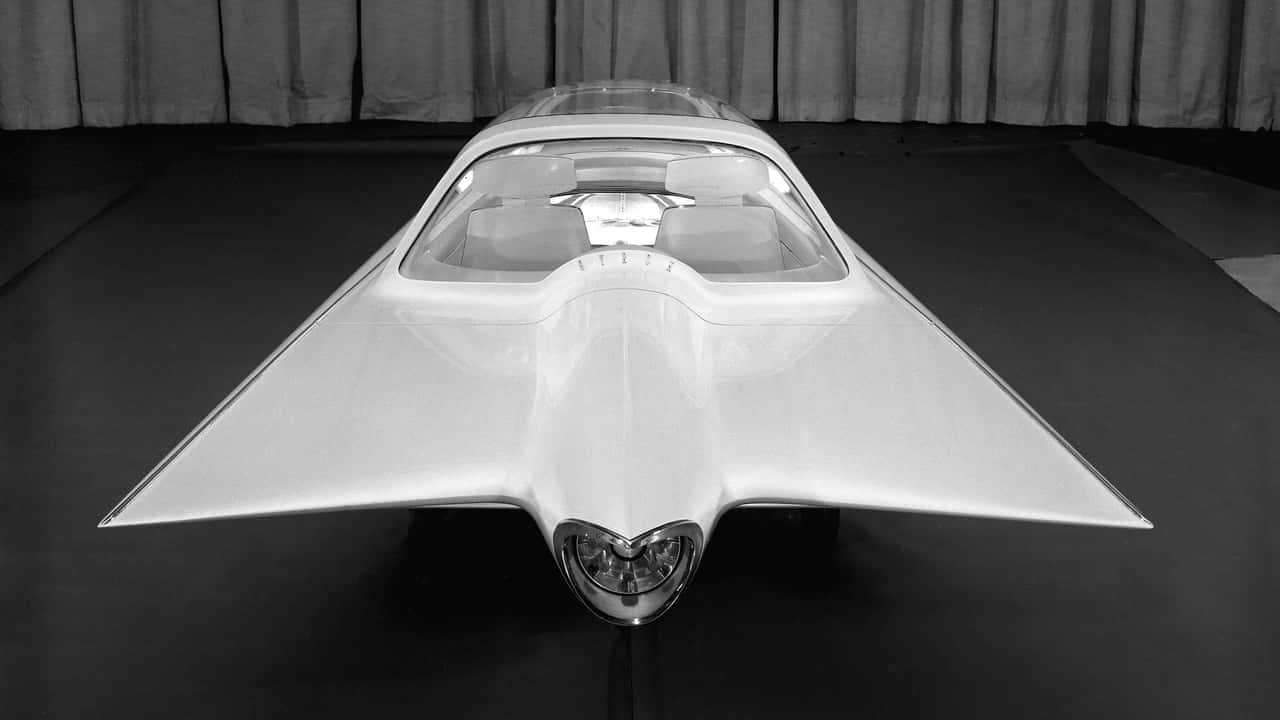
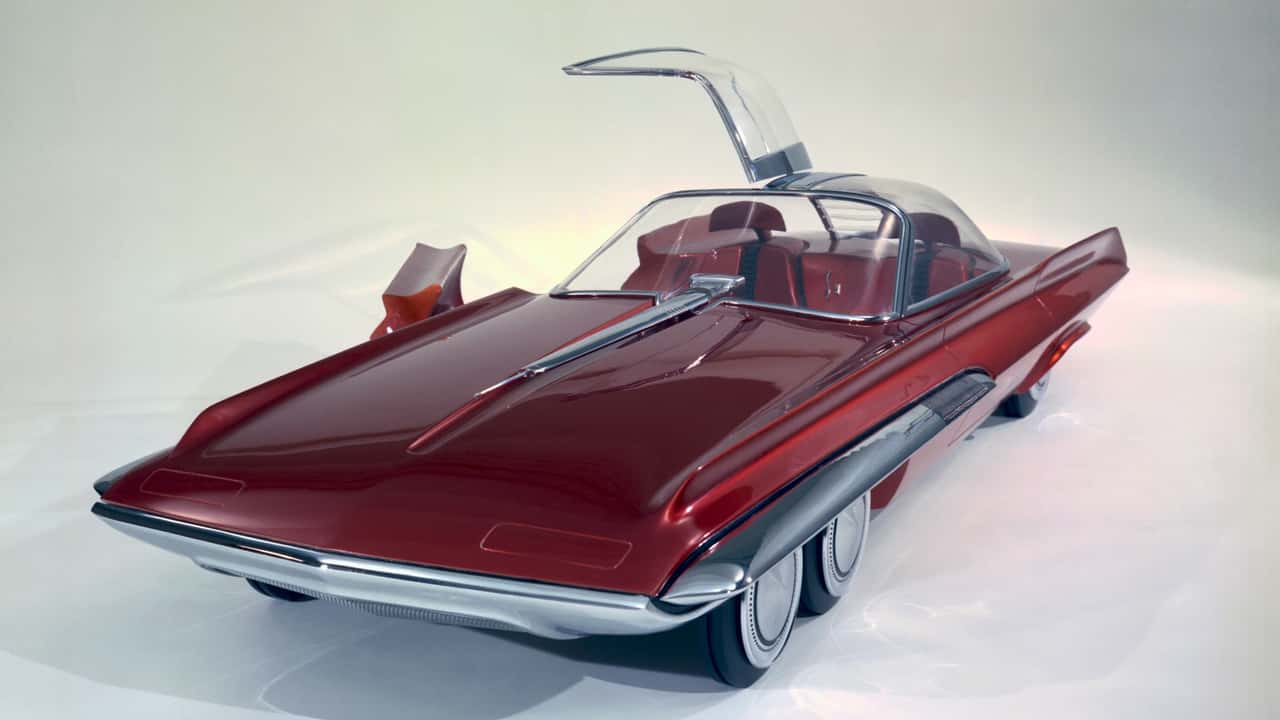
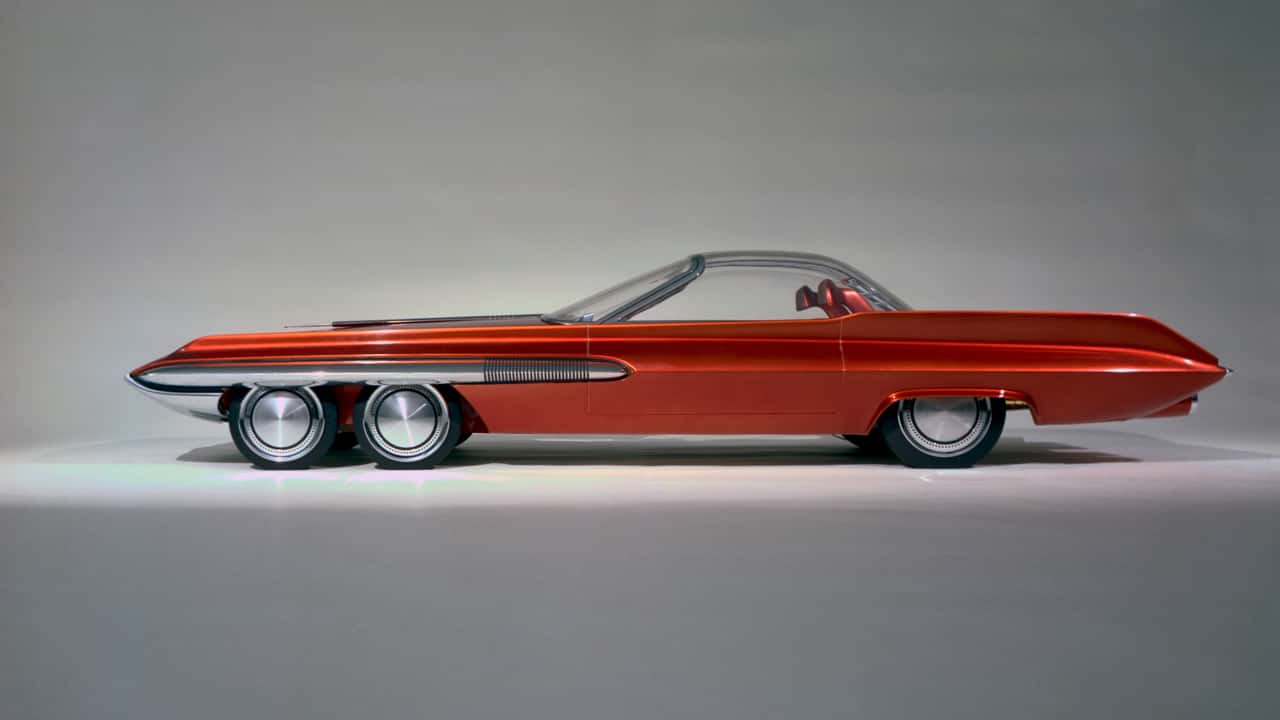
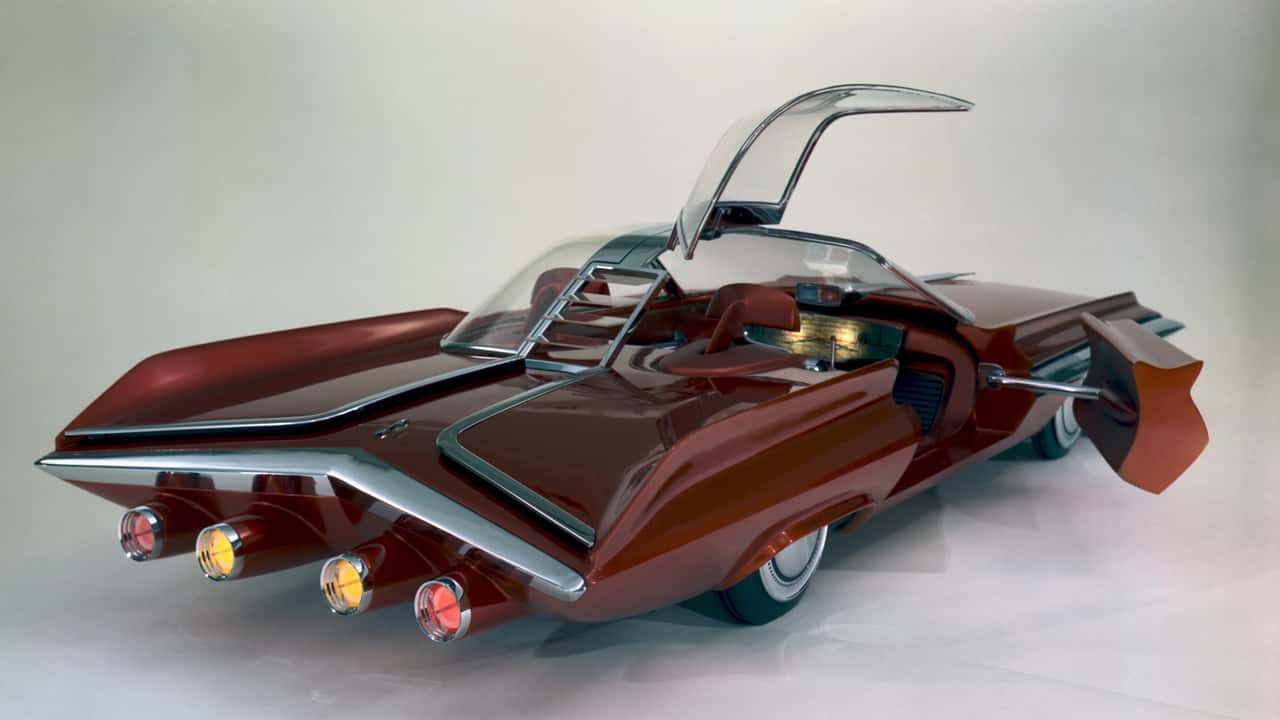
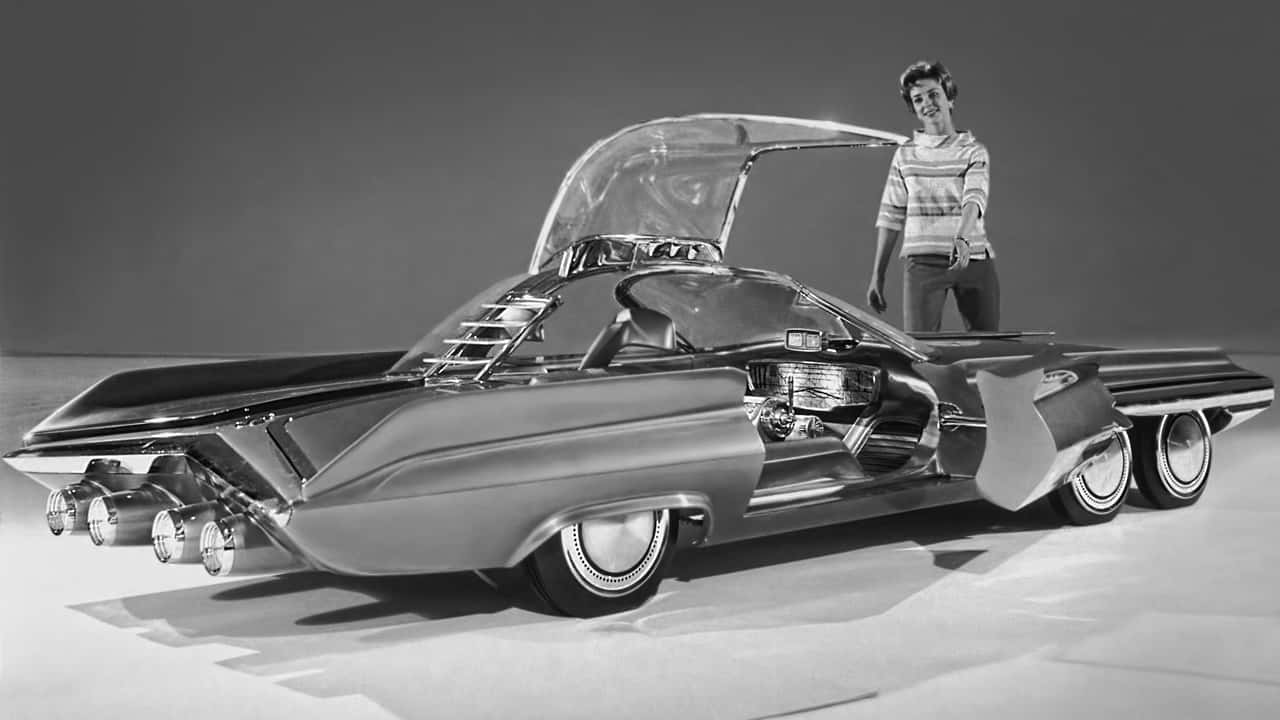
1962 Ford Seattle-Ite XXI
The Seattle-Ite XXI took Ford’s futuristic thinking to an almost absurd level. The company envisioned it as a high-speed, nuclear-powered, six-wheeled highway cruiser. Even stranger, the front portion could theoretically be swapped for a smaller city-driving module once the driver reached the suburbs.
The concept also imagined interchangeable power units, computer-assisted navigation, weather information, and “fingertip steering”—whatever that means. It never made it past the 3/8-scale model, but several of its ideas would live on in other Ford concepts.
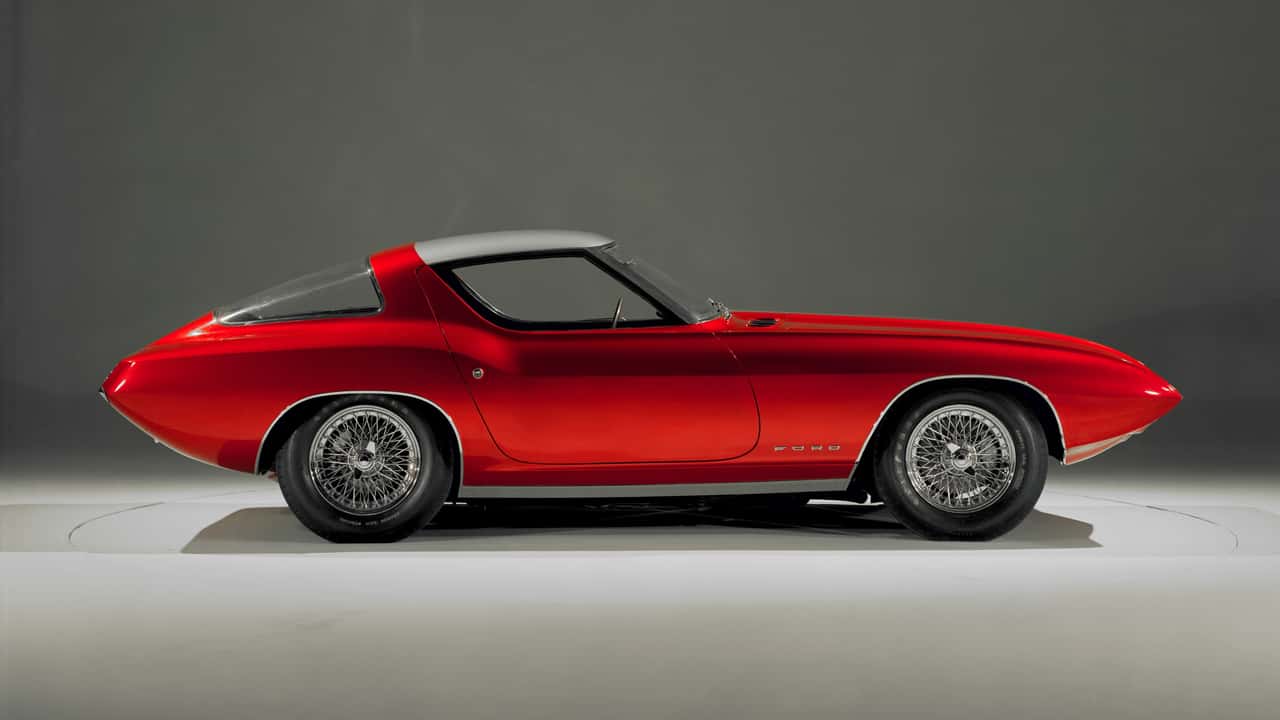
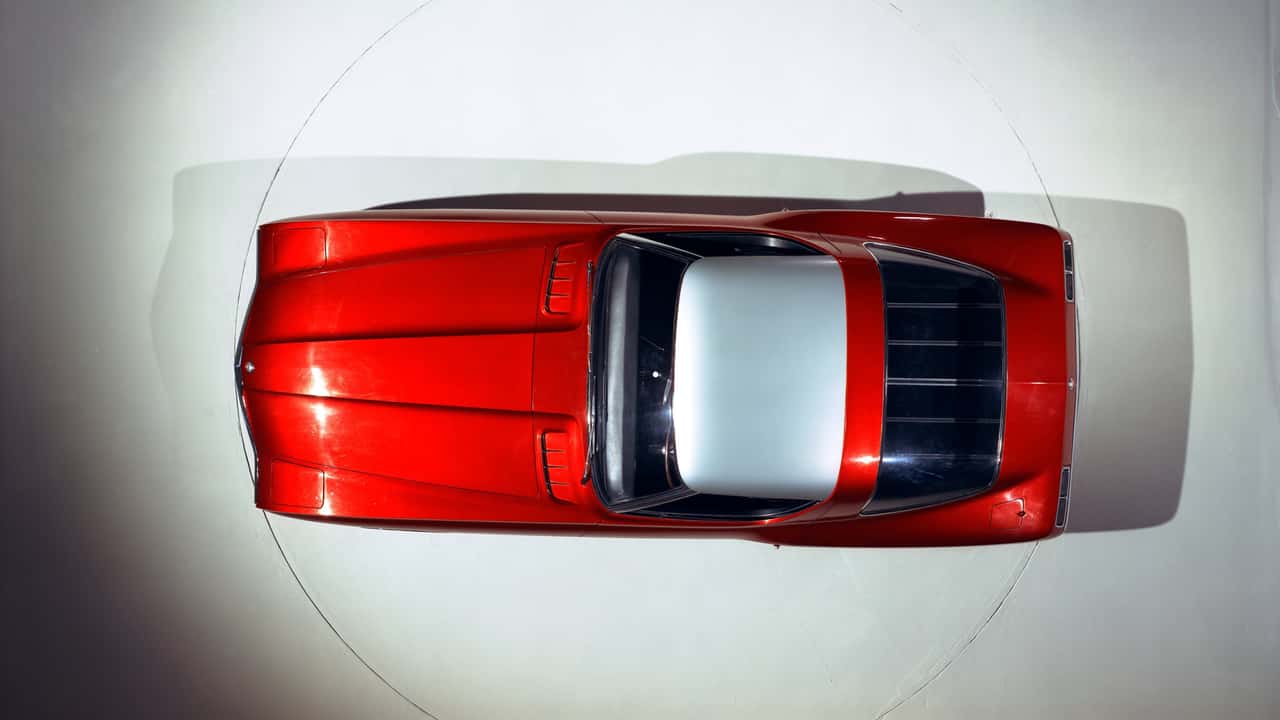
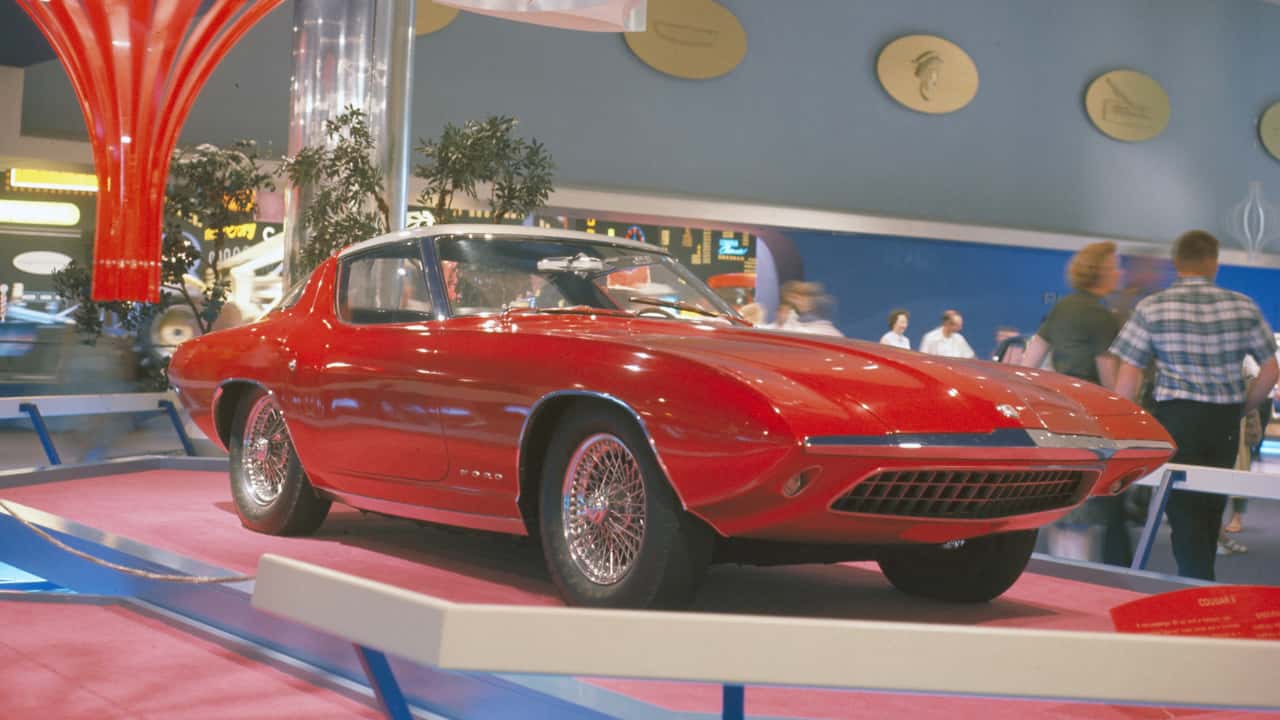
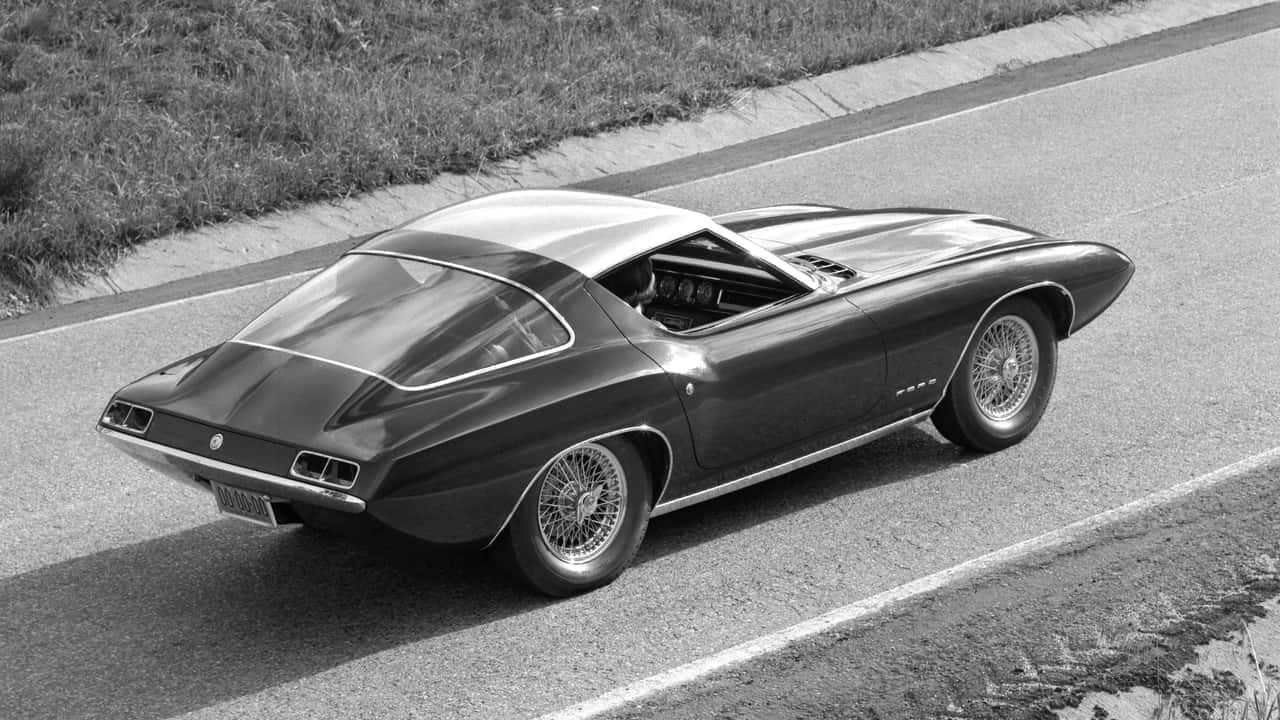
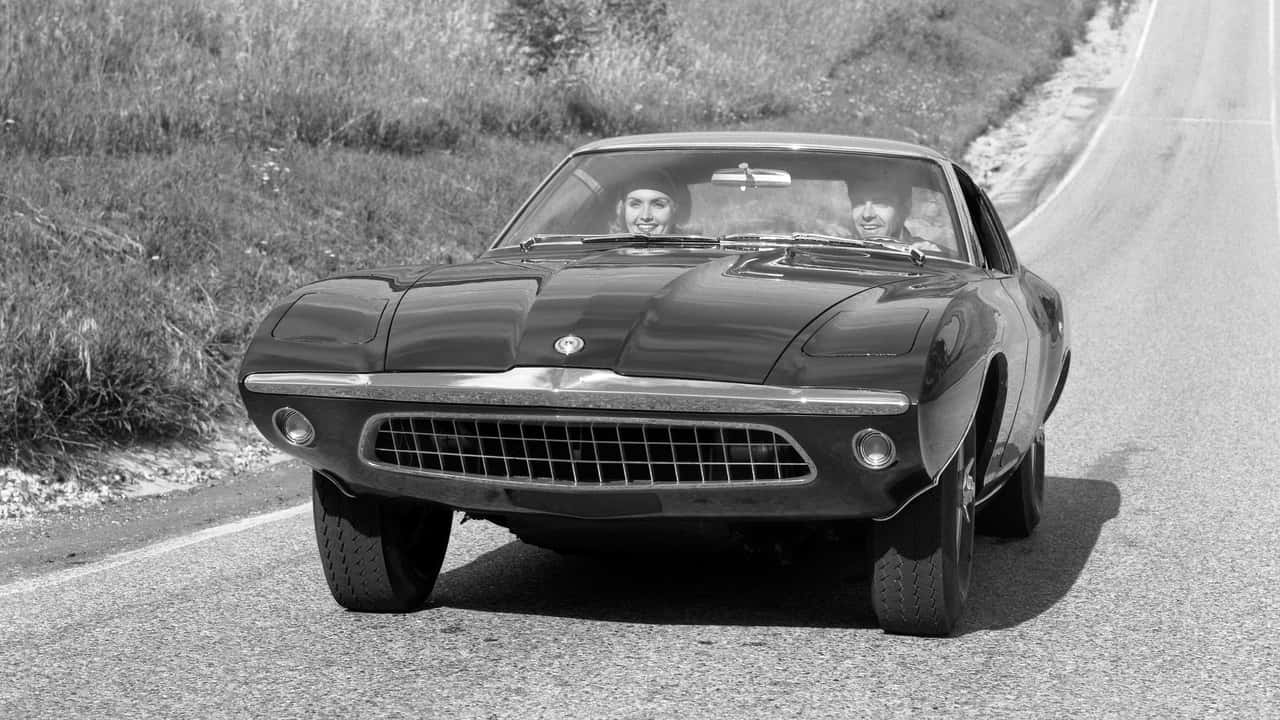
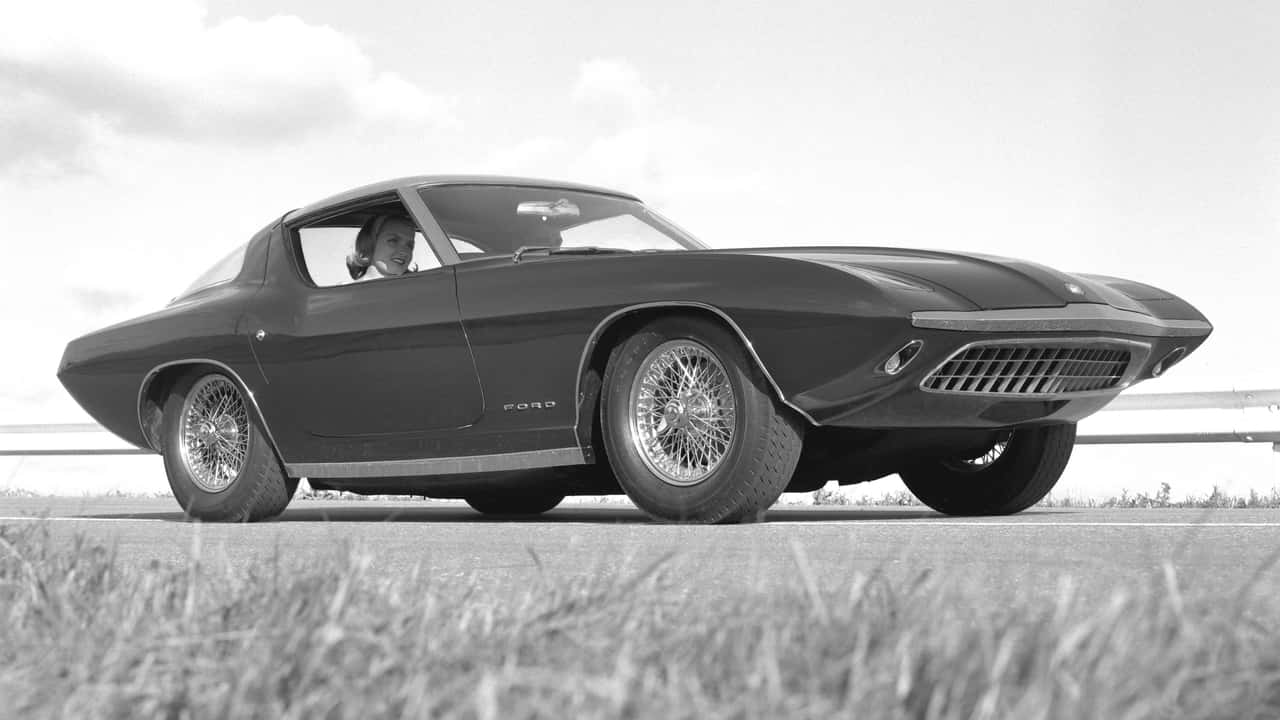
1963 Ford Cougar II
Ford was slowly moving away from its space-age styling in the 1960s, and the Cougar II was one of the first signs of that shift. It looked like Ford’s answer to the Corvette, with a sleek red body hiding some serious hardware underneath: a Shelby Cobra chassis, a 289-cubic-inch V8, and a four-speed manual transmission.
The design came from Ford stylist Eugene Bordinat, and the concept was shown at the 1963 Chicago Auto Show before appearing at the 1964–65 New York World’s Fair. It never became a production sports car, but it was one of Ford’s more convincing early performance concepts.
1970 Ford Mustang Milano
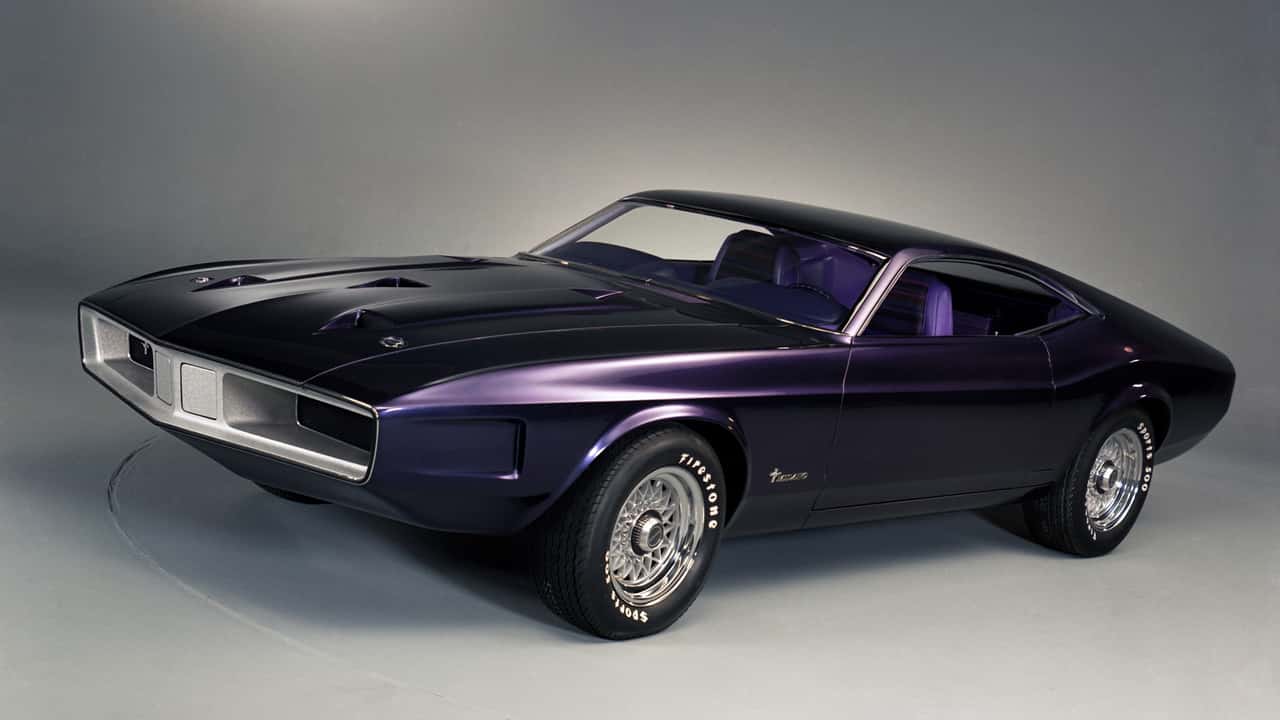
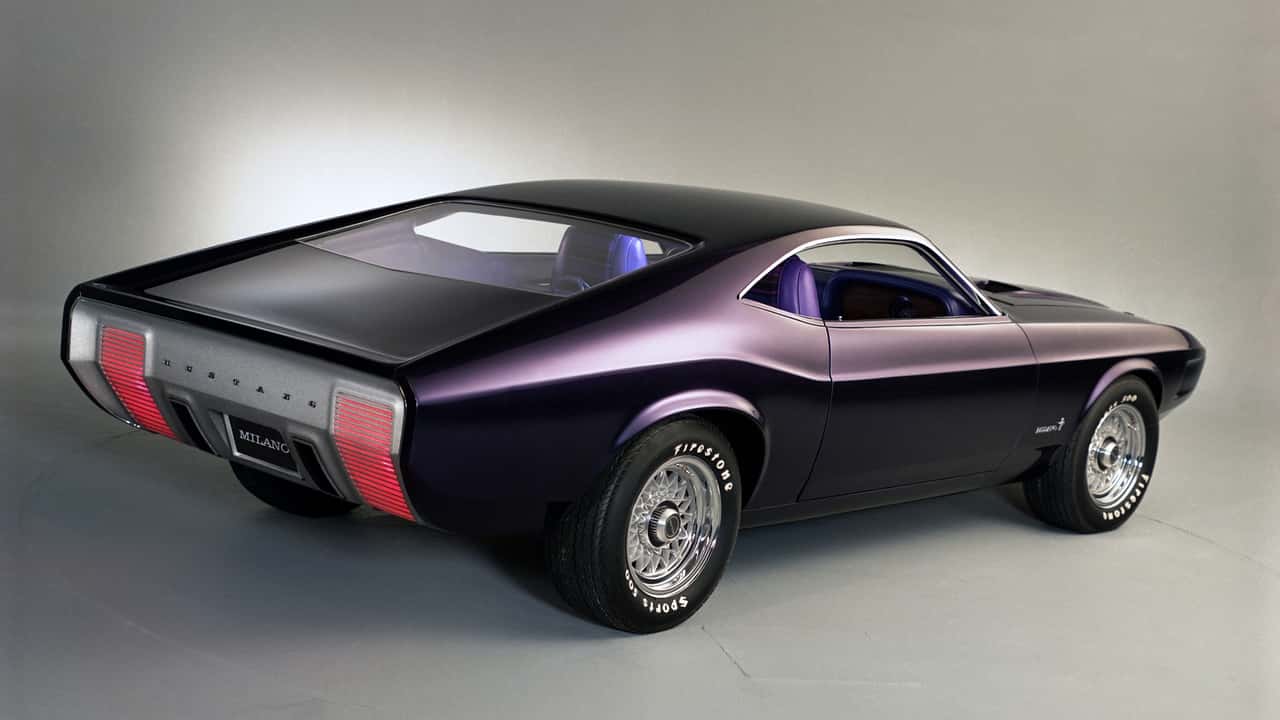
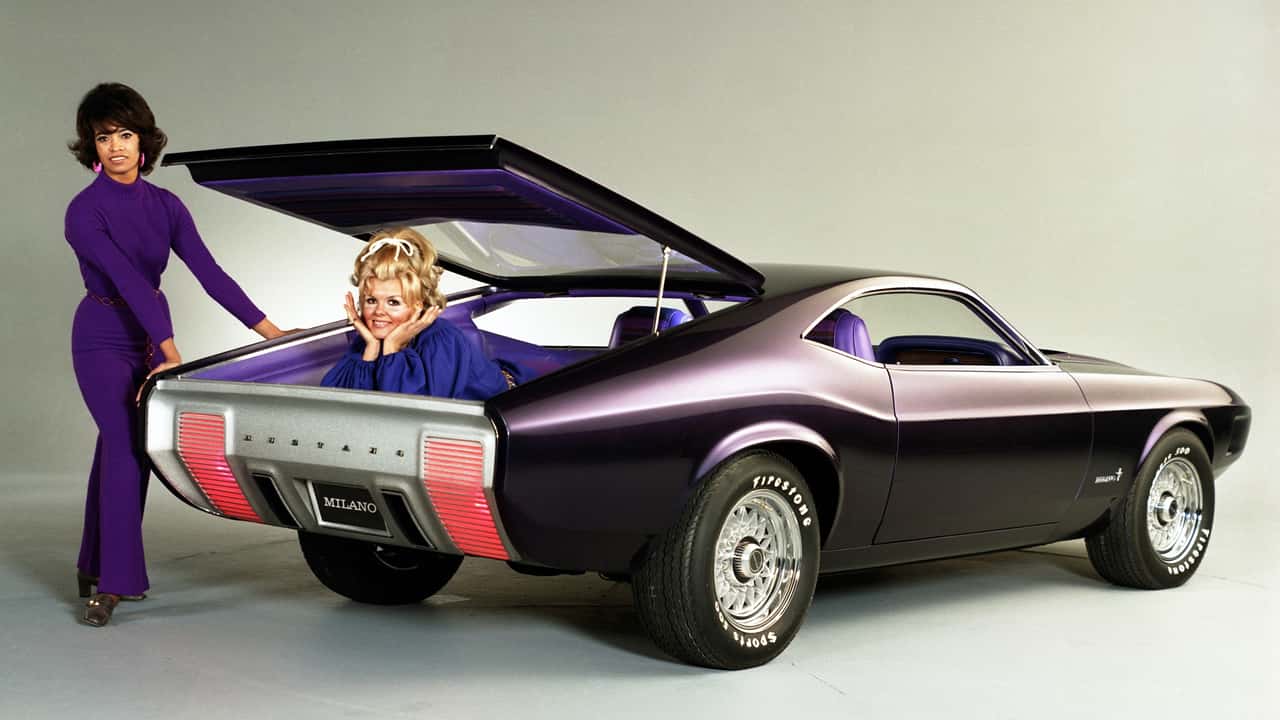
The Mustang Milano barely resembled the Mustang that debuted just six years earlier. Ford chopped the roof, stretched the body, and gave it a dramatically sloped windshield. Finished in an unmistakable shade of Ultra Violet (bring back purple), the 43.0-inch-tall concept was one of the wildest Mustang interpretations Ford had produced up to that point.
It also had some decent performance hardware—at least in theory. The Milano featured NACA-style hood ducts, a rear spoiler, early cast-aluminum wheels, and taillights that changed color depending on whether the car was accelerating, coasting, or braking. Some of its design cues eventually influenced the 1971 Mustang, while its styling also had an impact on Ford’s Australian Falcon.
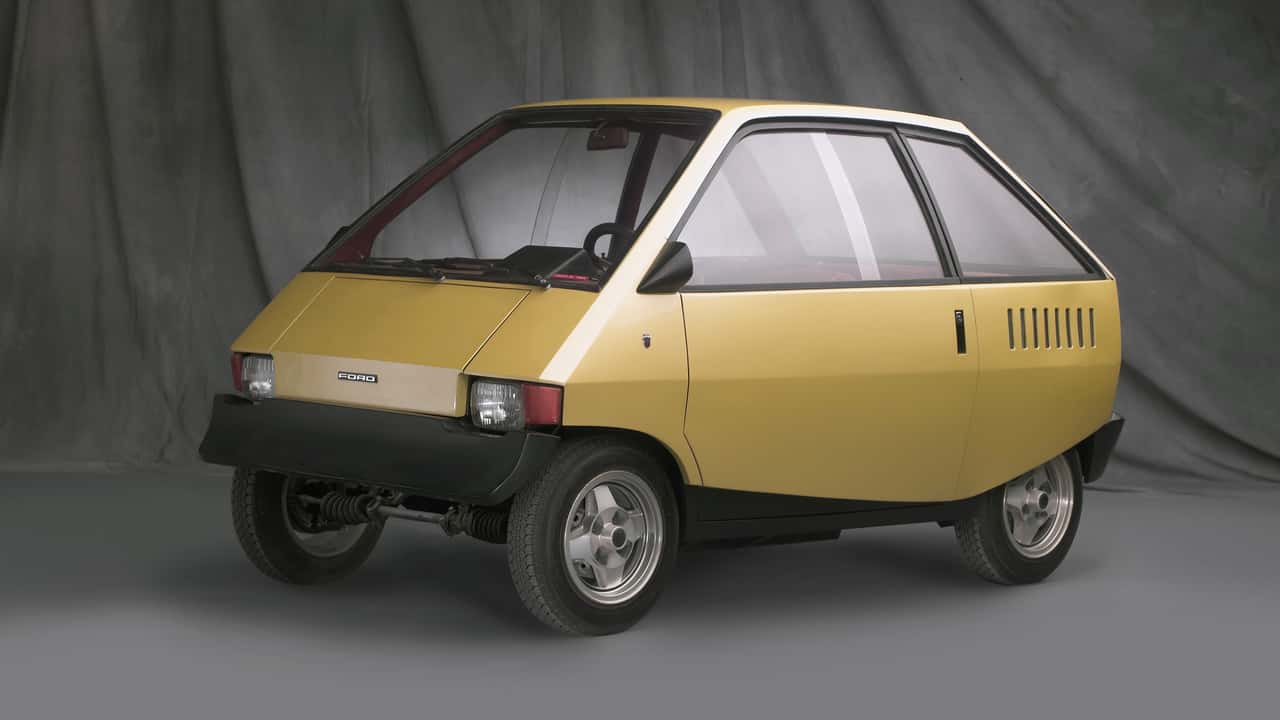
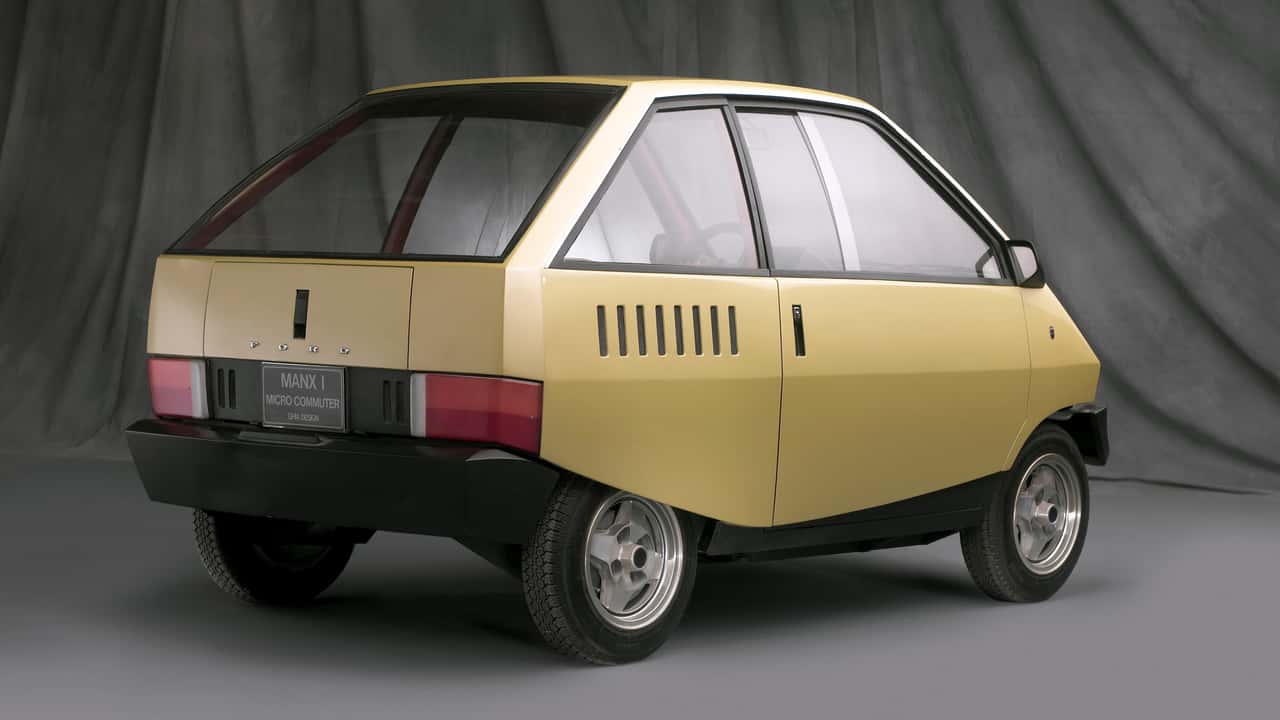
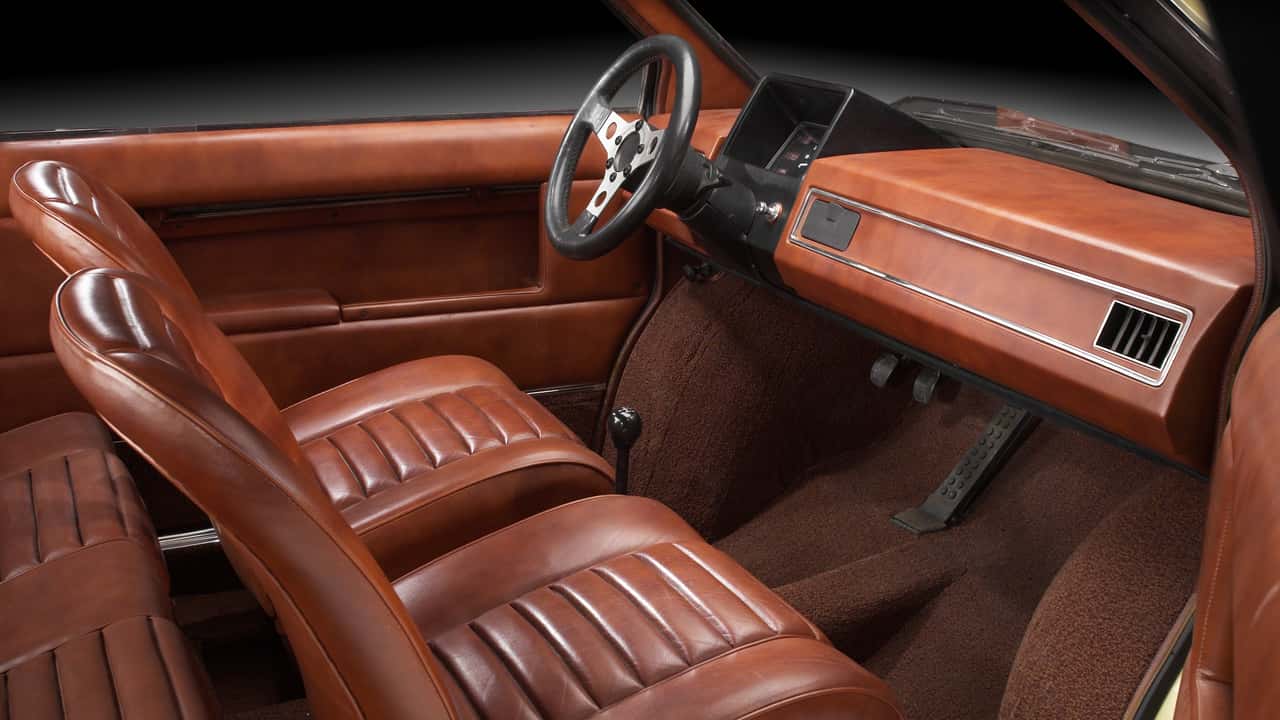
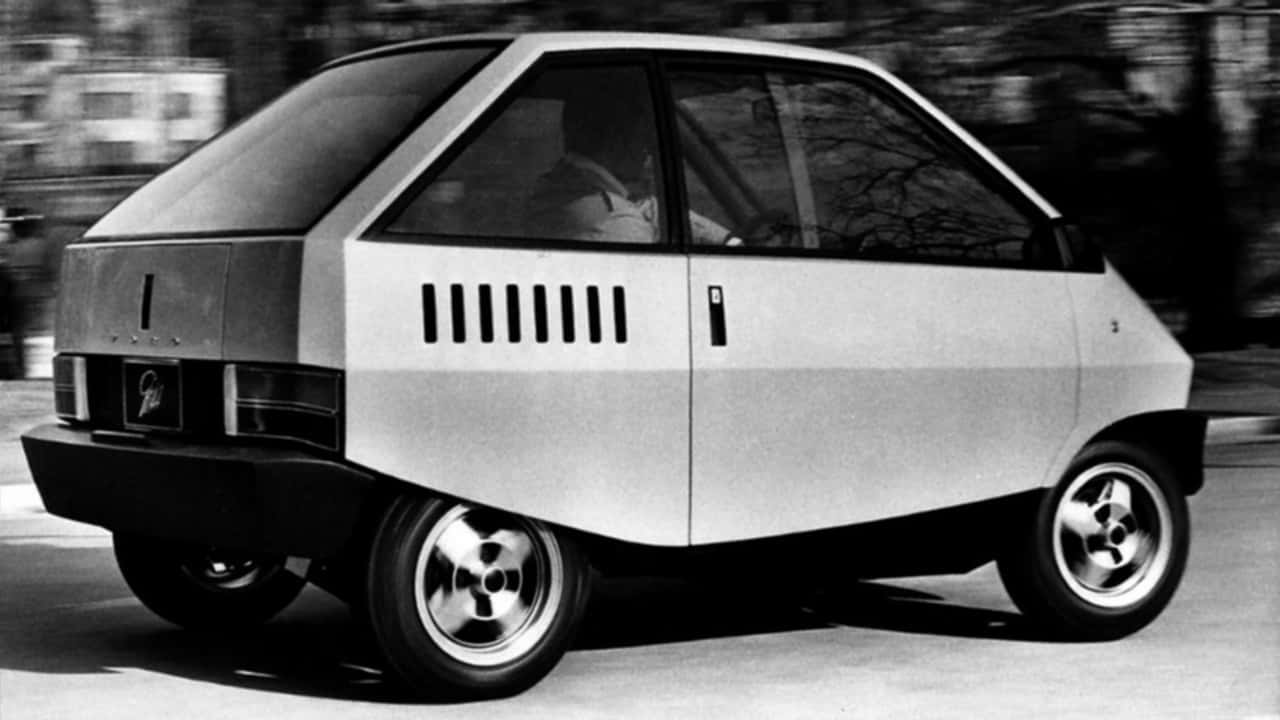
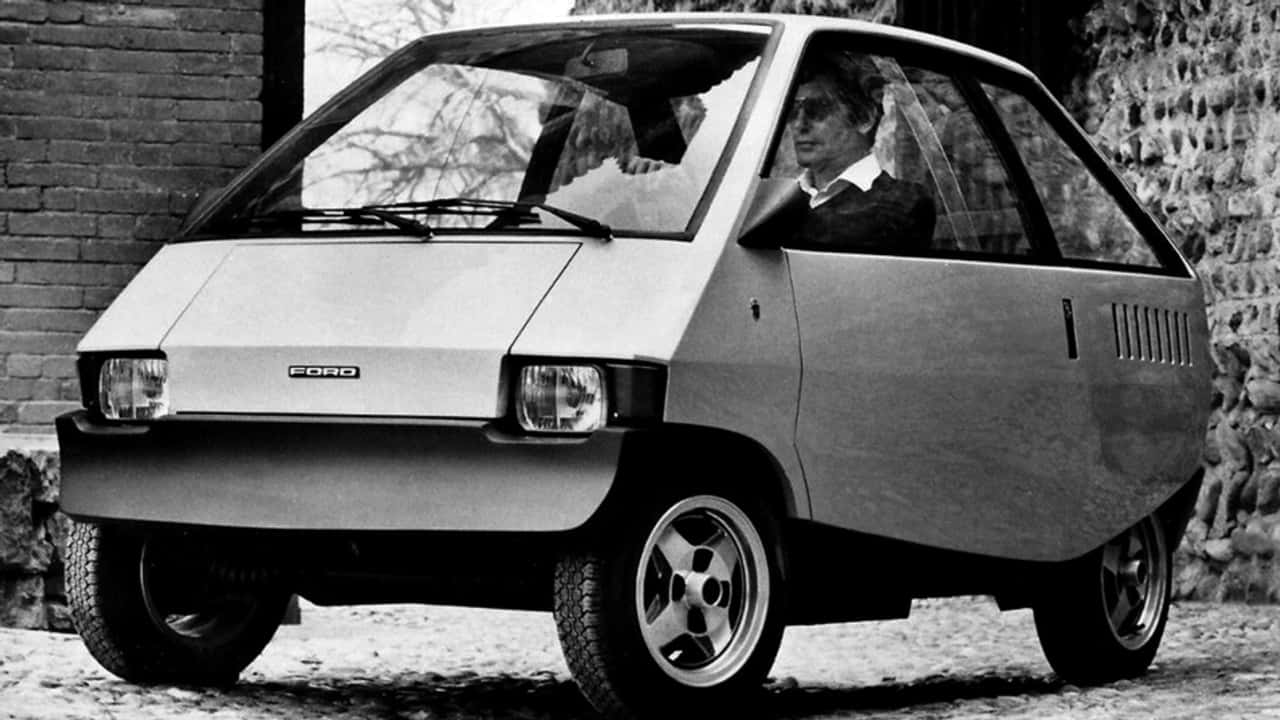
1975 Ford Urban Car
Also known as the Ghia Manx, the Ford Urban Car was about as far removed from the giant American vehicles of the 1970s as you could get. It was a tiny city-car concept built around the idea that urban transportation didn’t need to be enormous. It had a short, compact body designed to maximize interior space without taking up much road.
The concept was developed by Ford and Ghia during the 1970s and became closely associated with the push toward smaller, European-style cars that defined the Fiesta era.
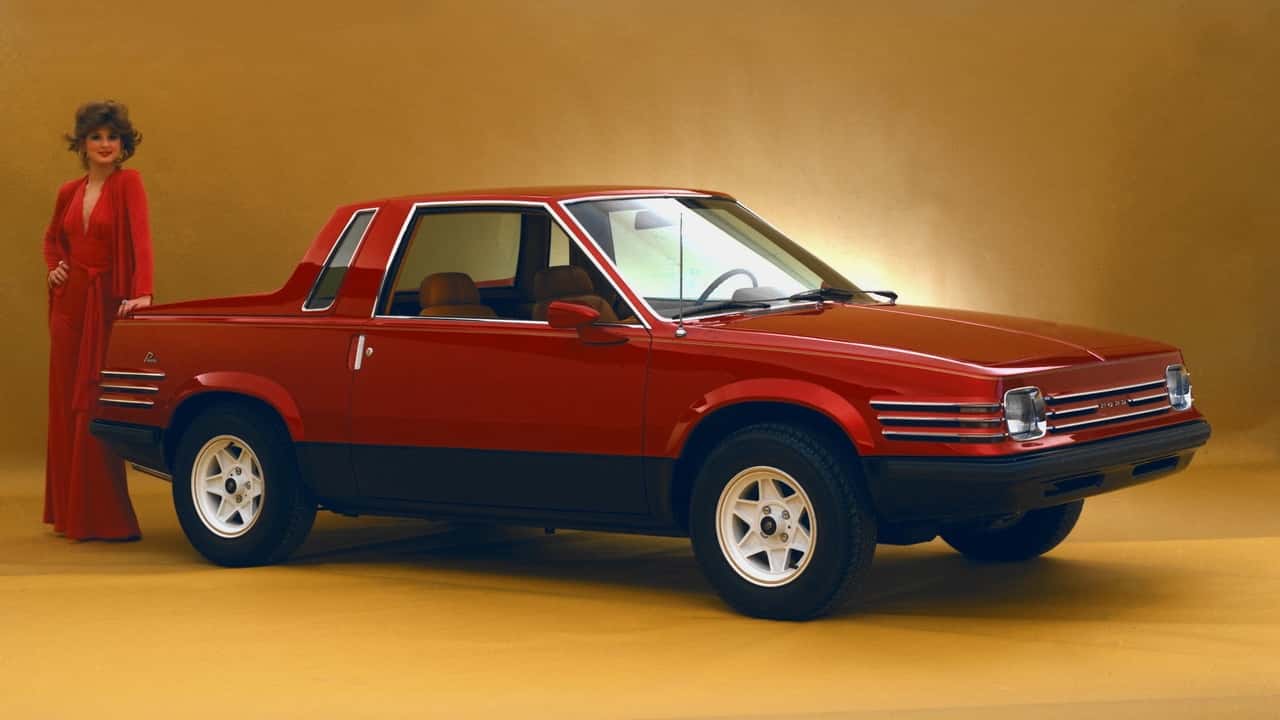
1976 Ford Prima
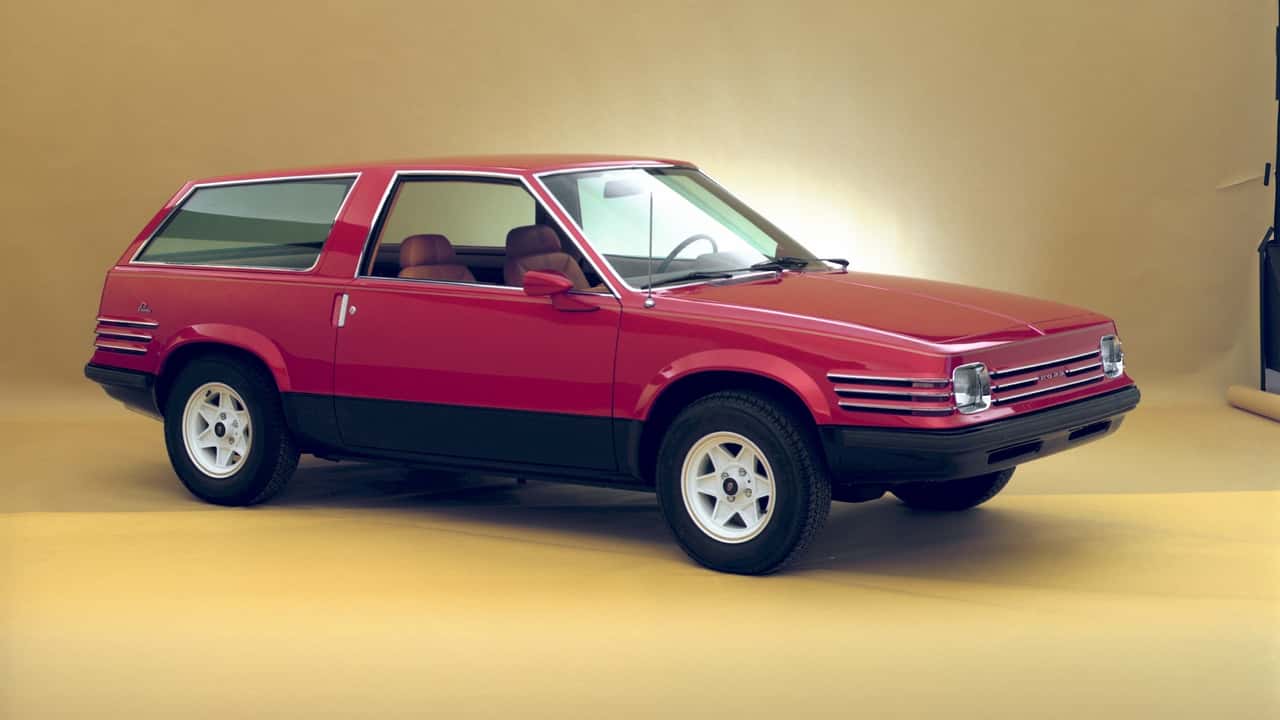
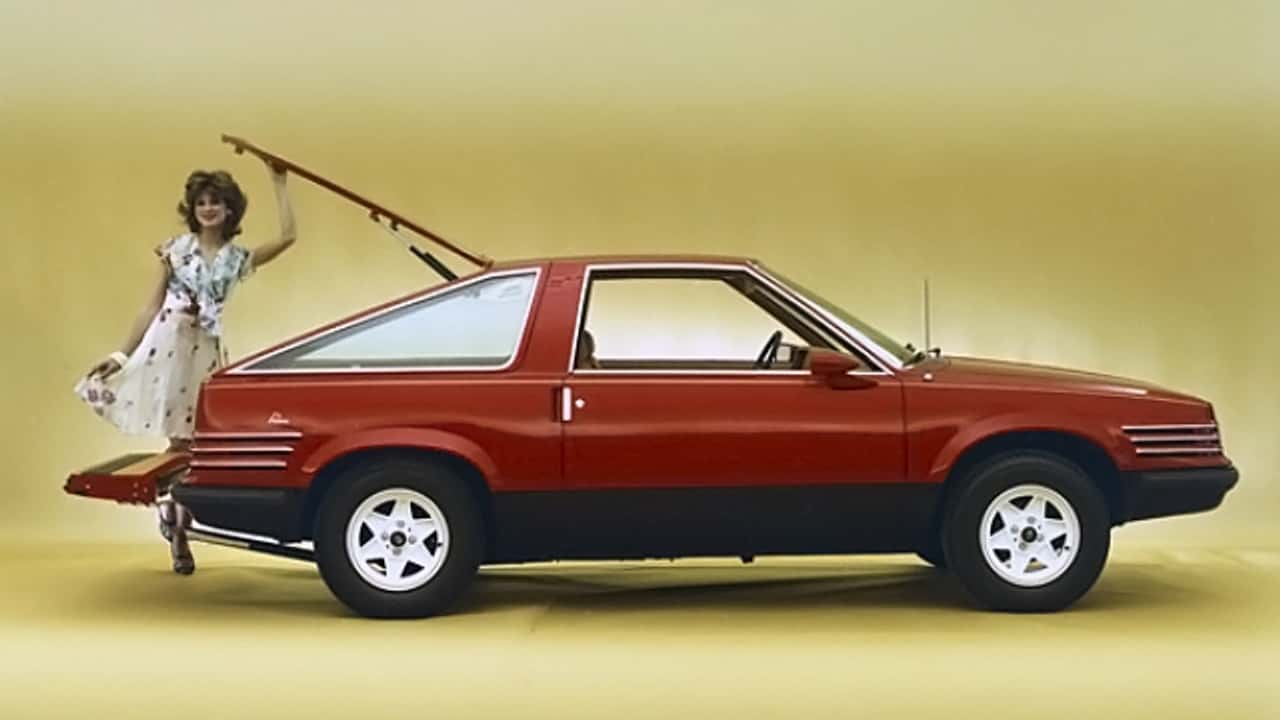
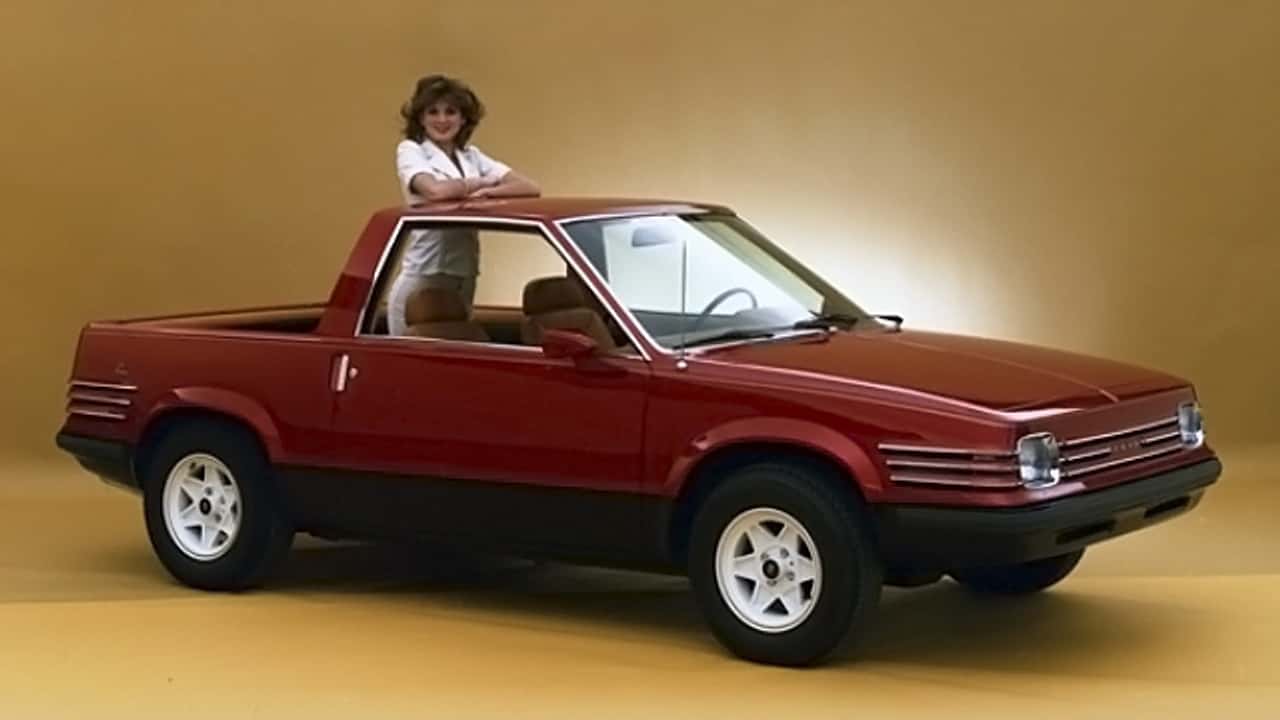
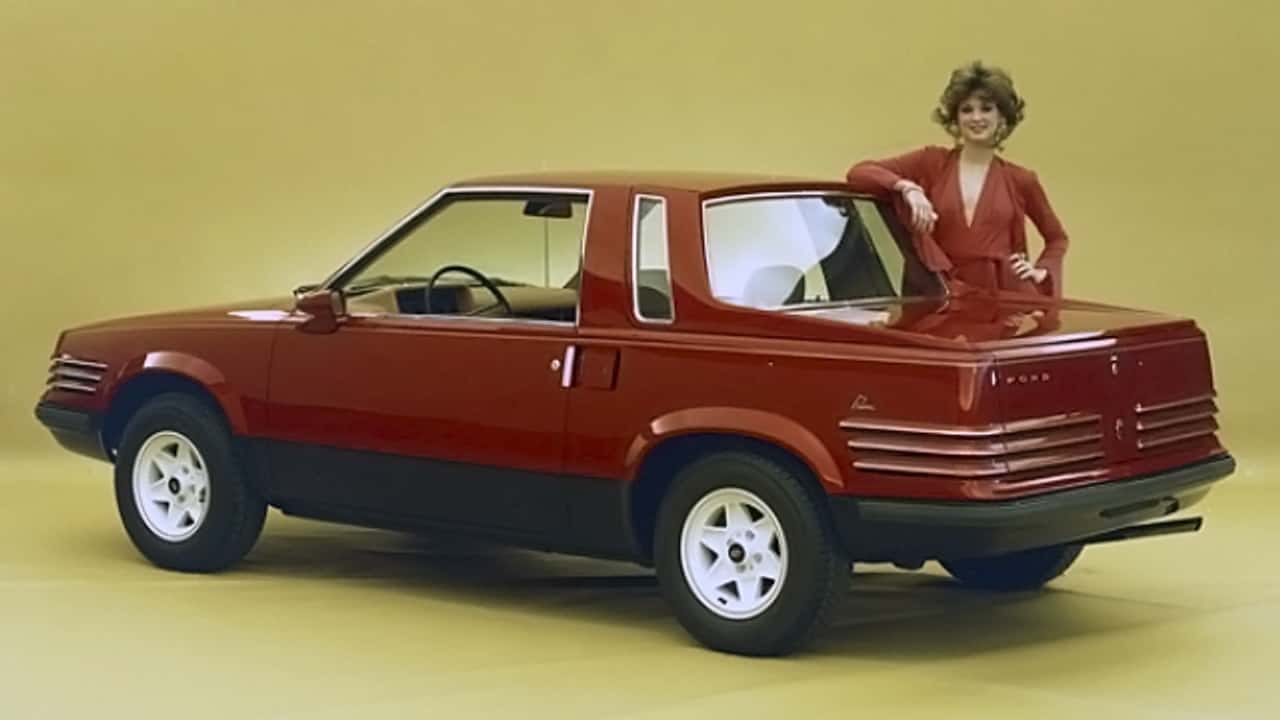
The Prima was essentially four cars hiding inside one tiny Ford. In its basic configuration, it was a two-seat pickup, but Ford designed it with removable tops that could transform it into a sports coupe, a 2+2 fastback, or a four-seat station wagon.
Developed by Ford’s Dearborn design operation with Ghia in Turin, Italy, the Prima was an early experiment in modular vehicle design. It was a clever idea decades before automakers started making modular platforms a major part of their development strategies.
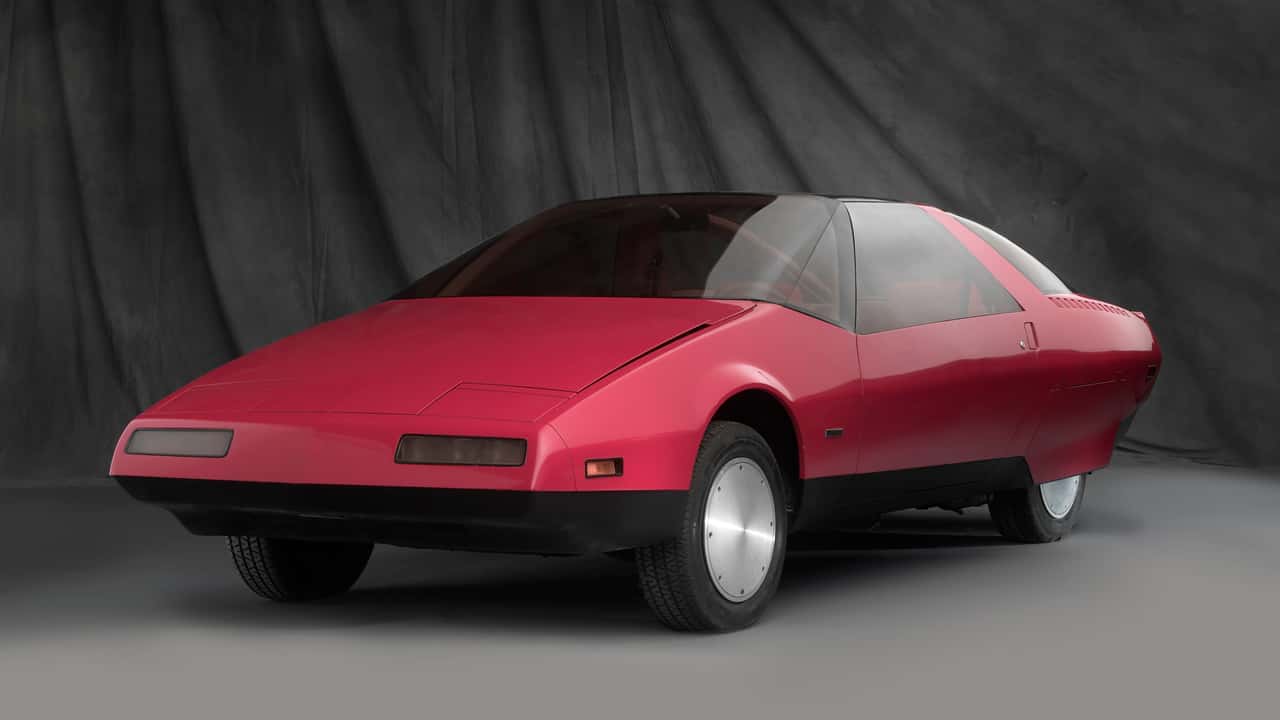
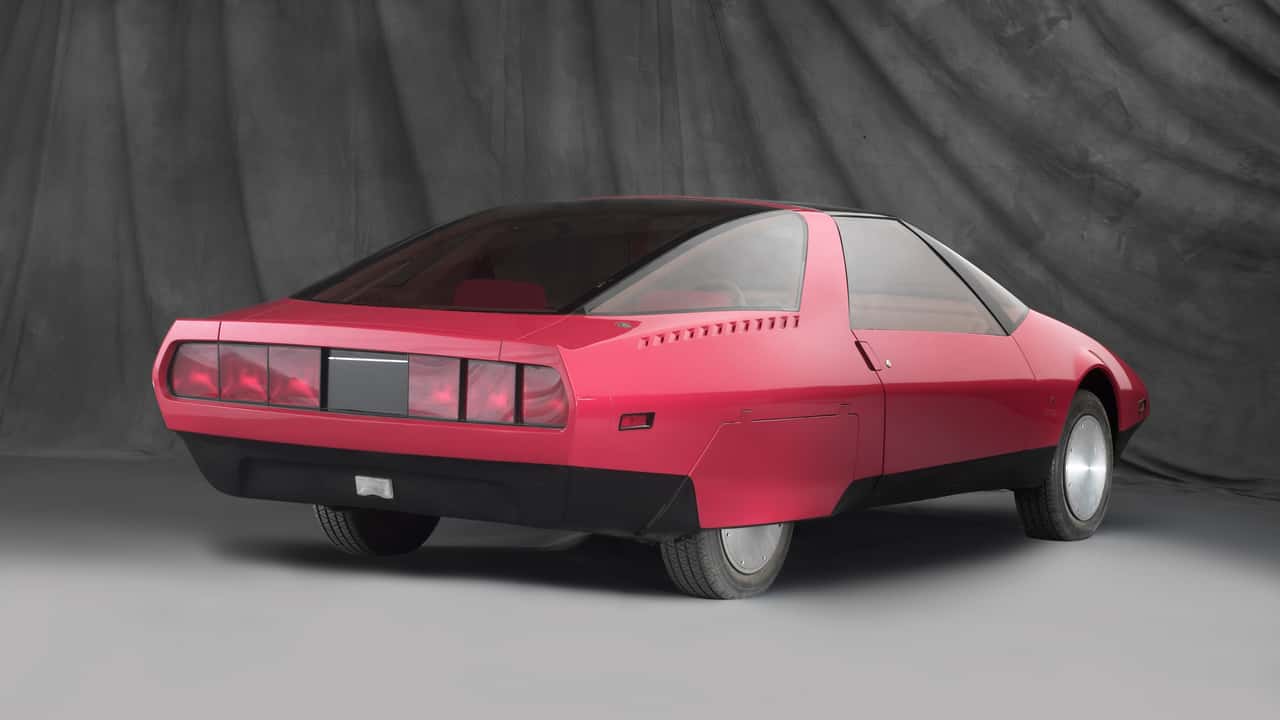
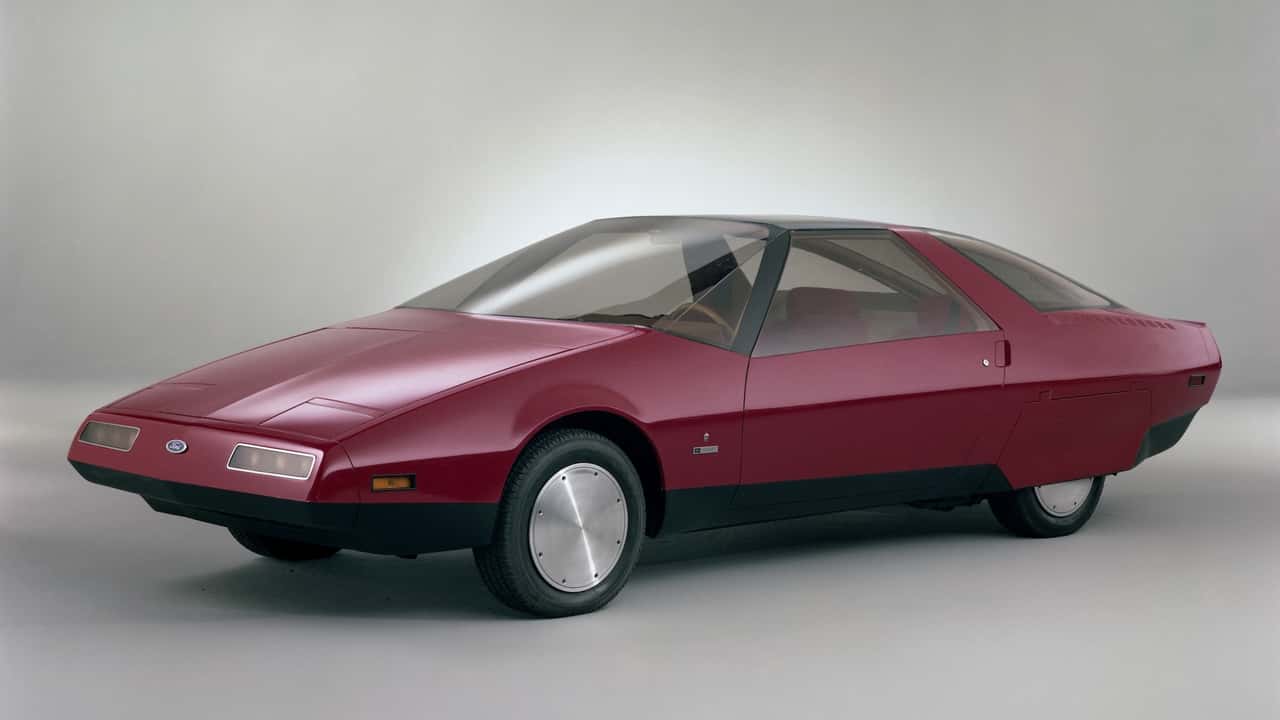
1979 Ford Probe I
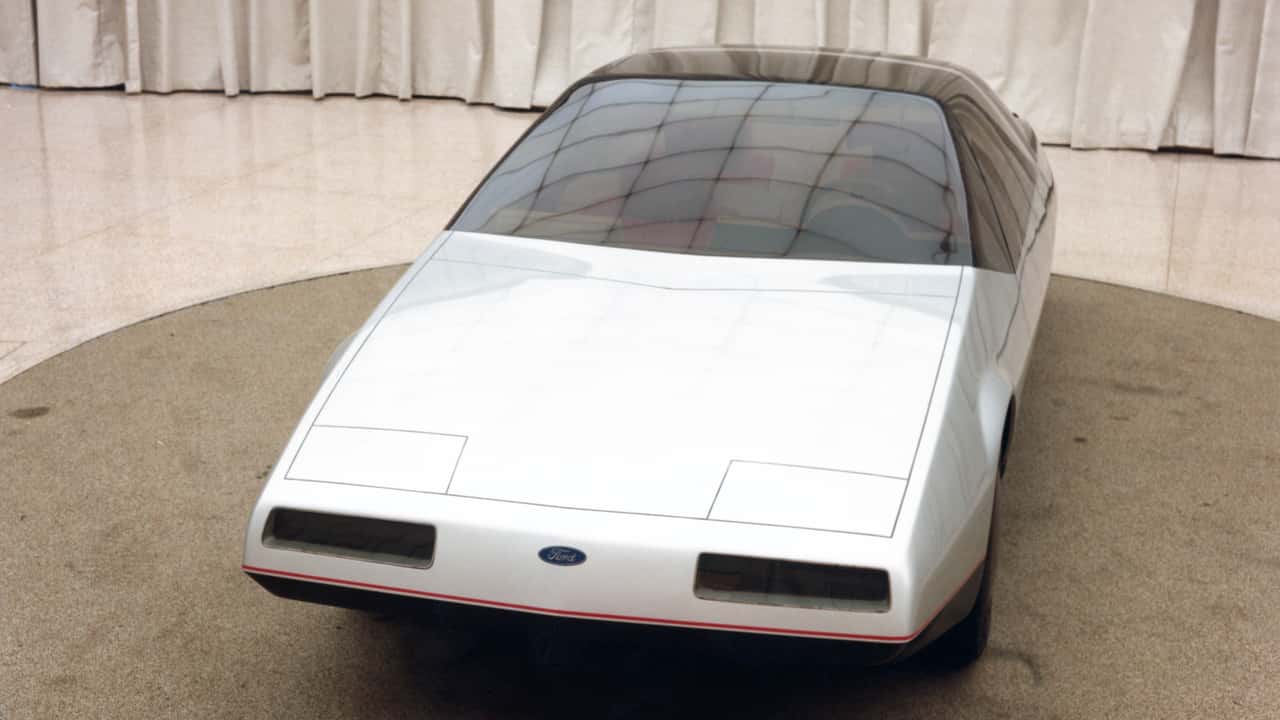
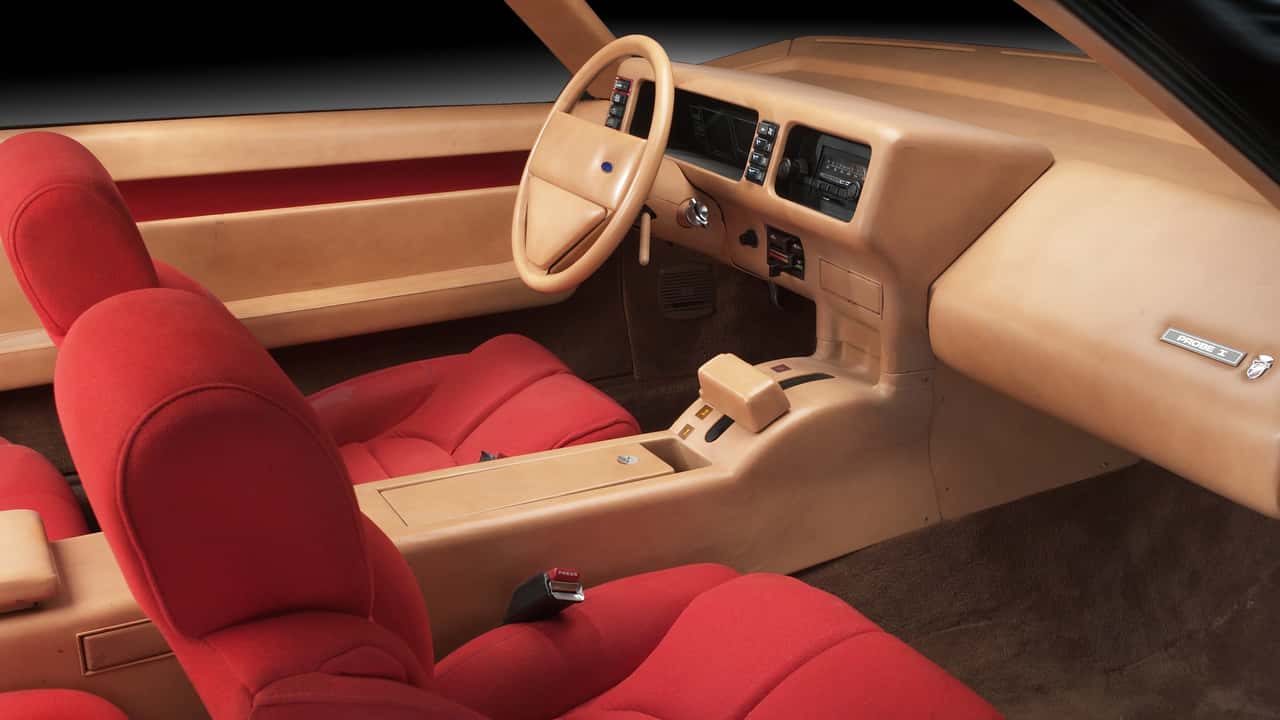
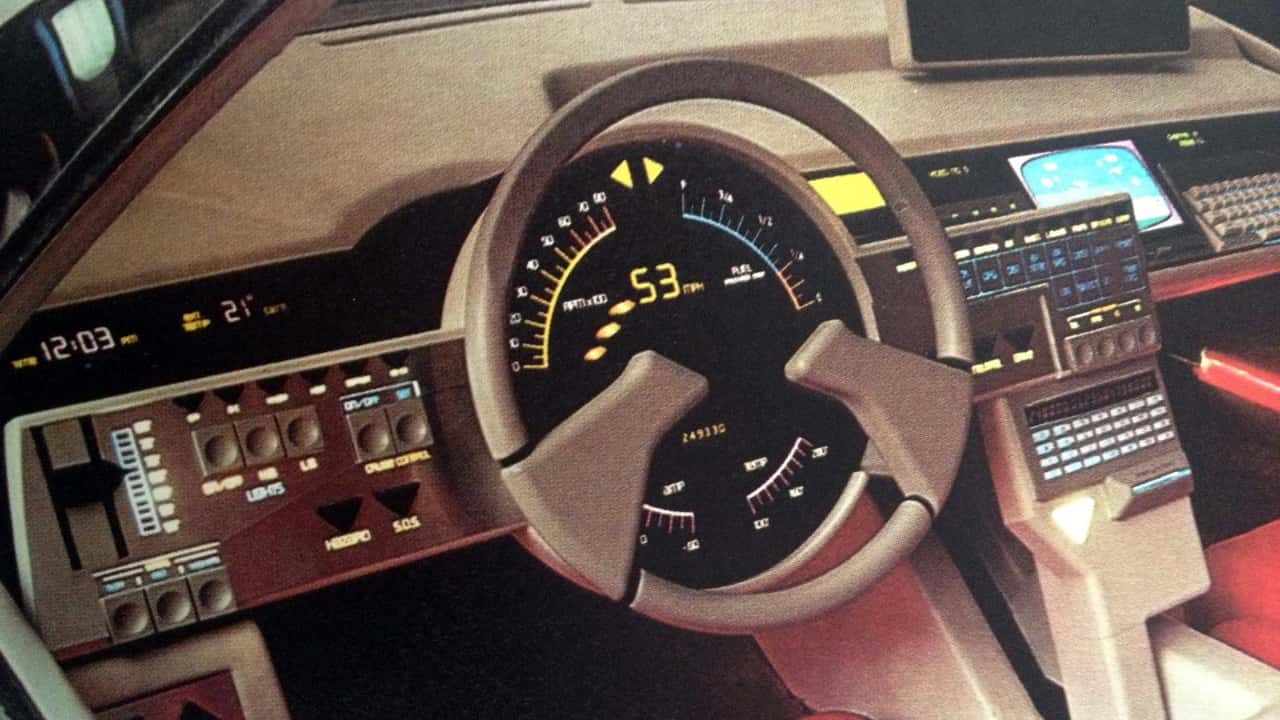
The first Probe was weird because it wasn’t trying to predict some distant technological future. Instead, it tried to solve a much more immediate problem: fuel economy. Designed by Ford’s Don Kopka with Ghia, the Probe I used an extremely slippery wedge shape, covered rear wheels, flush surfaces, and a glassy passenger compartment to reduce aerodynamic drag.
It was based on a Mustang platform, but you’d never know it by looking at the thing. Ford claimed the shape dramatically reduced drag compared with contemporary sports coupes. The Probe I kicked off a five-car series of aerodynamic experiments that eventually helped push Ford toward the rounded, slippery styling that defined cars like the Taurus.
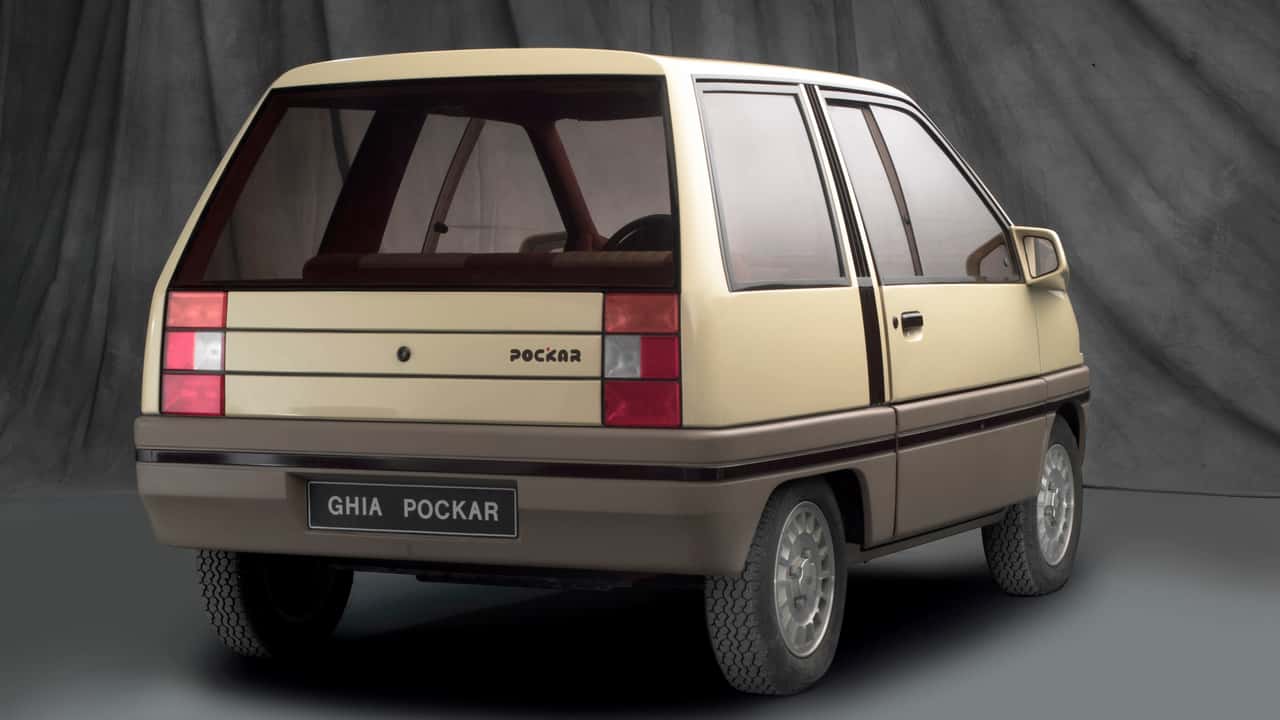
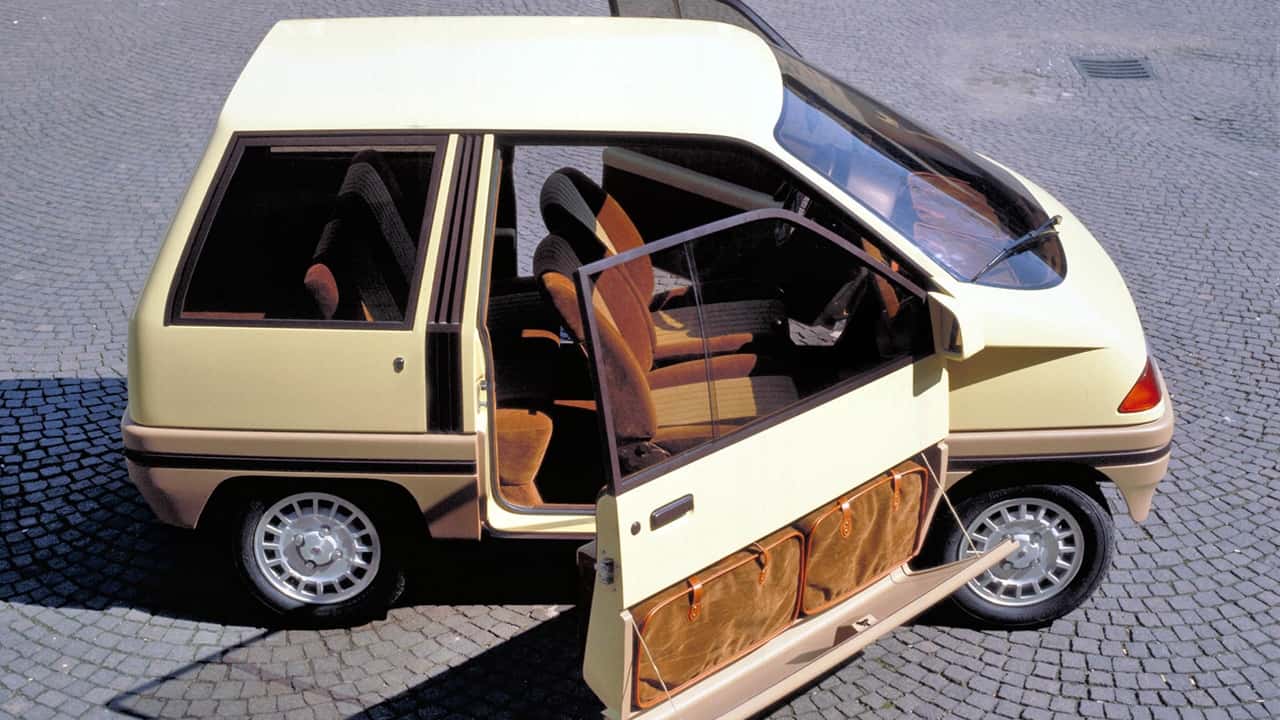
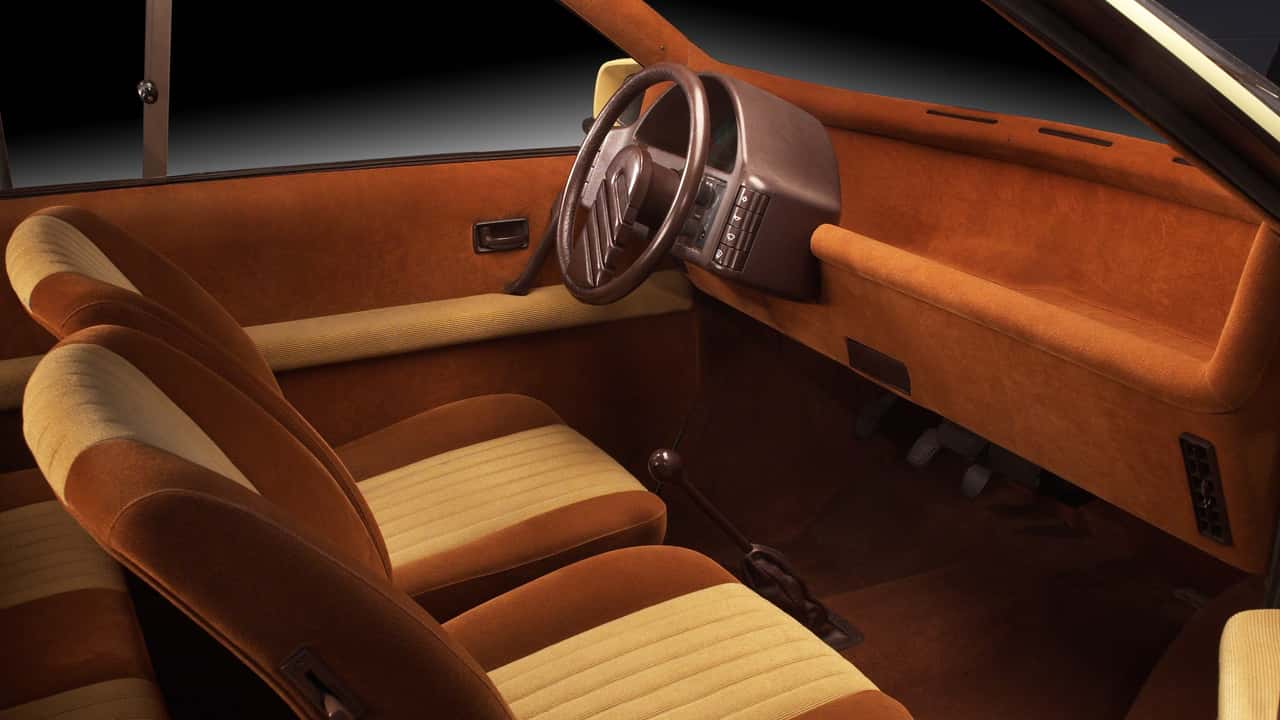
1980 Ford Pockar
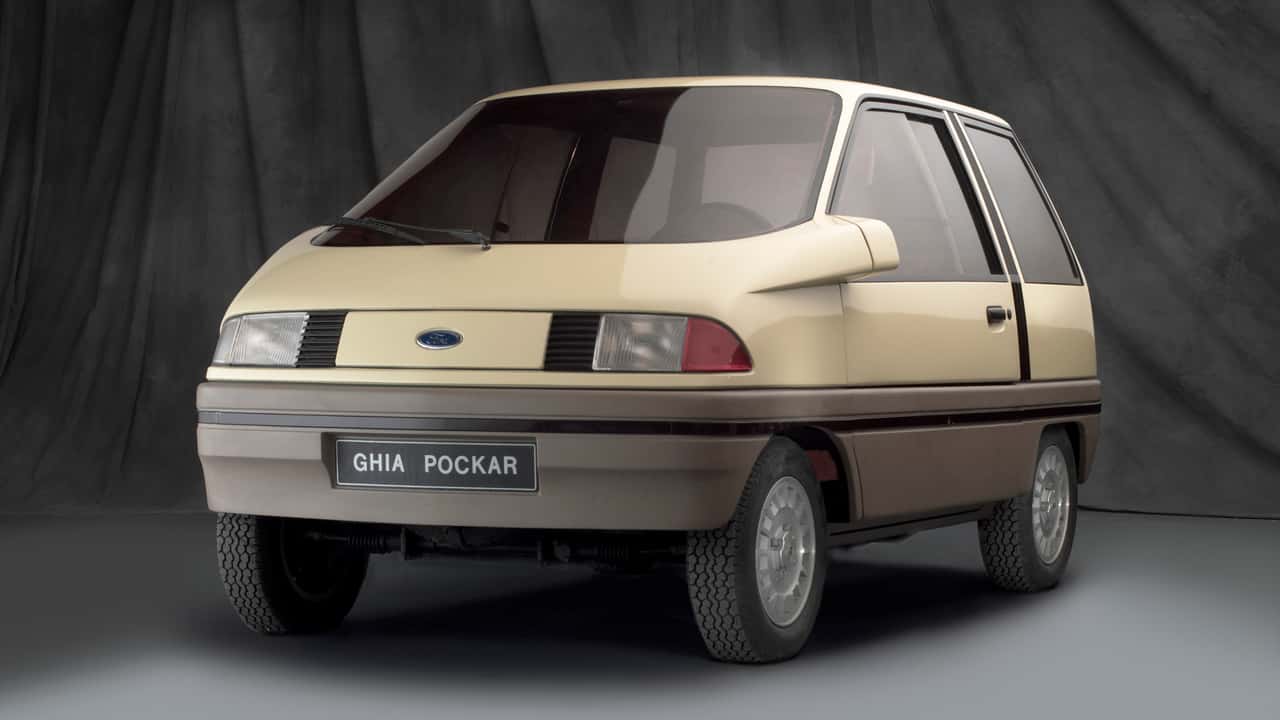
“Pockar” is short for “pocket car,” which it was in nearly every sense. Designed by Ghia, this tiny four-passenger concept was short, narrow, and tall, with an emphasis on squeezing as much practicality as possible into a very small footprint.
Its coolest trick was hidden in the doors. They were split horizontally, with the lower sections folding down like little tailgates to reveal built-in luggage compartments. The rear seat could also fold flat, turning the tiny car into something resembling a miniature van. It’s an idea that feels remarkably close to today’s obsession with maximizing interior space.
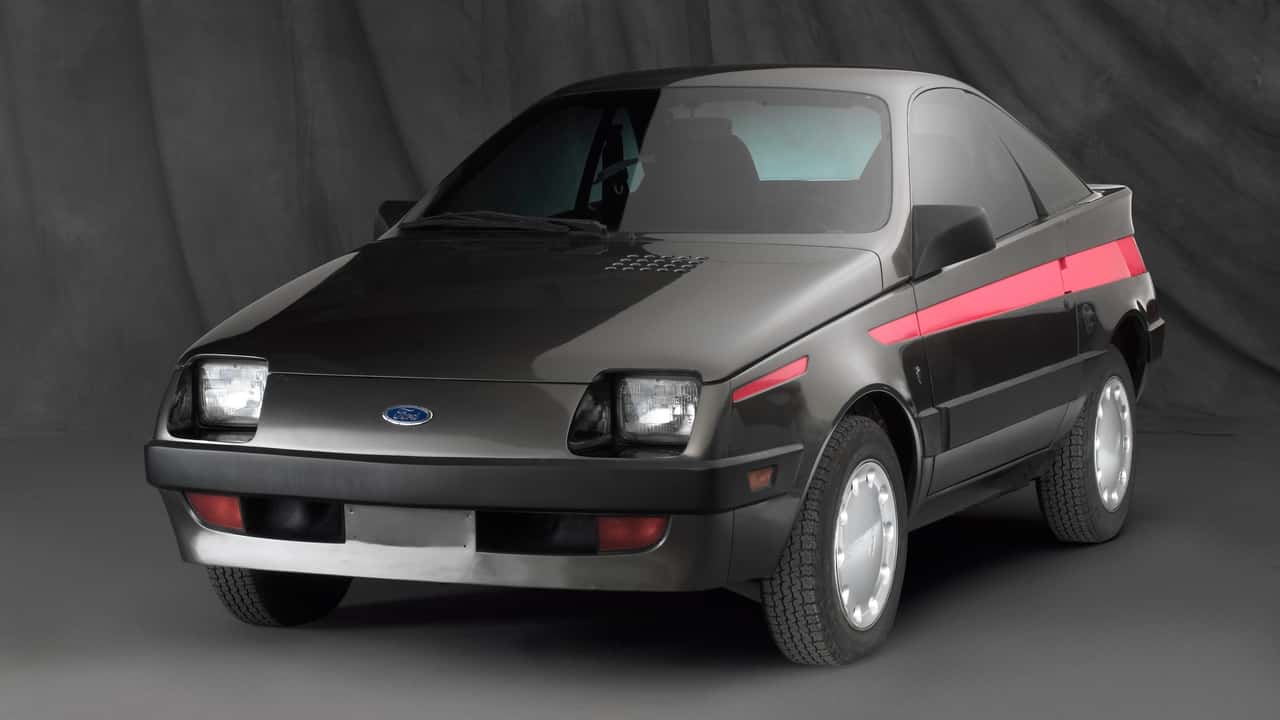
1981 Ford Shuttler
The Shuttler looked like somebody took a Fiesta, put it in a wind tunnel, and then told the designer to make it as futuristic as possible. Created by Ghia, the tiny two-seat city coupe featured a sharply wedged body, flush-mounted side glass, recessed door handles, and enclosed side mirrors.
It was also incredibly small, with a shortened Fiesta platform and a wheelbase of just 77.0 inches. A distinctive grid of openings in the hood and vents near the rear gave it an unusually technical appearance. The result was a tiny city car that looked more like a spaceship than something made to squeeze into European parking spaces.
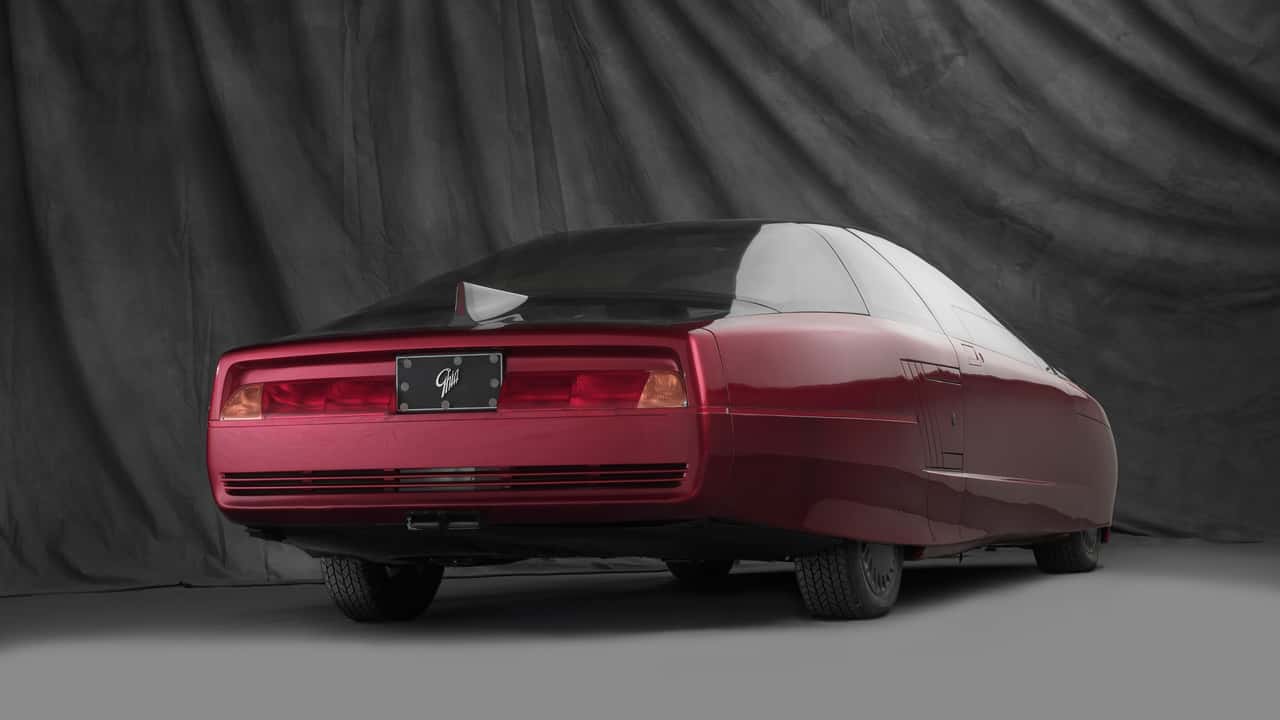
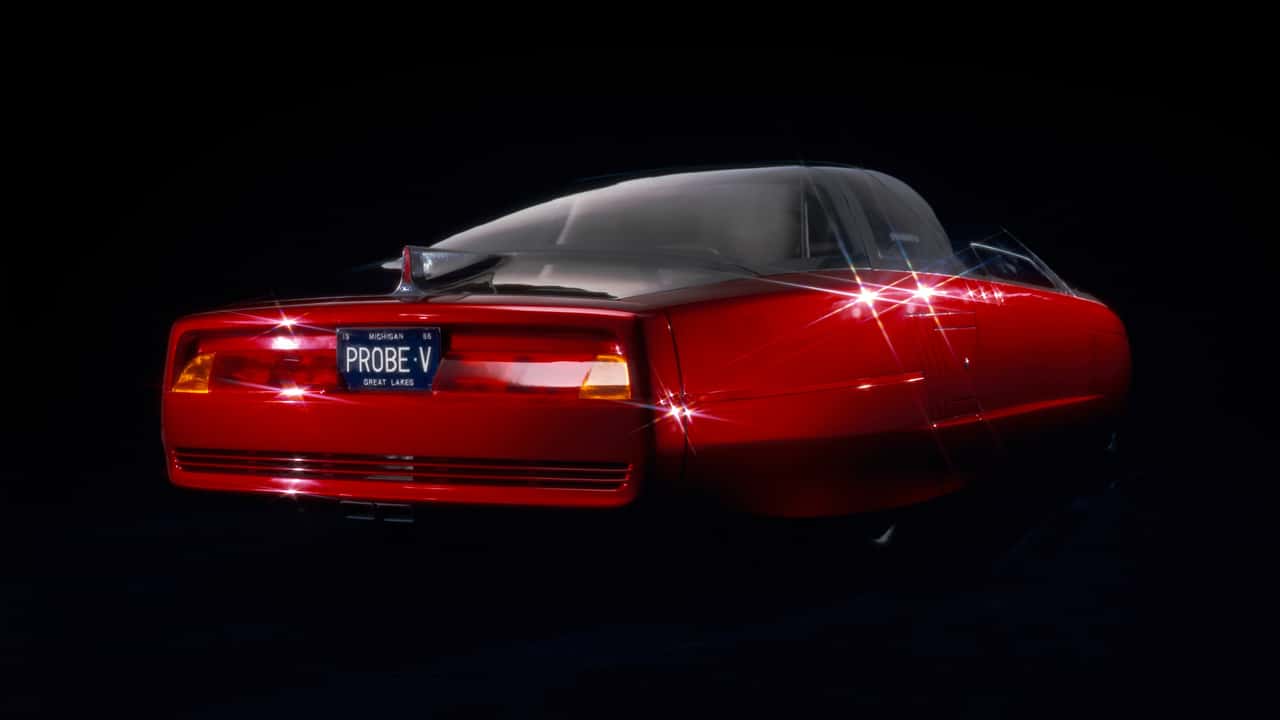
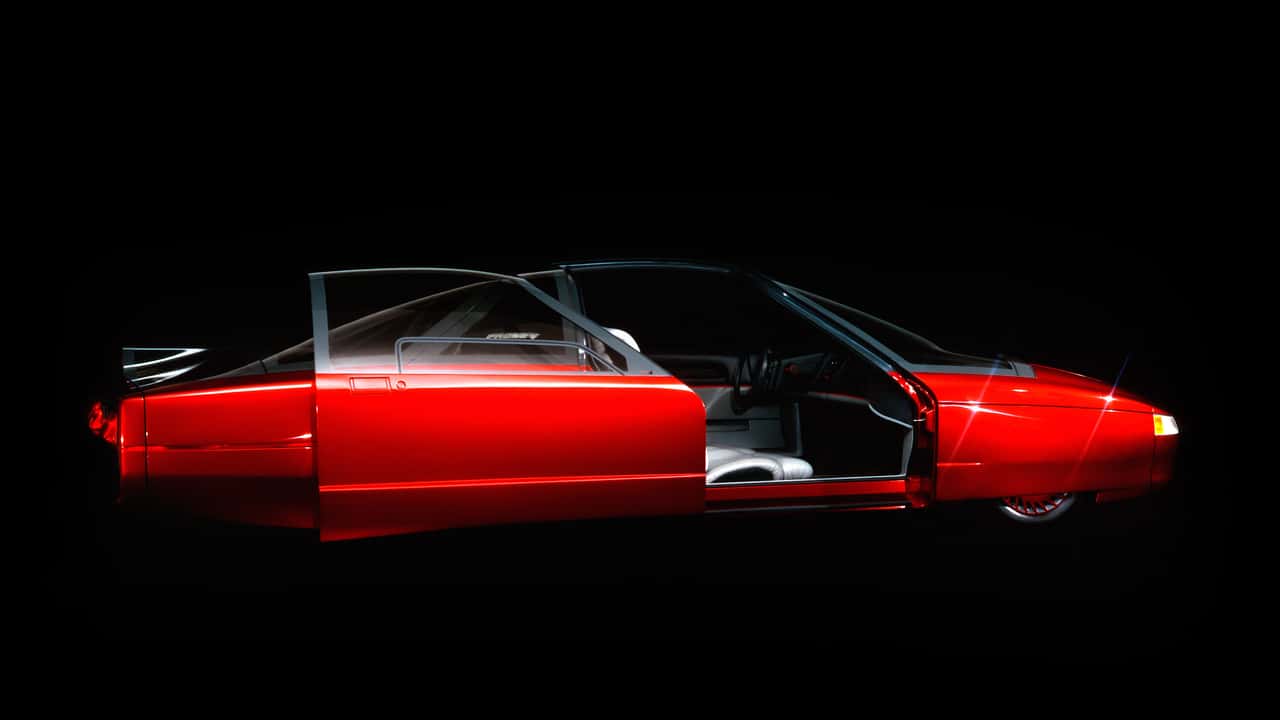
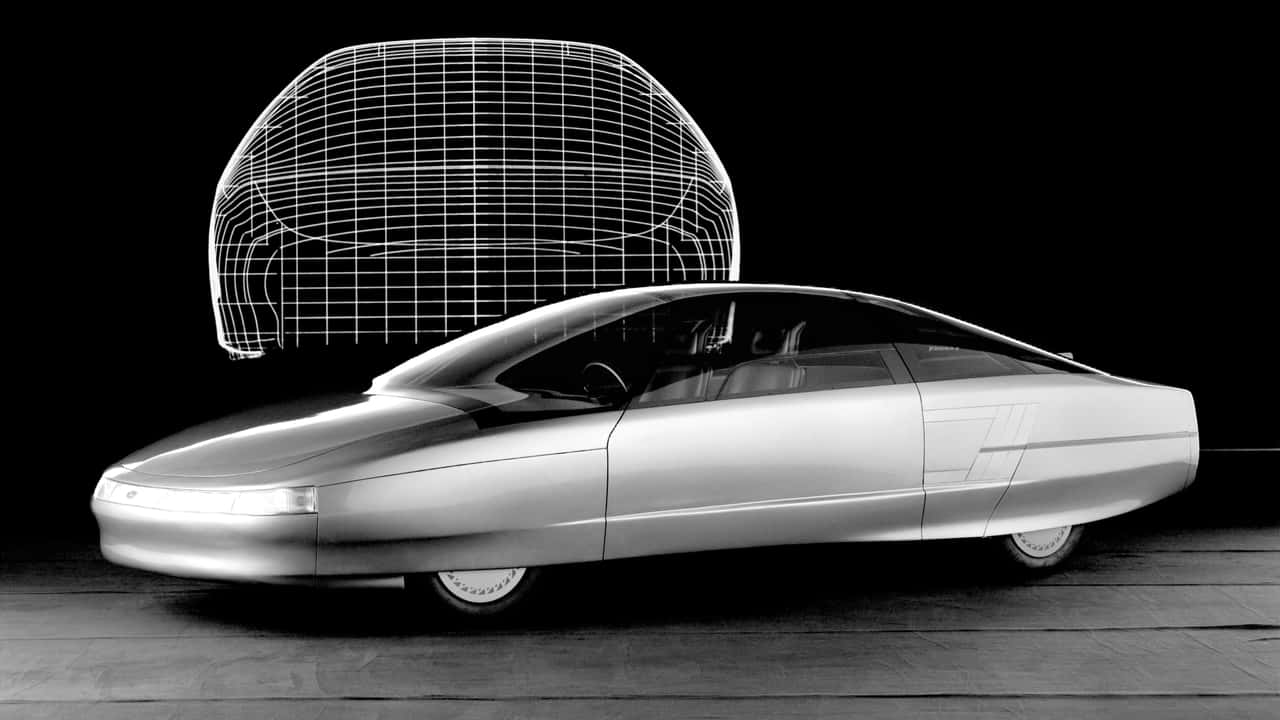
1985 Ford Probe V
The Probe V was the final—and arguably strangest—member of Ford’s original Probe series. Rather than simply making a sleek sports car, Ford used the concept to investigate just how slippery a four-passenger sedan could be. Almost every surface was shaped around aerodynamic efficiency, for better or worse.
The car had wheel covers, a huge glasshouse, sliding doors, and an unusual rear canopy that moved to provide access to the mid-mounted engine. Ford achieved a claimed drag coefficient of just 0.137, an astonishing figure for the era. More importantly, the Probe V previewed the aerodynamic design philosophy that would soon define the Ford Taurus.
1988 Ford Saguaro
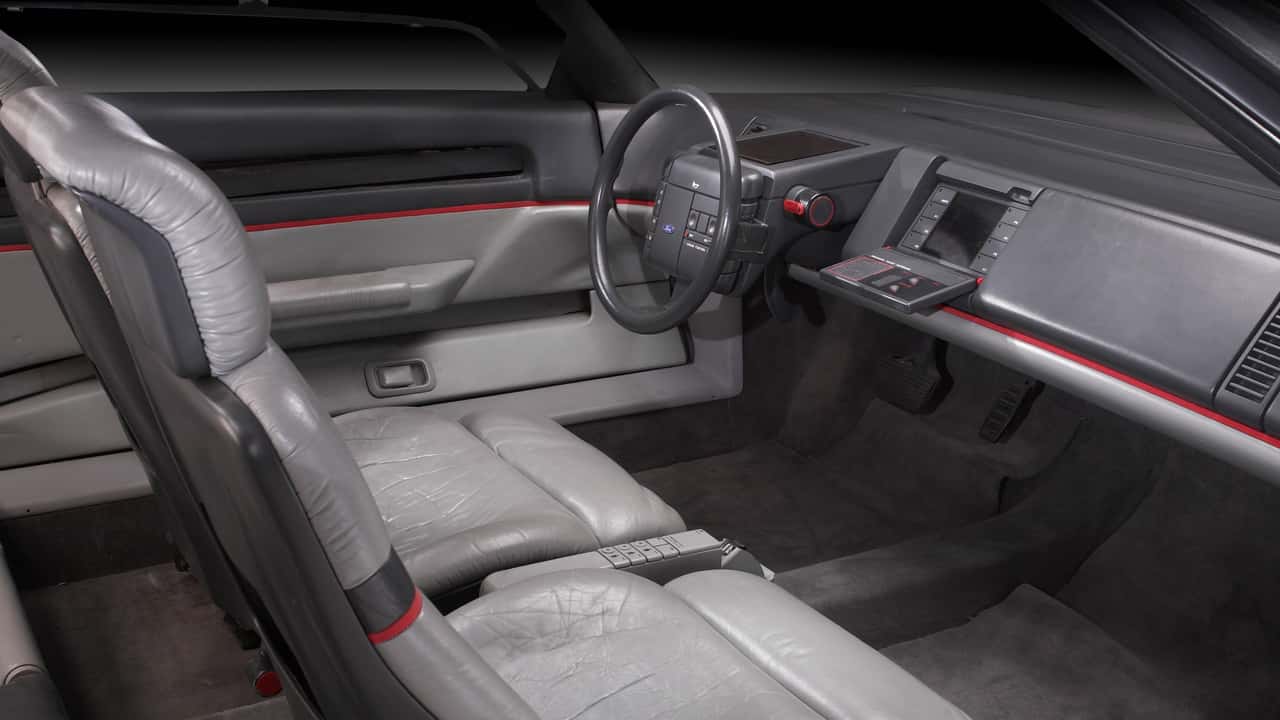
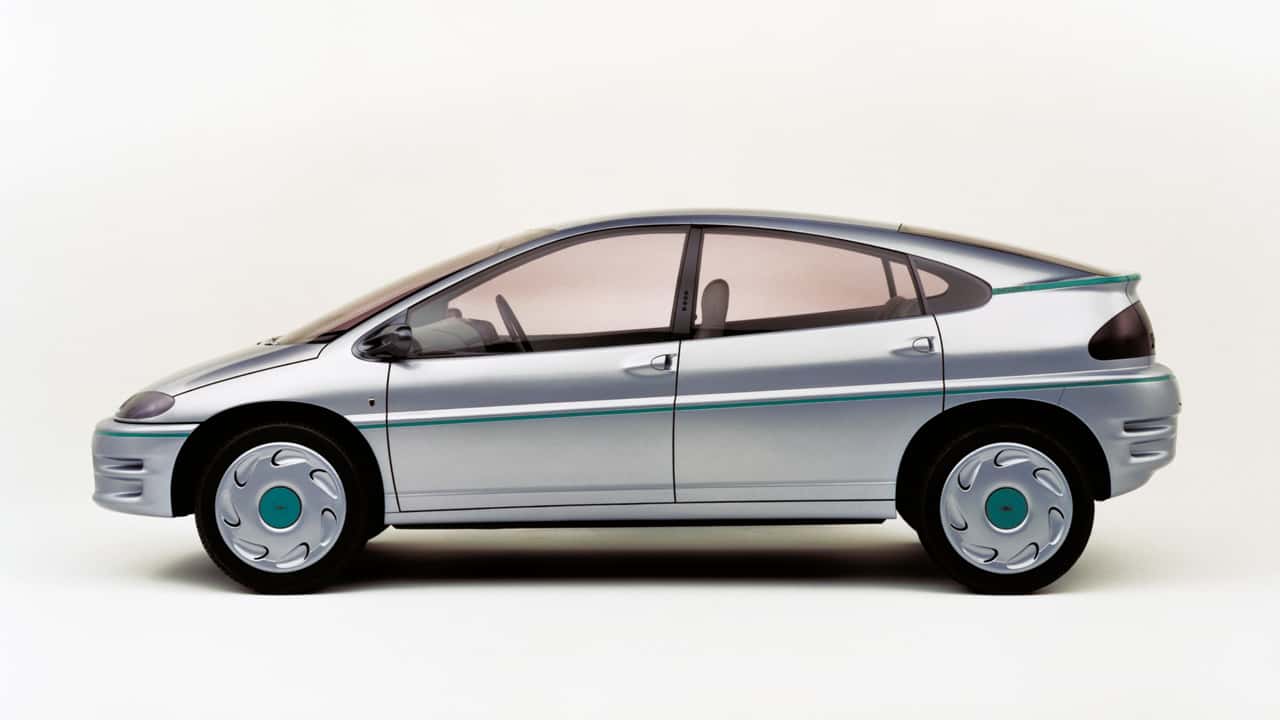
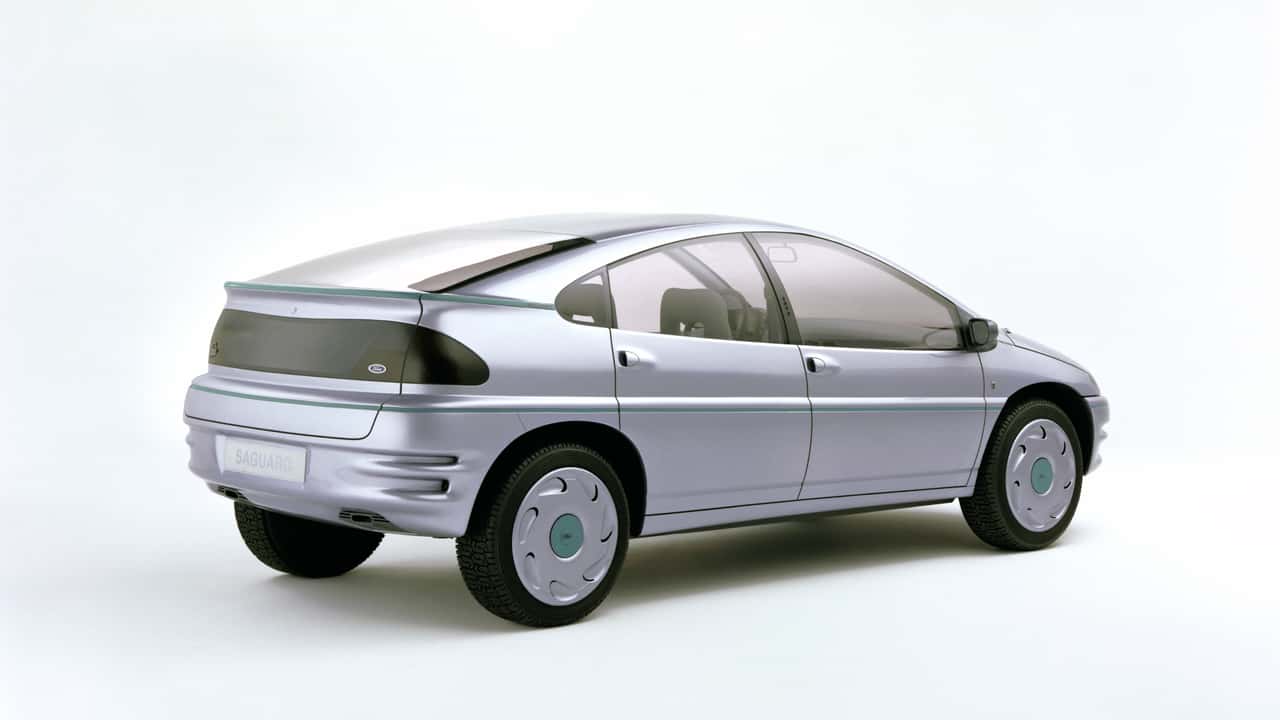
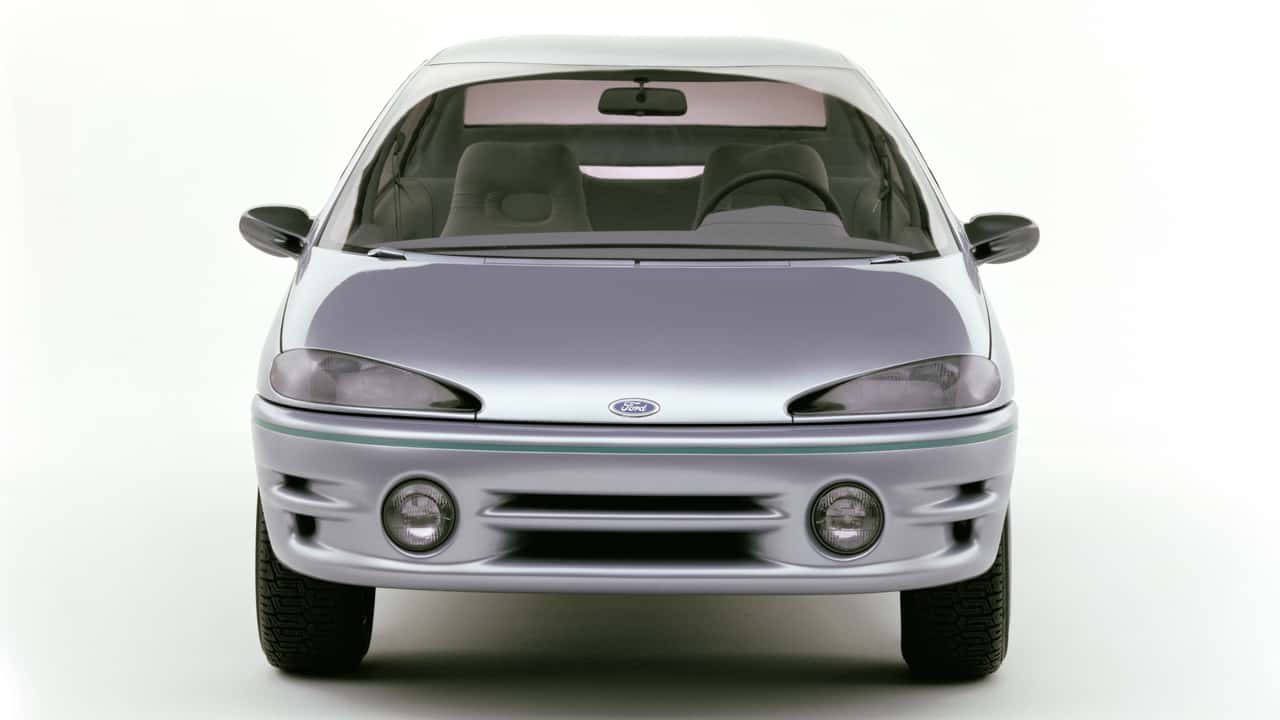
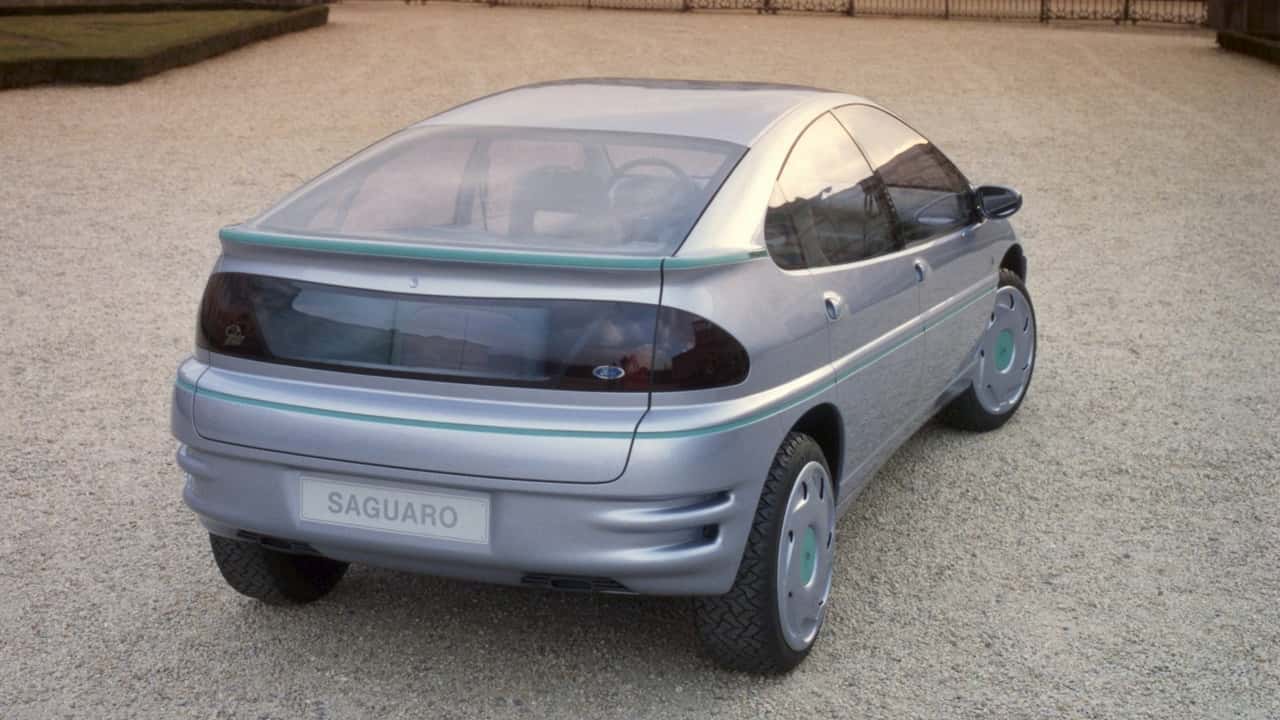
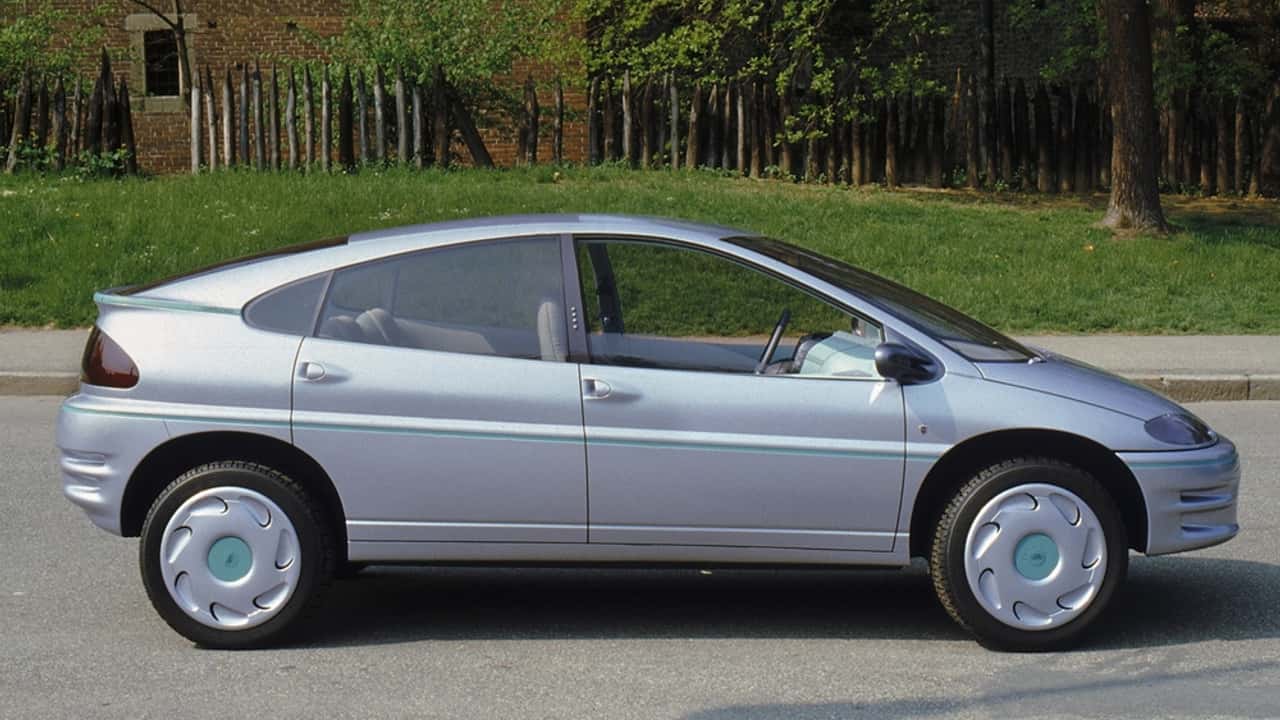
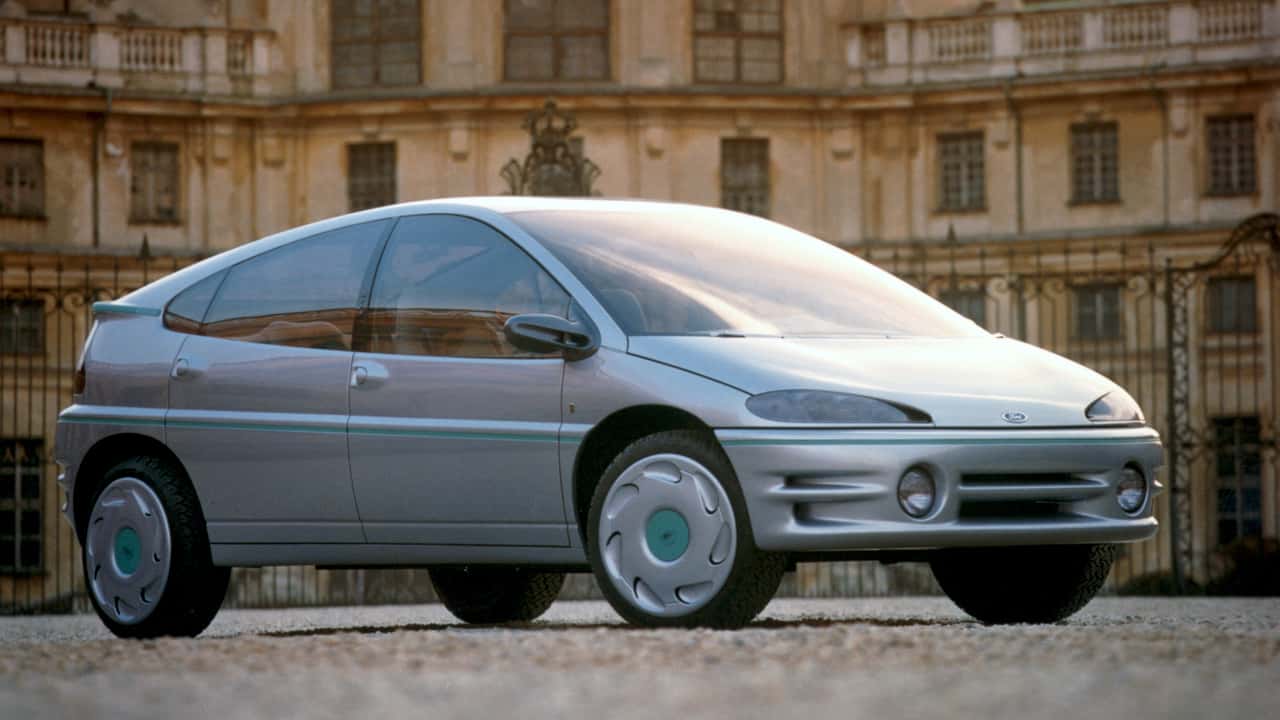
The Saguaro was Ford’s answer to a question nobody had really asked: What if an SUV looked more like a sports car? Built by Ghia, the seven-passenger concept combined a tall, utility-oriented body with a dramatically sloped windshield, huge wheels, flush glass, and a sleek, aerodynamic profile.
That combination makes the Saguaro look surprisingly modern in hindsight. Ghia explicitly wanted to explore an SUV that emphasized road-going style over ruggedness, essentially creating a sporty crossover decades before the segment became one of the industry’s biggest categories.
1989 Ford Via
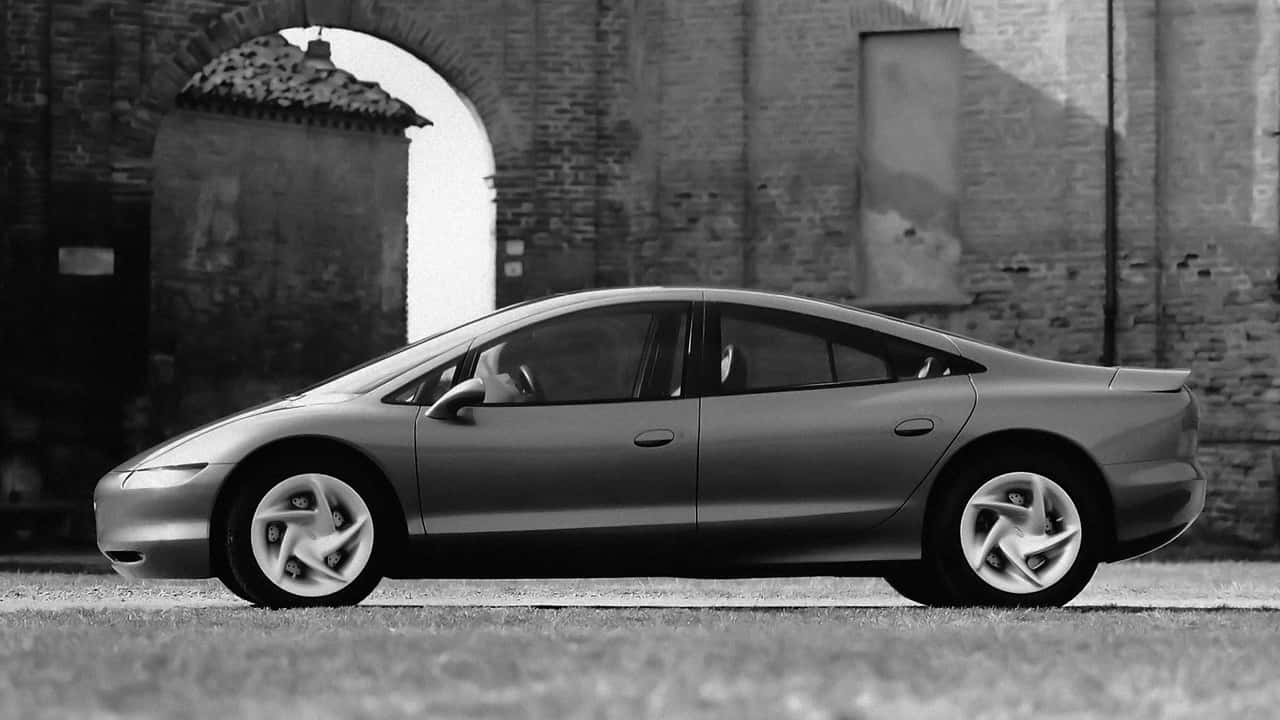
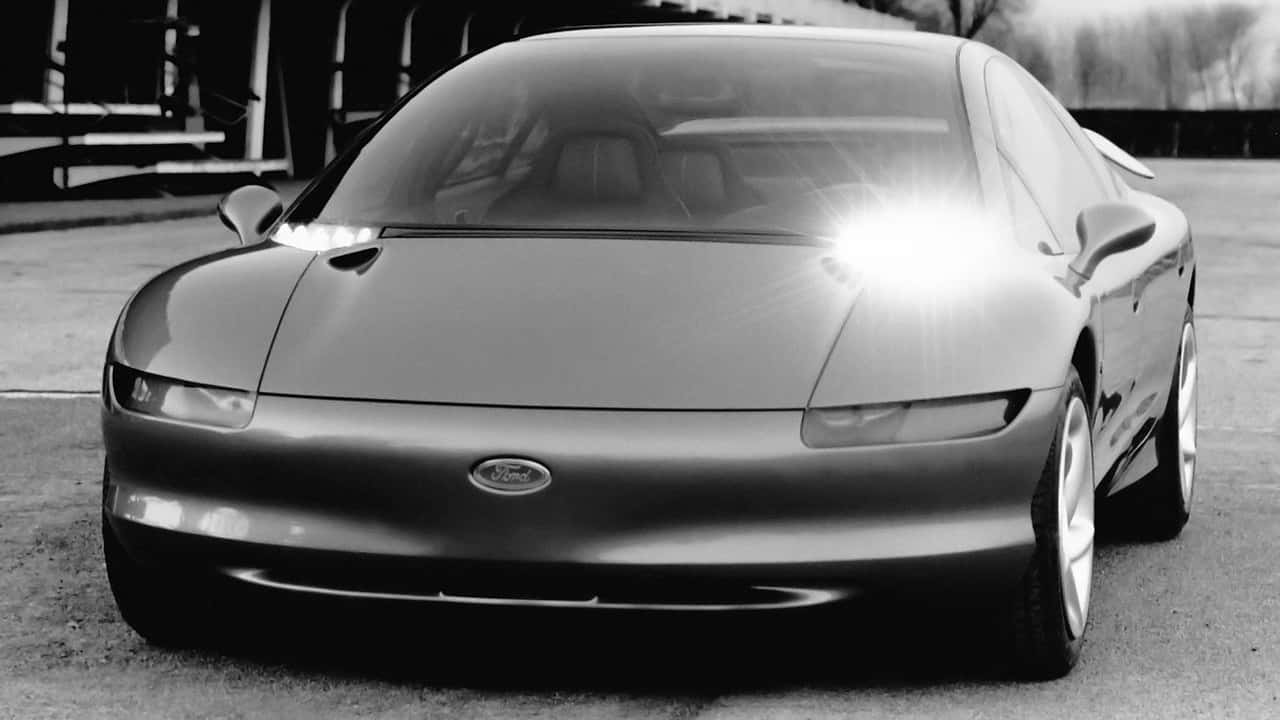
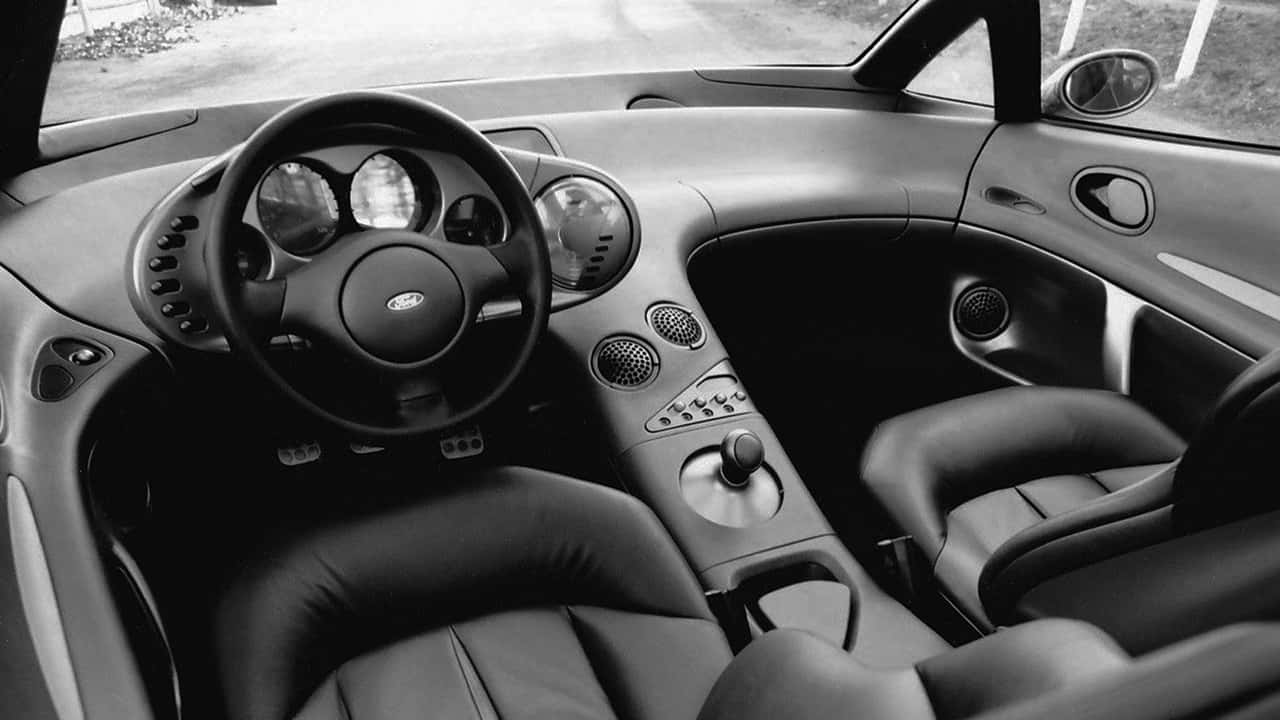
The Via looks like something that escaped from a 1990s science-fiction movie. Built by Ghia, the one-off concept featured a futuristic fiberglass body, fiber-optic lighting, an active rear spoiler, aircraft-inspired fuel filler caps, and a roof fitted with photosensitive glass panels that darkened in bright sunlight.
Even the doors were strange. The car had four doors, but only the two on the left side actually opened. There wasn’t a drivetrain underneath, either. The Via was essentially a rolling design experiment intended to showcase where Ford’s styling and technology could go. Though the former remains to be seen.
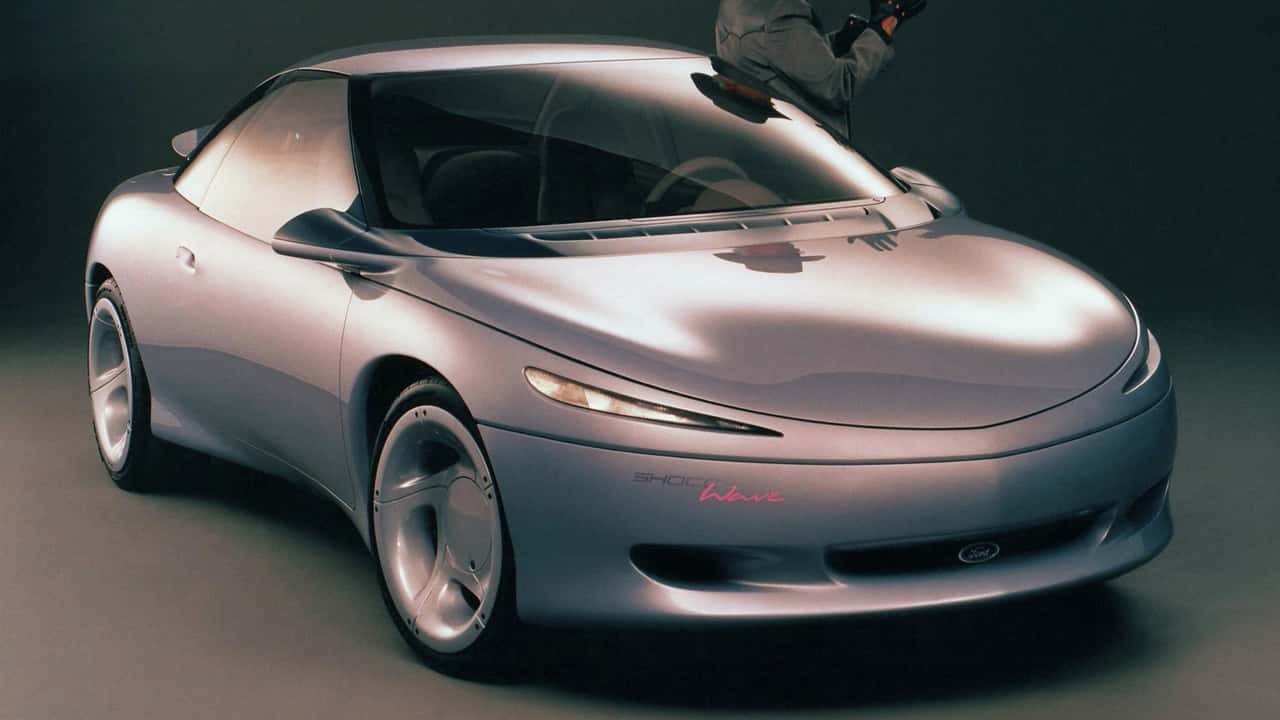
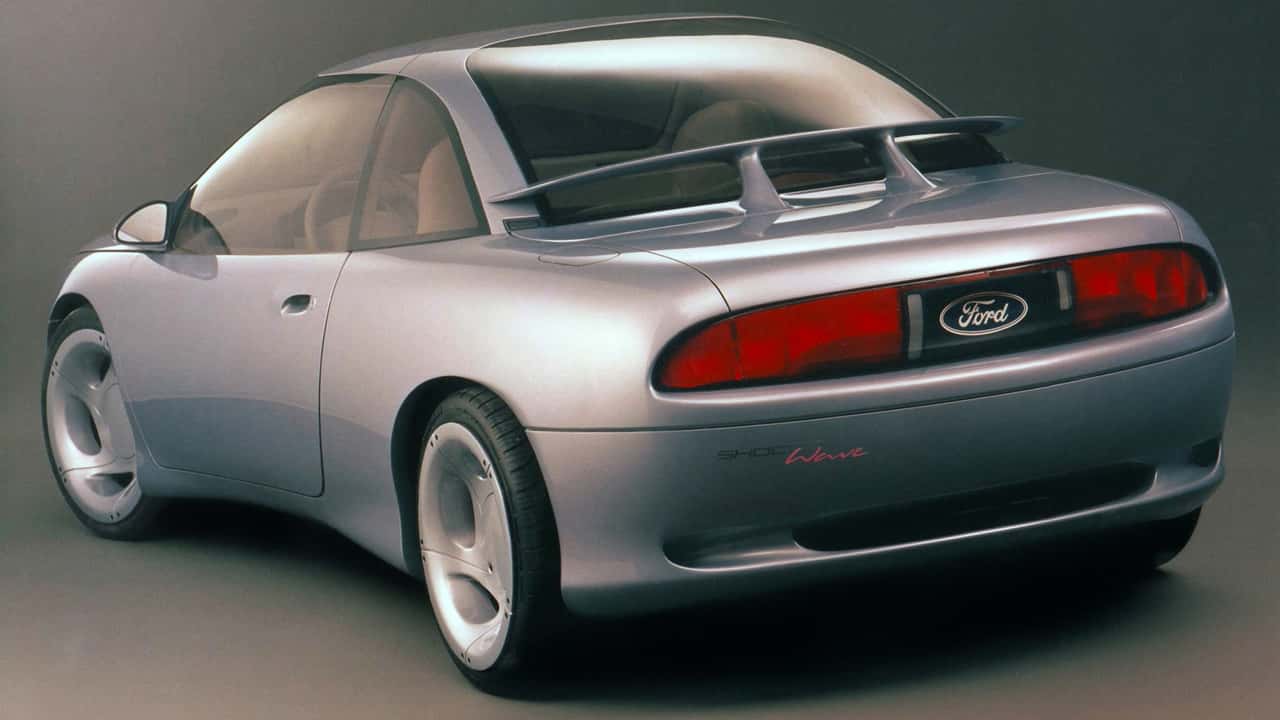
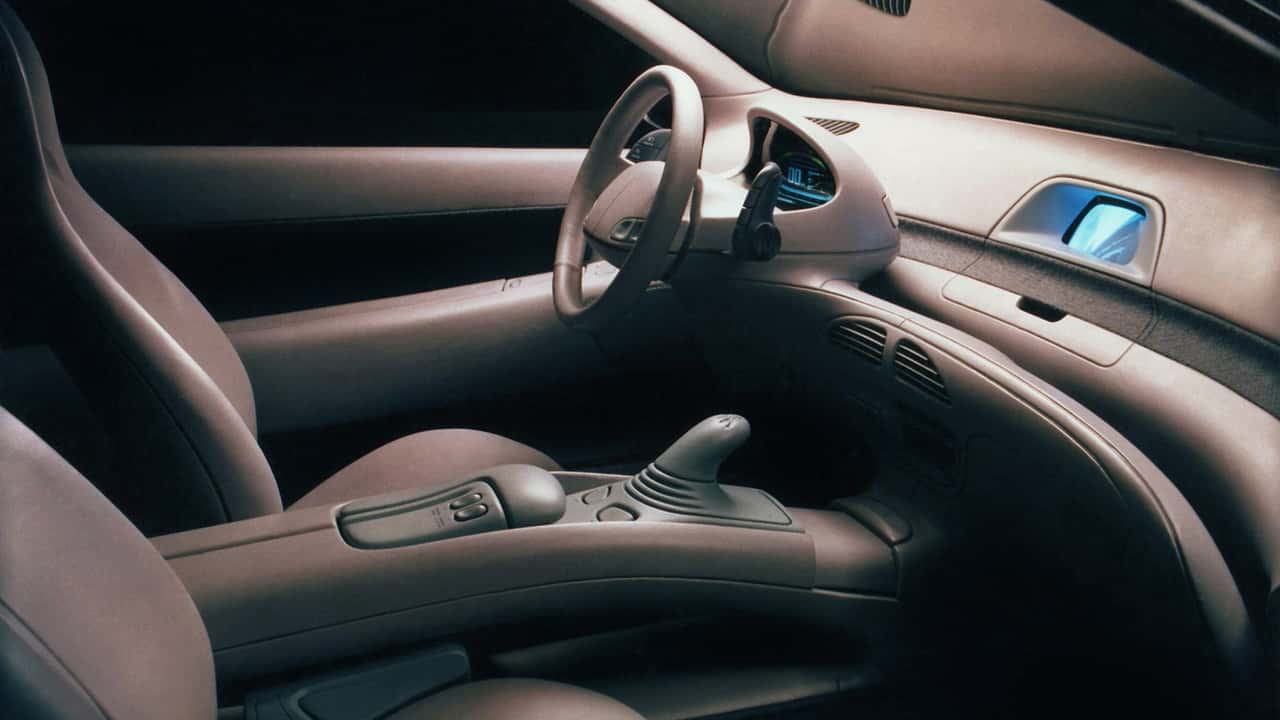
1990 Ford ShocccWave
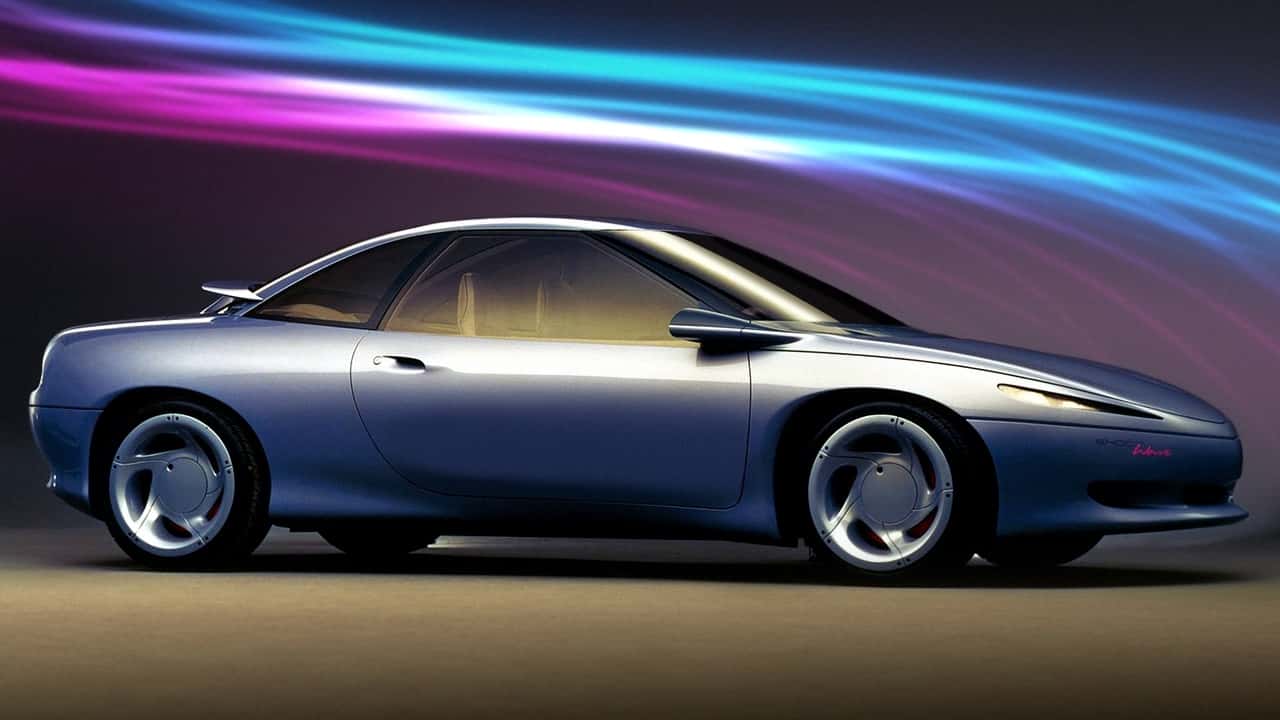
No, that’s not a typo. Ford really did spell it “ShocccWave” with three Cs. Introduced in 1990, the sleek two-door concept was intended as a vision for a performance car of the mid-to-late 1990s and became an important precursor to the second-generation Ford Probe.
Underneath the futuristic body was a much more familiar Ford component: the 3.0-liter Yamaha V6 from the Taurus SHO. It also featured all-wheel drive and an unusually adaptable cockpit in which several controls could be repositioned to suit the driver.
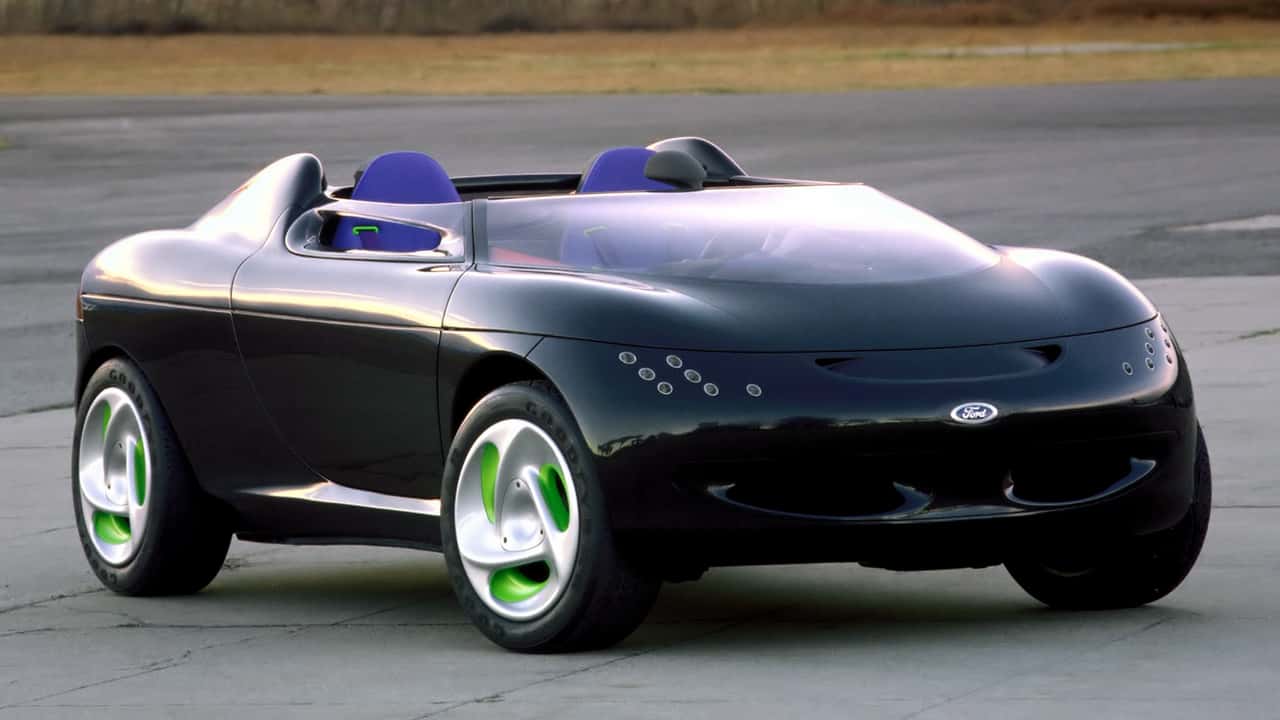
1990 Ford Zig
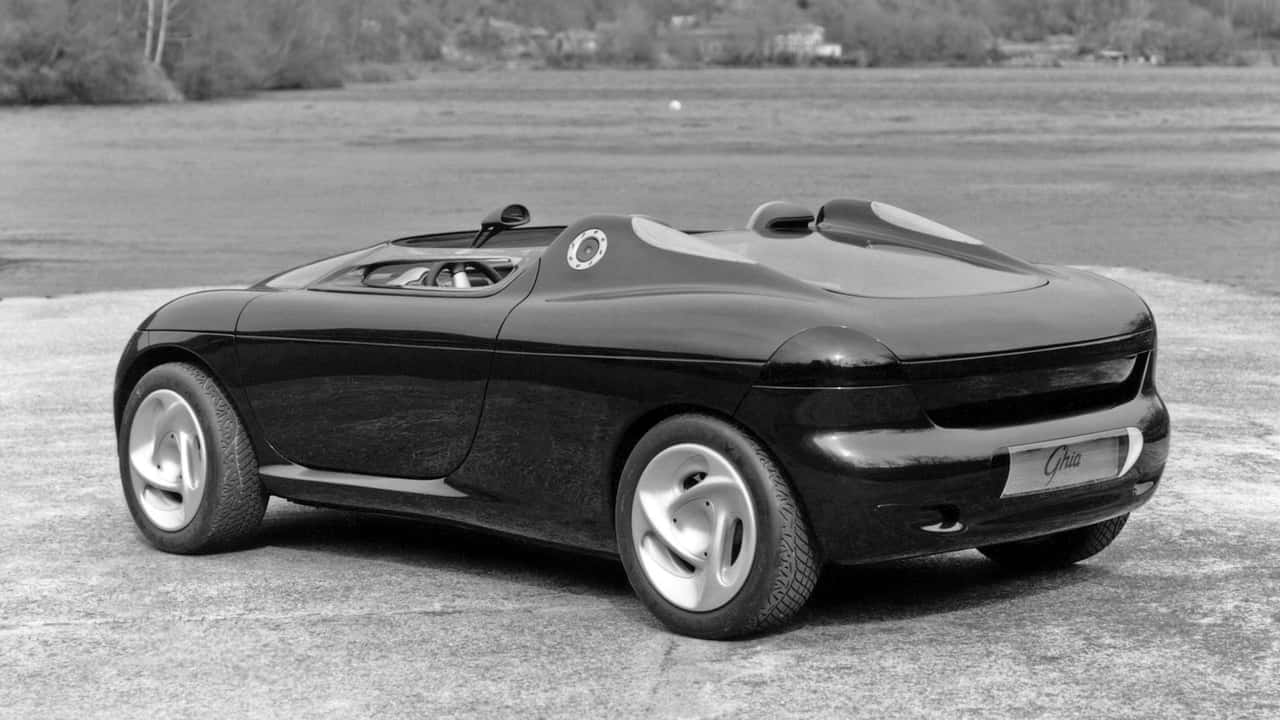
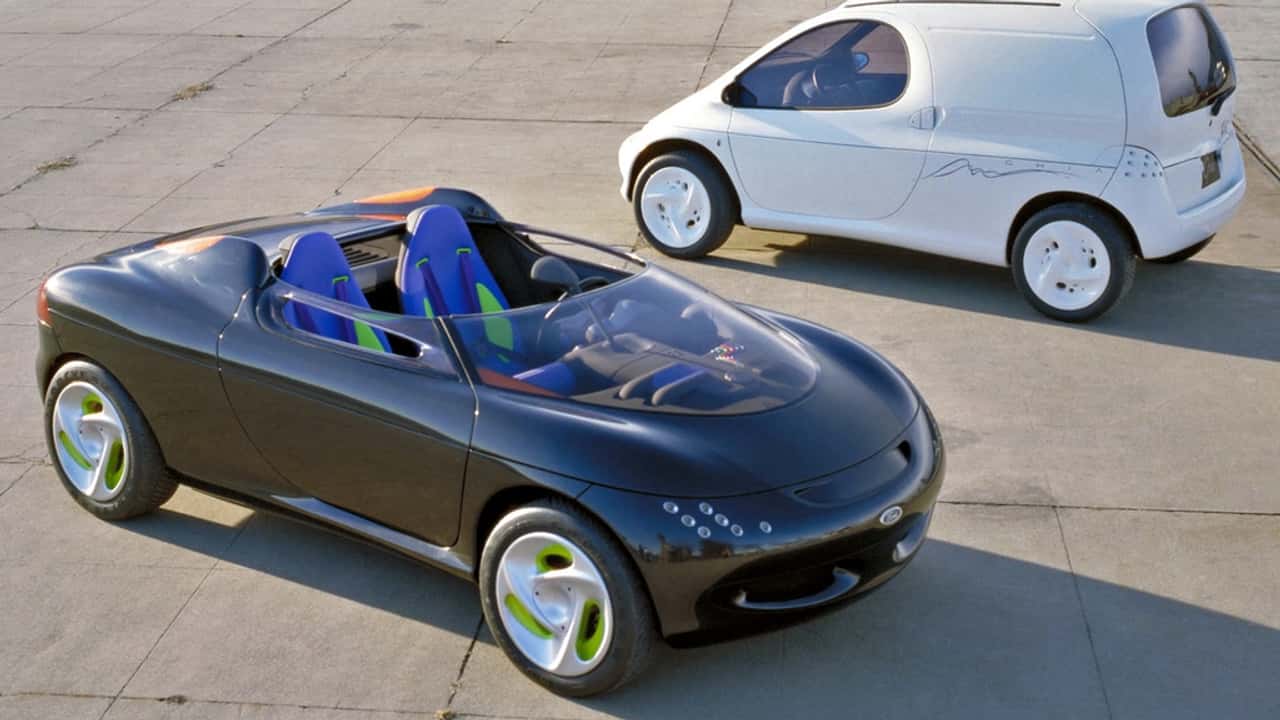
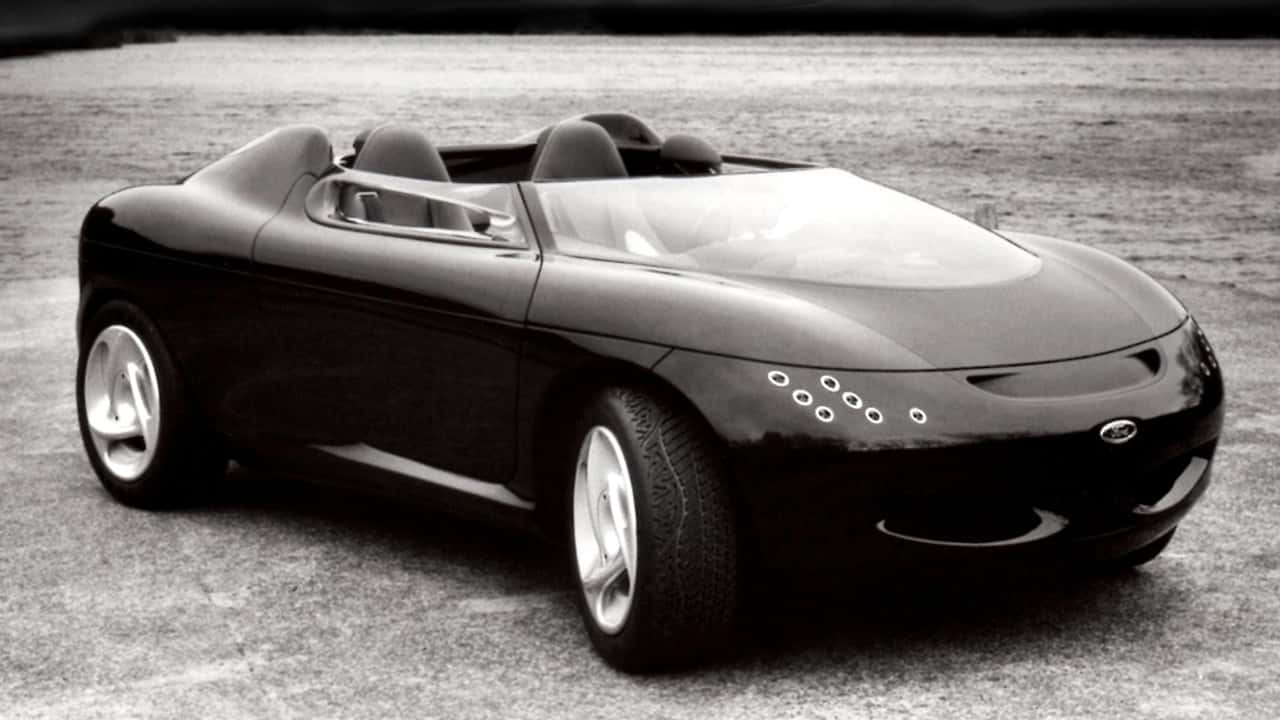
Ford didn’t just build one strange concept in 1990. It built two. The Zig was the sporty one, a tiny two-seat barchetta designed by Ghia and based on Fiesta architecture. Its black body was low, open, and dramatically different from the practical hatchback underneath.
Ford paired the Zig with the Zag concept to demonstrate how a common architecture could support radically different vehicles. In theory, the same basic platform could underpin sports cars, hatchbacks, sedans, pickups, and delivery vans.
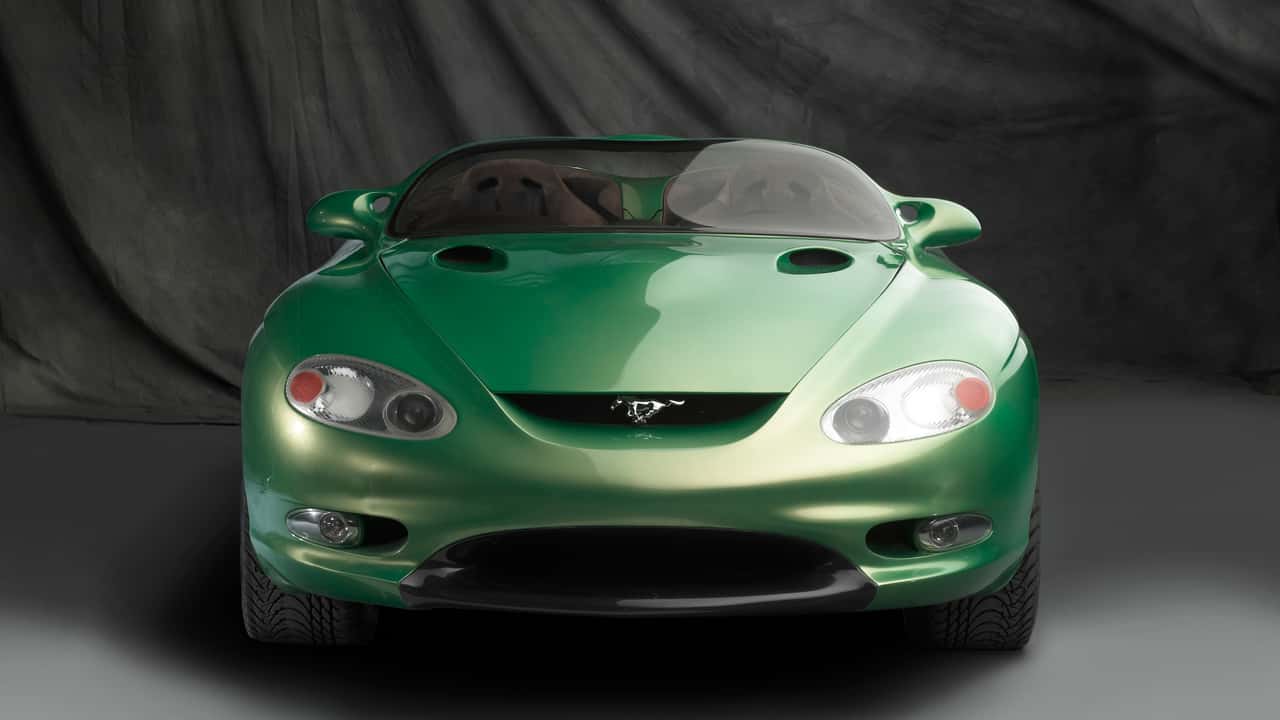
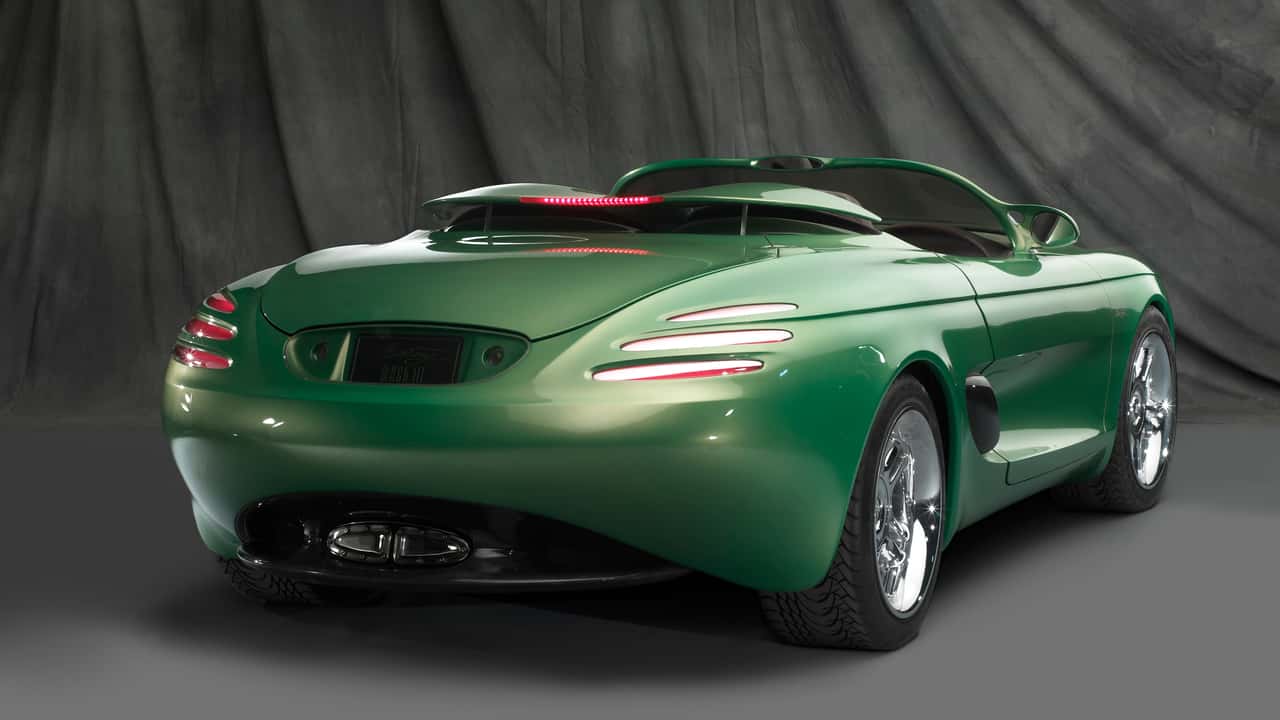
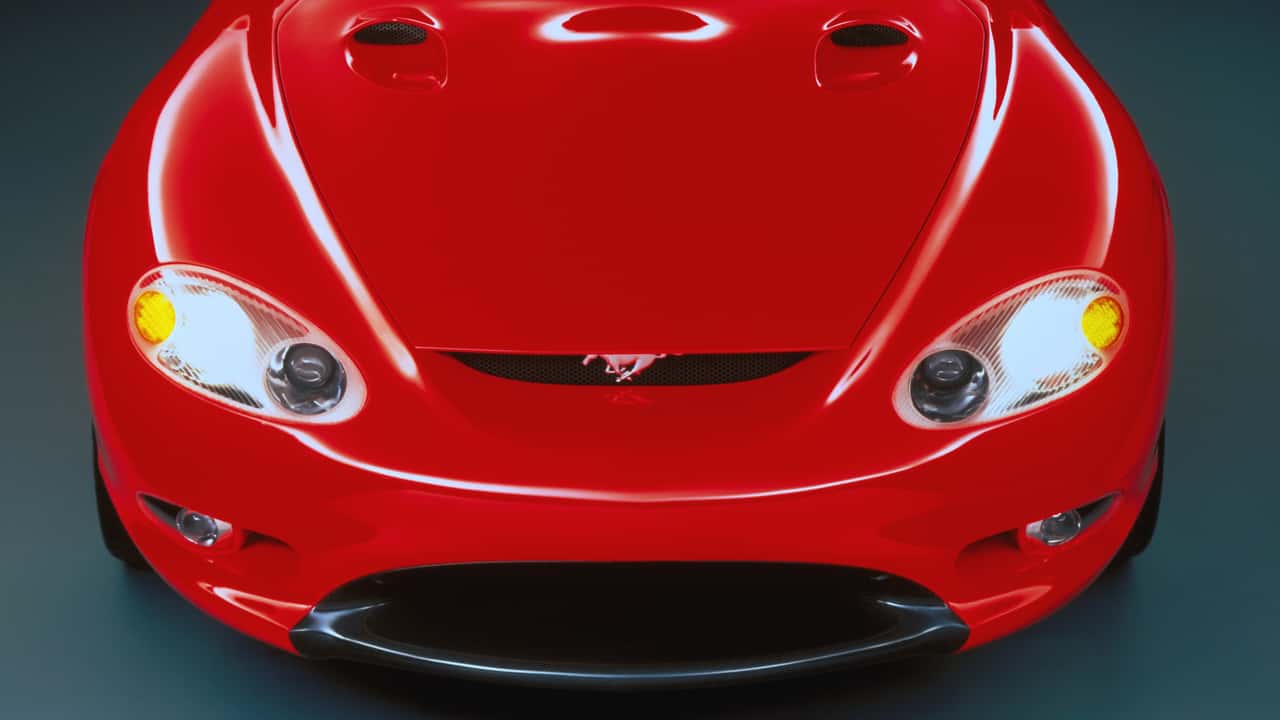
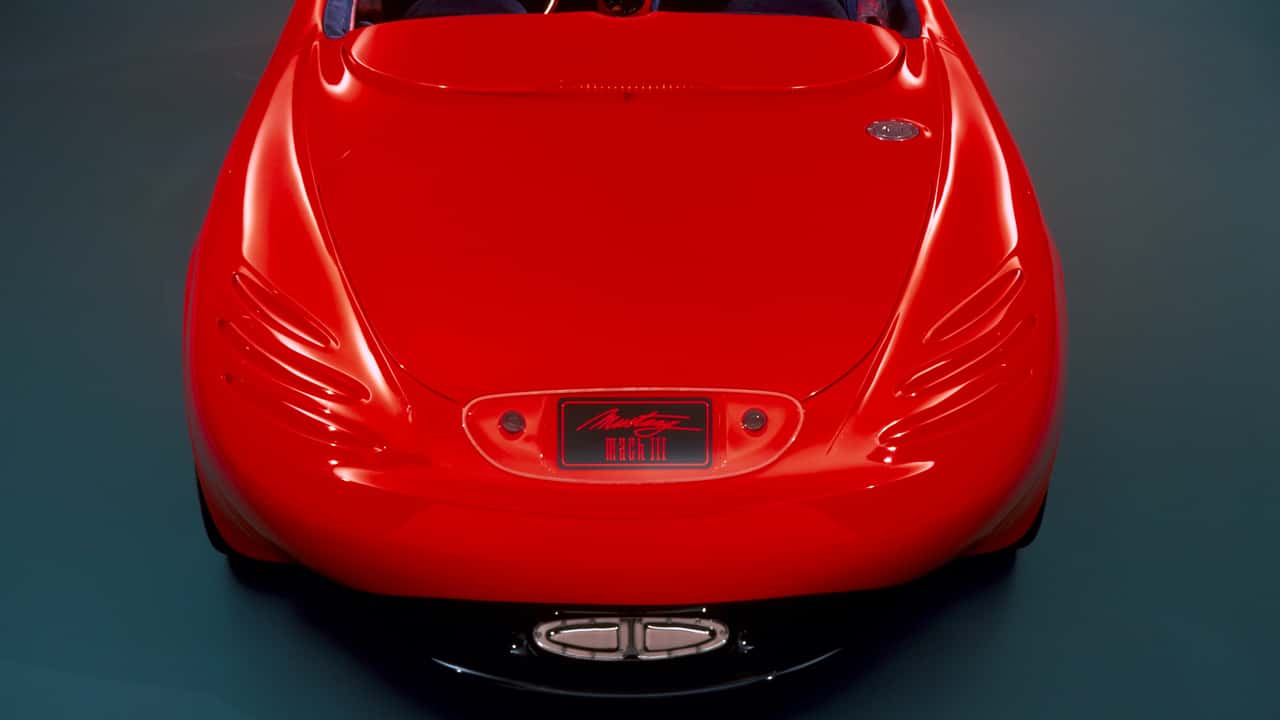
1993 Ford Mustang Mach III
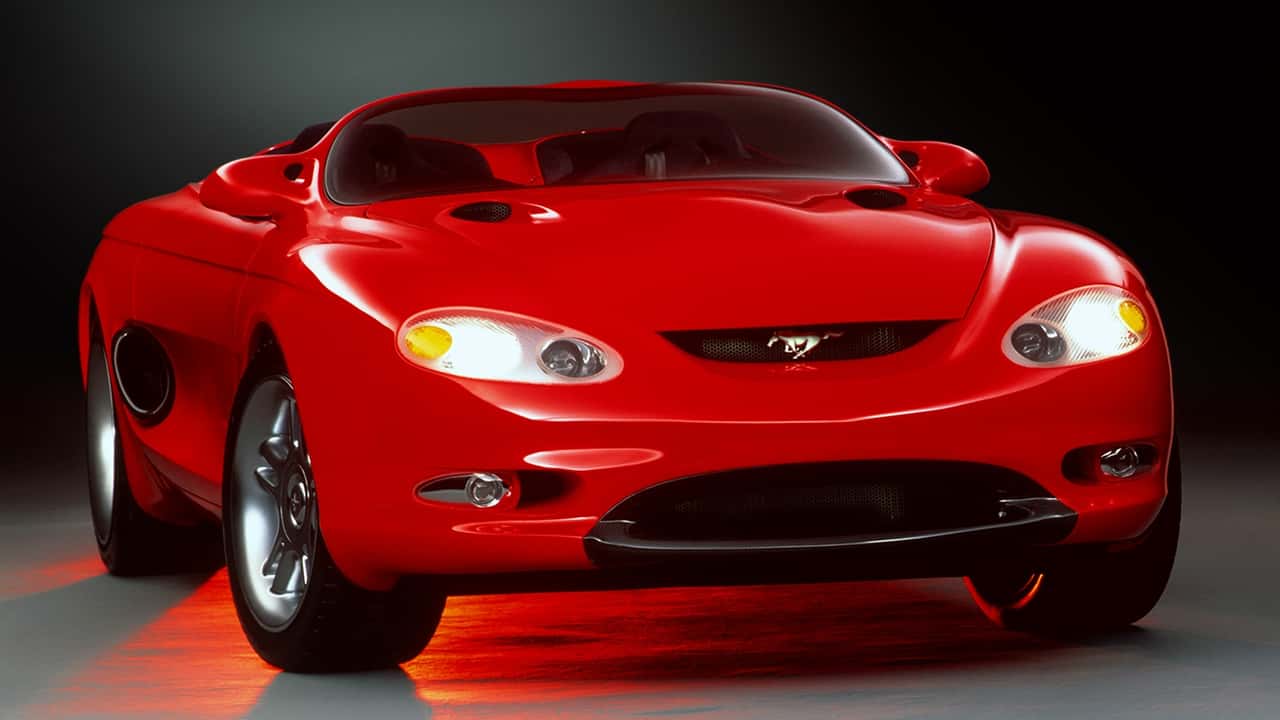
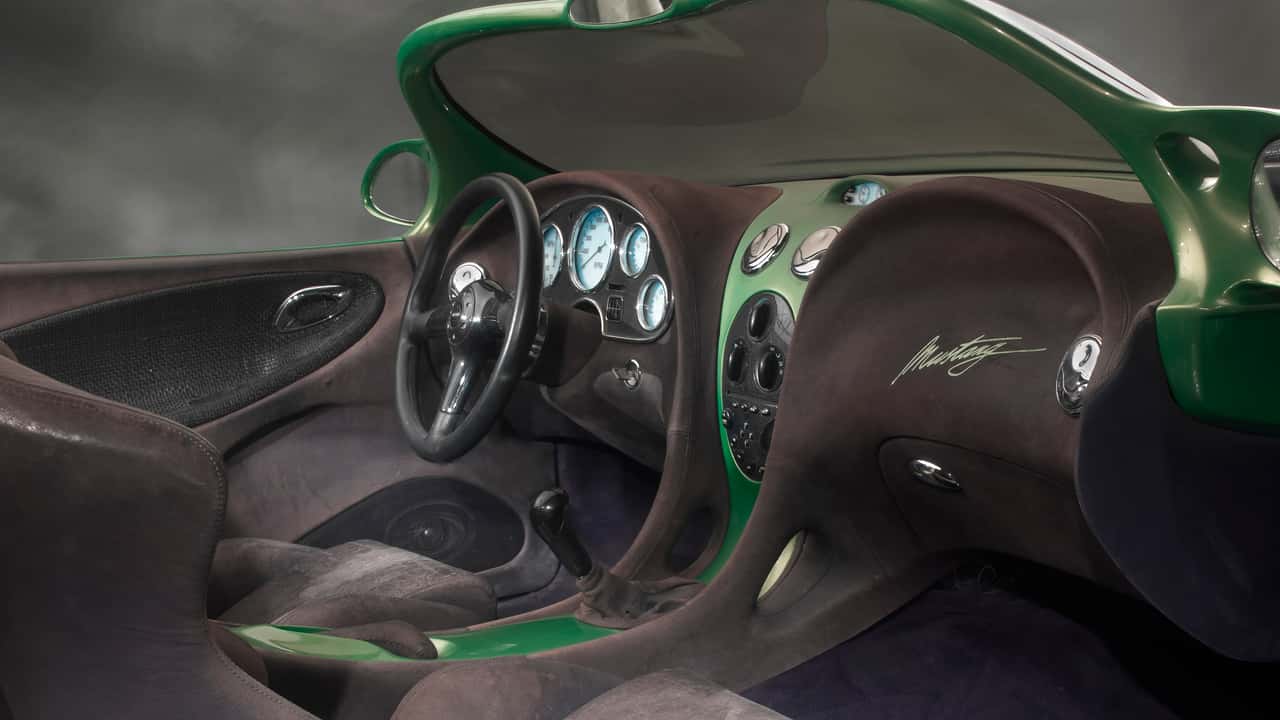
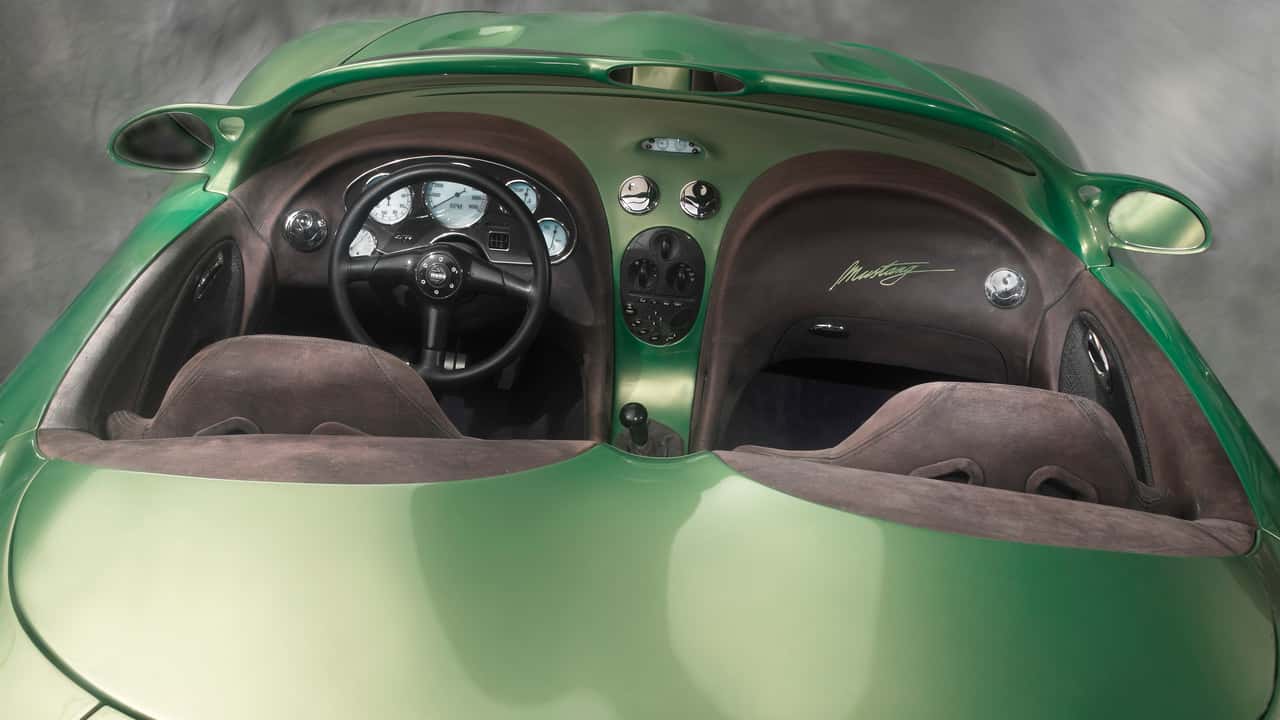
The Mustang Mach III looked like Ford had thrown the Mustang’s design rules out the window. It was an extremely low, rounded two-seater with a curved windshield, aggressive bodywork, and a supercharged 4.6-liter V8 producing a claimed 450 horsepower.
Despite its outrageous proportions, the Mach III wasn’t merely a styling exercise. It previewed the direction of the fourth-generation Mustang, including its rounded bodywork, side scoops, dashboard themes, and other details. The production SN95 Mustang was considerably tamer, but the Mach III showed just how far Ford’s designers were willing to push the pony car.
1994 Ford Powerstroke
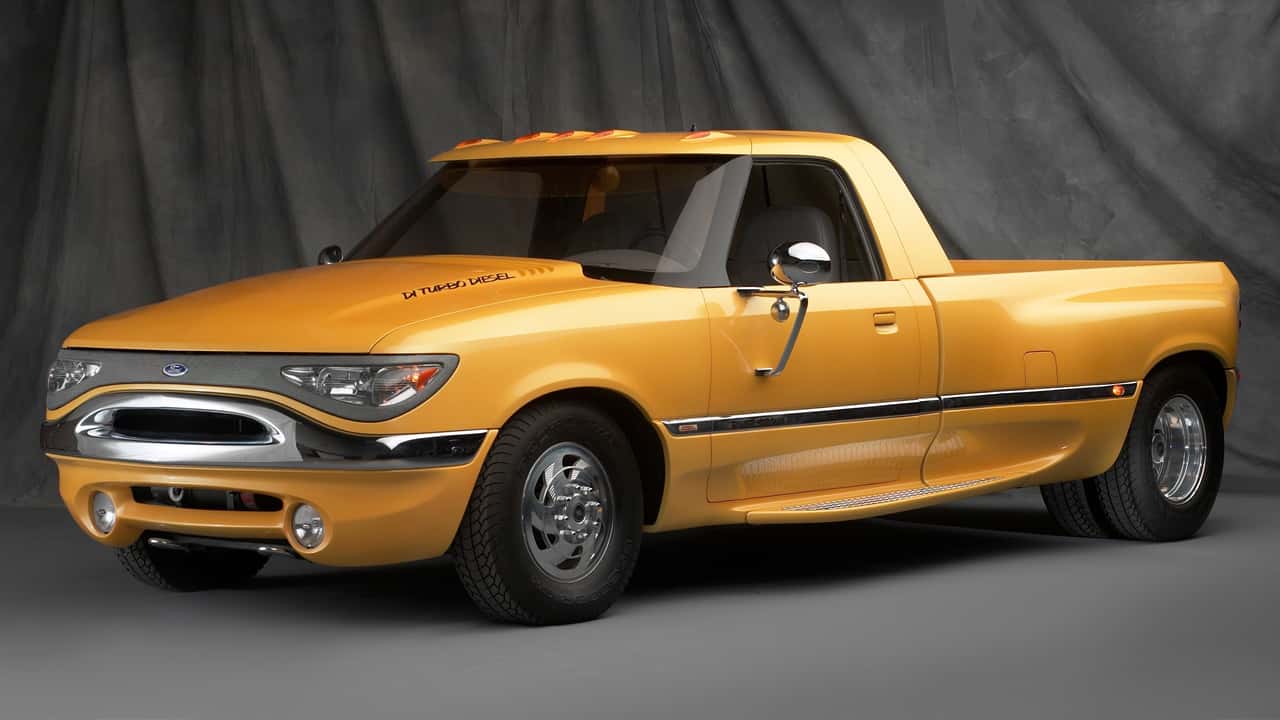
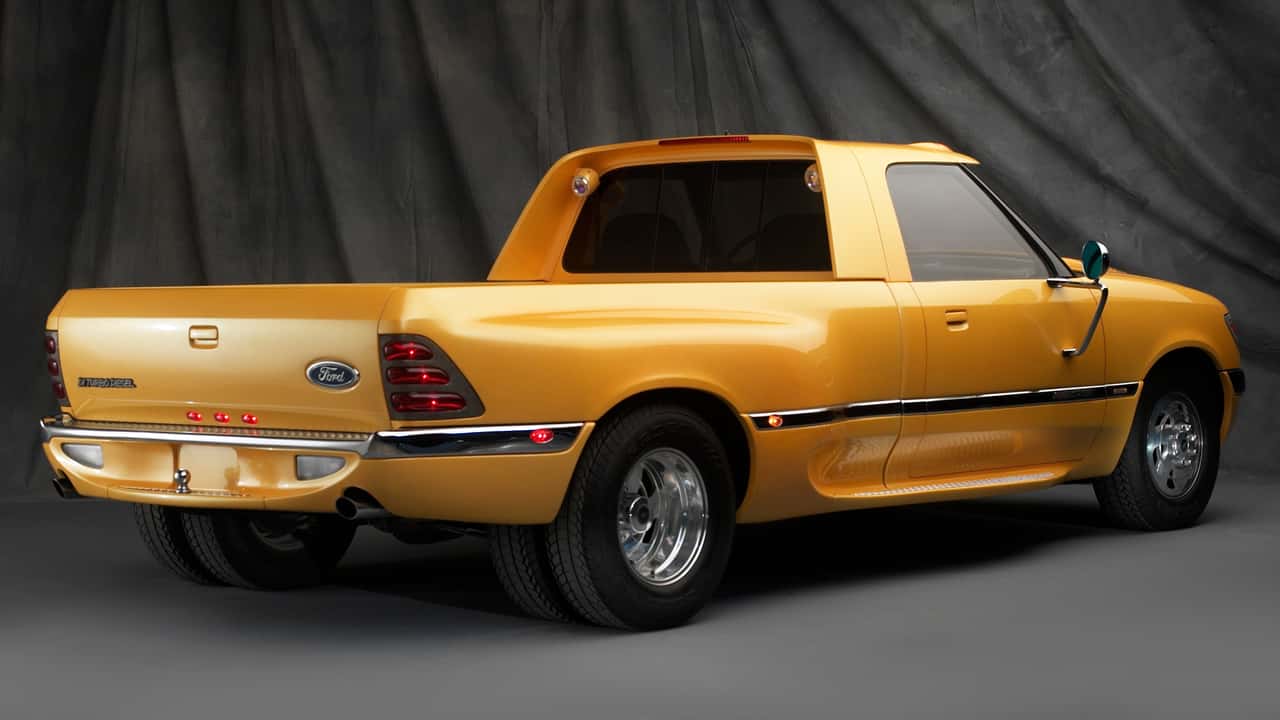
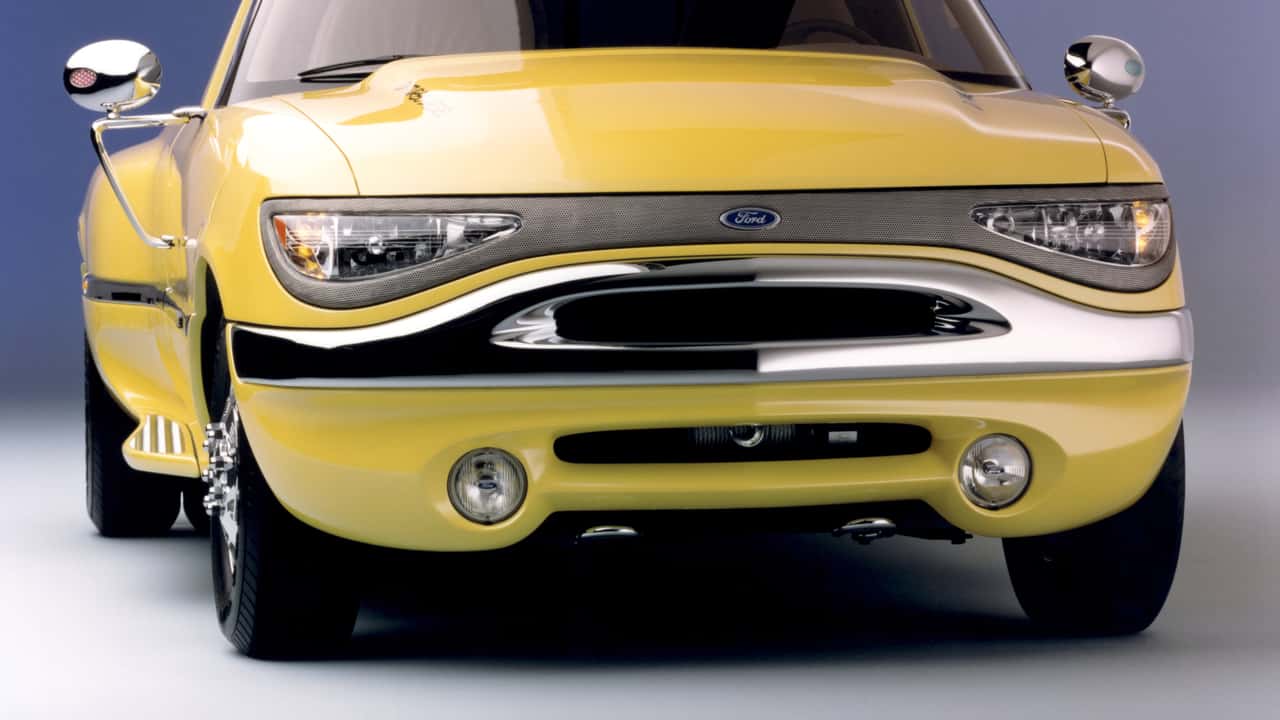
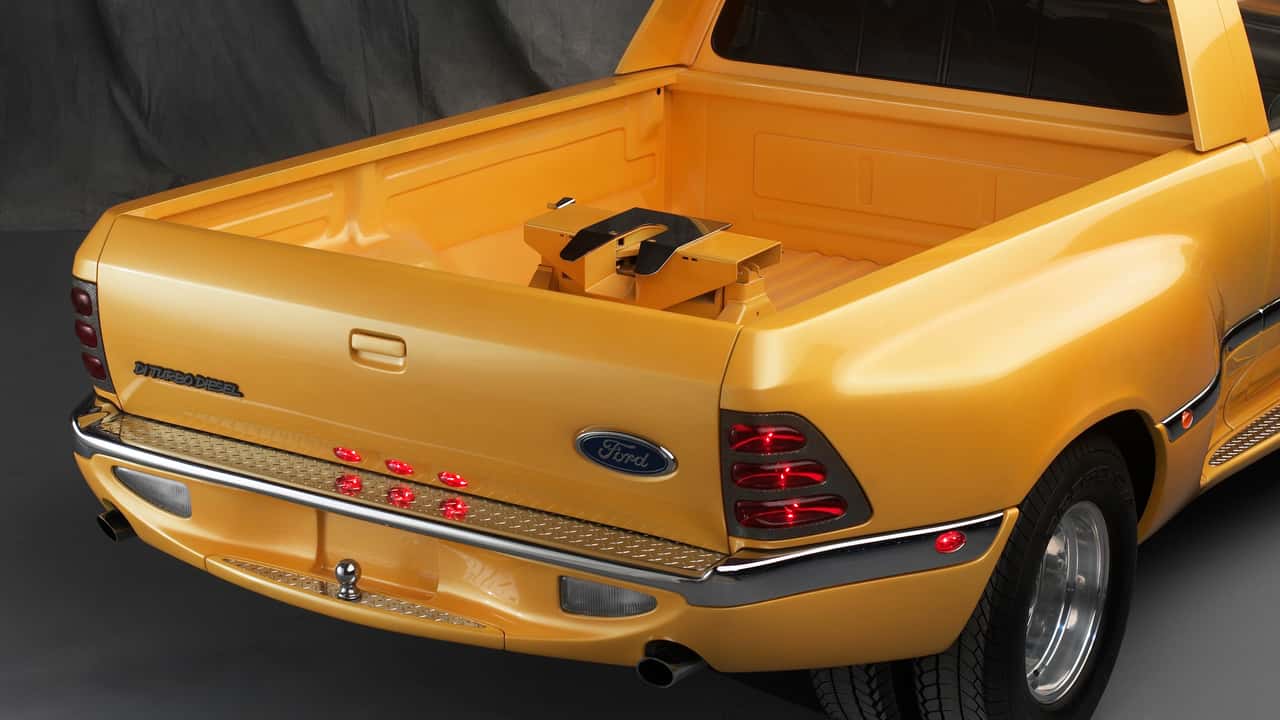
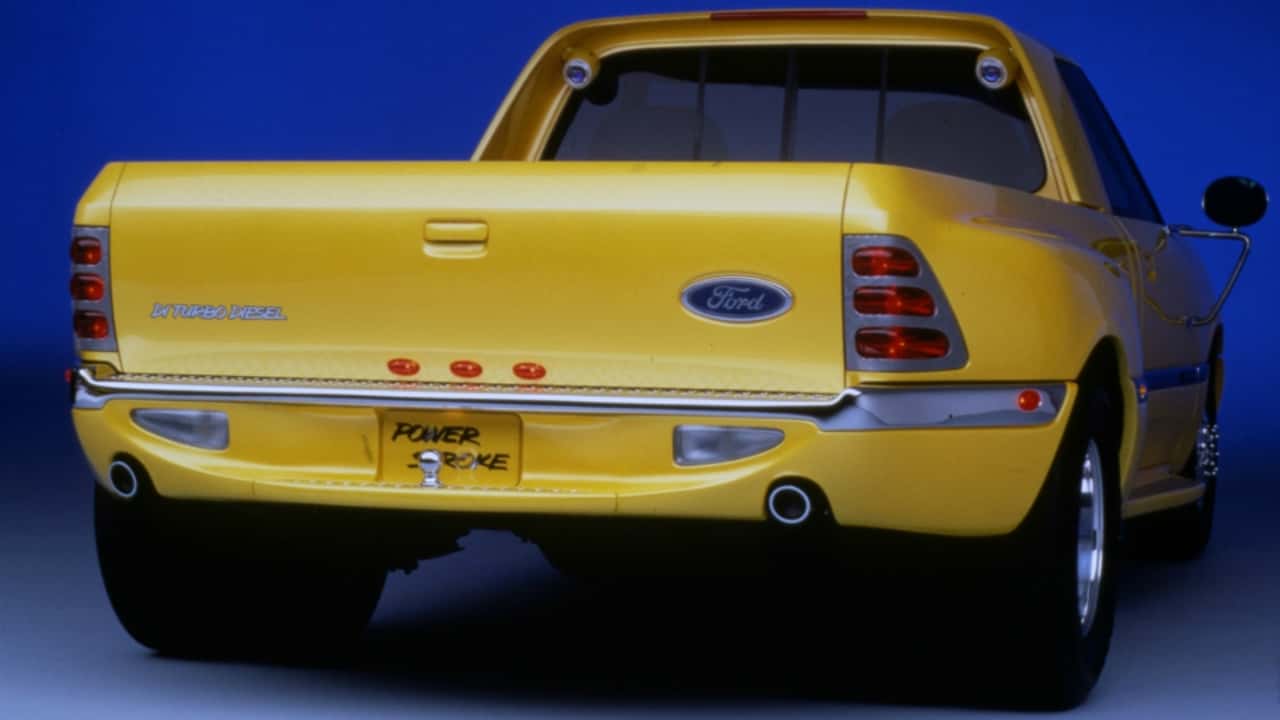
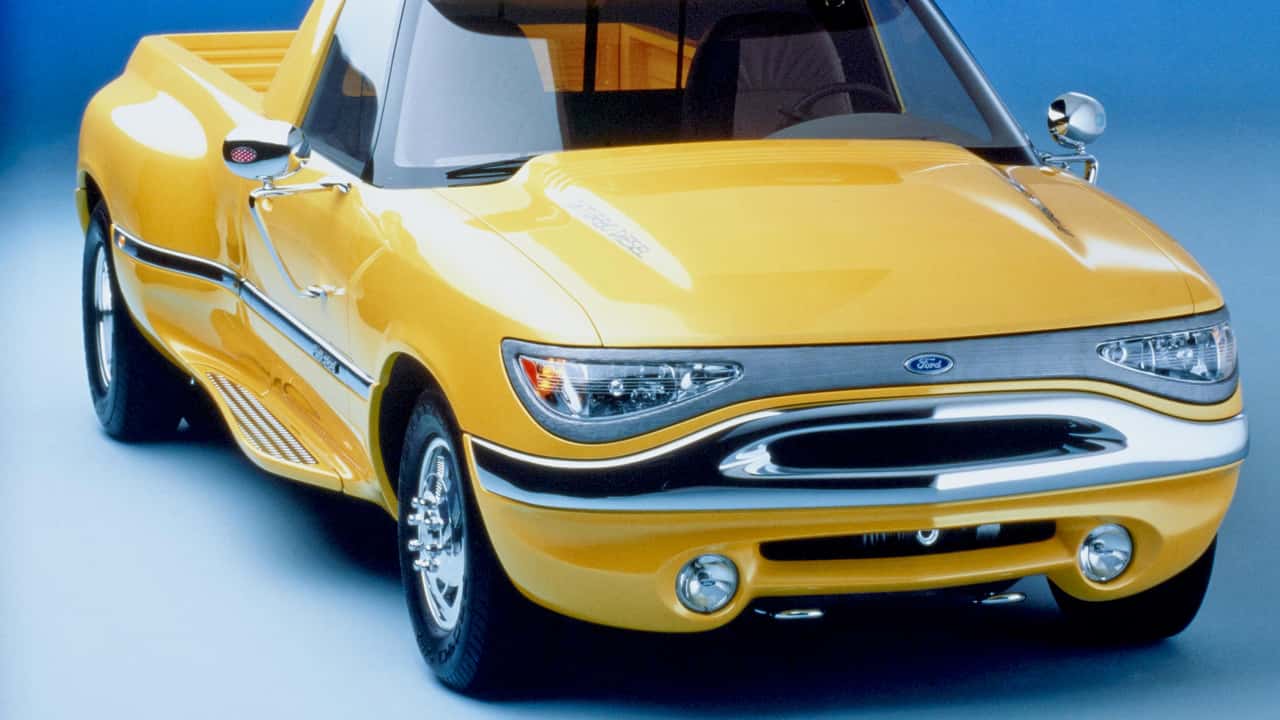
Before “Power Stroke” became synonymous with Ford’s diesel pickups, there was the wild Powerstroke concept. Built to showcase Ford’s upcoming 7.3-liter turbodiesel V8, the concept was essentially a rolling preview of what was to come.
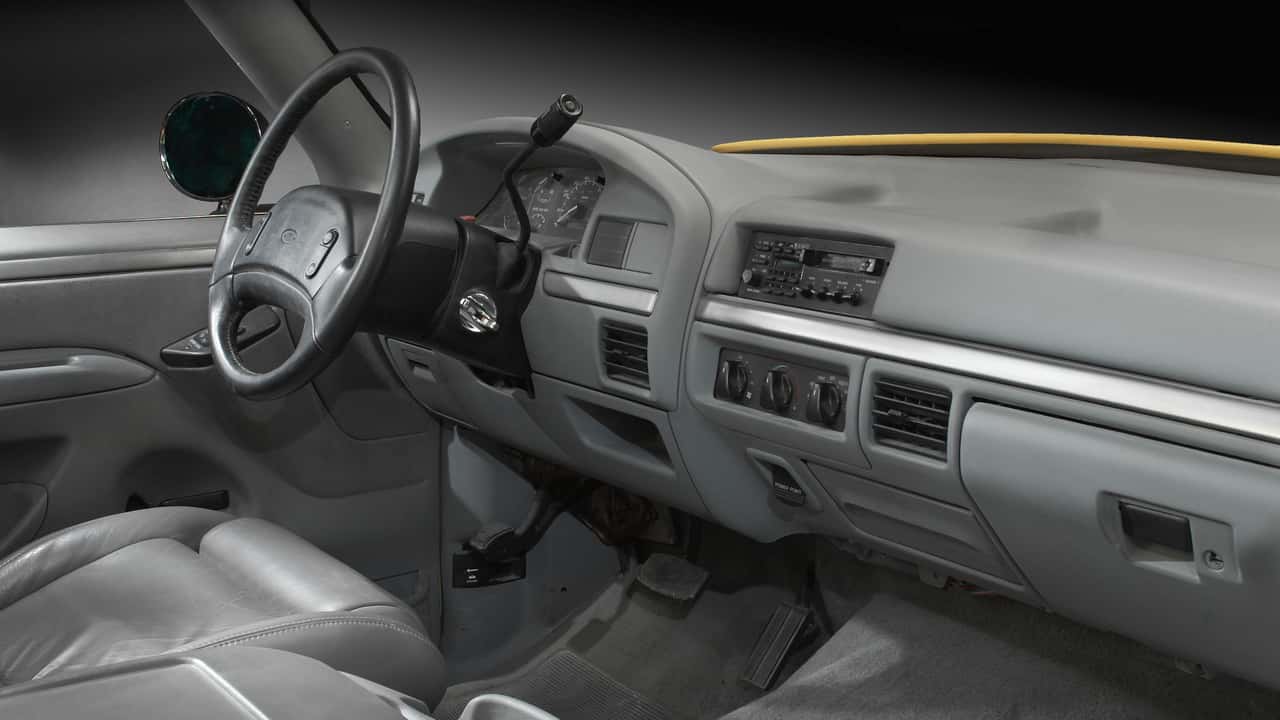
The truck itself looked like peak 1990s concept-car excess. It had a wraparound windshield, hidden A-pillars, integrated rear fender flares, diamond-plate running boards, a giant roof visor, and auxiliary lights. Inside, Ford even kept a cassette player because it was, after all, 1994.
1995 Ford GT90
Maybe “weird” isn’t the best way to describe the GT90. Its sharp, geometric body was certainly unexpected, introducing the world to Ford’s “New Edge” design language, while the mid-mounted powertrain was even more ridiculous: a quad-turbocharged 5.9-liter V12 with a claimed 720 horsepower.
Ford said the GT90 could theoretically approach 250 mph, putting it in supercar territory that few production cars could touch at the time. The car was reportedly developed in roughly six months, using an aluminum-and-carbon-fiber structure and several components related to the Jaguar XJ220. It was never produced, but the GT90 became one of the defining concept cars of the 1990s.
1996 Ford Synergy 2010
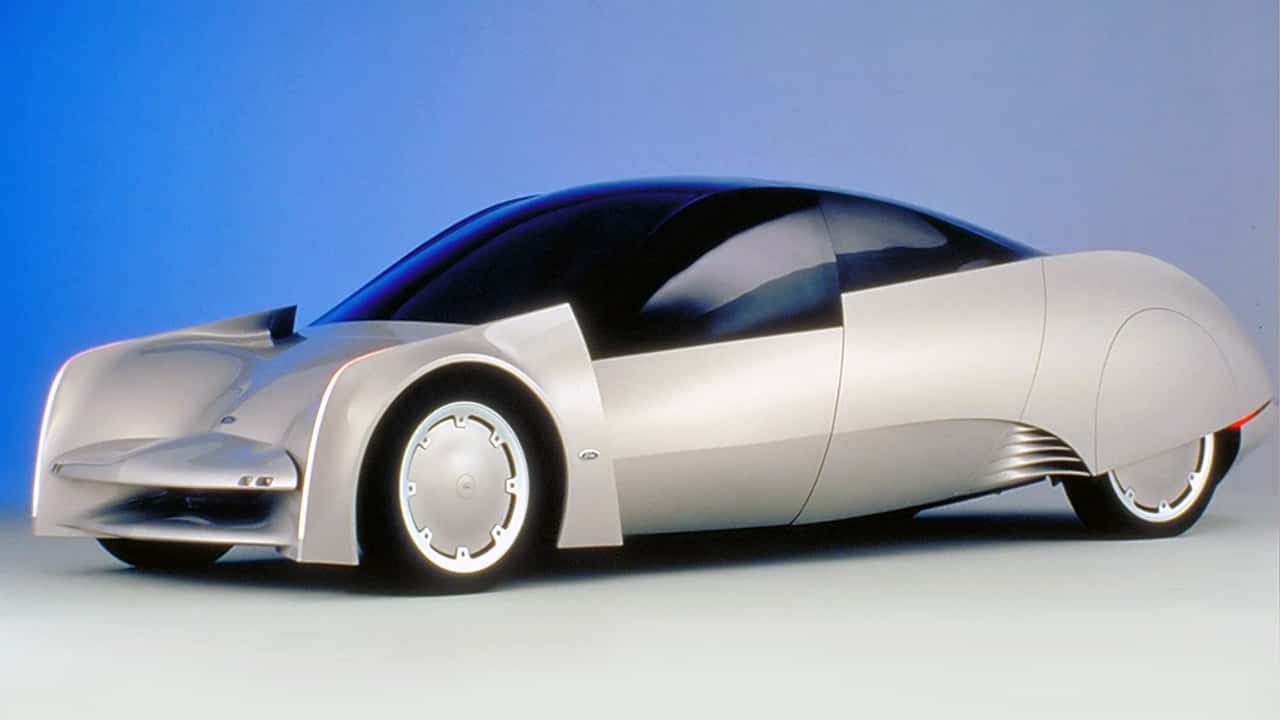
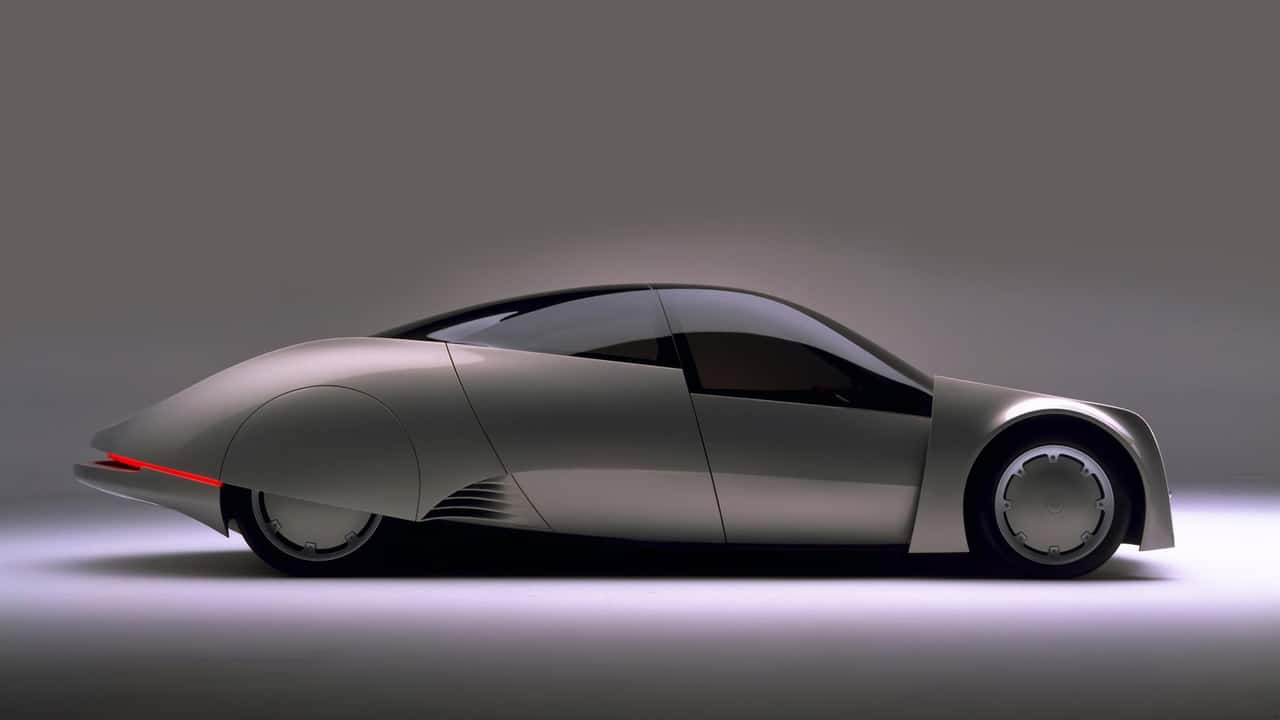
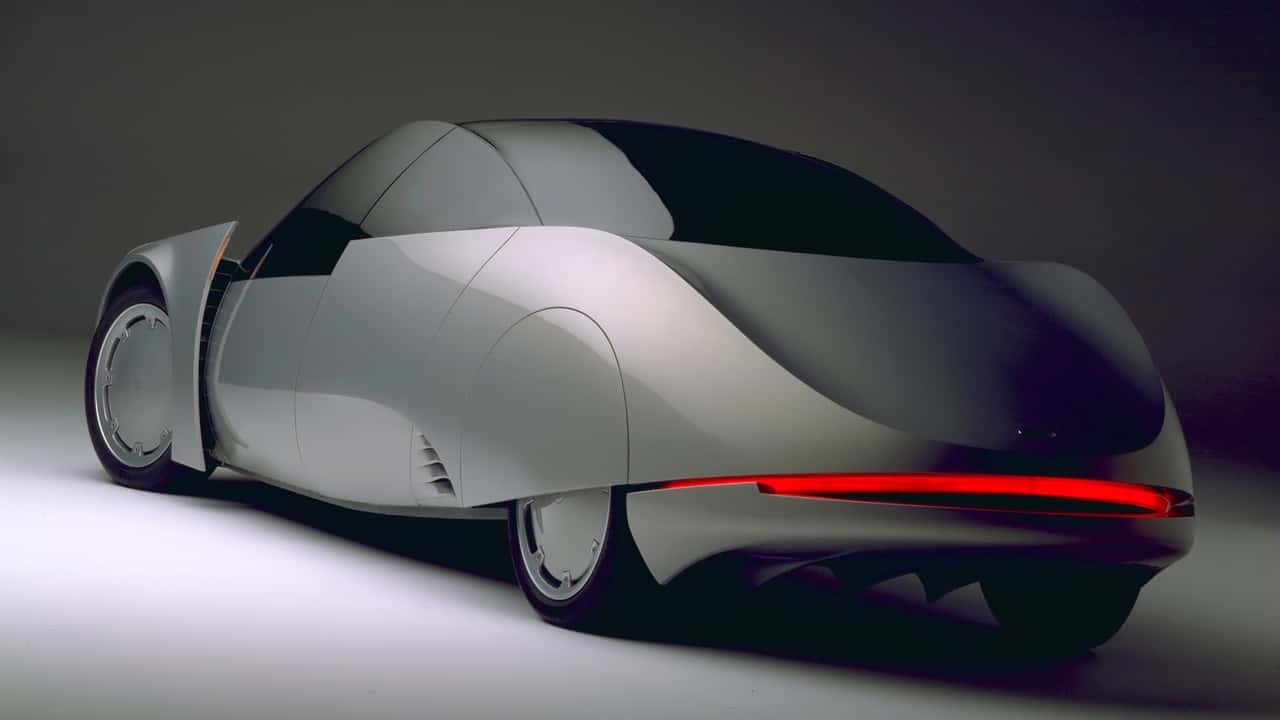
The Synergy 2010 was Ford’s vision of what a family car might look like in the next century. Despite the “2010” name, the concept actually debuted in 1996 as part of Ford’s effort to explore radically more efficient transportation. Ford targeted 80 mpg while keeping the car below one ton.
The powertrain combined a tiny 1.0-liter direct-injection gasoline engine with an electric motor, while the body used lightweight materials and extreme aerodynamic styling. Ford also envisioned voice recognition, head-up displays, and camera-based rear vision. In other words, the Synergy 2010 envisioned a hybrid family car packed with technology long before such features became commonplace.
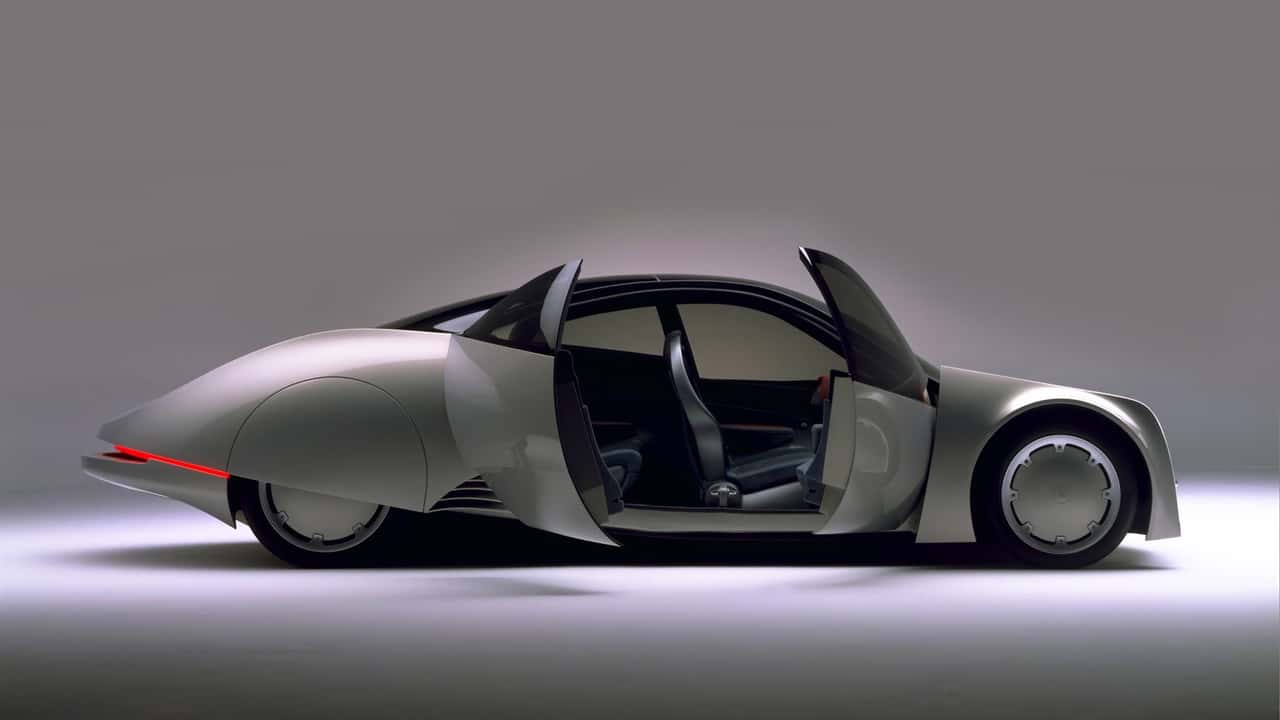
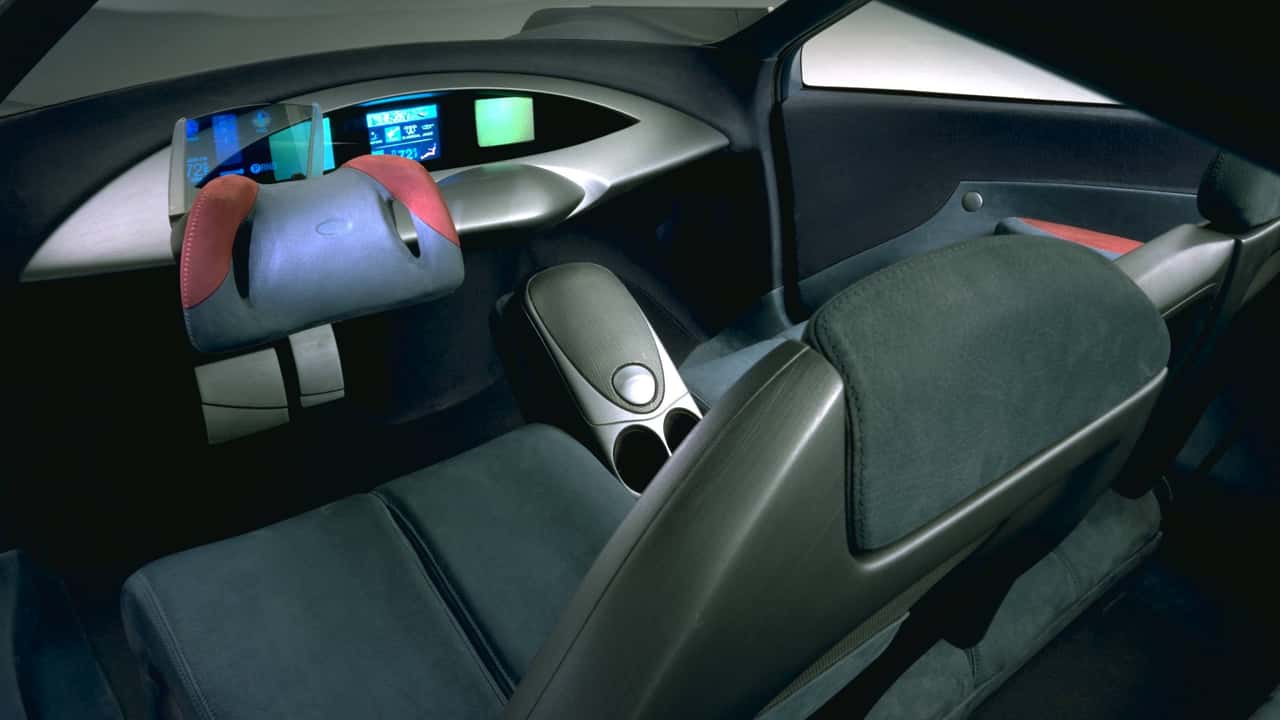
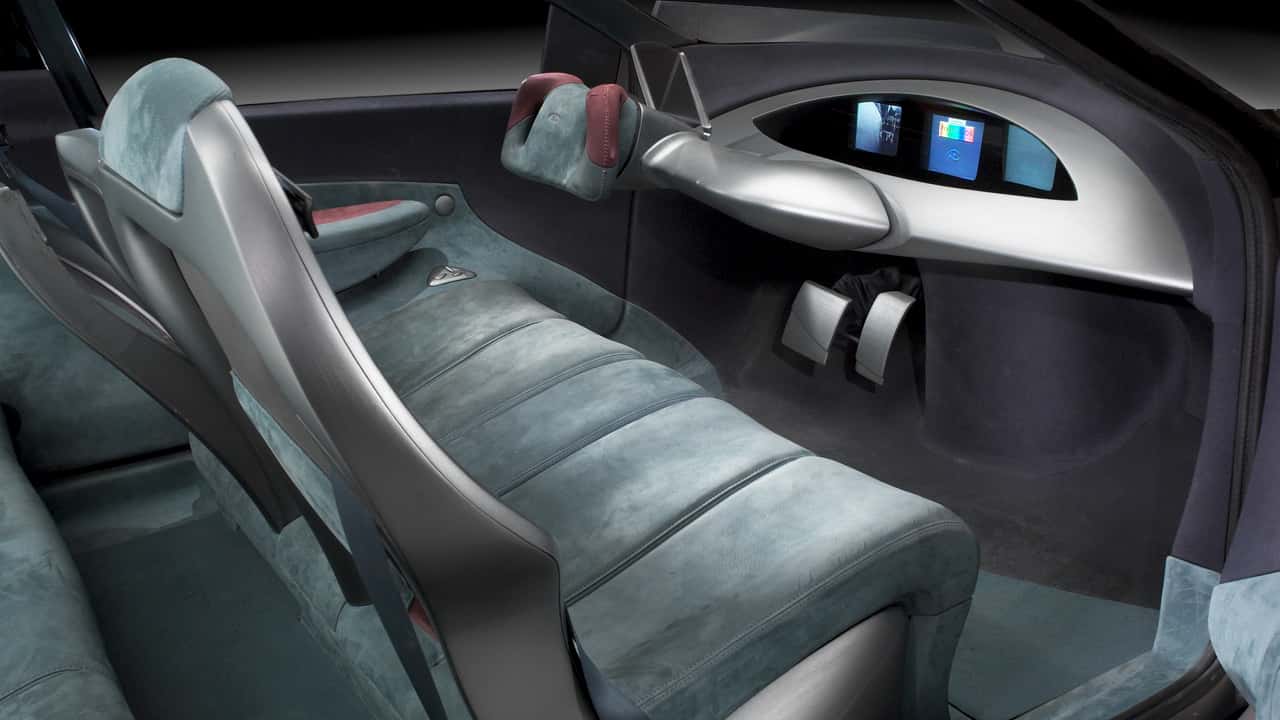
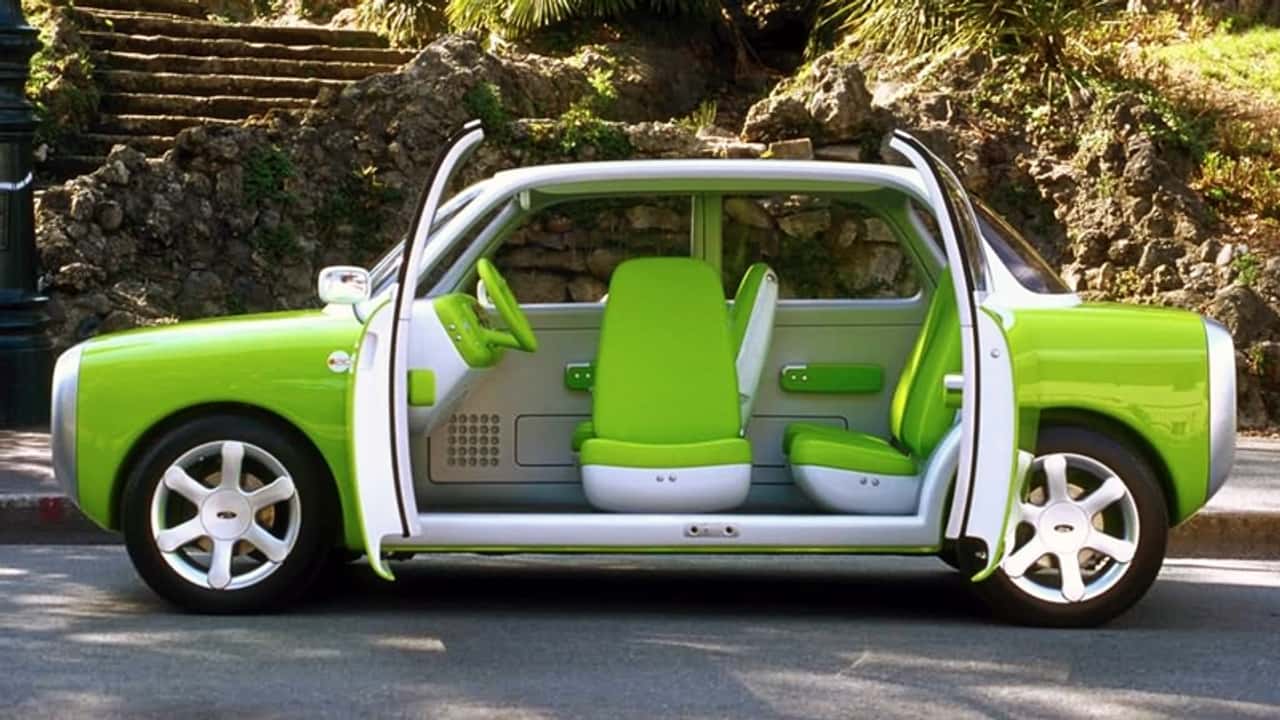
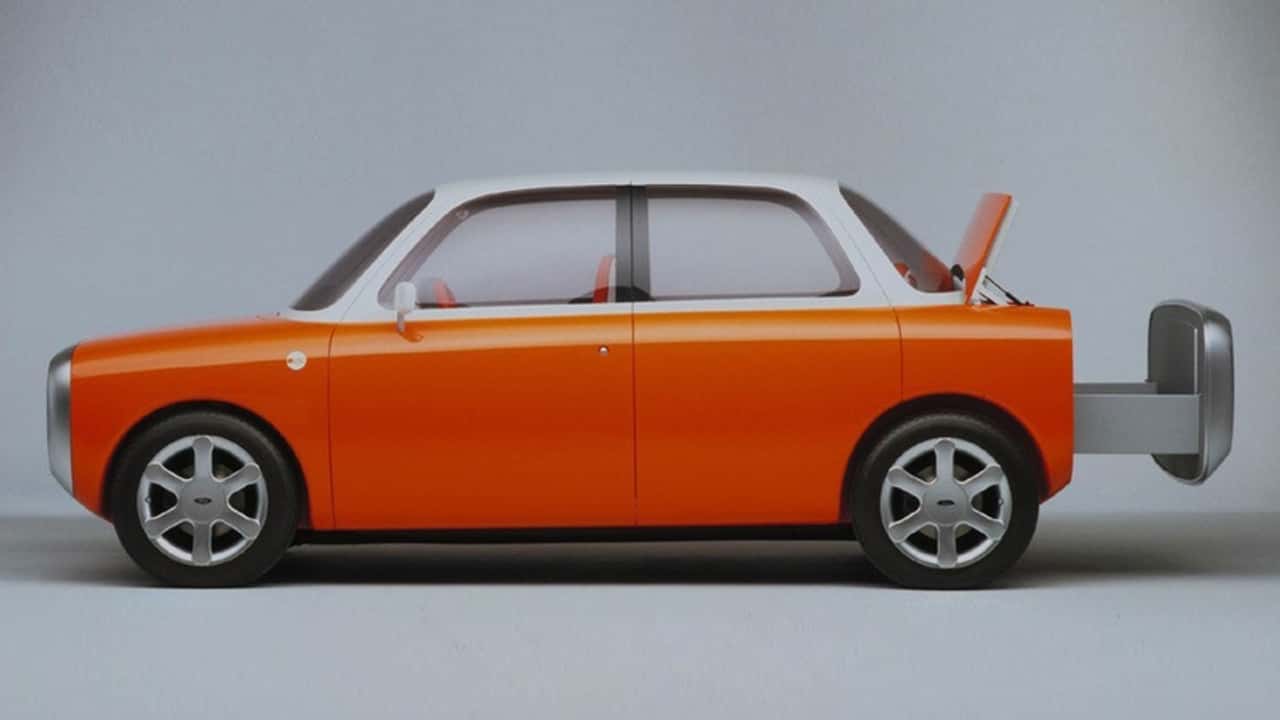
1999 Ford 021C
For the 021C, Ford commissioned industrial designer Marc Newson to imagine a car for young buyers entering the 21st century. The result was something that looked more like modern furniture than an actual automobile.
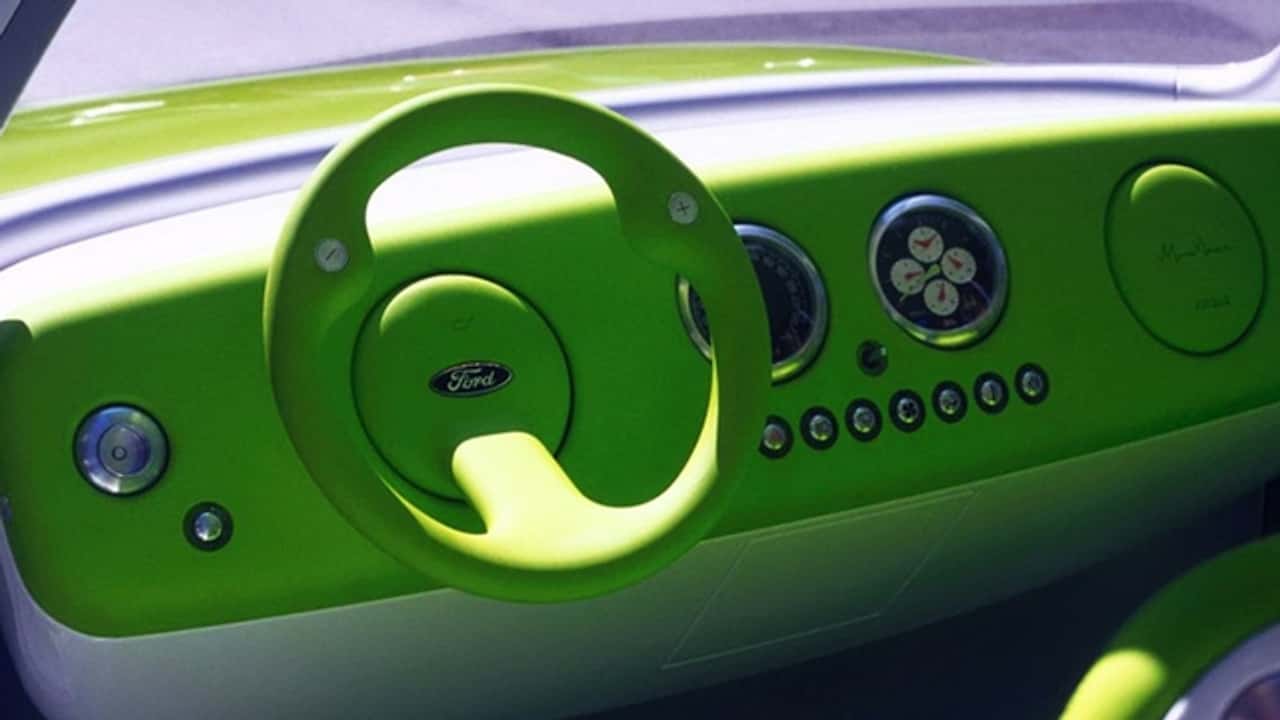
The tiny four-door sedan featured rounded corners, suicide doors, a sliding rear cargo compartment, swiveling front seats, and a dashboard that could move vertically. Even the lights were unusual, with full-width lamps at both ends. It debuted at the 1999 Tokyo Motor Show and won Best Concept Car, making it one of Ford’s most memorable design experiments.
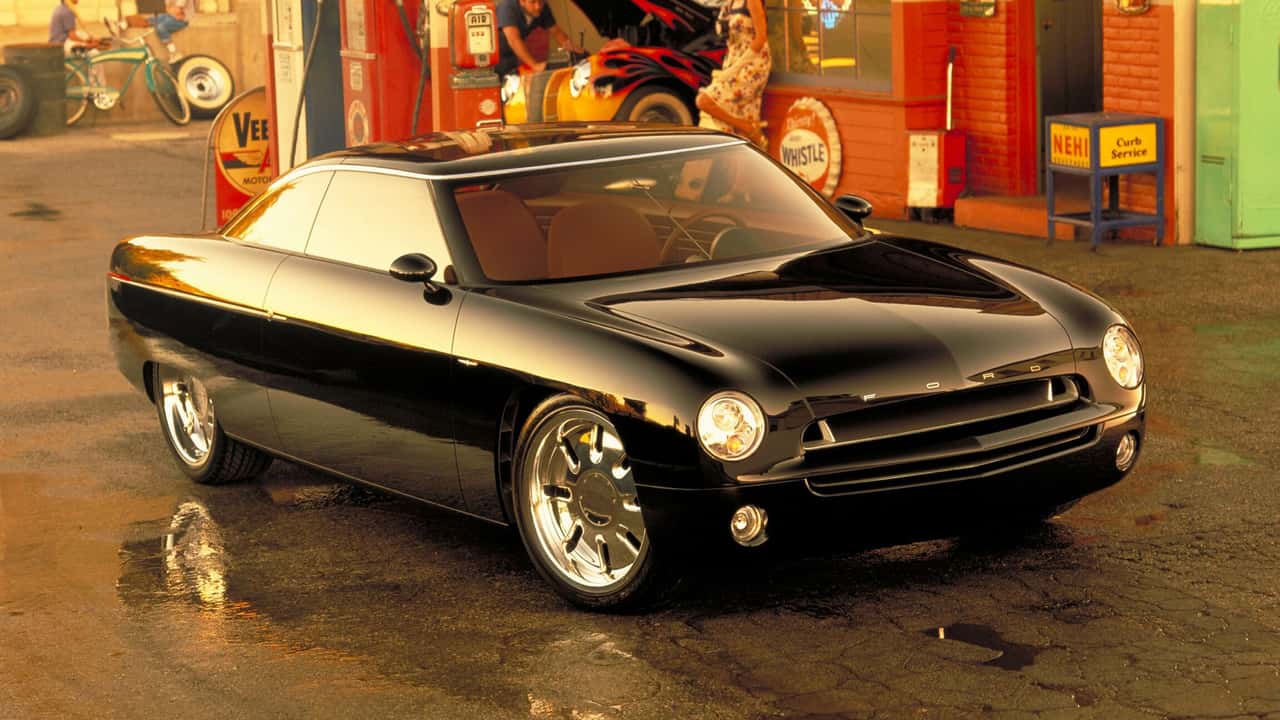
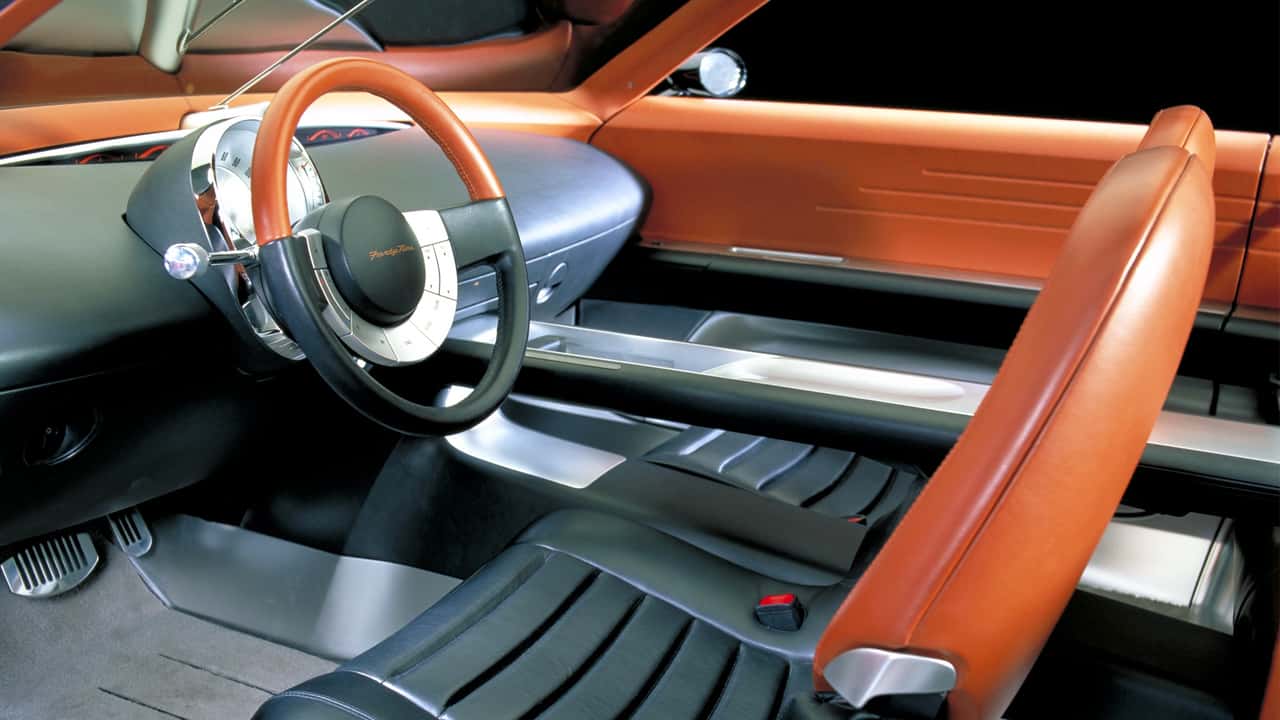
2001 Ford Forty-Nine
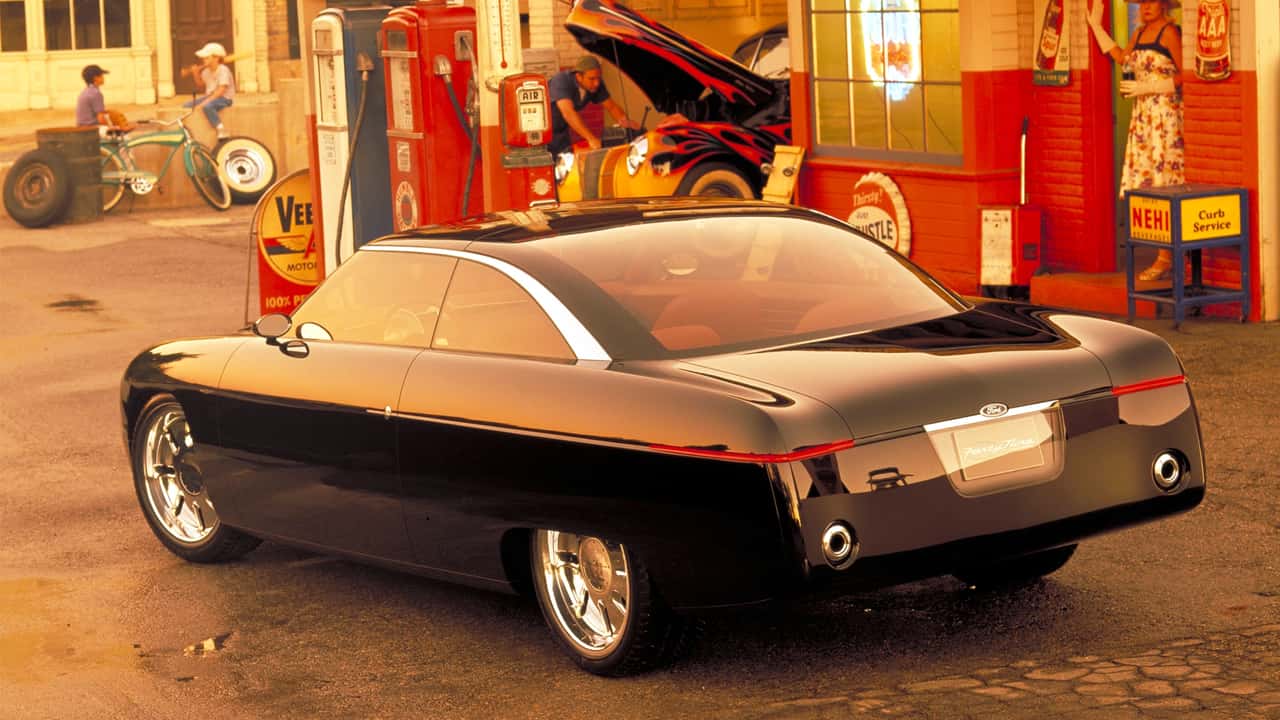
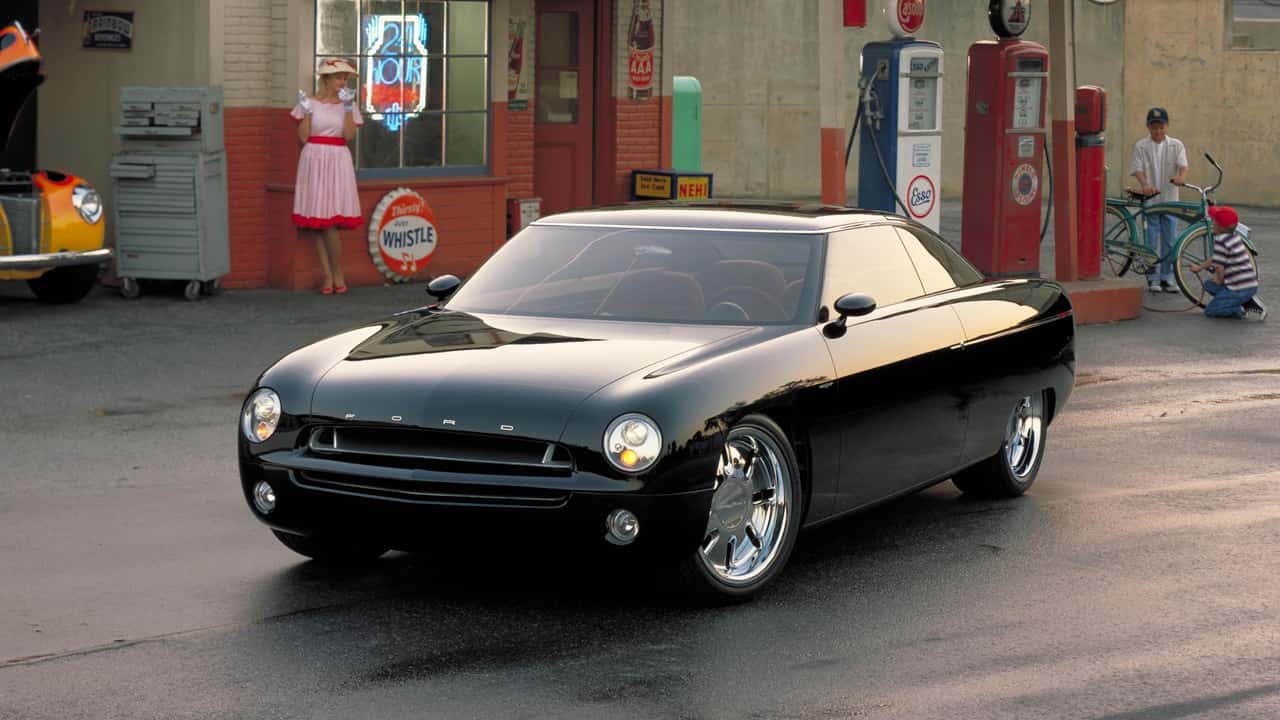
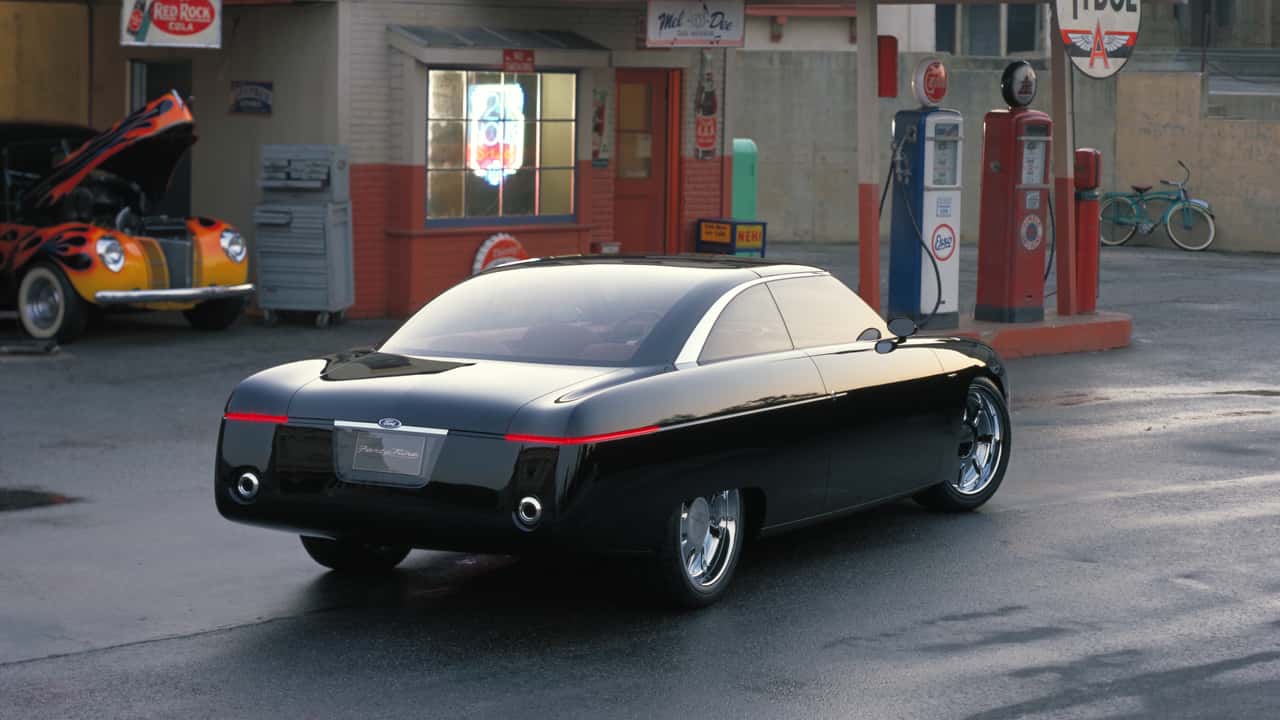
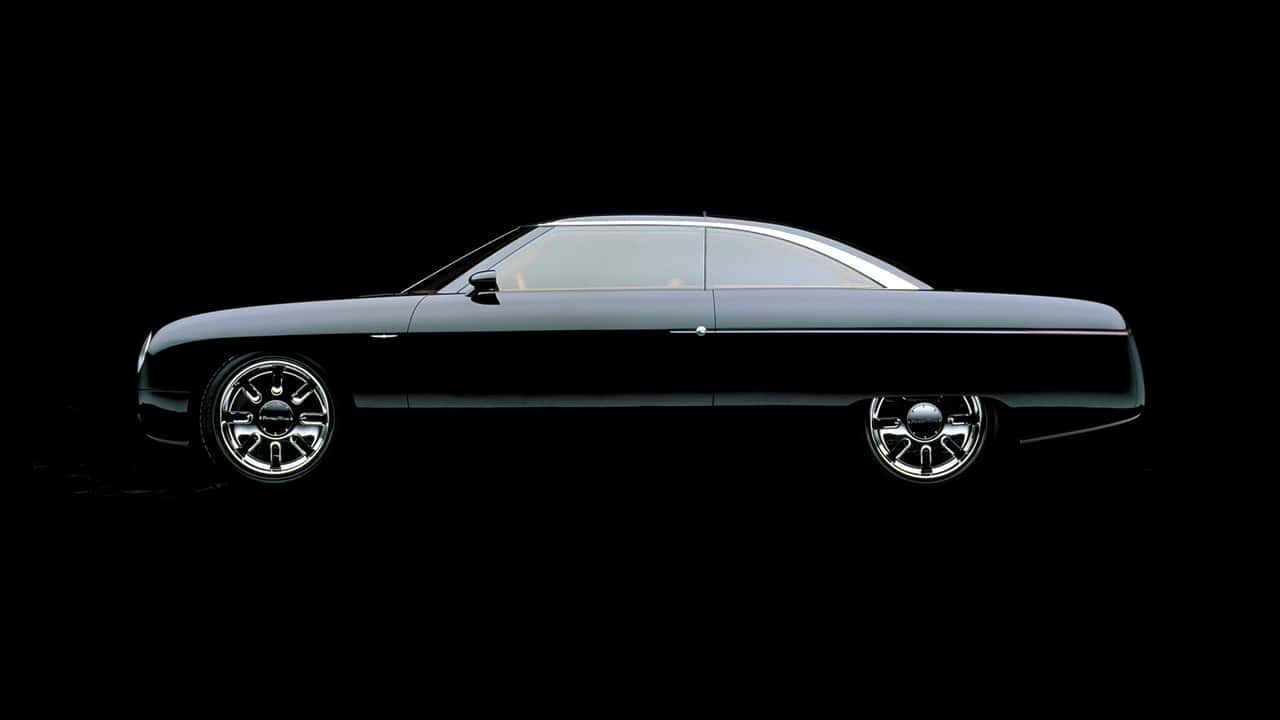
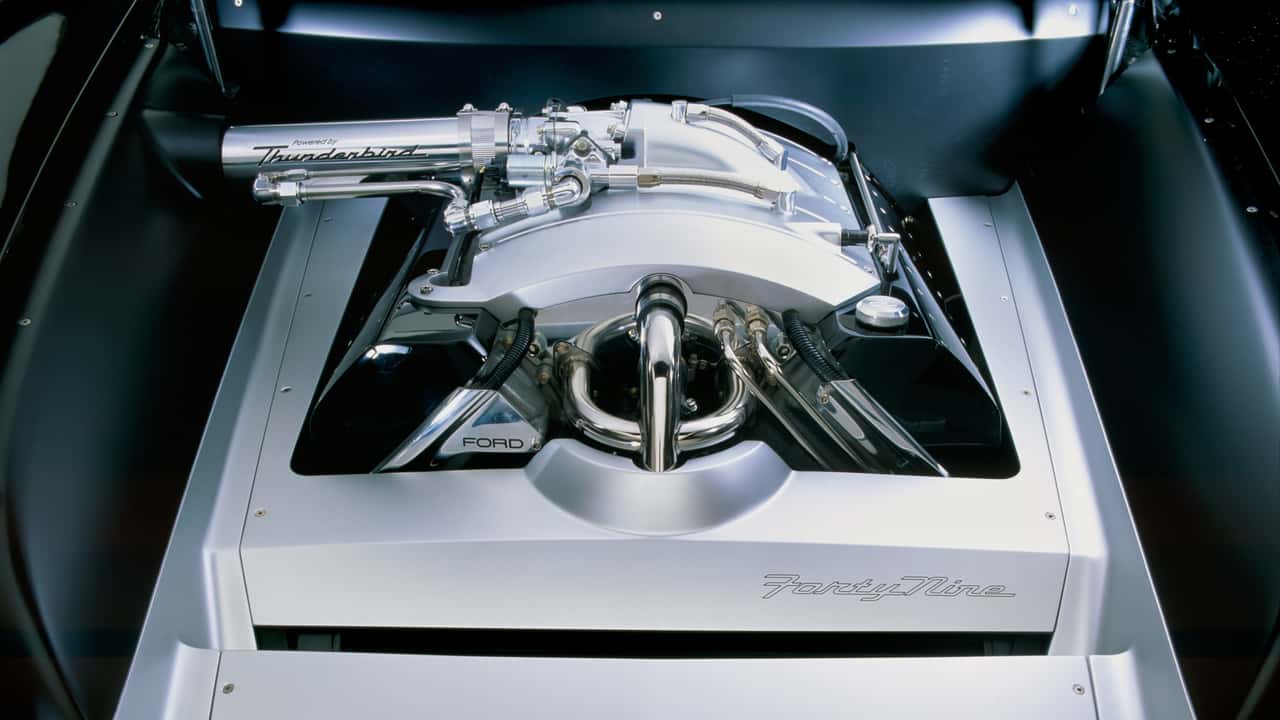
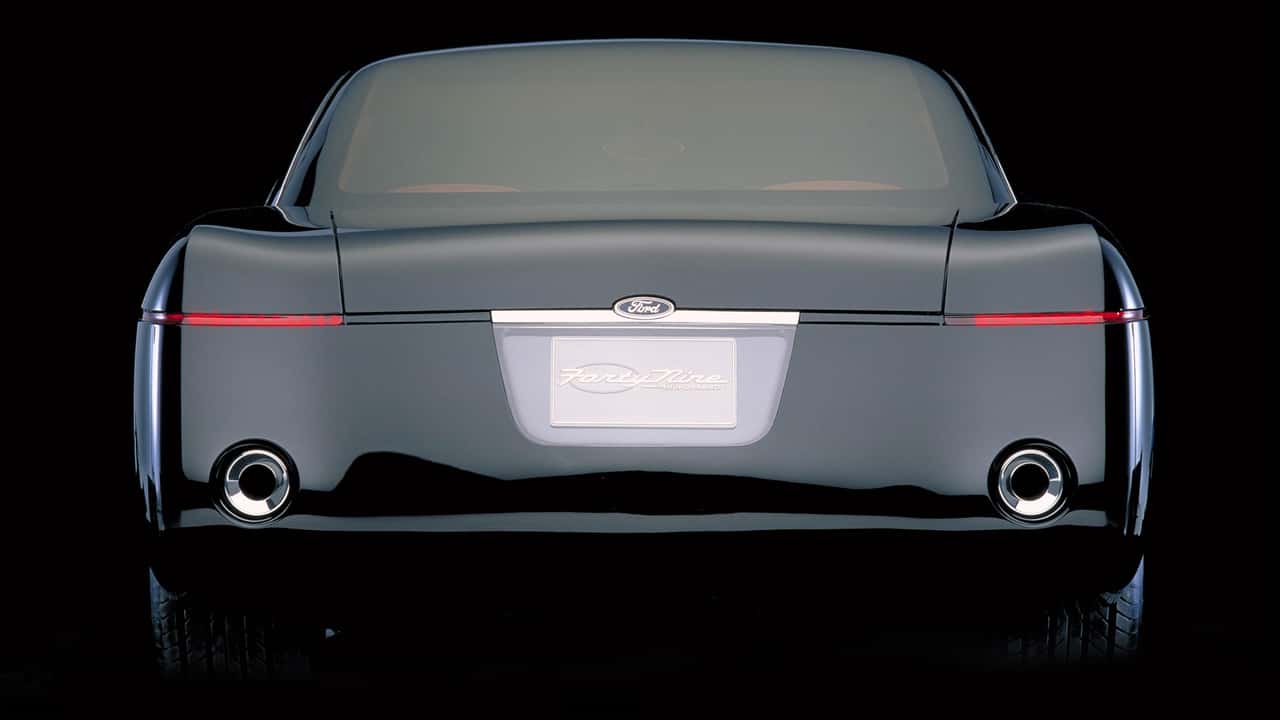
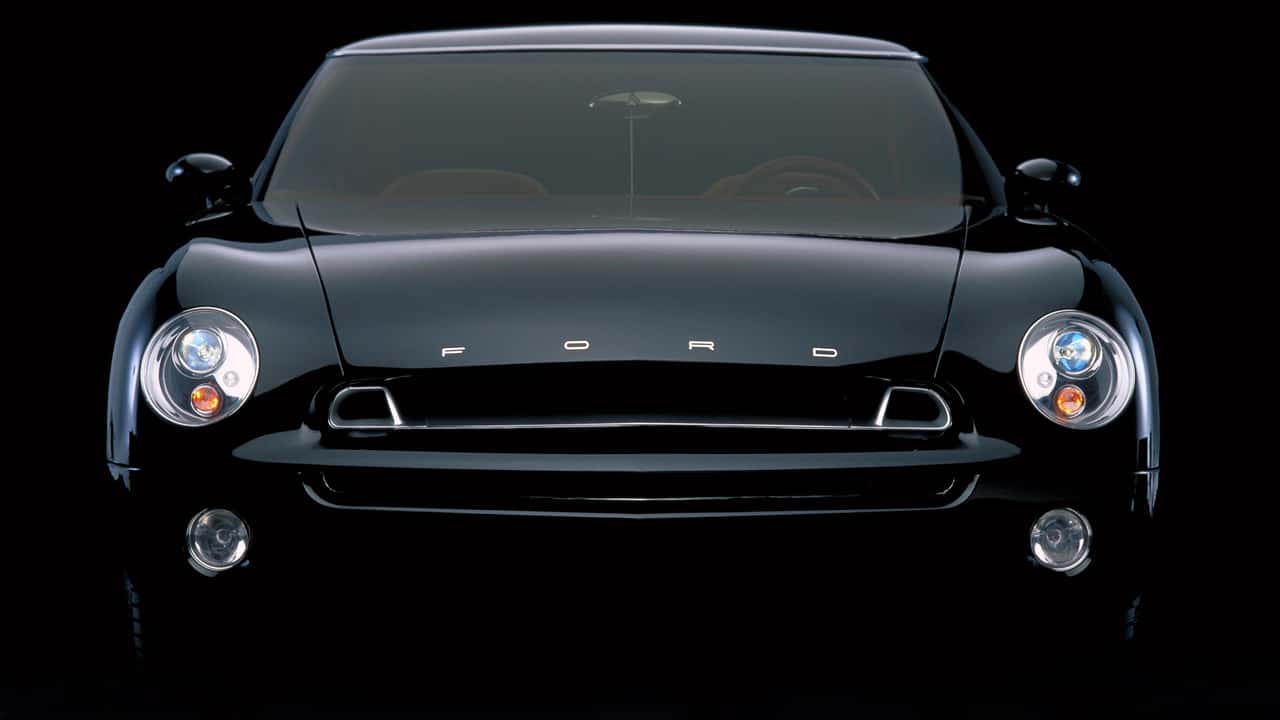
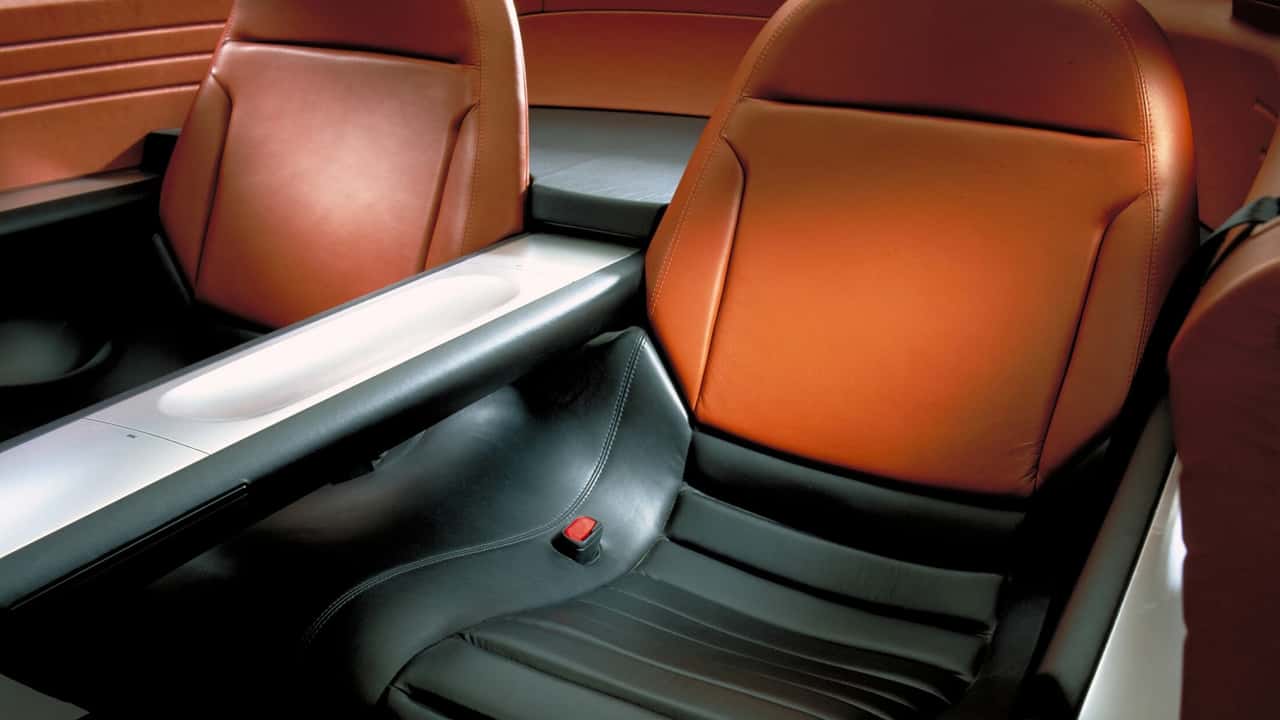
Ford went retro in the early 2000s before retro became completely unavoidable. The Forty-Nine was a modern interpretation of the 1949 Ford, but instead of simply copying the original, designer Chip Foose gave it a sleek, futuristic body and a massive glass roof stretching from front to rear.
Underneath the nostalgic styling was a 3.9-liter Jaguar-sourced V8 driving the rear wheels through a five-speed automatic transmission. Ford even built a convertible version. The concept generated plenty of excitement at the 2001 Detroit auto show, but neither body style reached production.
2002 Ford MA
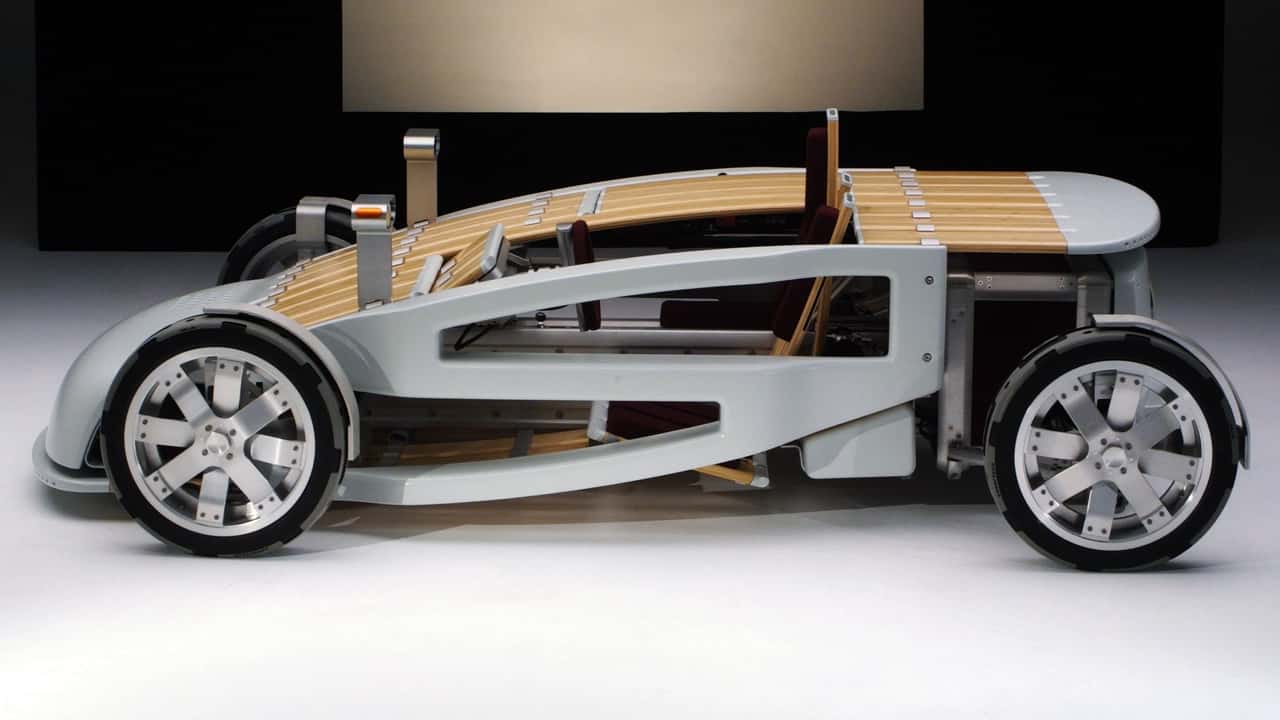
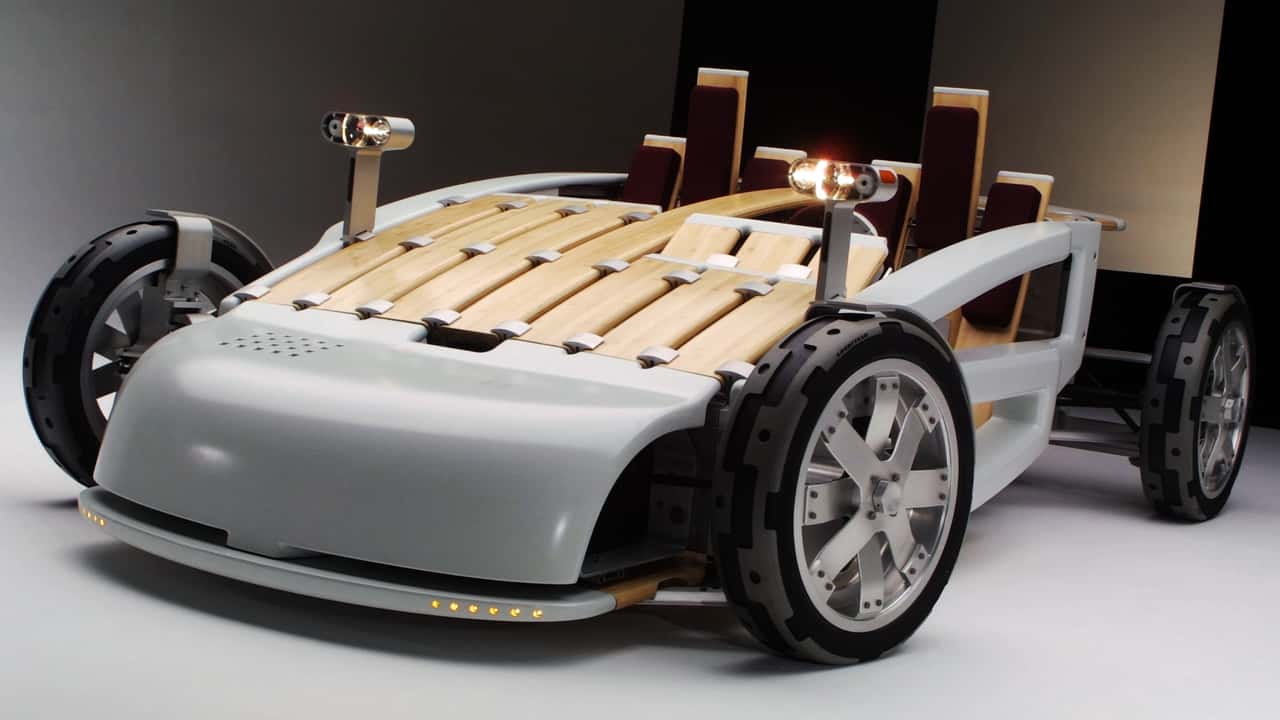
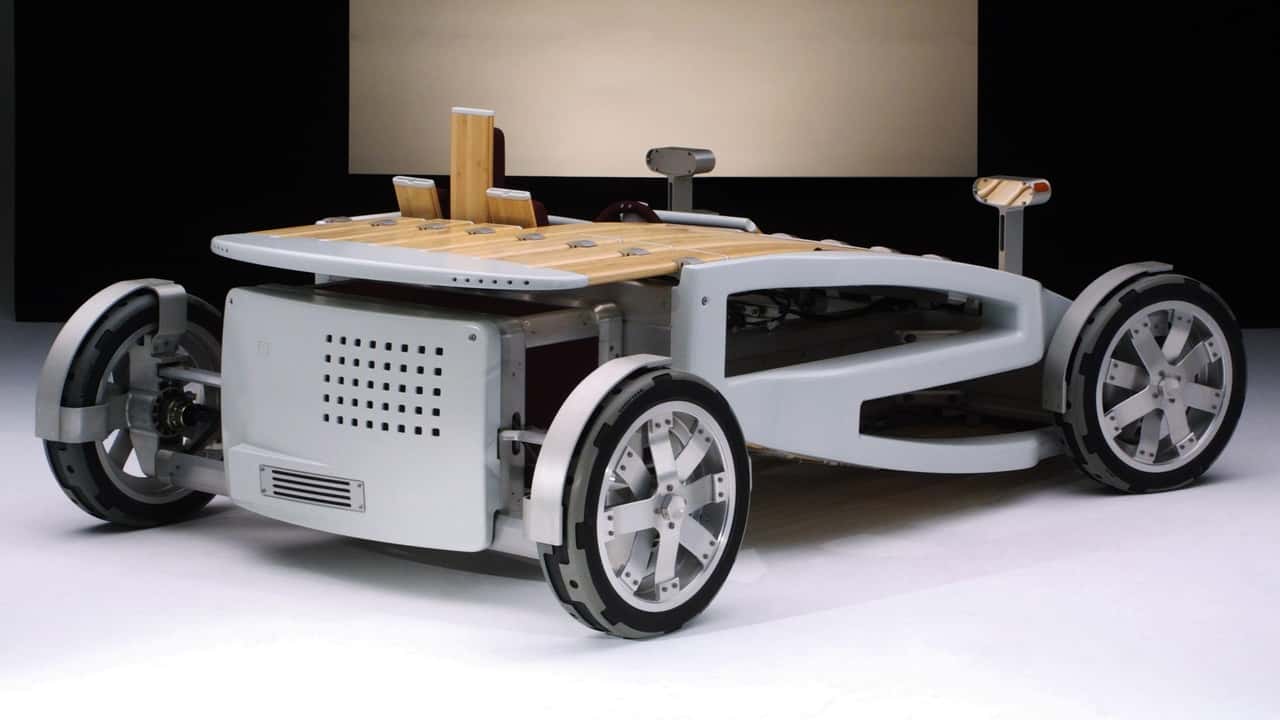
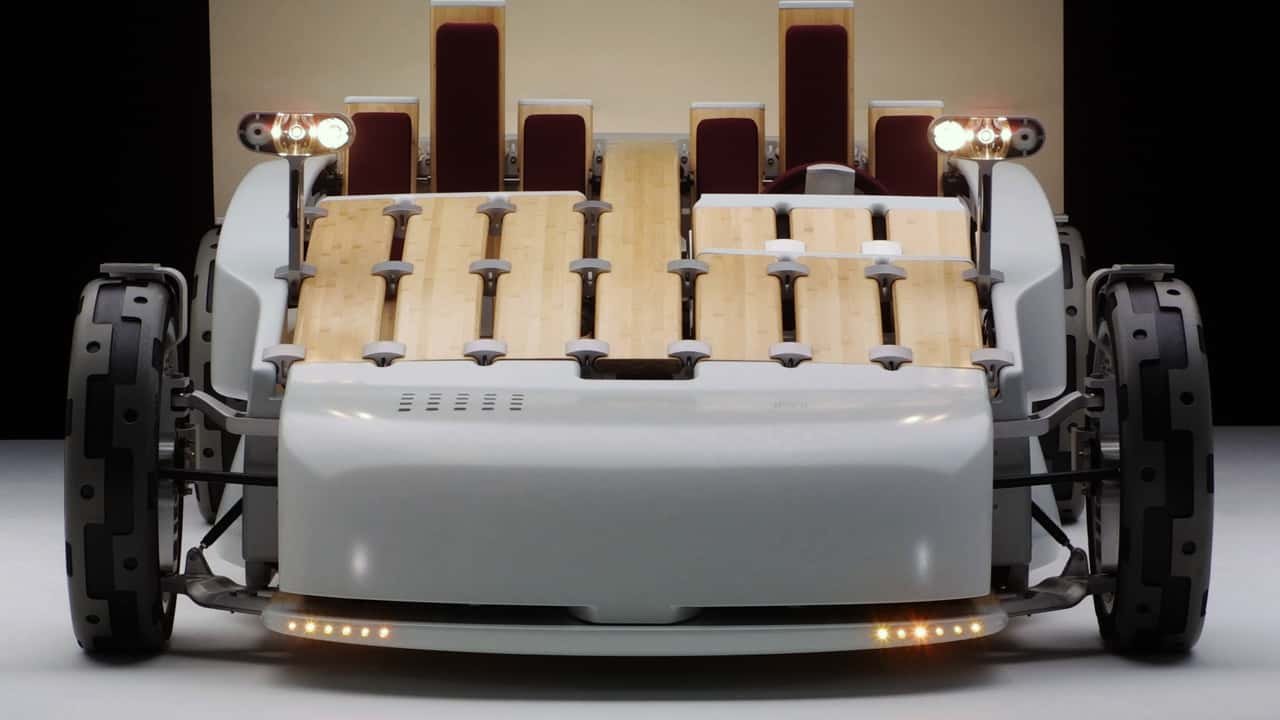
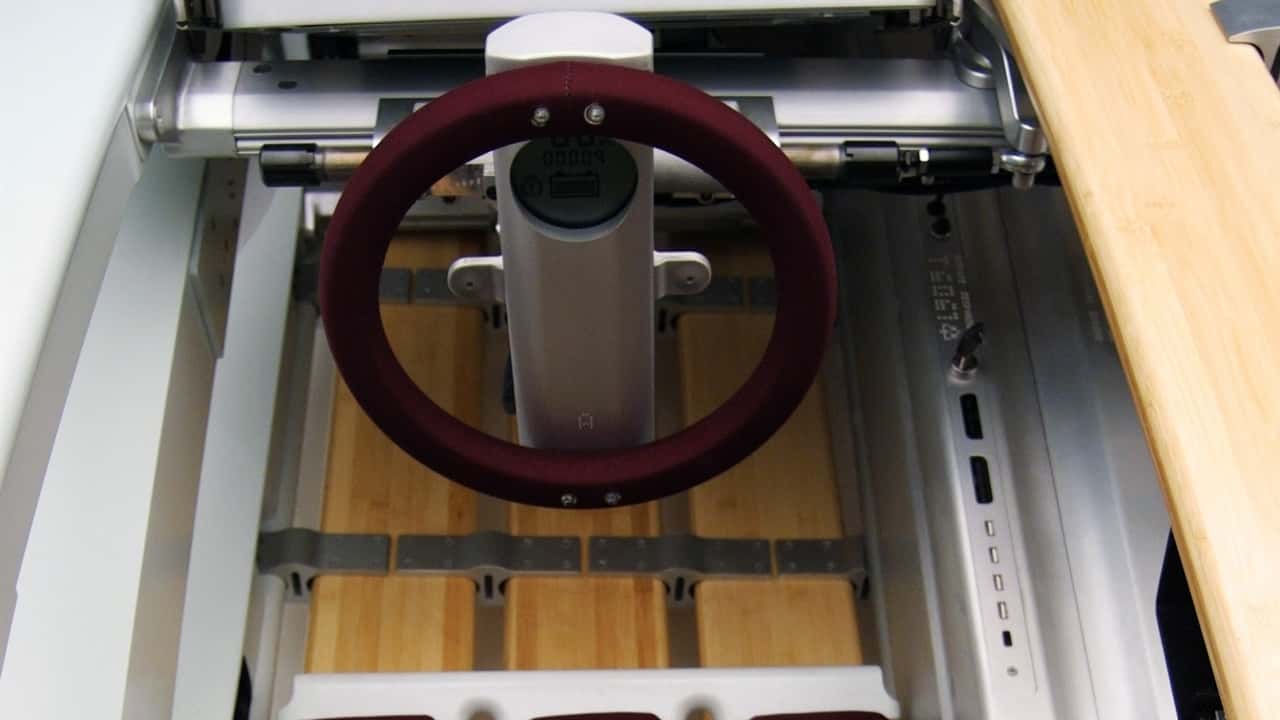
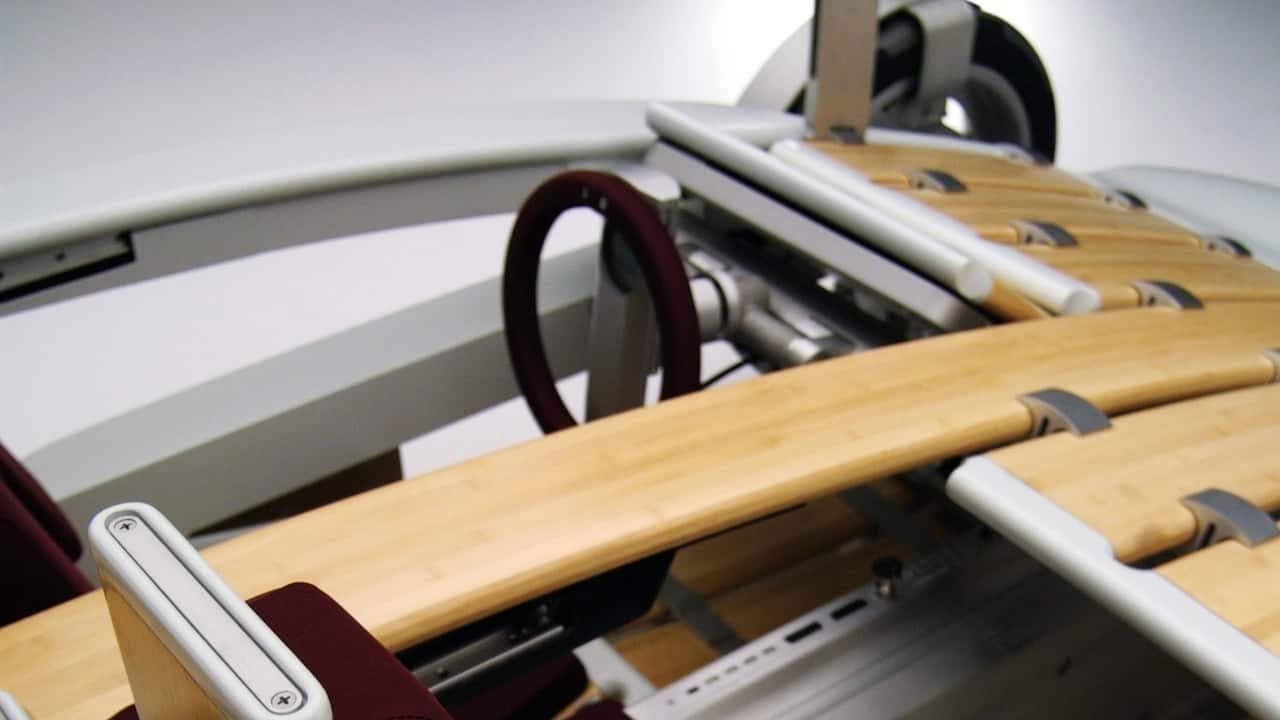
The MA looks less like a conventional car than an IKEA cabinet that somehow got a license plate. Ford designed it as a minimalist two-seat roadster with an emphasis on simple construction, lightweight materials, and recyclability.
Almost nothing about it followed traditional automotive construction. The MA used bamboo, aluminum, and carbon fiber, with hundreds of titanium bolts instead of conventional welding. Ford claimed about 96 percent of the car could be recycled. It could also accommodate either electric or combustion power, making the MA an unusually forward-thinking experiment in sustainable vehicle construction.
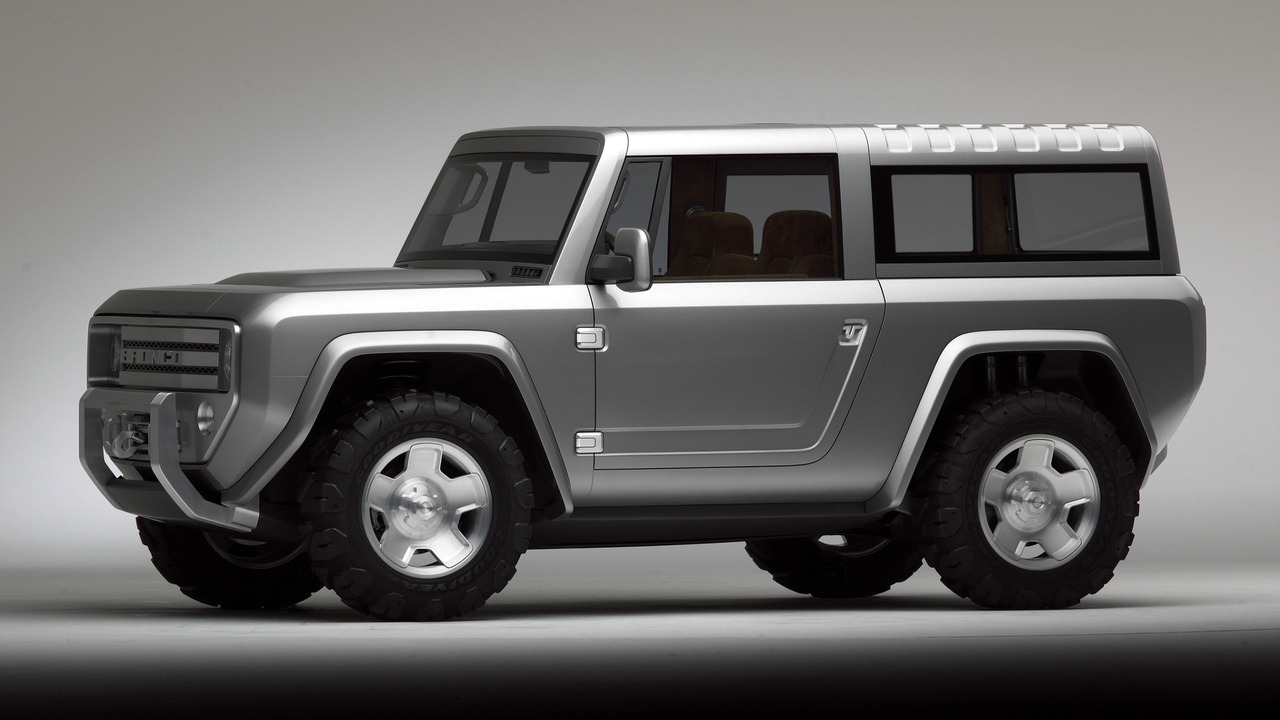
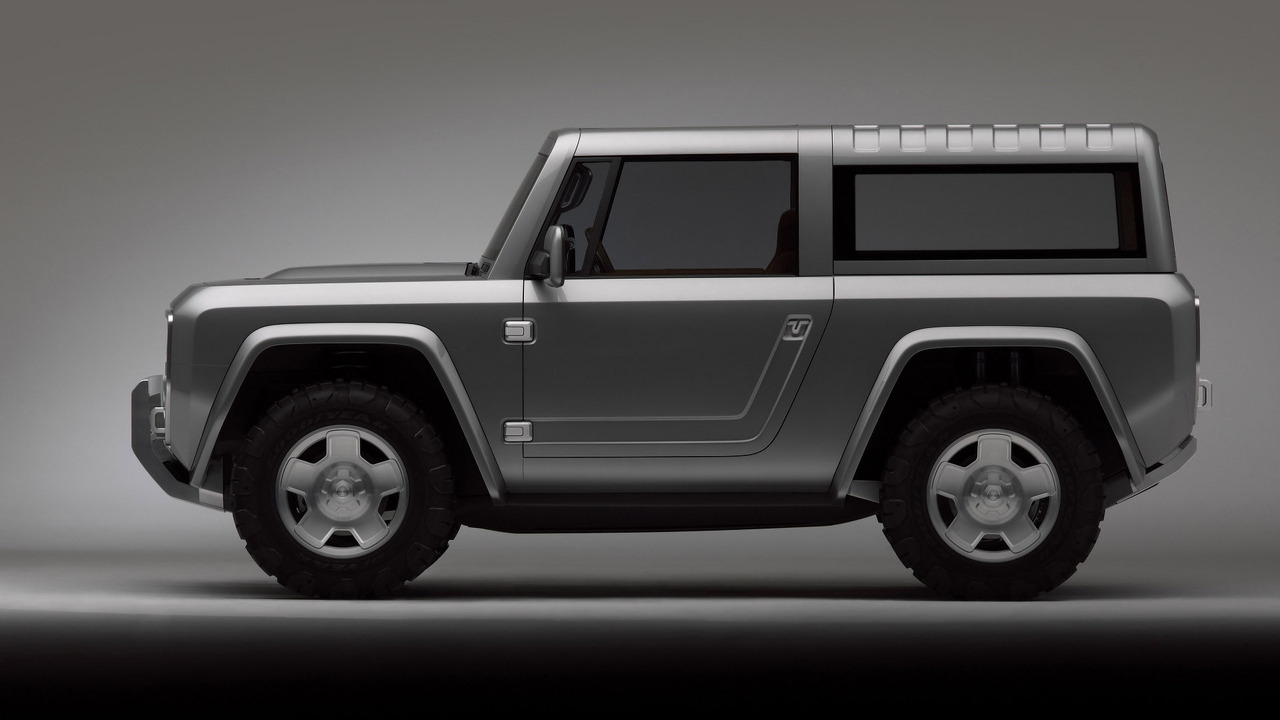
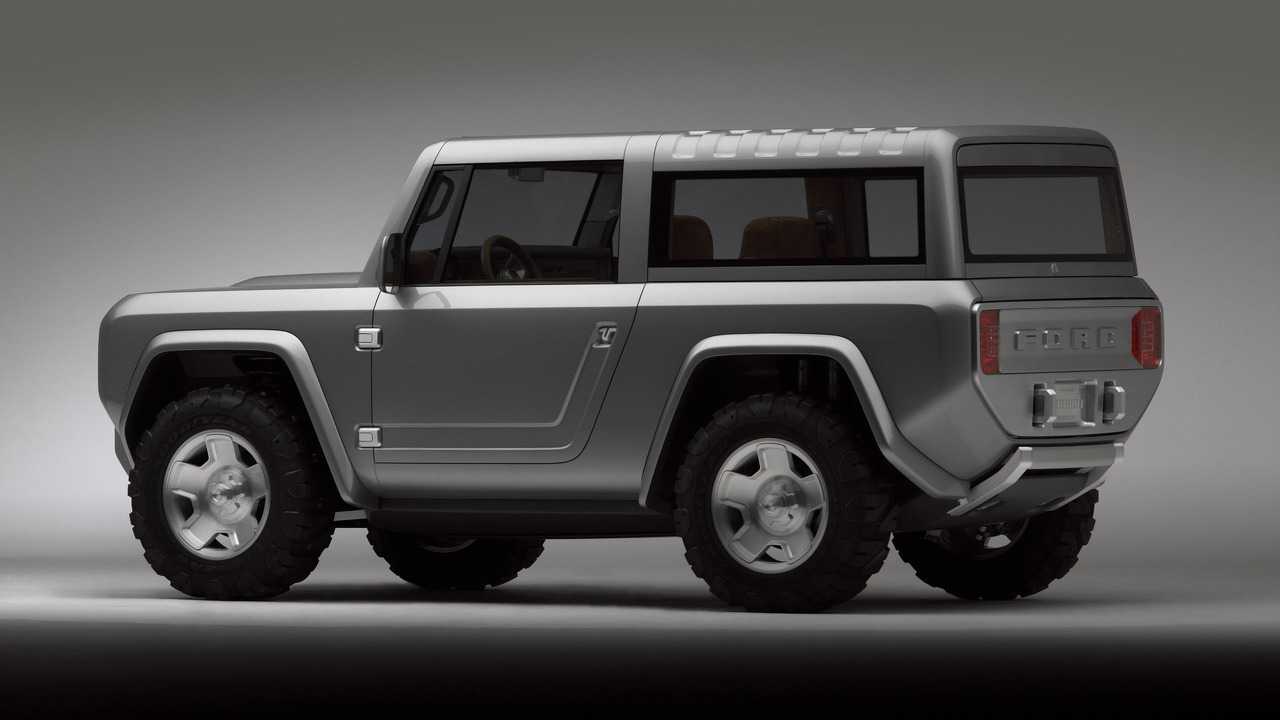
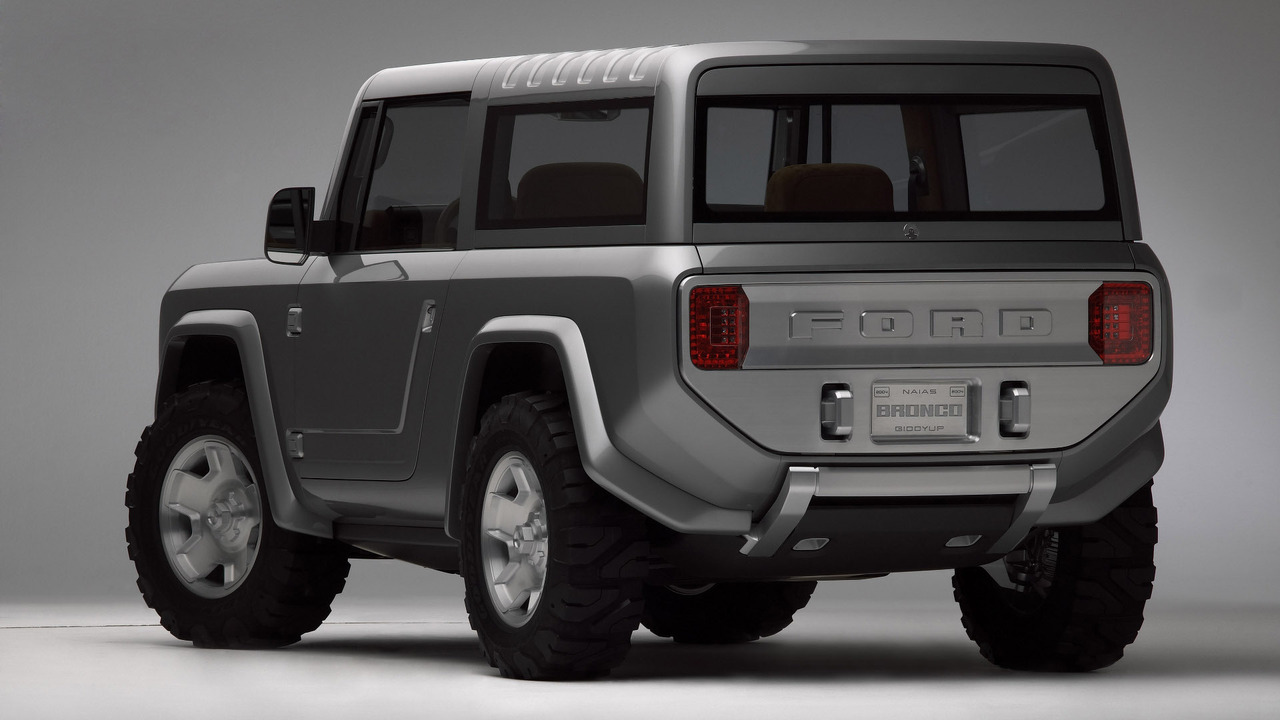
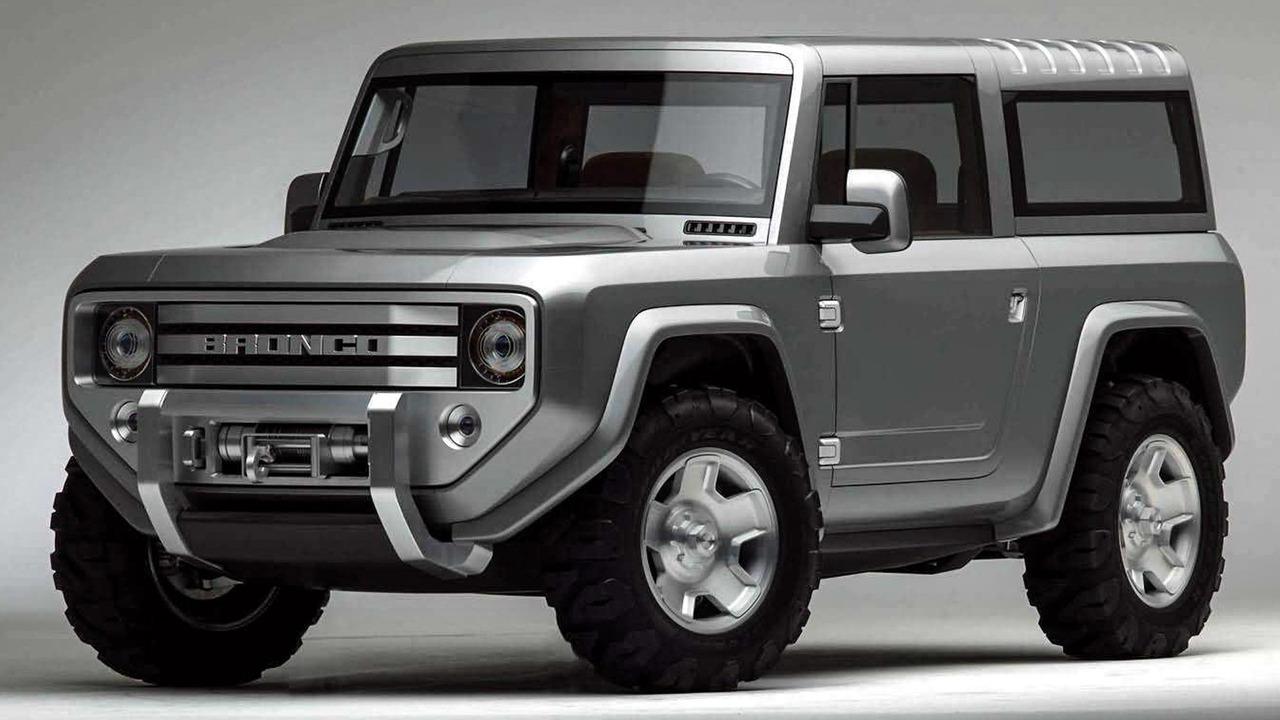
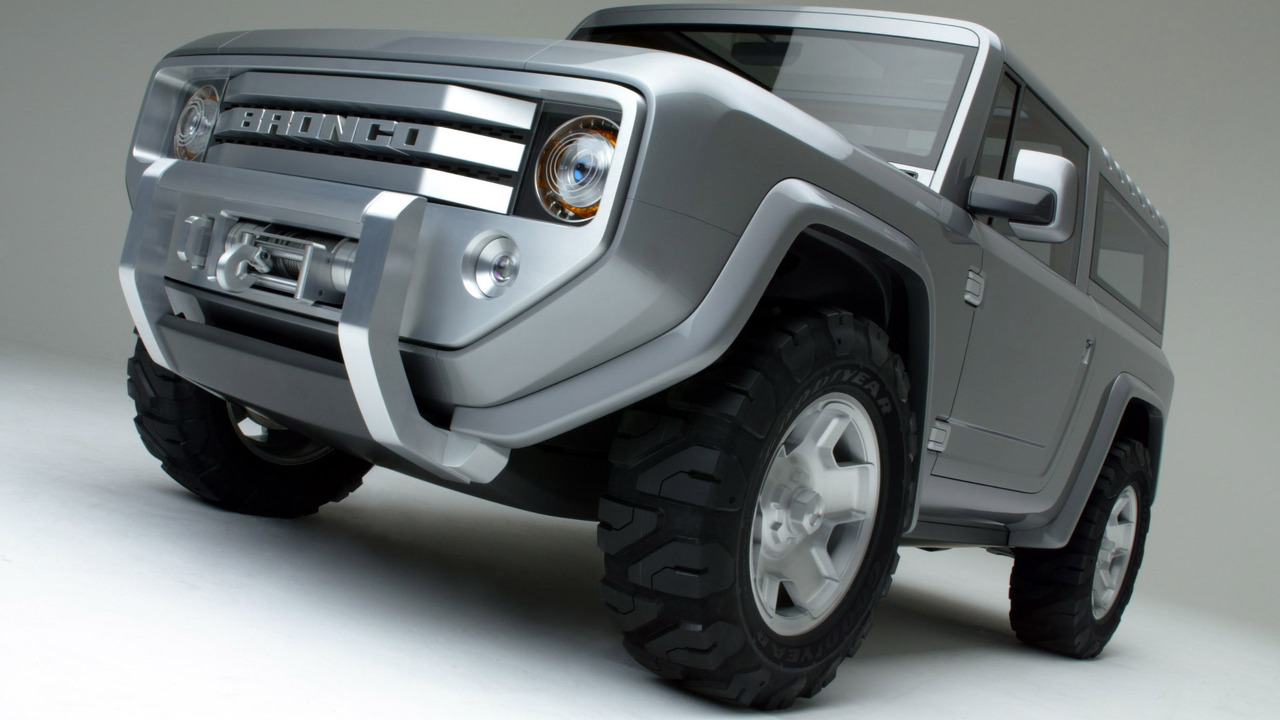
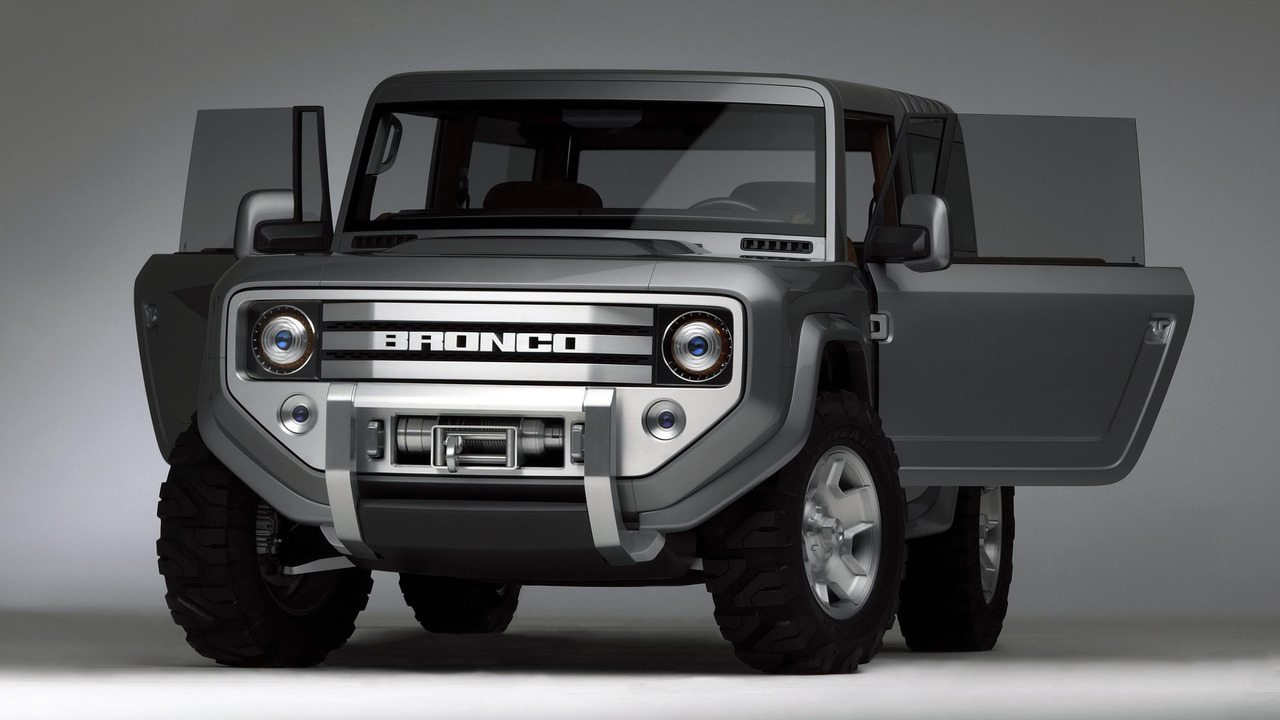
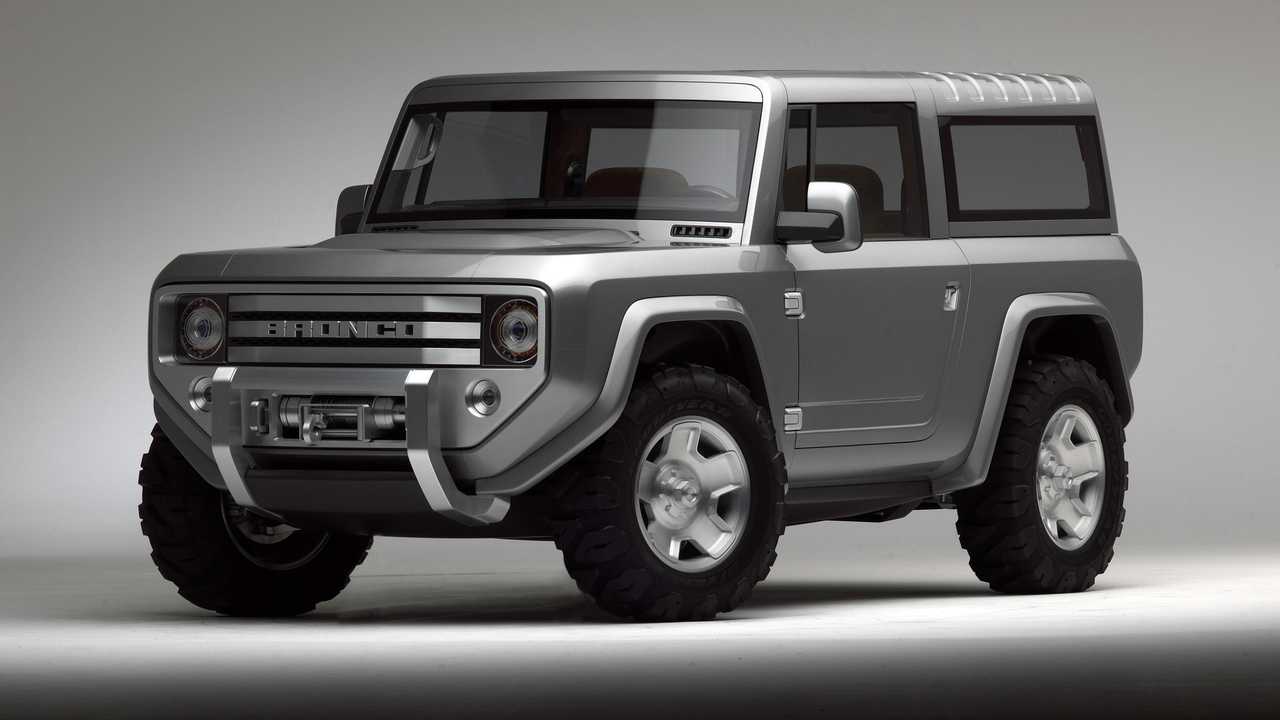
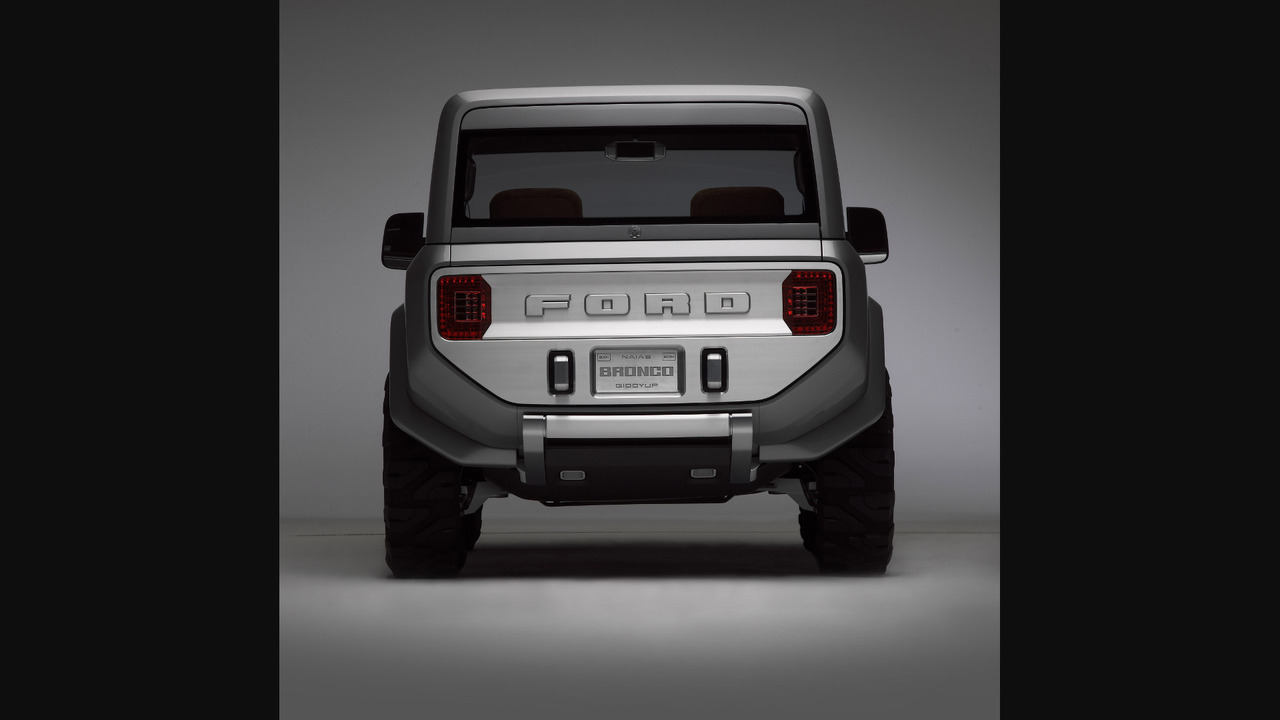
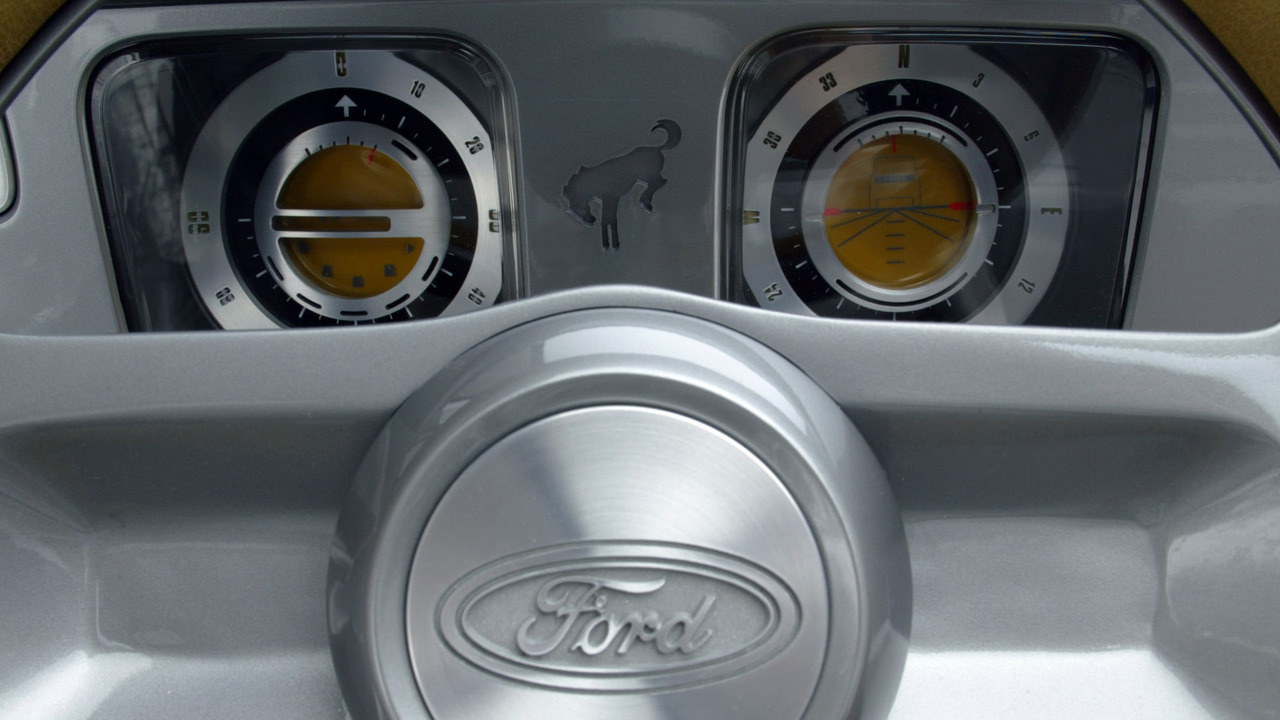
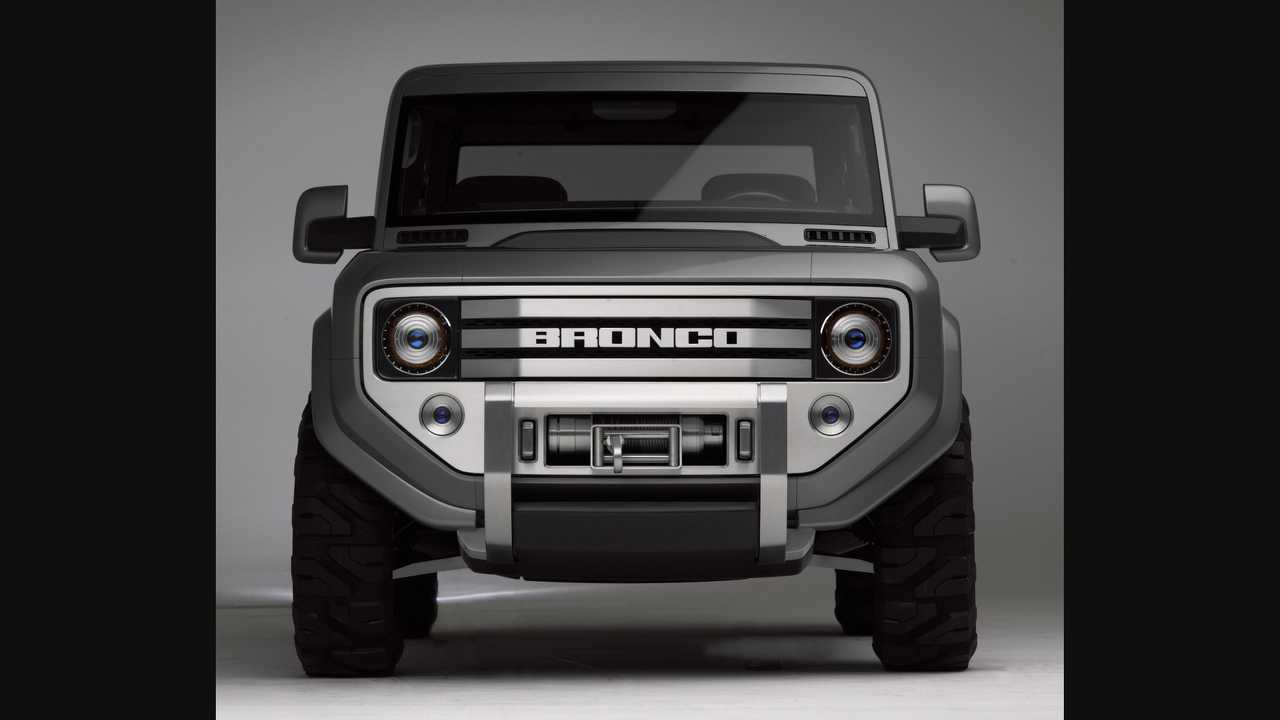
2004 Ford Bronco
The 2004 Bronco concept was strange mostly because it was so… simple. At a time when SUVs were becoming increasingly luxurious, Ford imagined bringing back the original Bronco’s stripped-down personality with a short wheelbase, upright body, round headlights, and a two-seat cabin.
It also previewed the three-bar grille that would become an important part of Ford’s design language. Underneath the retro body was a 2.0-liter turbodiesel engine, giving the concept a distinctly European flavor. The production Bronco wouldn’t return until 2020.
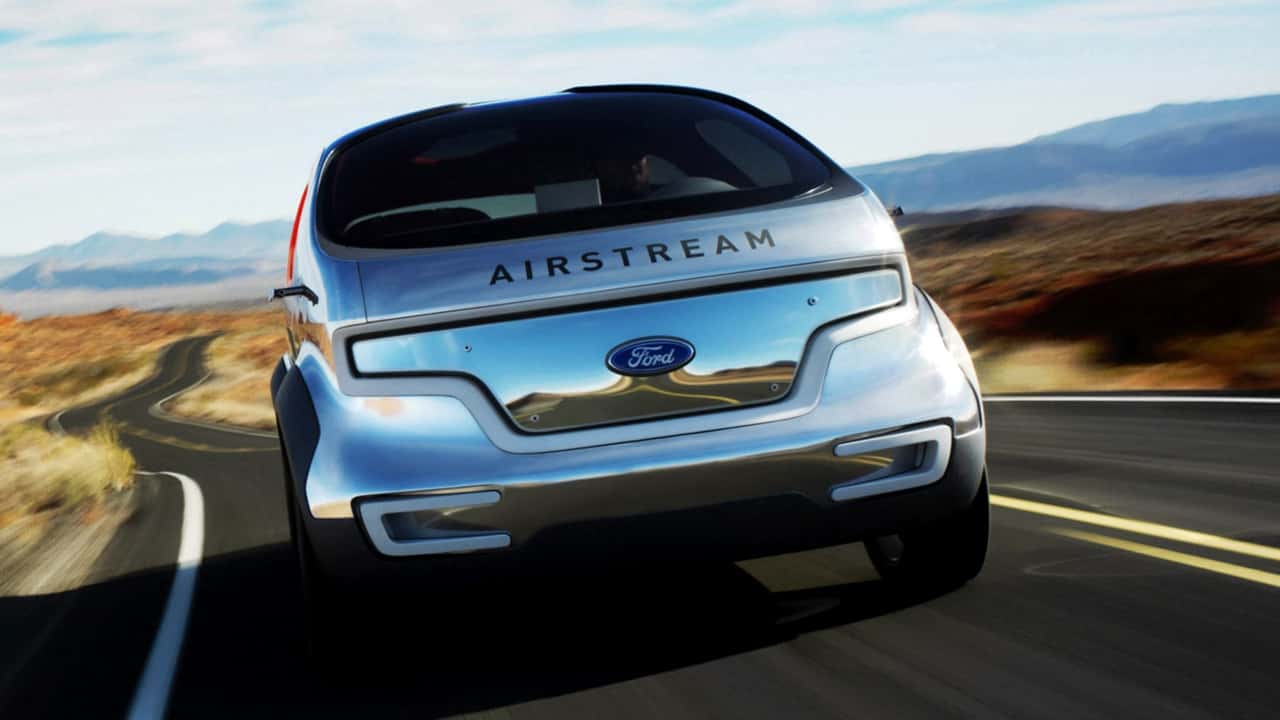
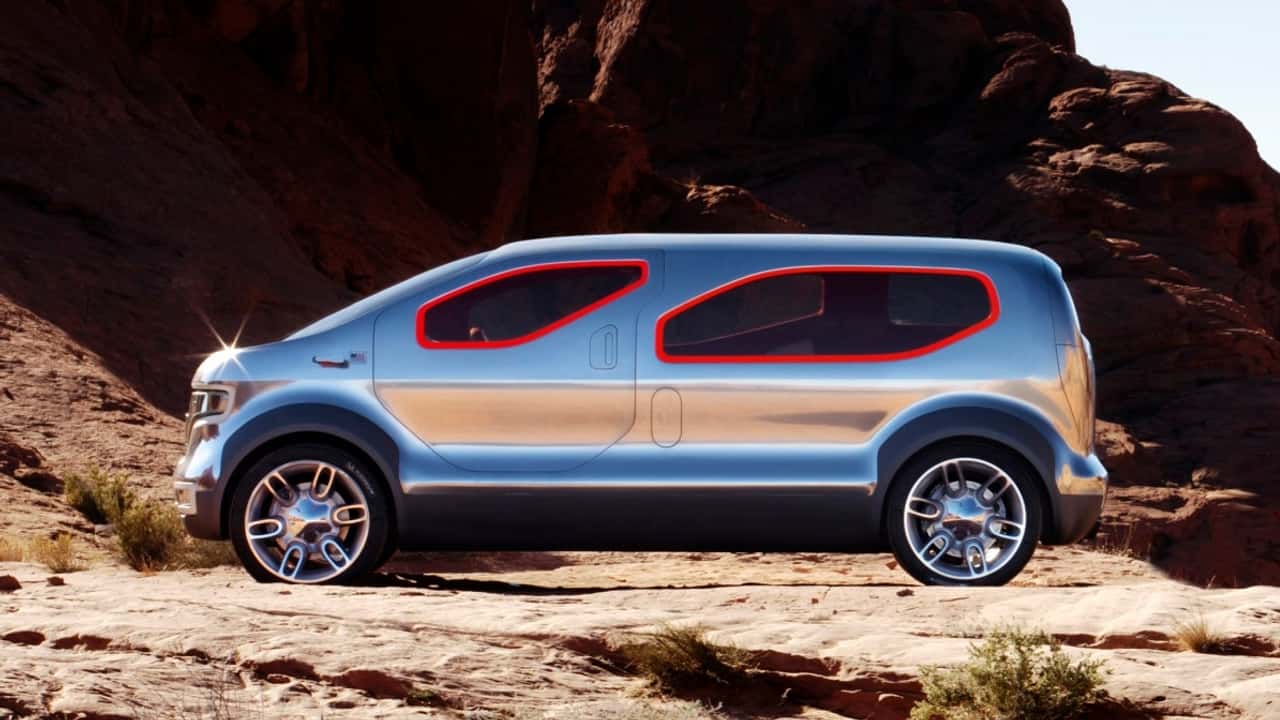
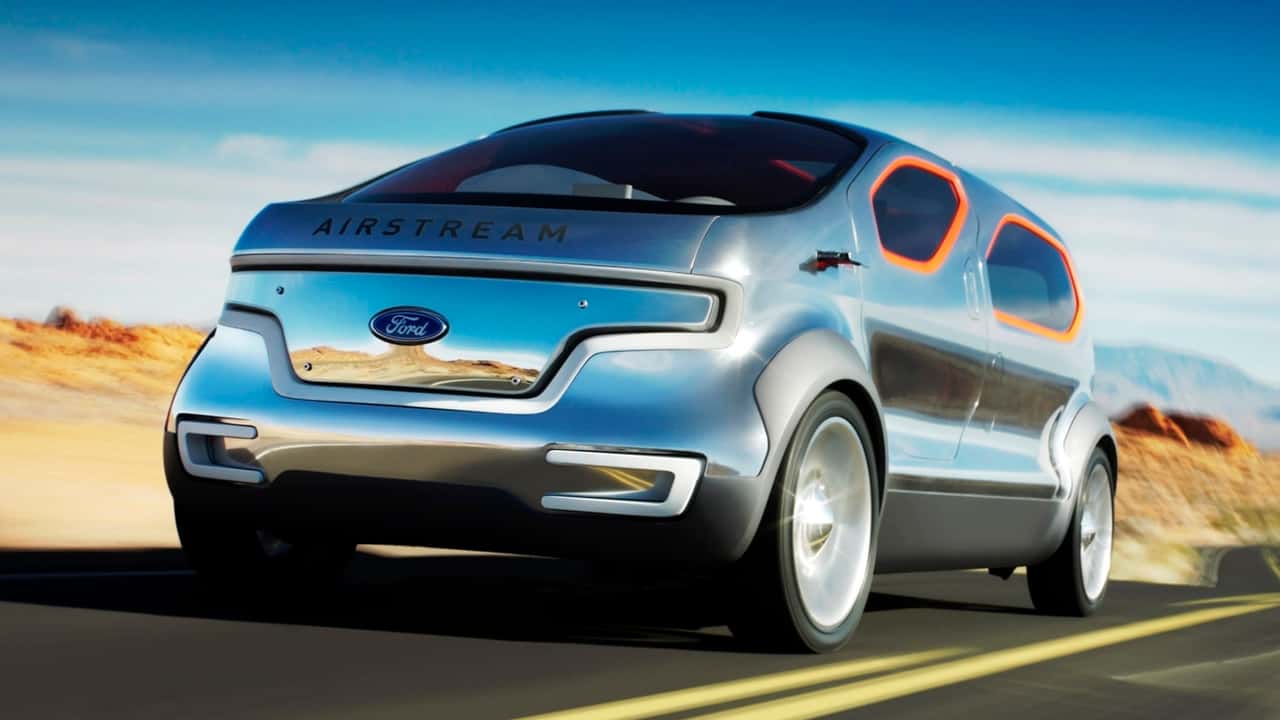
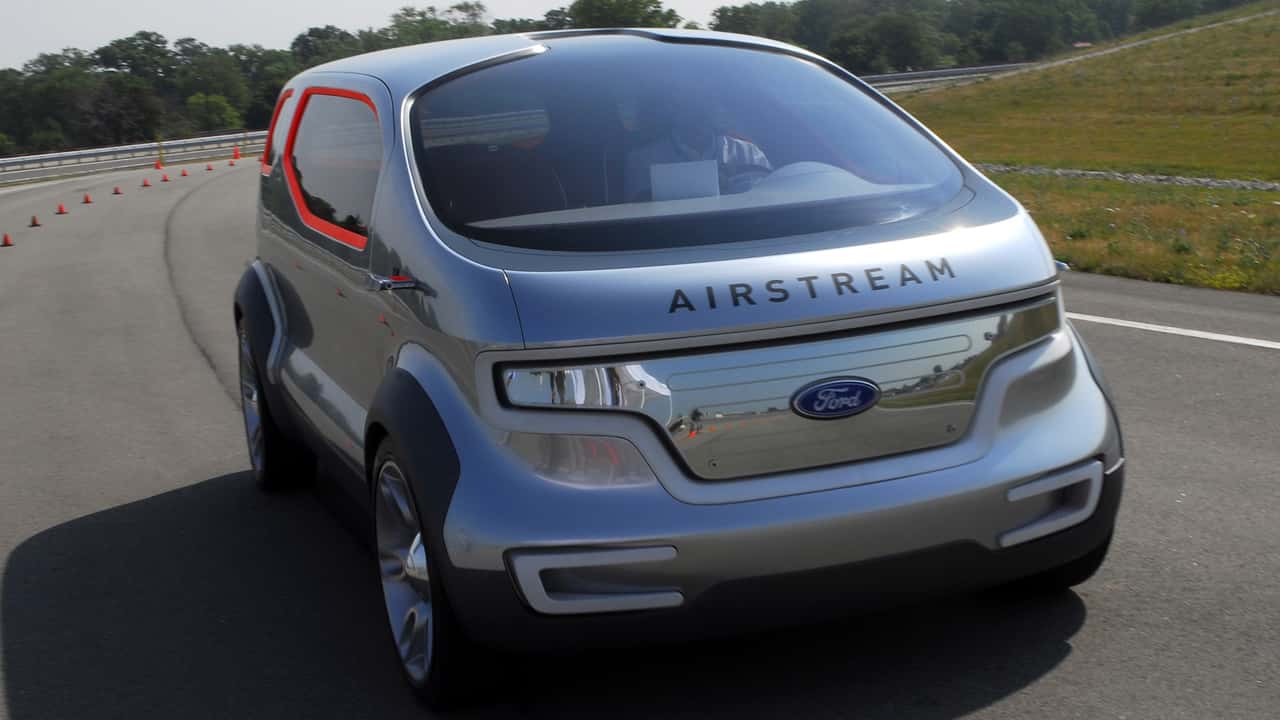
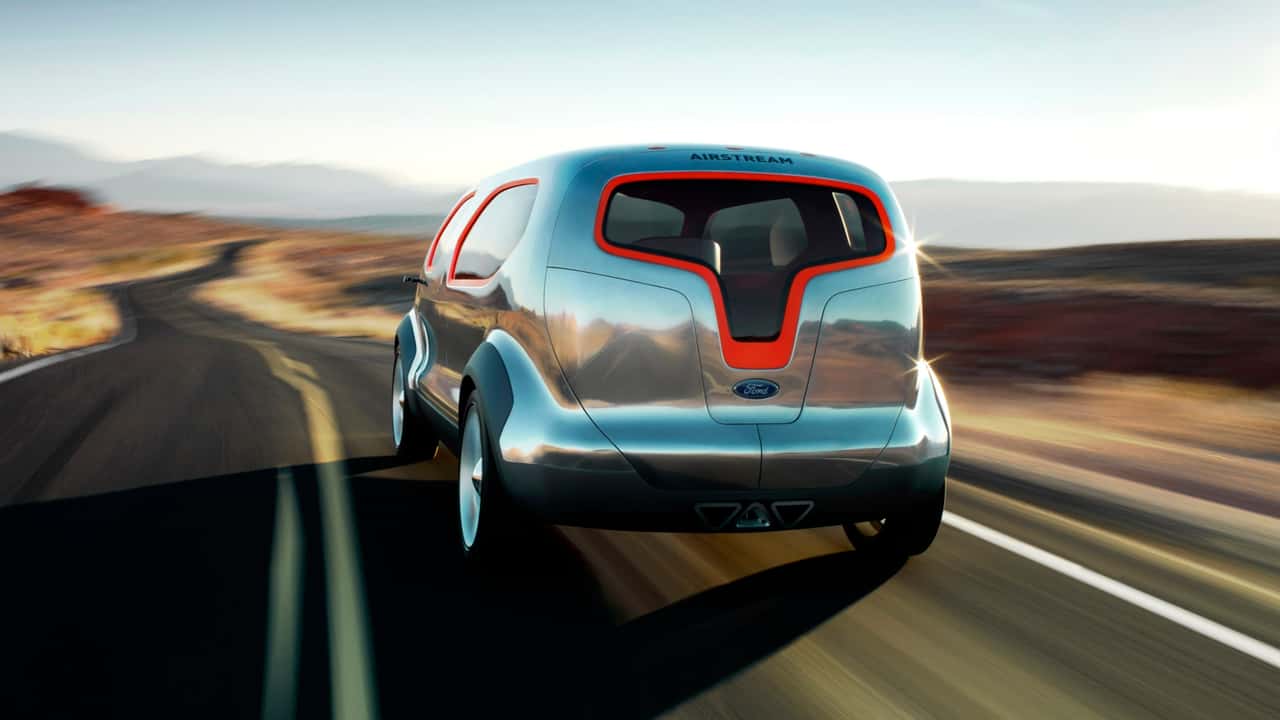
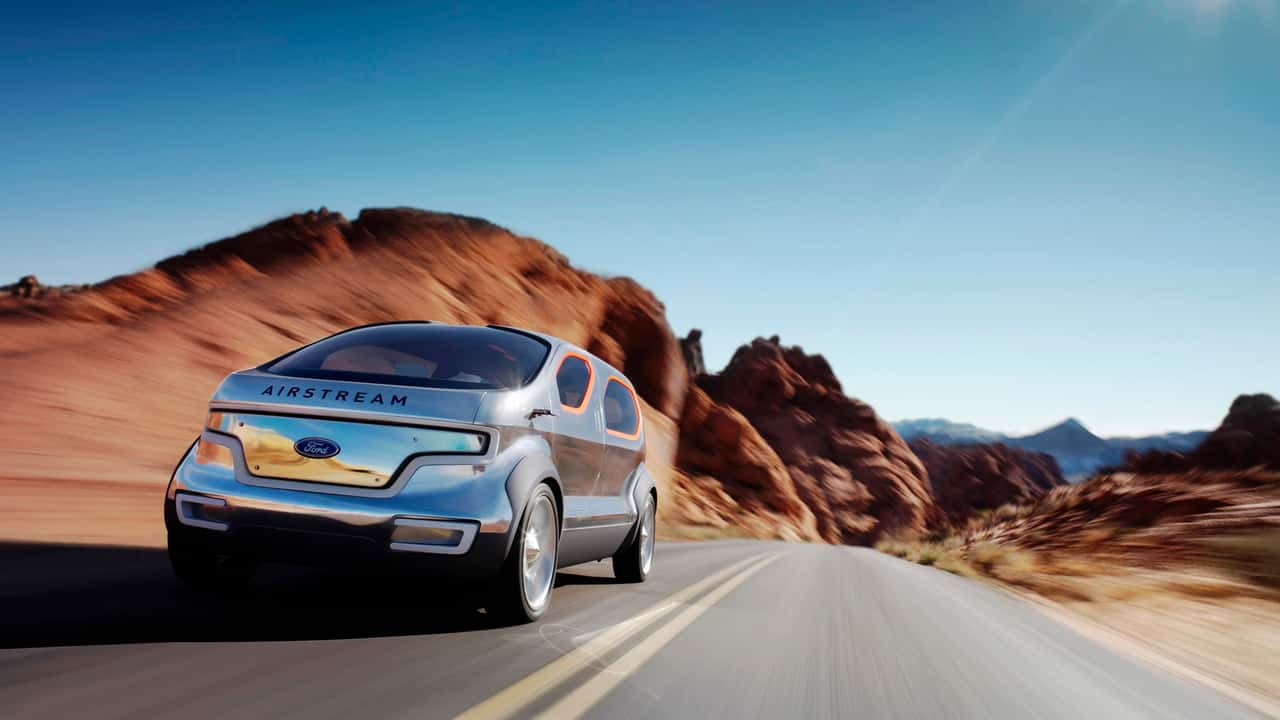
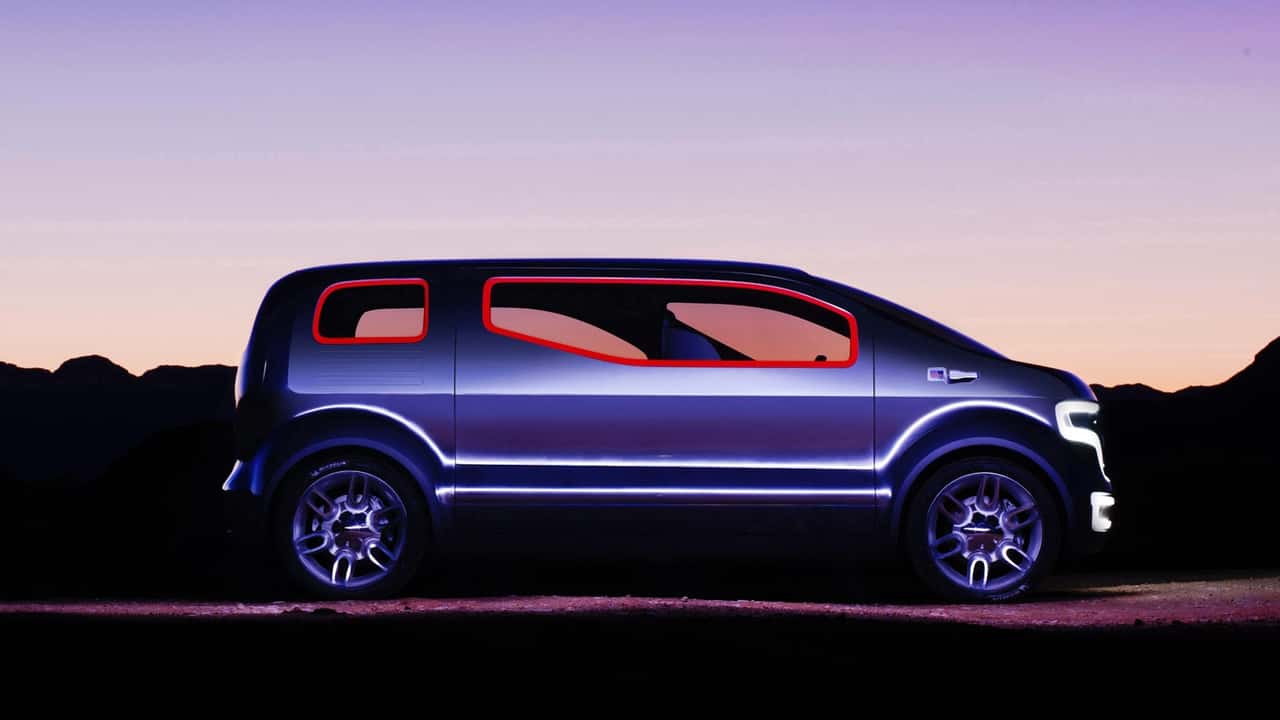
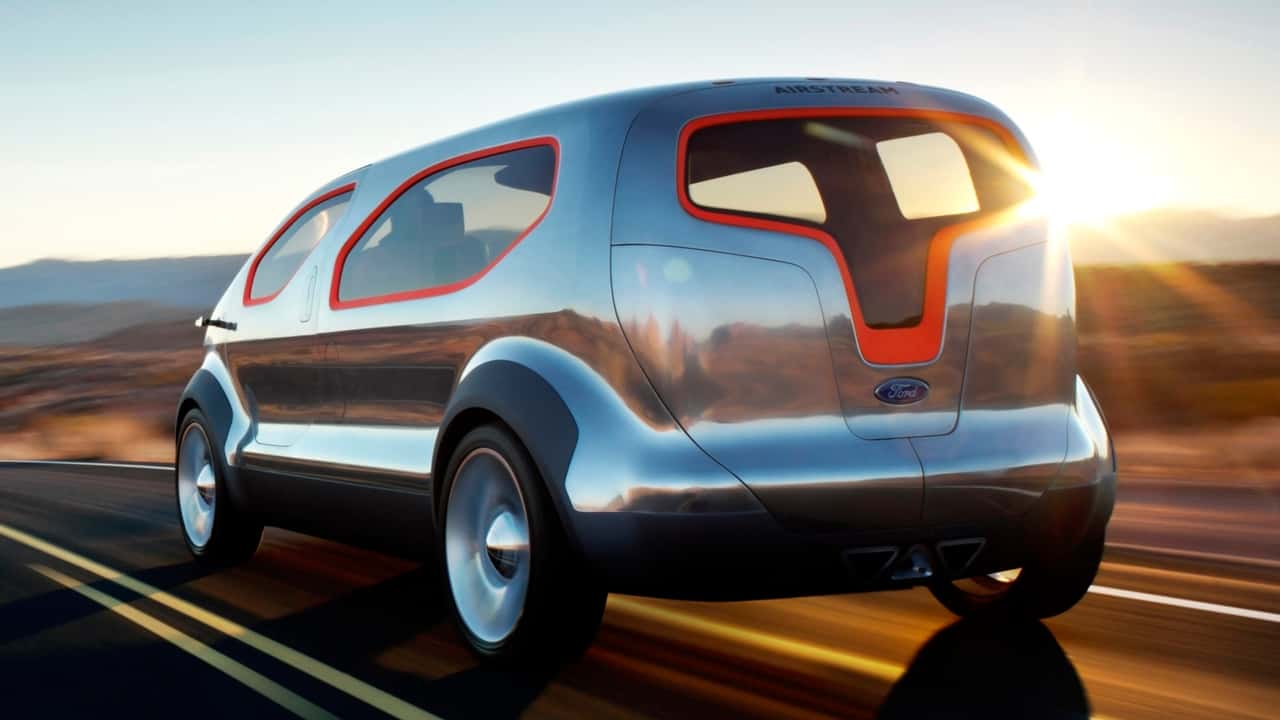
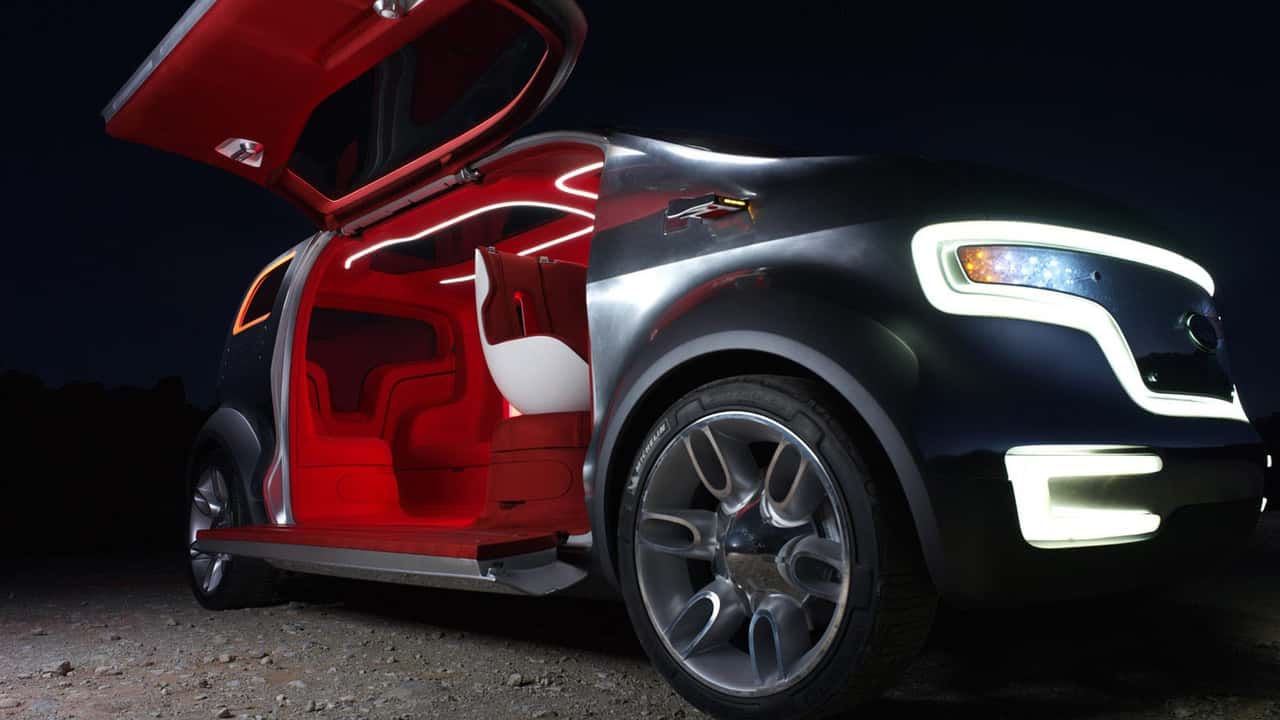
2007 Ford Airstream
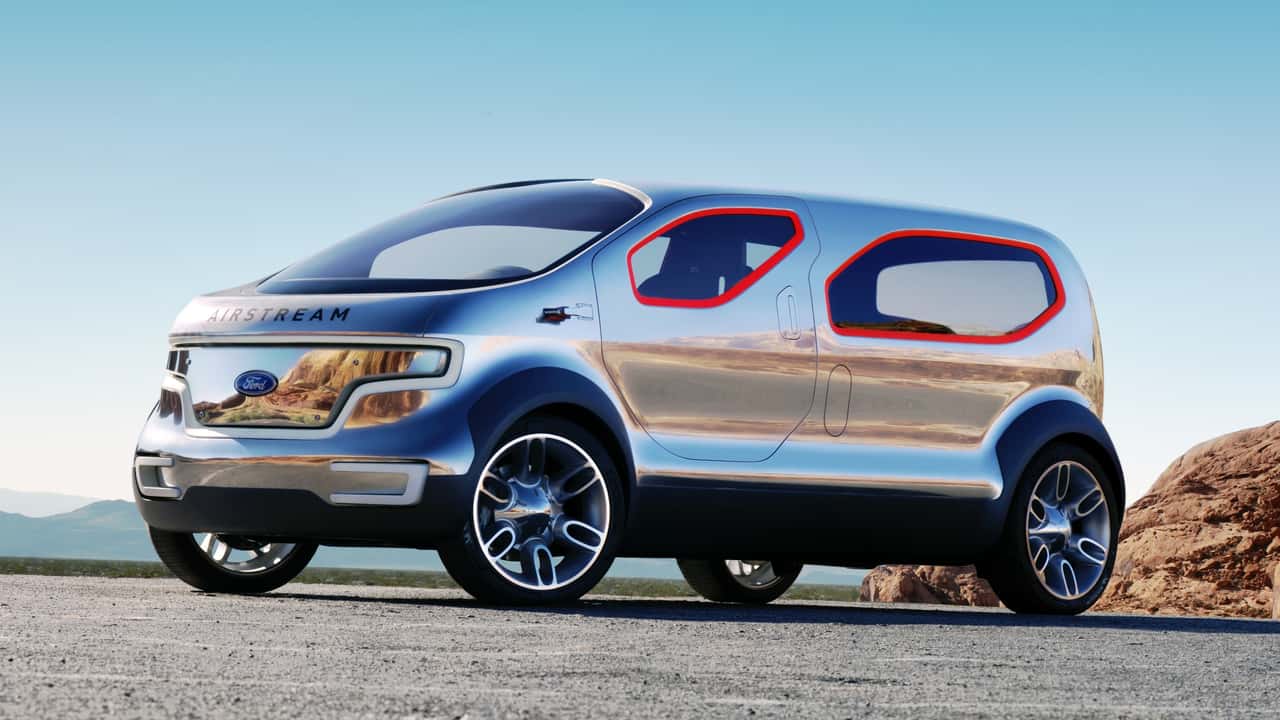
The Airstream was Ford’s attempt to turn one of America’s most recognizable travel trailers into a futuristic crossover. Developed with Airstream, the concept combined the company’s polished aluminum aesthetic with the futuristic interiors of 2001: A Space Odyssey.
Ford used a plug-in hybrid hydrogen fuel cell system called HySeries Drive, with electric motors powered by batteries and a hydrogen fuel cell serving as a generator. The interior was just as wild, with unusual seating, asymmetrical windows, touch-sensitive controls, and a cylindrical display designed to create ambient lighting effects.
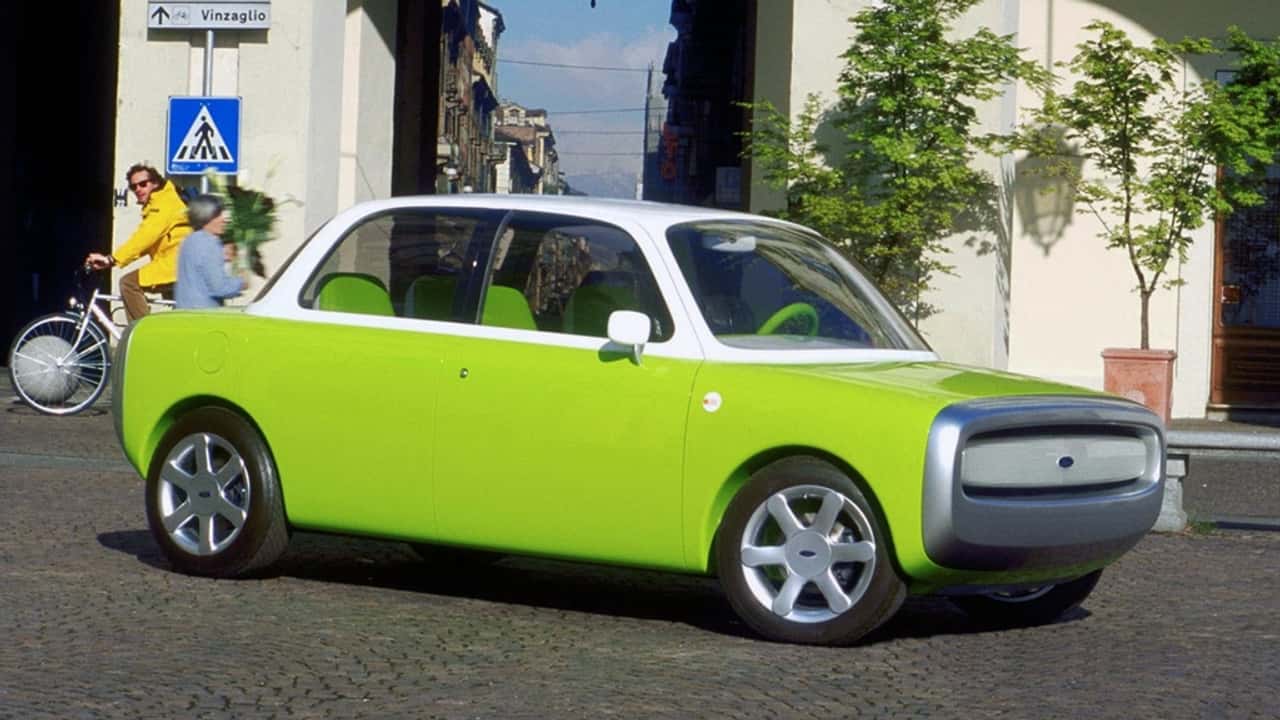
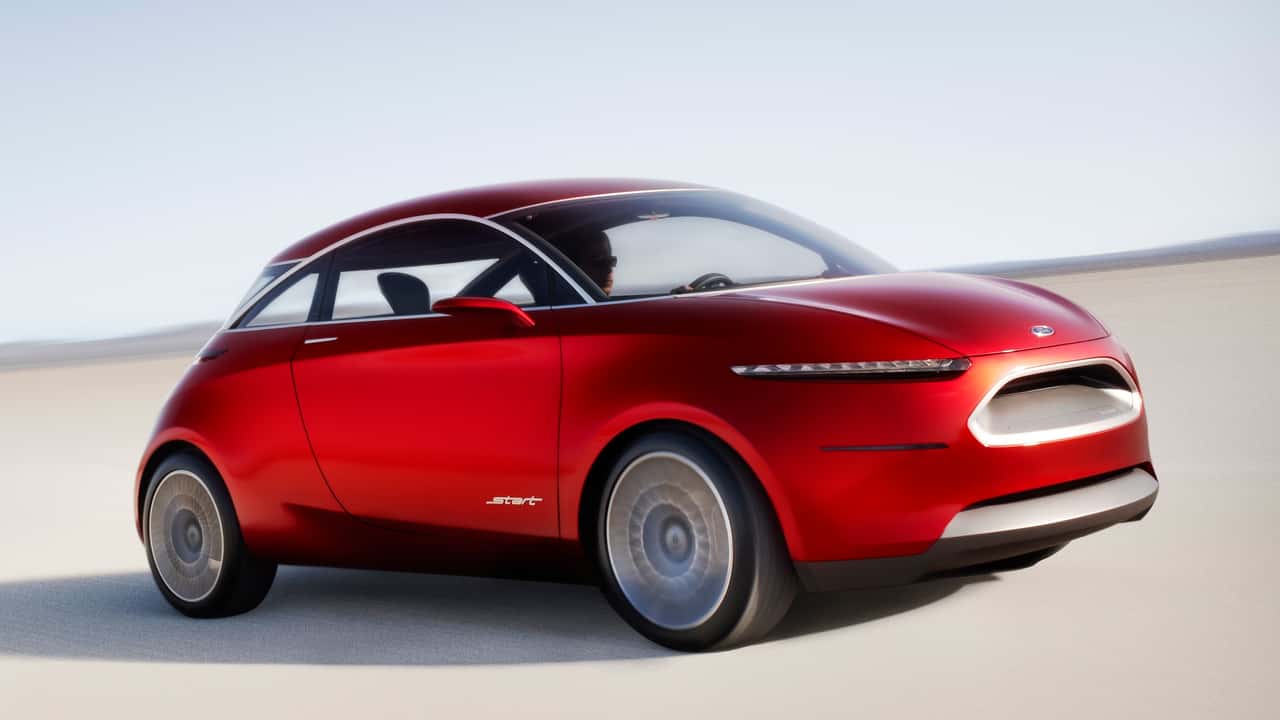
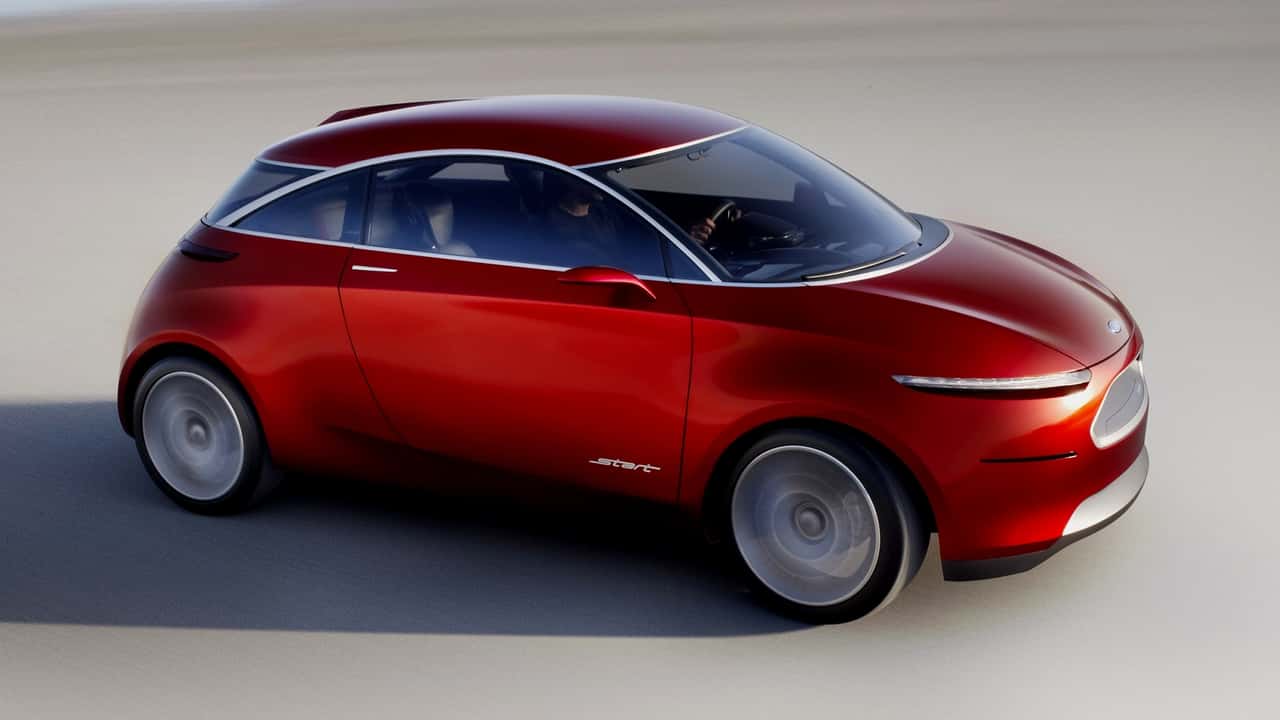
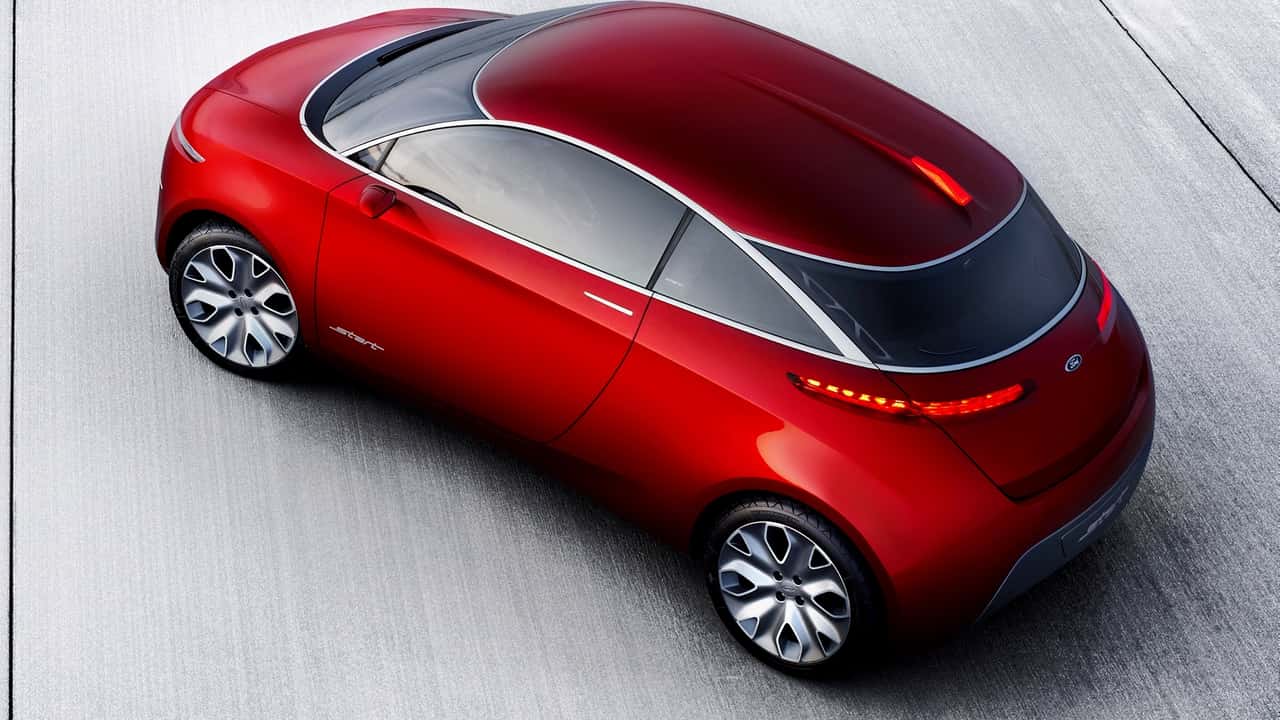
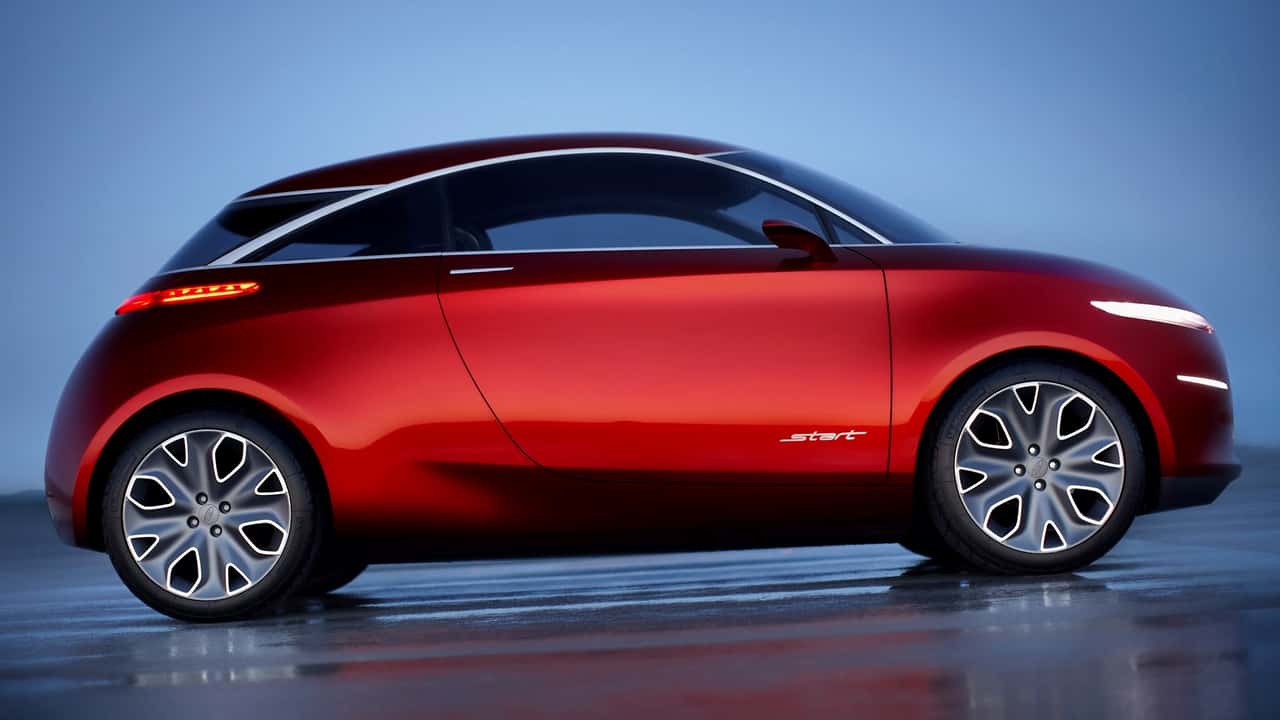
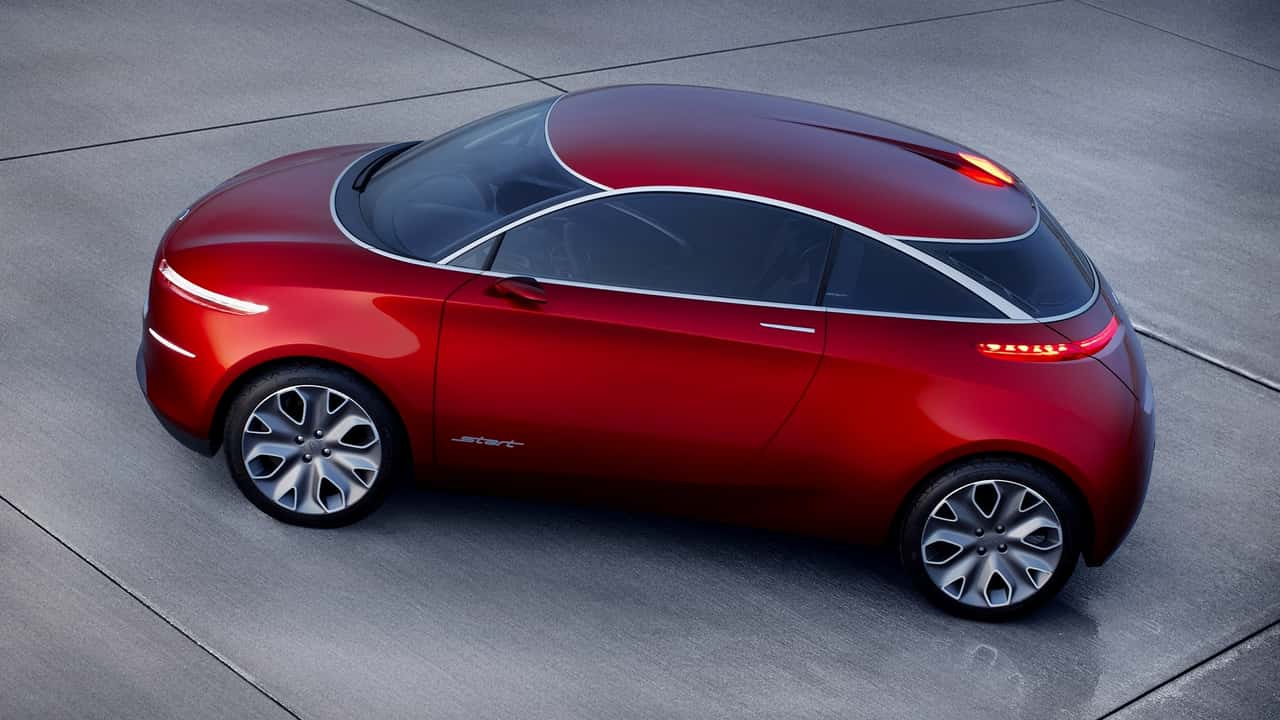
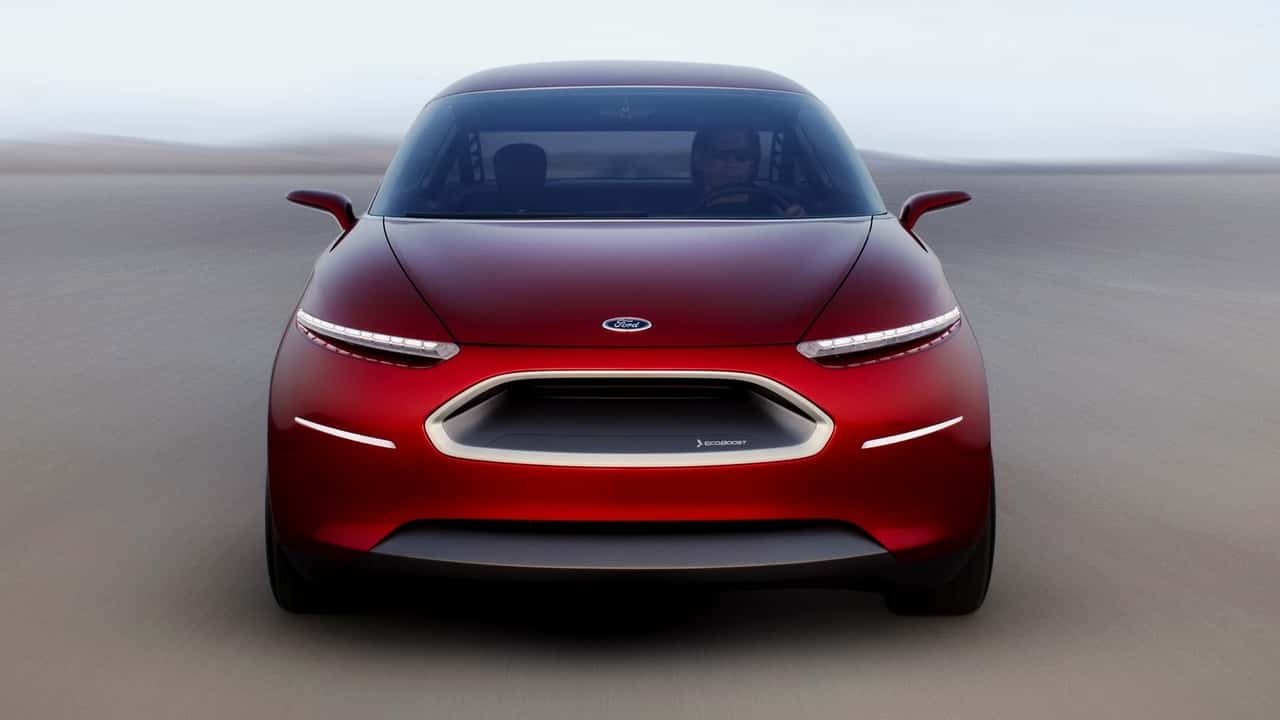
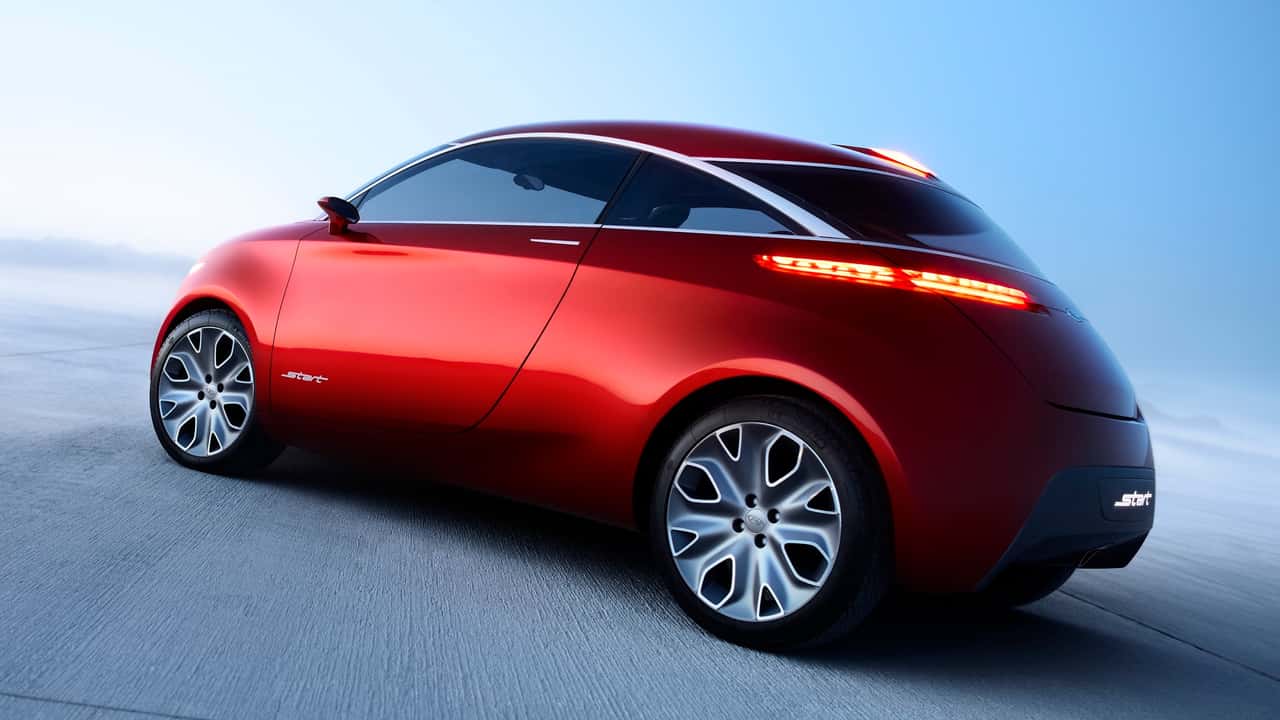
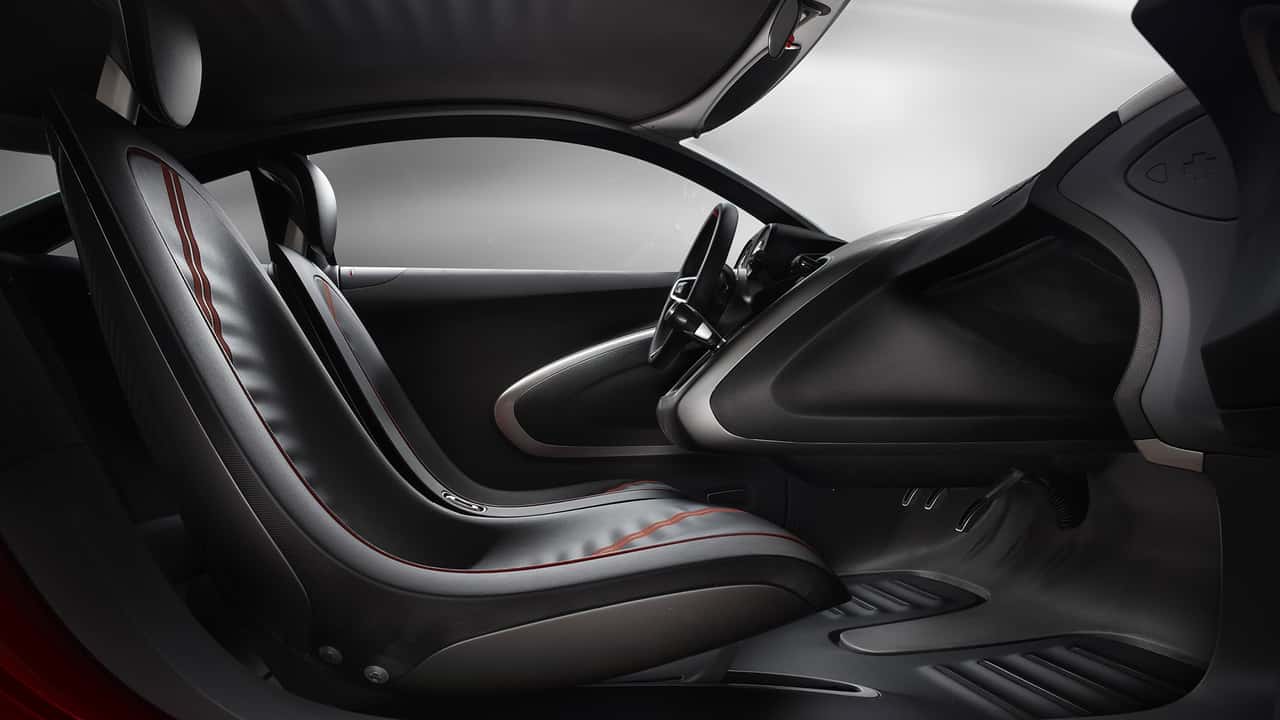
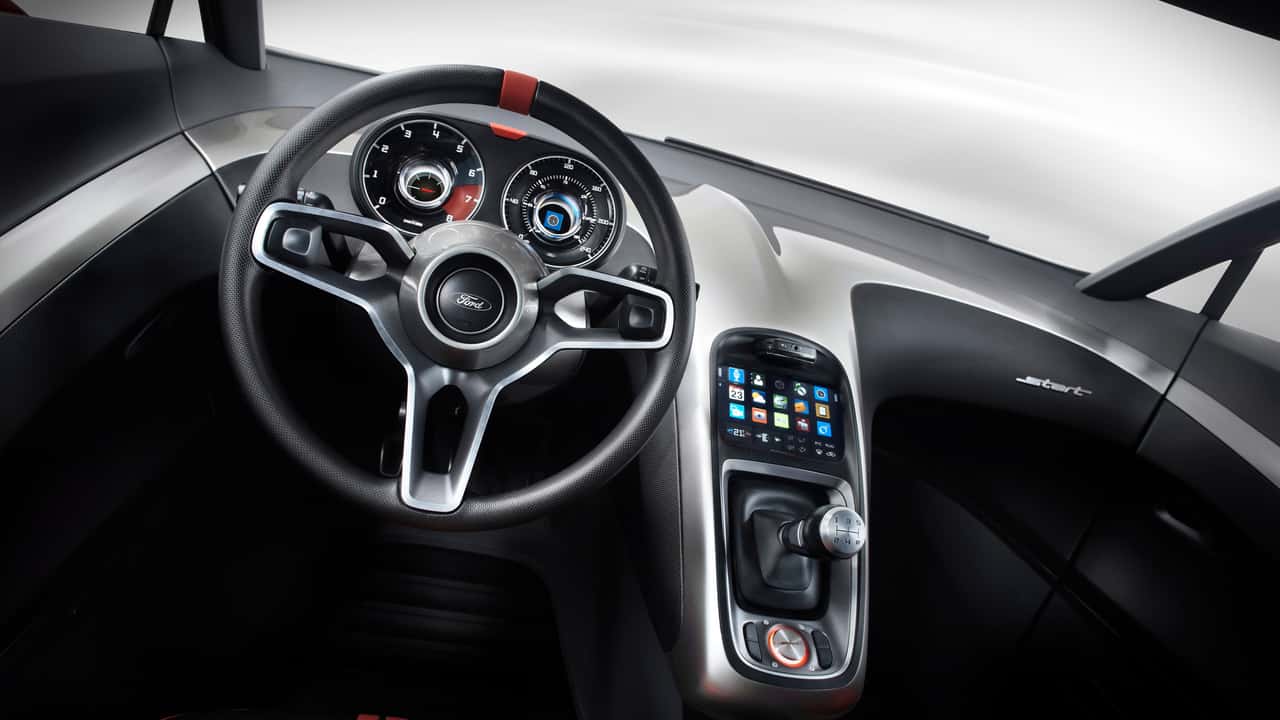
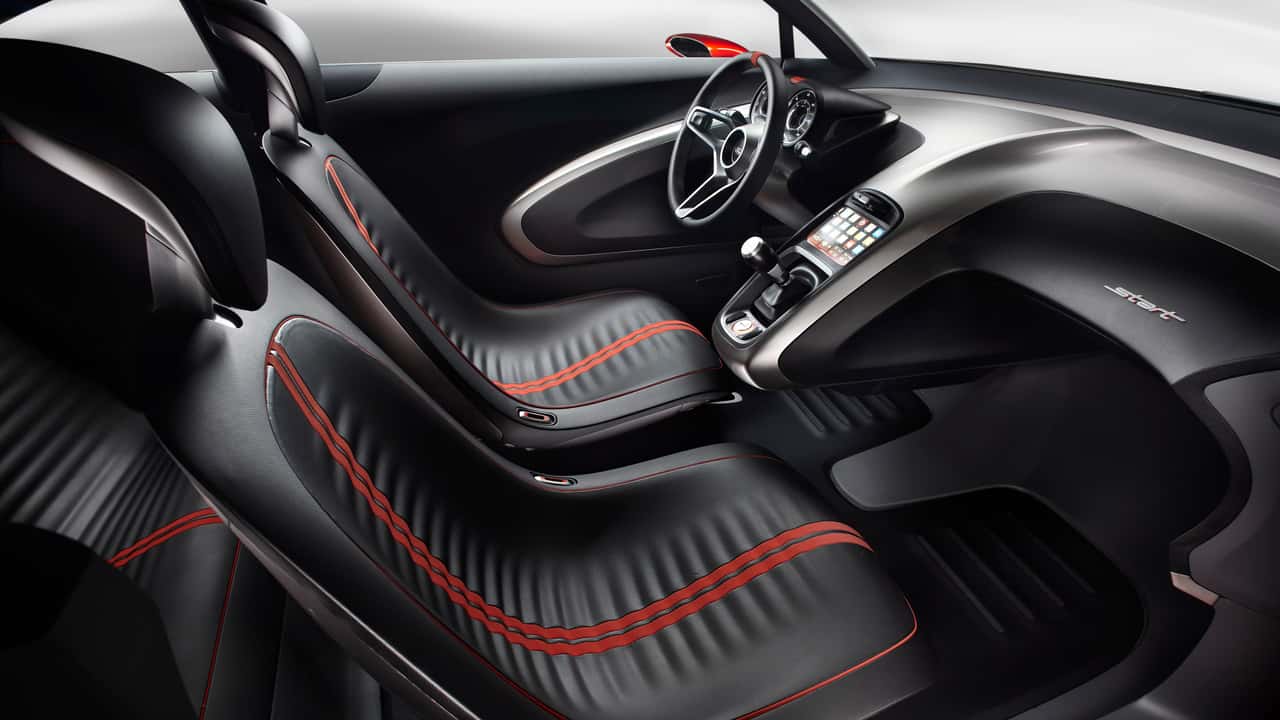
2010 Ford Start
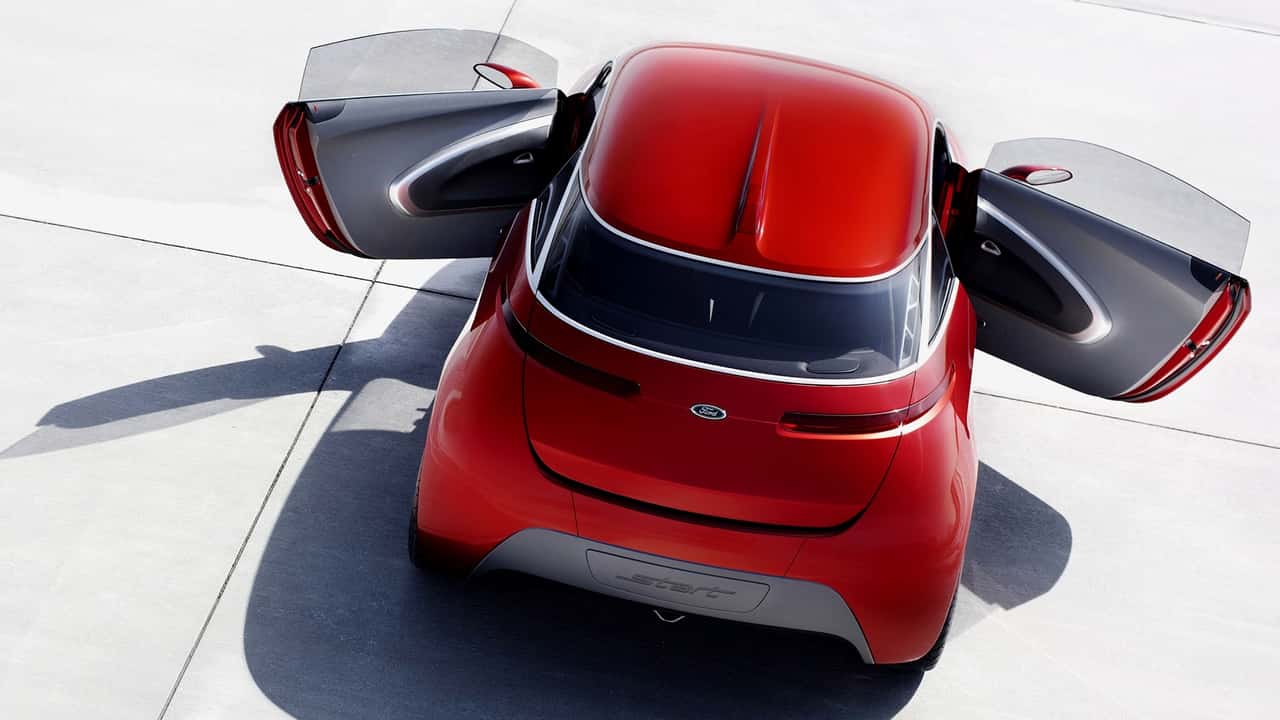
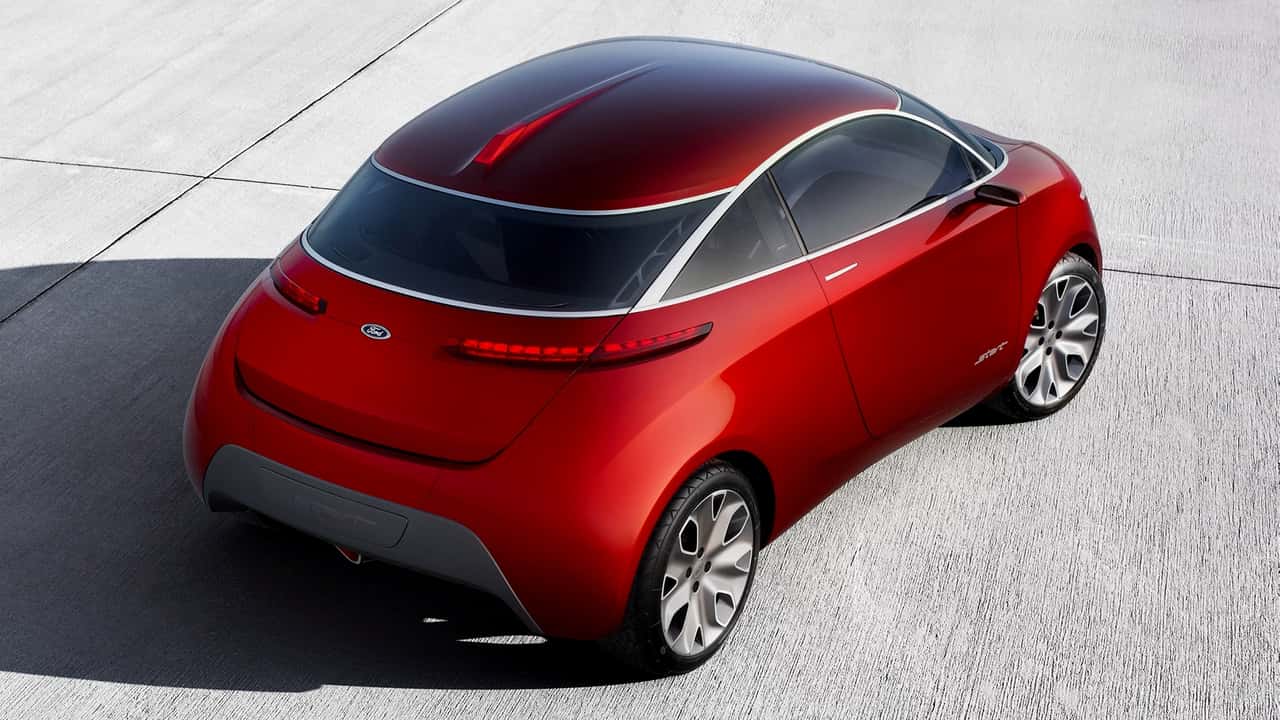
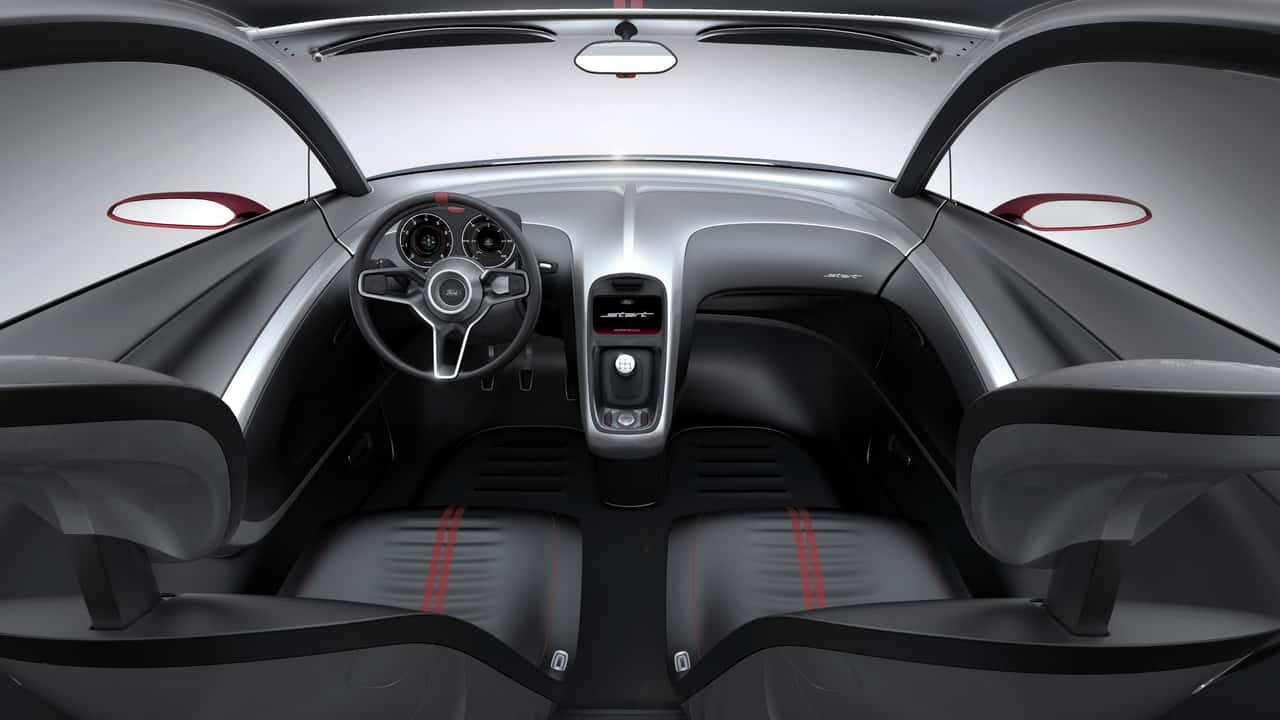
The Ford Start was small, cute, and surprisingly important. Introduced at the 2010 Beijing Auto Show, it imagined an affordable city car designed for increasingly crowded megacities. Its rounded body was inspired partly by classic sports cars, while its compact dimensions and lightweight construction emphasized efficiency.
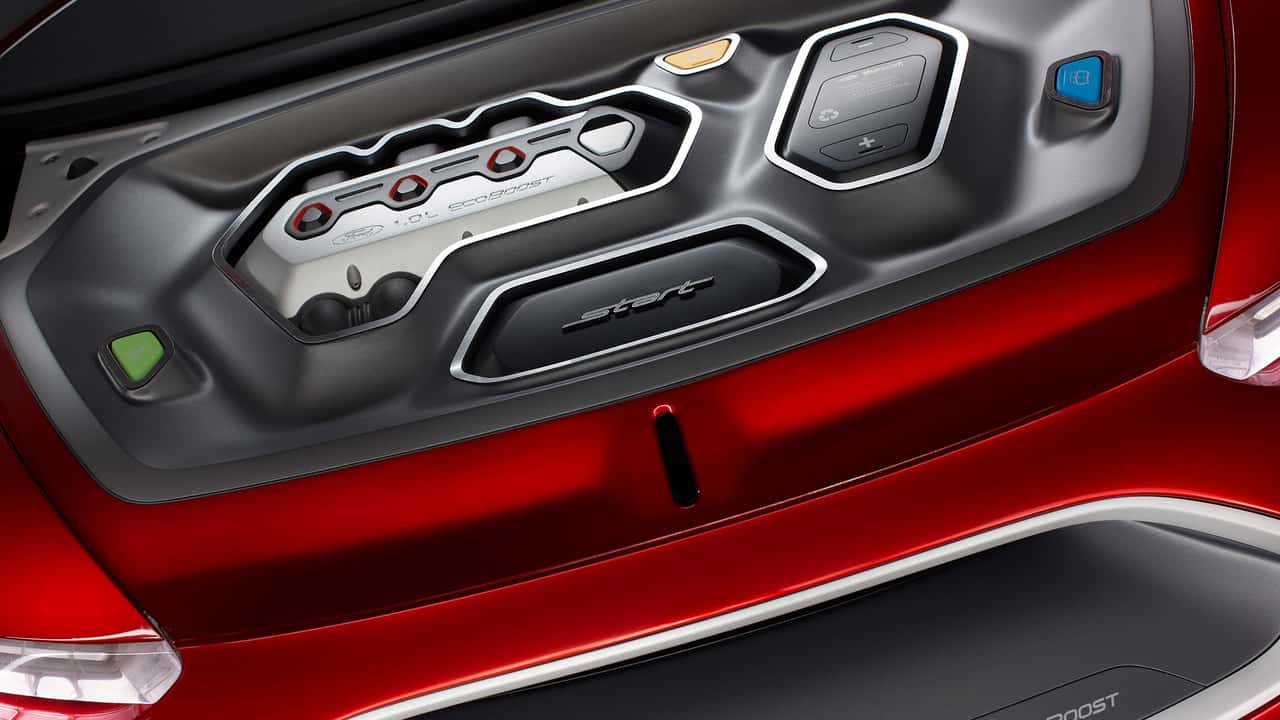
But the real star was the engine. The Start previewed Ford’s 1.0-liter three-cylinder EcoBoost engine, which promised the performance of a larger engine with much lower emissions. That engine would soon become a major part of Ford’s global lineup, making the Start more than just another futuristic show car.
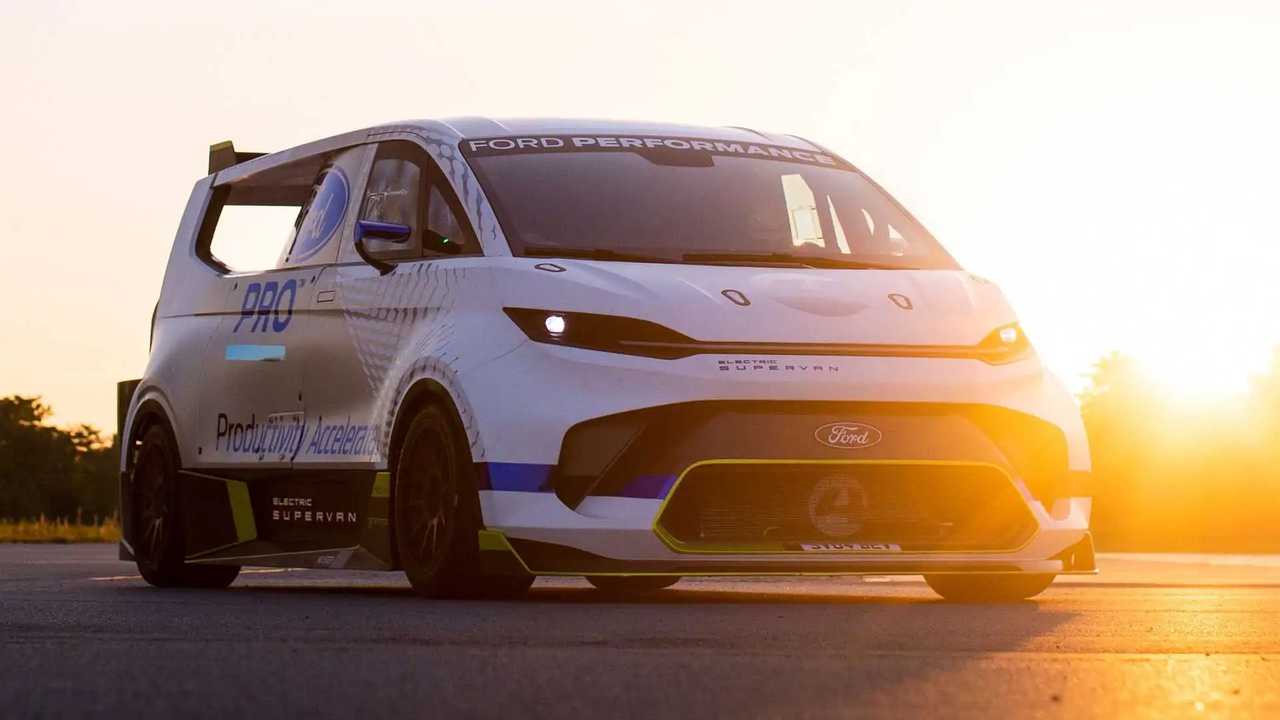
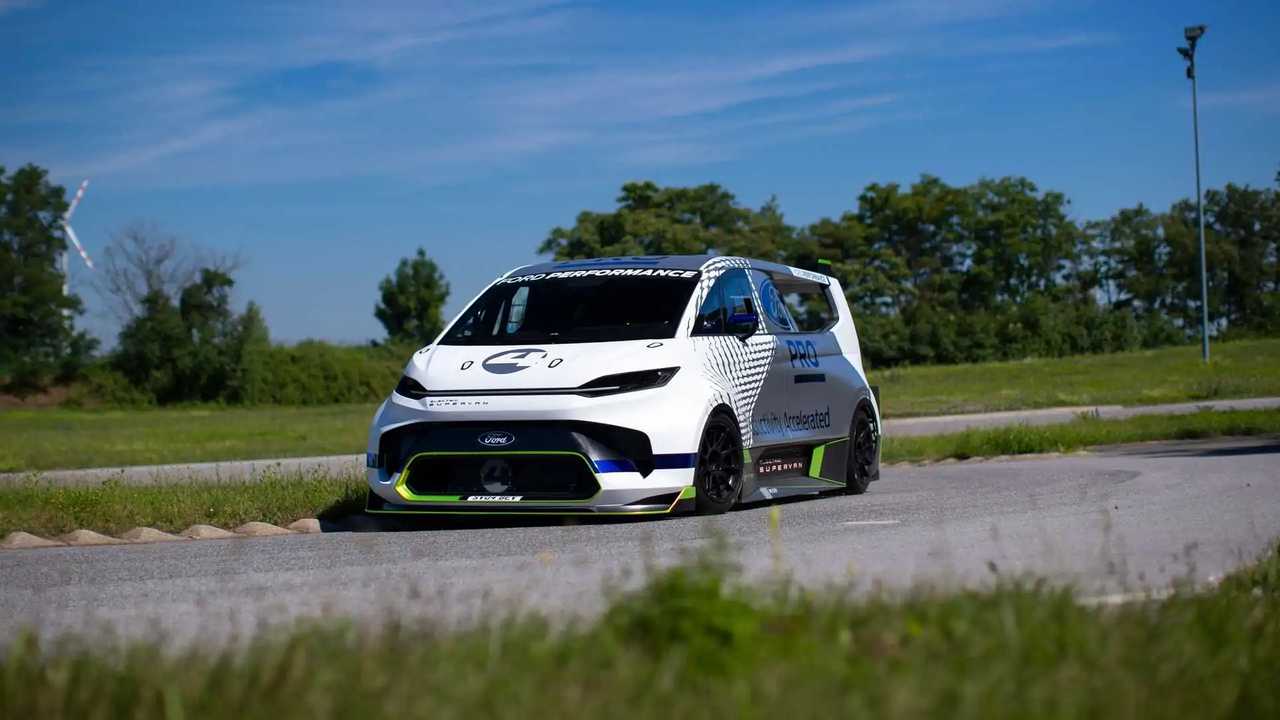
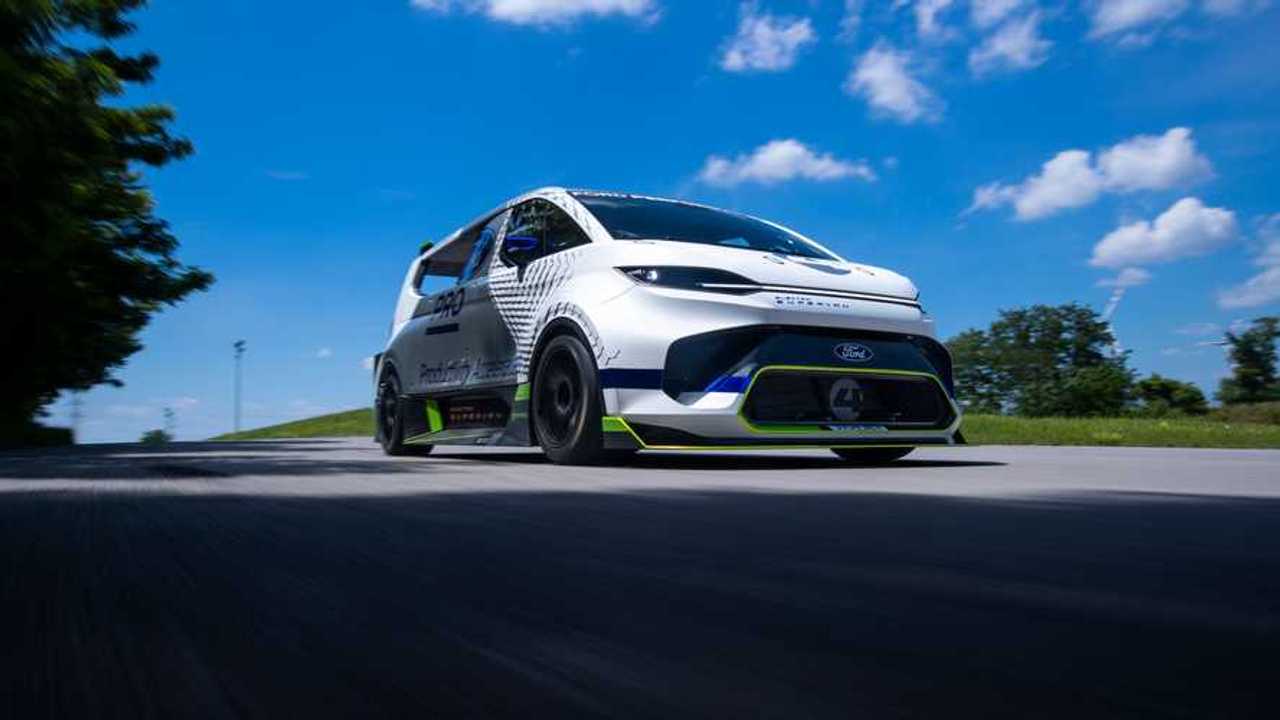
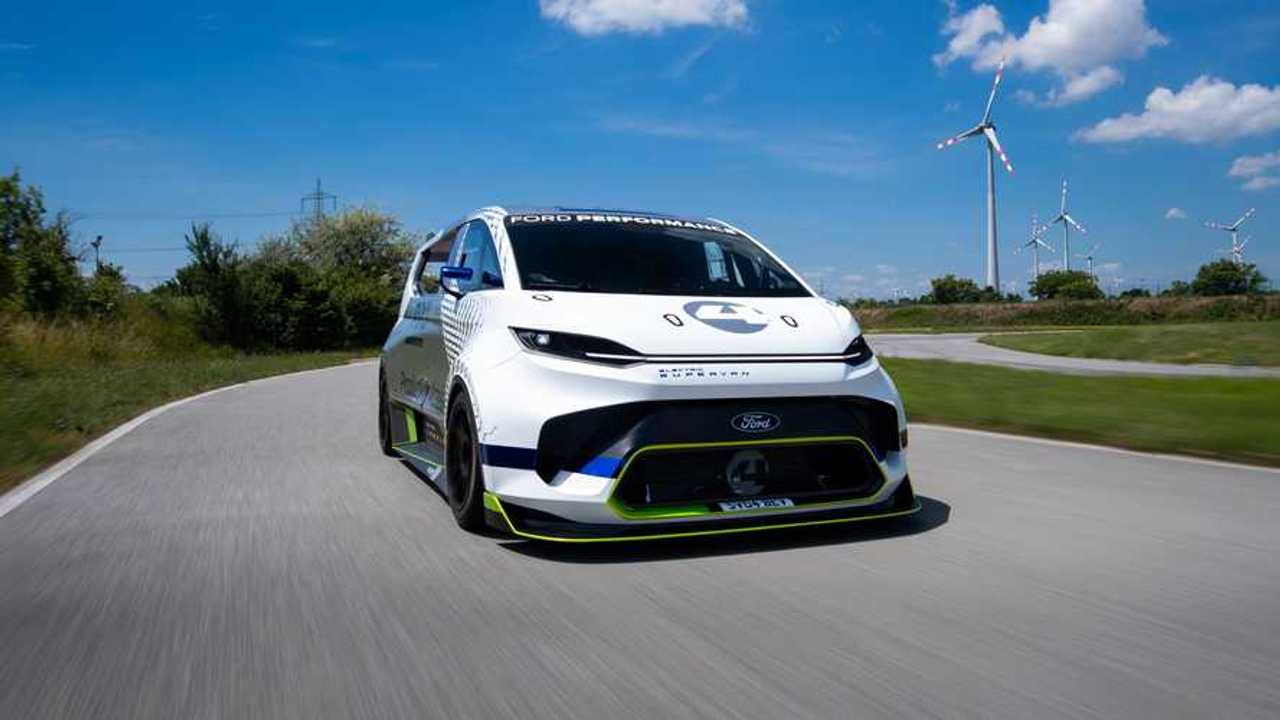
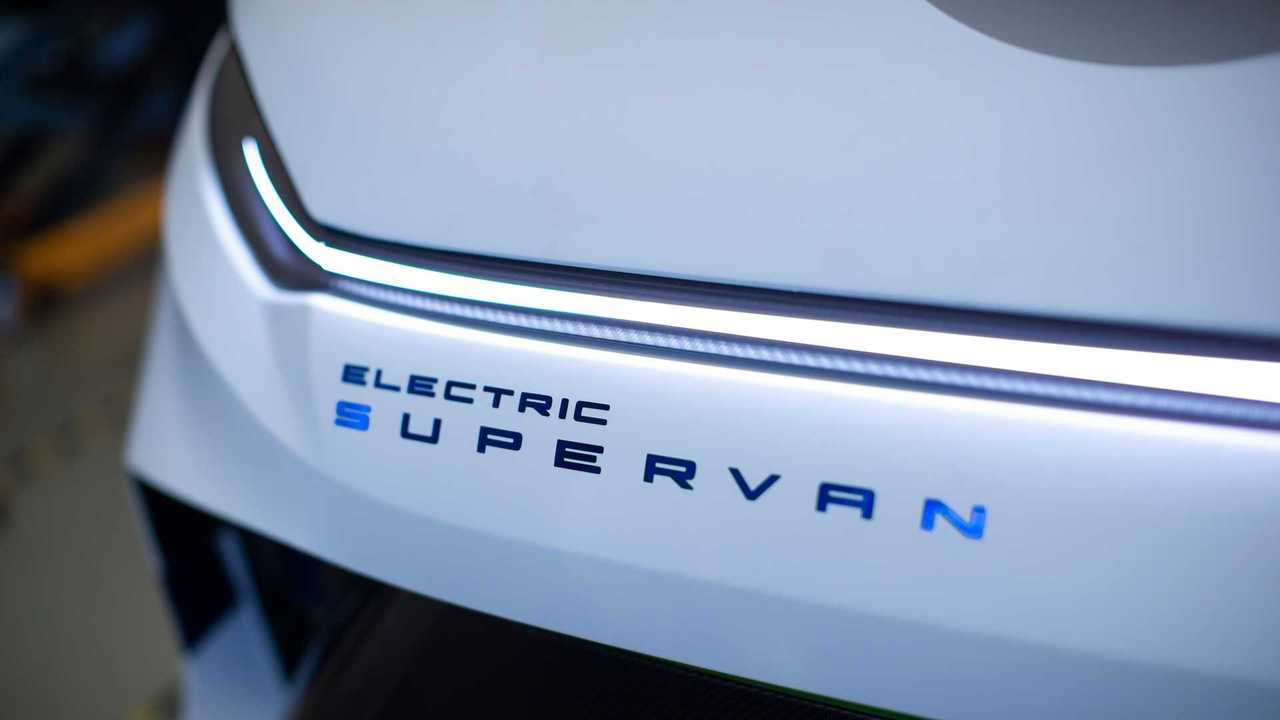
2022 Ford Pro Electric SuperVan
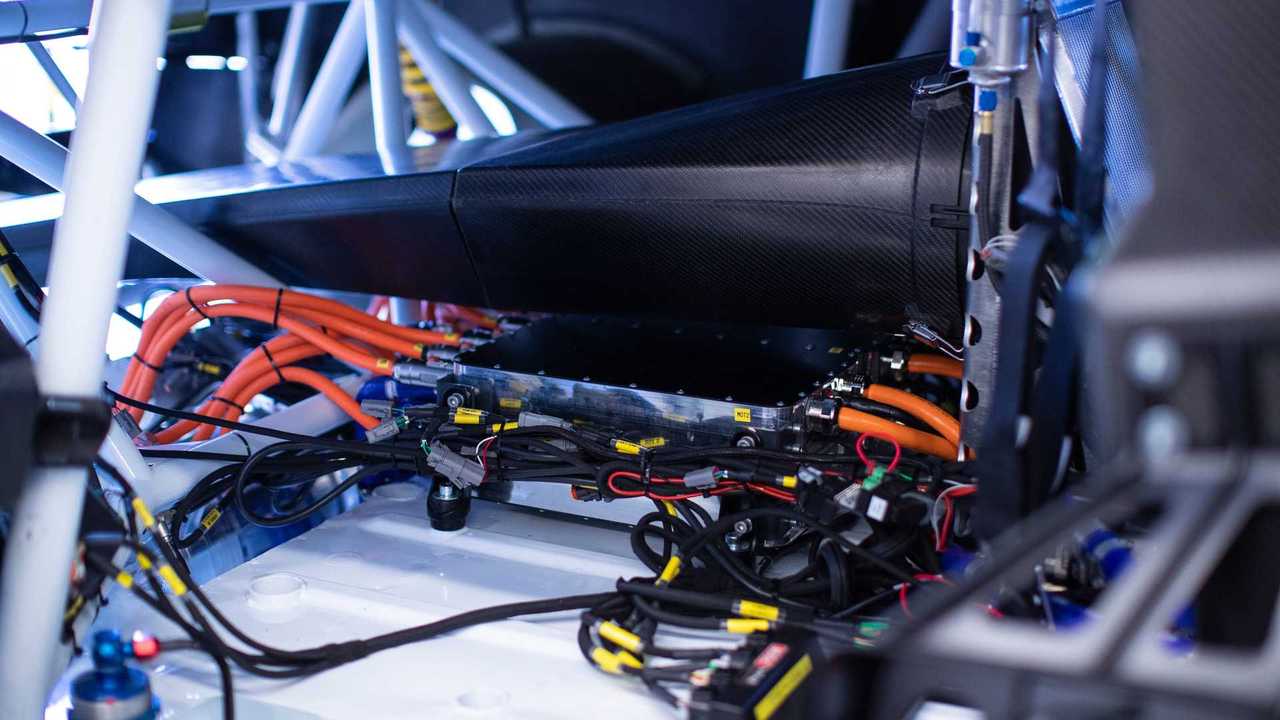
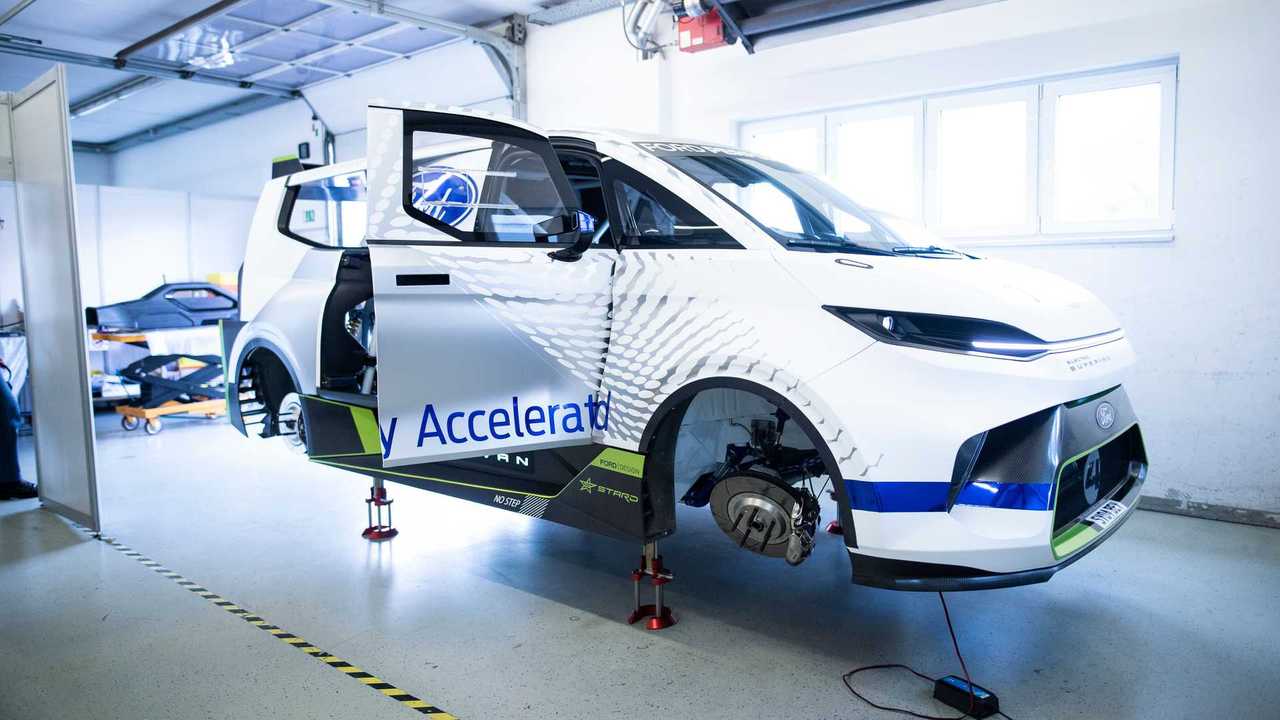
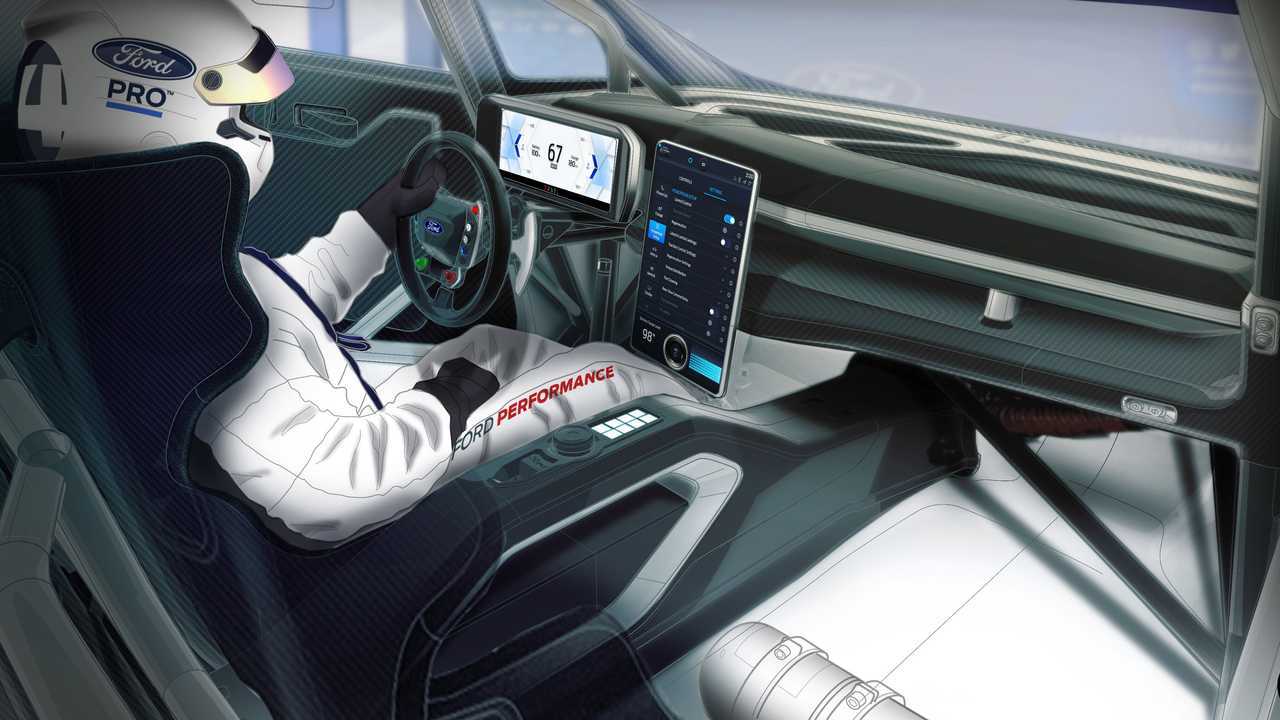
The Electric SuperVan looked like someone had taken a commercial Ford Transit and sent it straight into a video game. Built by Ford Performance and its partners, it combined a van-shaped body with an electric powertrain and enough performance hardware to make the vehicle almost impossible to take seriously as a normal delivery van.
With roughly 2,000 horsepower in its most extreme configuration, the SuperVan was designed to demonstrate what Ford’s electric technology could do when practicality was thrown out the window. It was a rolling test lab, a promo machine, and a genuine performance vehicle all at once—and one of the strangest things Ford has ever put a Blue Oval on.
10 Great Alternatives For People Who Hate SUVs
5 Vehicles That Are Surprisingly Great For Camping
More Than 100 Brands Are Coming To Paris. Here’s What To Expect
RIP: These SUVs Are Dead For 2027