Owning and driving a vintage car is already hard enough. Between dwindling part supplies and shrinking knowledge bases as a generation of experienced technicians and fabricators leaves the workforce, the barriers to entry are only poised to grow. Throw in a patchwork quilt of evolving regulations, and it’s enough to make your head spin.
What’s more, people passionate about the preservation and enjoyment of historic cars are often seen as isolated, fringe hobbyists rather than a unified group of serious historians or collectors.
One of America’s most significant car collectors would like to change both of those things.
Miles Collier founded the Revs Institute in 2008 to, as he puts it, “be the most useful resource to the historical and meaningful car community, worldwide.”
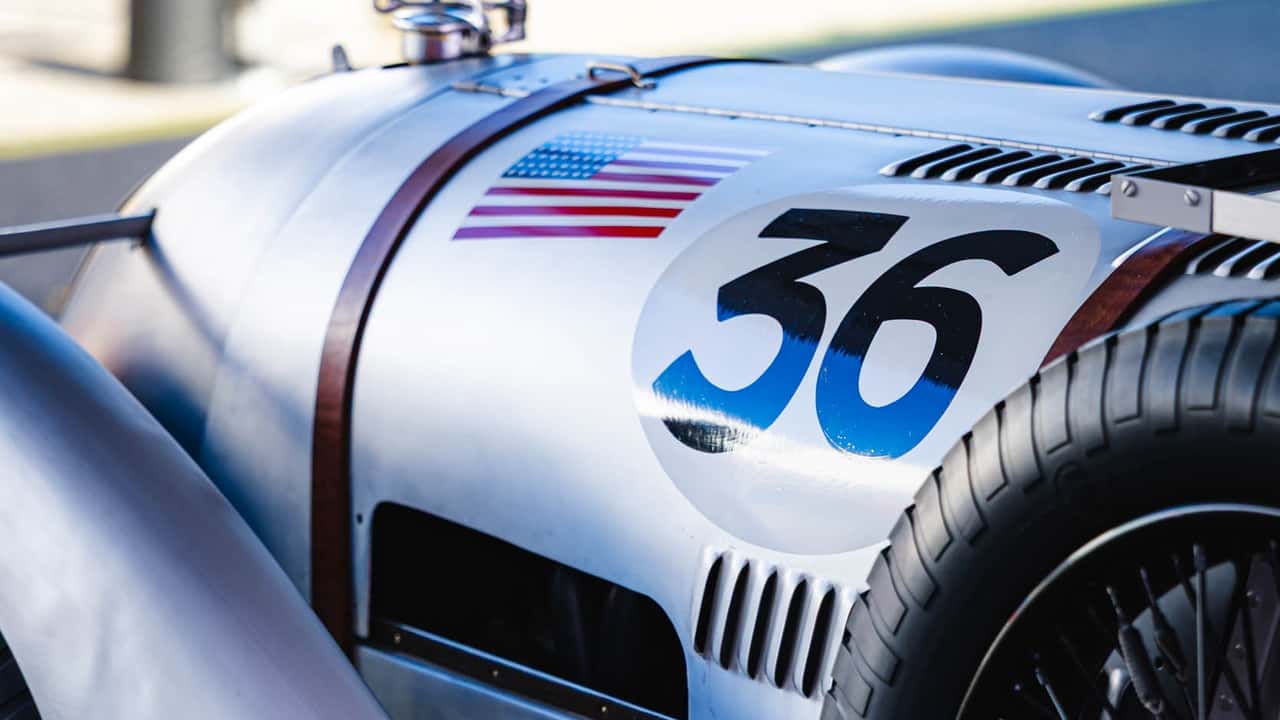
Photo by: Revs Institute
Located in Naples, Florida, Revs is more than just a car museum. Accompanying its collection of over 130 historic cars is a treasure trove of archives, all of which are designed to be shared, referenced, and used by the community at large.
Need a McLaren F1 for a magazine test? Revs is who you call. How about mechanical diagrams of an Alfa Romeo transaxle, or a photograph of your 1970 Dodge Challenger rolling off the factory floor? They’re here for that, too.
Collier comes from a long line of automotive nuts. His father, also named Miles Collier, began racing sports cars in the 1930s along with his uncle Sam. Sam tragically died behind the wheel of a Ferrari 166 race car at Watkins Glen in 1950, and the elder Miles retired from racing shortly thereafter.
Collier was inducted into the Global Automotive Hall of Fame earlier this year. I caught up with him at Lime Rock Park’s 44th annual Historic Festival, where he was welcomed as the guest of honor. What follows is an informal interview lightly edited for length and clarity.

Miles Collier
Photo by: Revs Institute
Motor1: Tell me your family’s history with cars and racing?
Miles Collier: Well, thereby hangs a tale. My family, on both sides, back at my grandparents’ level, were interested in automobiles. On my dad’s side, oddly, the car person of my grandparents’ generation was my grandmother, not my grandfather. My grandfather didn’t know which end of a screwdriver worked.
My grandmother, prior to marrying Baron Collier, among other things, worked on her own cars in Memphis, Tennessee, which young women of her stature, status, whatever, didn’t do. But she did, and she, you know, and she must have passed it on to my two uncles and my dad. The two most fanatic of that group were my Uncle Sam and my dad [Miles Collier].
On my grandmother’s side, my uncle was an early investor with the Duryea boys in auto manufacturing in the US, and was also awarded back in the ’40s the Early Bird certificate, which was [given to] people who participated in the pioneer times of powered flight. So, he liked stuff with an engine in it, whether it was on wheels or whether it flew through the air.
With that preface, it was kind of hard for me to avoid coming down with a bad case of ‘motoriritis,’ or whatever it all is. And I have been fascinated by cars for most of my life, and have spent most of my sum and substance learning more trivia about old cars. I find them ineffably interesting, one of the most interesting things around.
What Is It Specifically About Old Cars And Old Racing Cars That Fascinates You?
They’re multivalent. They have a whole bunch of avenues of engagement. In fact, I’ve discussed this in my book. There are seven avenues of engagement to old cars. I don’t necessarily maintain that all of these are highly elevated, intellectual avenues and engagements, but this is what they are.
And one is, obviously, nostalgia. You know, half the people here [at the Lime Rock Historic Festival] are here for nostalgic purposes. But then, you know, there’s an interest in the history of cars. There’s an interest in the technology, an interest in aesthetics. There’s an interest in competition, an interest in mastery, and there’s an interest in fellowship, as it becomes a vehicle of commonality between people socially. So, cars do many things for many people in many ways.

Photo by: Revs Institute
Given That Extensive History And Background, Can You Tell Me A Little Bit About How And Why Revs Was Founded?
I founded [Revs] as an expression of an ongoing compulsion that I’ve had, which is this idea that there ought to be an institution in the historical and meaningful car space.
A quick interjection there: A meaningful car is a car that’s meaningful to the person that owns it. And don’t denigrate that. I mean, I don’t care what car it is. If you’re really into that car, I think that’s absolutely terrific. And Revs, at least, is interested in helping support your Jones about that particular car. Meaningful cars, as well as historical automobiles.
Here we have a $50-, $60 billion-a-year turnover engine. And for all intents and purposes, there’s no institution that’s focused on the common weal, on how do we do things that move our passion, our area of interest, forward in some productive way? Case in point: One of the third rails that you can touch in the field of the Academy is automobiles, right? It smacks of hobbyism and enthusiasm, and it doesn’t have the sober intellectual propriety that some other field of endeavor requires. And as a result, you can look at automobiles as sort of an abstract force, you know, the changes in income patterns in Middle America, with the coming of the automobile, 1932, 1940. That’s a perfectly okay topic. All right? But to talk about the development of the transaxle on the 2900 8C Alfa is a no-no.
And my view is, if in the world of art history, we talk about those objects in that way, and not purely as manifestations of economic surpluses in the Low Country in the 1600s, why not look at cars the same way? So one of my ambitions is to raise the tone of the discourse with cars from a word I truly hate: hobby, which this is not.
My interest is: How do we turn automobiles from hobby to legacy? How do we go from automobiles as archetypes to automobiles as archeological individuals? There are a number of ways to sort of unpack the automobile. And I’m interested in unpacking it through the avenue of archaeology, because it basically takes this idea that objects are manifestations of how people used them in the past, how they thought about them, how they employed them, how they modified them, and so on. And that still applies today, you know, whether you’re looking at a red-figure Greek, or an MGB, GT.
I think that automobiles are a significant piece of human legacy and a significant manifestation of human culture. Modern humans, and maybe even pre-humans, like the Neanderthals, ended up coming out of Africa, and then they gradually traveled throughout the world, and they were making stone tools and hand axes, and things of that nature. My response is, well, why isn’t the car the exact same manifestation of that? Humans are toolmakers. What are cars if not tools for movement? And it combines the two great genetic imprints that we have. We make tools, and we like to travel. And so, what’s better than a 32-high boy with a Chrysler 440 Magnum?
And Arguably, Nothing’s Reorganized Human Society More Than The Car—At Least In The Last 100 Or 120 Years.
It’s been transformative. The two great transformative forces in modern society have been electricity and the automobile. And the automobile probably did more to change the surface of the Earth. Electricity did more to change social relationships and other kinds of things. When you think about the advent of mass media, and it just completely changed everything, and nowadays, of course, God knows where we’re gonna go, but clearly things like AI are gonna alter how our world works in fundamental ways.
I think that the automobile is one of the best examples of transformative technology that reworked how the whole world works. But it did it long enough ago that we could see how it all played out. We cannot yet see how genetic engineering is gonna play out, how AI’s gonna play out, or how robotics is going to play out. Other than we know that they’re equally powerful technologies; they’re gonna change the world. But at least if we look at the automobile and how it impacted and became a part of human legacy, we get an idea about how transformative, socially radical things alter the world. Maybe that helps us in how we manage some of the things that are coming.

Photo by: Revs Institute
Getting Back To That Goal Of Examining Cars More Through That Lens Of Archaeology And Art History, Has That Changed Or Evolved?
We want to be the most useful resource to the historical and meaningful car community, worldwide. If you’re gonna be megalomaniacal, you might as well go for the whole thing. We are a totally interconnected world today. So if you’re an effective advocate for this stuff, by definition, almost, you are an effective advocate worldwide.
What Are The Ways In Which You’re Doing That Today And What Are The Ways In Which You Hope To Do That In The Future?
There are really two things that I’m looking at in the short term. One is, what are the pain points that anybody who’s involved in a serious way with historical cars has to deal with? And of those pain points, which ones can be addressed by Revs today? Some may not even be a transformative solution to the problem, but it may be an important step in the right direction.
And the other thing is: Among people who are seriously interested in the automobile today, most of them have some kind of ambition for their activity, which is why this is more than a trivial hobby. And Revs wants to say: “We understand your ambition. We will help you. How can we help you?”
So, what are examples of pain points that make some sense? Well, if you talk to people who’ve been in this business for any length of time, they will tell you, problem number one is the vanishing number of skilled technologists and people who are able to practice certain at-risk skills, whether that’s making wooden wheels, or coach lacquering, or knowing how to adjust, modify, or even make from scratch leaf springs. It goes on..
There is a mountain, literally a mountain of stuff out there, that we are running the risk of losing. The most modest approach to dealing with that immediately is to identify practitioners who are willing to work with us on this to record every aspect of the practice of their particular skill, and have it recorded as living history [which then] can be archived, and 100 years from now, you can pull the archive of, “here’s somebody who’s gonna show us how we babbit bearings in an engine that requires babbitting,” okay?
This is not supposed to be a YouTube, fascinating thing to watch. This is supposed to be an exhaustive, analytic approach to how it’s done. And there’s an infinite amount of that stuff out there. We just need to get going with it. And I think that that’s something that the historic car world could get behind.
So, 50 years from now, we’re sitting on 1,700 exhaustive analyses with photographs, film, written text, and perhaps even examples of the work that can be consulted by people. And those are the kind of things that we ought to make available [to the broader community]. And I think that’s pretty useful.
Maybe we can develop some really good protocols using AI assistance to help people to read photographs, to identify individual cars. The way I look at cars is: You have the archetype, and then you have the individual cars that have been used as racing cars or cars that have been around in the world for a long time. Those have transcended main archetypes and turned into individuals.
Well, it would be really helpful if we had protocols to enable you to tell us what car you have, and we can go through the files and identify that particular car you’re talking about, your 8C TF. has three bungs on the side, and it’s got six louvers, not seven. Okay, that makes the car basically an individual. And so on, so then you’re looking for that as you go through photographs, where you see two or three of these things in the same shop. So it’s the way to find individualizing points on an object that enables you then to keep track of it.
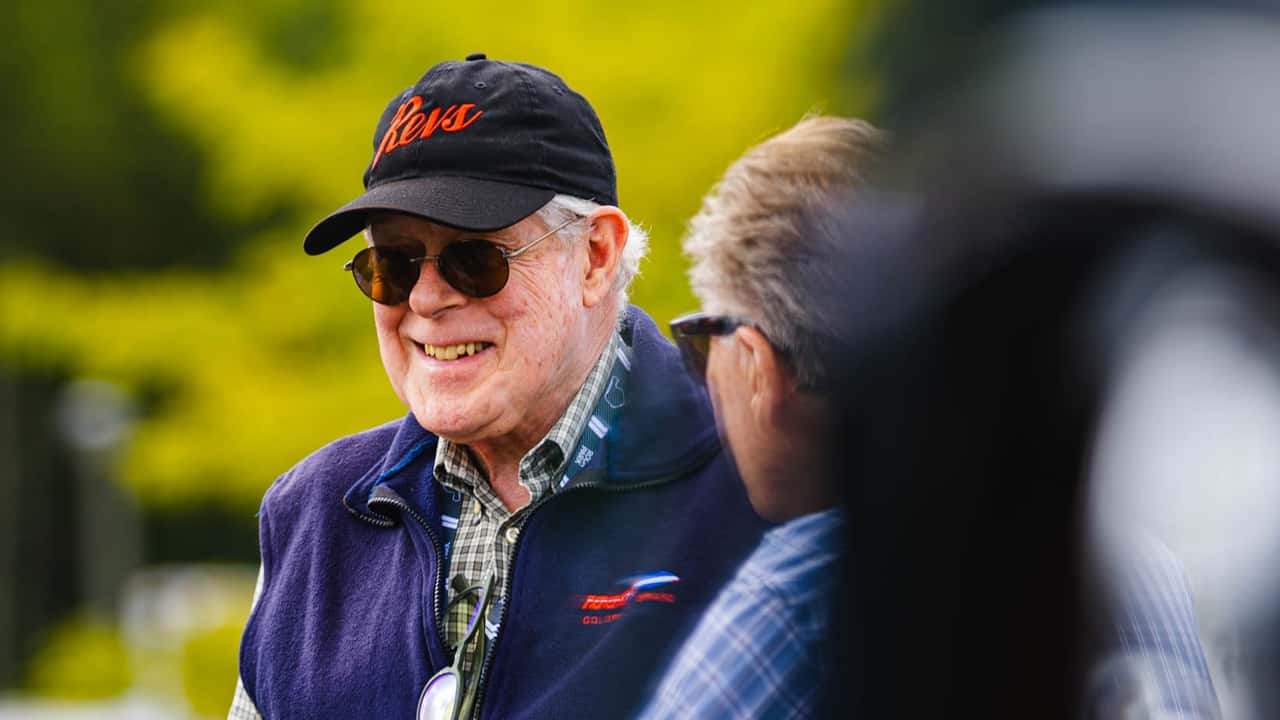
Photo by: Revs Institute
I Recently Read A Book About Max Hoffman, And I Think Half Of The Photos In There Were From The Revs Archives. How Do You Approach Assembling A Massive Archive Of Automotive Records?
We work with people who are producing media all the time. One of our upcoming projects, which I hope will be a product, is something that we’re calling StoryHub, and it’s all about coming up with a set of protocols that we can offer to content creators to develop content based on our archives.
And, you know, it’s complicated. Okay, you have to figure out how the benefits are properly allocated between Revs and the content creator, blah, blah, blah. But I think that will be useful for people who are doing things like that. Or, you know, the really perfect example of somebody who wants to do a long-form program for 40 minutes on YouTube. Revs would put together lists of materials that they could consult. And sort of have a concierge of information available to help them realize the content. So that, I think, will be helpful.
And Does Revs Engage In Some Sort Of More Hands-On Training Programs To Try And Get More People Engaged?
Miles Collier: You gotta pick your spots. I mean, we’d like to. It’s certainly within what I view as our purview. The problem is how much can you do at any given time? The biggest problem we have is not, “Gee, can you come up with something for Revs to do?” That’s not the issue. The issue is: What are the things that are most important for Revs to do at this point, so that Revs’ vision of being the most useful resource can come to fruition. You’ve got to start out with a relatively narrow scope, and you’ve got to make sure that you can do something there, even if it’s in a fairly simple form. And I promise you, that’s the way anything starts. But we hope that people will get involved with us early on in the stage and grow with us.
Our job is not to preach to anybody or tell them how anything ought to be done, but merely to offer them facilities to do whatever it is that they want to do. And I think if we do that, that makes us most useful. Now, of course, if we get successful, that’ll be people trying to do what Revs is doing. That’s fine. The more the merrier; at some point, that just increases the size of the market.

Photo by: Revs Institute
I Hear People Say All The Time That Young People Aren’t Interested In Cars. Where Do You See The Future Of This Passion Going?
Cars are such rich objects, okay? You can engage them in so many different ways. I think my supposition is, it’s not that young people aren’t interested in cars. They’re just not necessarily interested in cars the way the last generation, or my generation, is interested in cars. And I think we need to wake up to that, which is a reason why Revs wants to support people with meaningful cars.
I think that young people will always find their way to what’s relevant and nutritional to them. We just have to have the wit to get the hell out of the way and support them in those endeavors. We’ve got to be open to what people want.
You’re Being Honored This Weekend At Lime Rock. Could You Tell Me A Bit About What That Means To You And Revs?
It’s nice that people think the things that Revs has tried to do over the last 15 years have value. Being honored by all this great stuff here at Lime Rock indicates that we’re not completely going down the wrong track. I’m very pleased that, so far, we have made a difference and people recognize it.
And I hope that I can say with some validity that: Stick with us; you haven’t seen anything yet. Because Revs is going to do really cool stuff, which we have aspired to, but we are now going to start acting on it.
‘This Is The Enthusiast’s Choice:’ Porsche’s American CEO On Why The Manual Still Matters And What’s Next
Brabus Has Big Plans Beyond Mercedes: ‘It’s Time To Change’
Dodge’s CEO Says The Best Is Yet To Come: ‘We’re Going To Go Faster’
BMW M Boss Frank Van Meel On The Future Of M, EVs, And Keeping The Fun Alive