The DeLorean DMC-12 became one of the most recognizable cars in the world after it starred in the Back to the Future movies, but the company behind it disappeared almost as quickly as it arrived.
Company founder John DeLorean’s dream went from automotive revolution to bankruptcy—and then back to fame—in a roller-coaster ride so intense that a movie about him premiered in 2018.
Here’s what went wrong and why the DeLorean name is, surprisingly, still around today.
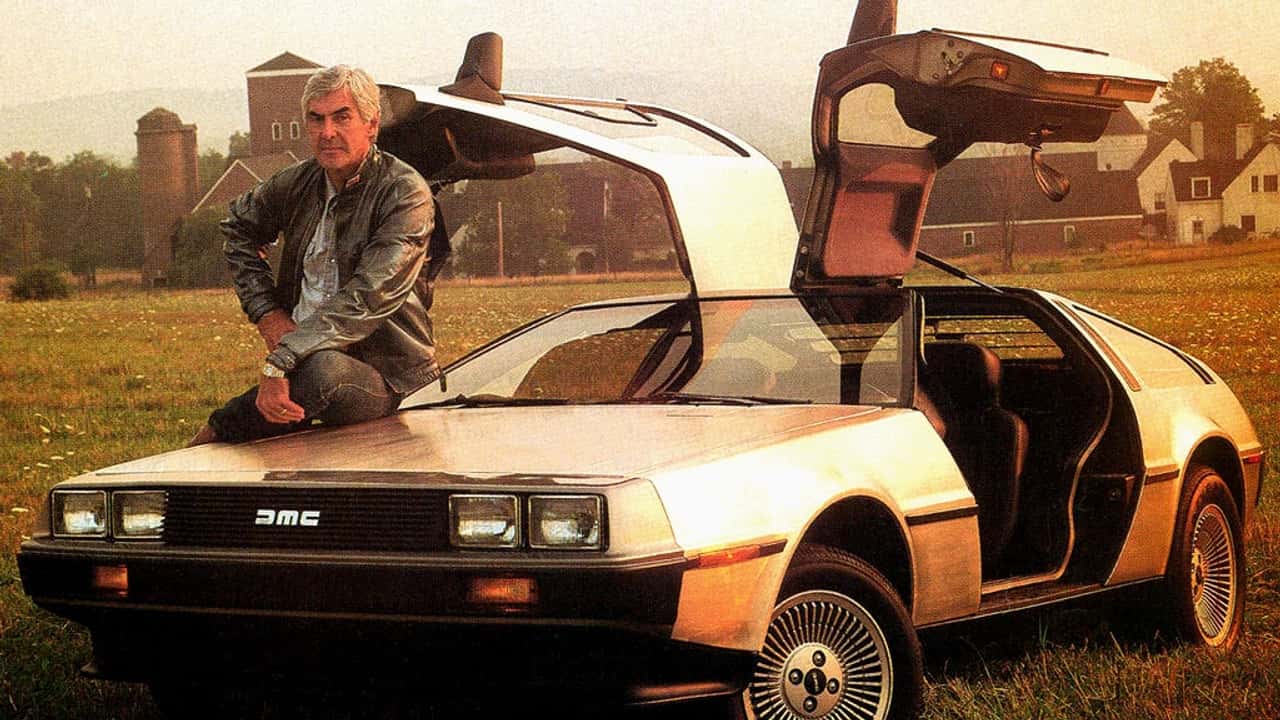
John DeLorean With The DMC-12
Photo by: DeLorean Motor Company
DeLorean Was Supposed To Change The Car Industry
When John DeLorean founded the DeLorean Motor Company in 1975, he wasn’t trying to build just another sports-car company. The former General Motors executive wanted to create a different kind of automobile, combining striking design with safety, durability, and engineering innovation.
The result was the DMC-12, a car that looked like it had arrived from the future. Its stainless-steel body, gullwing doors, and Giorgetto Giugiaro styling immediately separated it from virtually everything else on the road.
Production eventually began at a purpose-built factory in Dunmurry, Northern Ireland. The project also received major financial backing from the British government, which hoped the factory would create jobs in an economically troubled region. At its peak, more than 1,600 people worked at the plant.
The problem was that creating an exotic-looking sports car was considerably easier than creating a successful car company.
The DMC-12 Had A Lot Going Against It
The DeLorean’s looks weren’t the only problem. If anything, the styling remains the strongest part of the car’s legacy. The bigger issue was everything surrounding it.
Production suffered delays, quality-control problems, and financial difficulties. The DMC-12 also arrived during an unfavorable economic period, while its relatively modest performance made its high price harder to justify against established sports cars.
Several factors made life particularly difficult for DeLorean:
Production delays: Getting the factory running smoothly proved difficult, with manufacturing and quality-control problems affecting the company’s ability to build cars efficiently.
High price: The DMC-12 cost considerably more than many buyers expected for a car with its performance.
Modest performance: Its rear-mounted 2.85-liter V6 produced roughly 130 horsepower in U.S. specification, which wasn’t enough to match its exotic appearance.
Weak sales: DeLorean struggled to sell enough cars to generate the revenue needed to keep the business financially healthy.
Economic headwinds: The early 1980s recession made an expensive, niche sports car an especially difficult product to sell.
By the end of 1981, the Dunmurry factory had reportedly built around 7,500 cars but had sold only about 3,000. That mismatch left DeLorean with a serious inventory and cash-flow problem. In other words, you could buy a car that looked like a spaceship without getting spaceship-like performance.
John DeLorean’s Arrest Didn’t Help
DeLorean’s financial problems were already severe by 1982, but the company’s final chapter became even more dramatic when John DeLorean was arrested in October that year as part of an FBI sting involving a proposed cocaine-smuggling deal.
DeLorean was ultimately acquitted after his defense argued that he had been entrapped. But by then, the damage to his reputation—and to the company—was enormous.
The company had already entered receivership in February 1982, and the British government announced the closure of the factory later that year. DeLorean Motor Company filed for bankruptcy in October 1982, bringing the original company’s short-lived run to an end.
Production finally stopped in December 1982. Approximately 9,000 DMC-12s were produced, depending on how production figures are counted. The remaining cars, parts, and assets were eventually sold off after the bankruptcy. For most car companies, that would have been the end of the story.
For DeLorean, it was only the beginning of the legend.
Then ‘Back To The Future’ Changed Everything
The DMC-12 might have become an obscure footnote in automotive history if not for Hollywood.
In 1985, Back to the Future transformed the DeLorean from a failed sports car into a cultural icon. The movie’s decision to turn the gullwing-door coupe into a time machine was almost perfect casting: the car already looked like something that didn’t belong in its own era.
Its appearance in the original film—and subsequently in Back to the Future Part II and Part III—gave the DMC-12 a level of cultural recognition that the original company could never have achieved through car sales.
That’s the strange irony of the DeLorean story. The company failed because the car wasn’t successful enough commercially, but the car eventually became famous enough that virtually everyone knows what a DeLorean looks like.
The surviving cars also developed a dedicated enthusiast following. Parts, restoration and maintenance support continued after the original company disappeared, helping keep thousands of DMC-12s on the road decades after production ended. A company operating under the DeLorean Motor Company name today says it maintains a huge inventory of original-stock, replacement, and reproduction parts for the cars.
Fans Still Debate What Really Happened To DeLorean
Car communities tend to agree on one thing: the DeLorean DMC-12 was an incredible-looking car that never quite lived up to its appearance.
In a popular r/cars discussion on Reddit marking the 40th anniversary of the DMC-12, users described it as an ambitious idea undermined by poor execution, with its weight, lack of performance and reputation for reliability problems frequently coming up.
That said, commenters also acknowledged that its distinctive design and Back to the Future connection turned it into something far more memorable than its sales figures would suggest.
DeLorean Died, But Its Legacy Lives On
Calling DeLorean a complete failure wouldn’t be fair. The car survived the company’s bankruptcy after Back to the Future turned it into an icon. Enthusiasts kept the cars alive. Parts companies continued supporting them. And eventually, the DeLorean name returned to the spotlight with plans for modern vehicles.
There is now a modern company operating under the DeLorean name, although it is not the same corporate entity that John DeLorean founded in the 1970s.
The modern DeLorean Motor Company traces its roots through the later parts and restoration business and has developed concepts intended to take the brand into the future. It’s hard to say whether it will make it, though.

DeLorean Alpha5
Its most famous modern project is the Alpha5, a futuristic electric concept that deliberately moves away from simply copying the DMC-12. DeLorean describes its philosophy as constantly evolving the brand rather than treating the original car as its final destination.
That’s perhaps the most interesting part of the entire DeLorean story. The original company lasted only a few years, but the car it created has endured for more than four decades. DeLorean didn’t survive because the DMC-12 was a great commercial success. It survived because the car became something much more valuable: an icon.
Did You Know: AutoZone Will Loan You Tools For Free
The Dealership Isn’t Always The Best Place To Fix Your Car
You’re Not Imagining It: Car Grilles Are Getting Bigger
Why The Batmobile Always Looks Different In Every Batman Movie