Few cars in history look as fast while being as decidedly not fast as the DeLorean DMC-12.
With its stainless-steel body, gullwing doors, rear-mounted V6, and impossibly low wedge-shaped profile, the DeLorean looked like it should have been parked next to a Lamborghini Countach or Ferrari 308. Instead, it was considerably closer to a stylish grand tourer that happened to be wearing a superhero costume.
And that’s part of what makes the DeLorean so fascinating. The car wasn’t necessarily terrible. In fact, its chassis had some impressive engineering behind it. But as a sports car, the DMC-12 simply couldn’t deliver the performance its appearance promised.
Here’s why.
It Looked Like A Supercar, But It Wasn’t
The first problem was one of expectations.
Designed by Giorgetto Giugiaro, the DeLorean looked exotic. The stainless-steel body and gullwing doors gave it the visual drama of something costing several times its actual price.
But underneath that body was a 2.9-liter PRV V6 producing only around 130 horsepower in US spec. The engine was developed by Peugeot, Renault, and Volvo and was hardly the sort of powerplant you’d expect to find in a futuristic sports car.
The car also wasn’t particularly light. The production DMC-12 ended up considerably heavier than some of the early concepts envisioned, which made those 130 horses work even harder.
The result was performance that simply didn’t match the styling.
A manual DeLorean needed more than nine seconds to reach 60 miles per hour, while the automatic was even slower, taking roughly 11 seconds.
For context, this was a car that looked like it should be terrifyingly quick. It wasn’t.
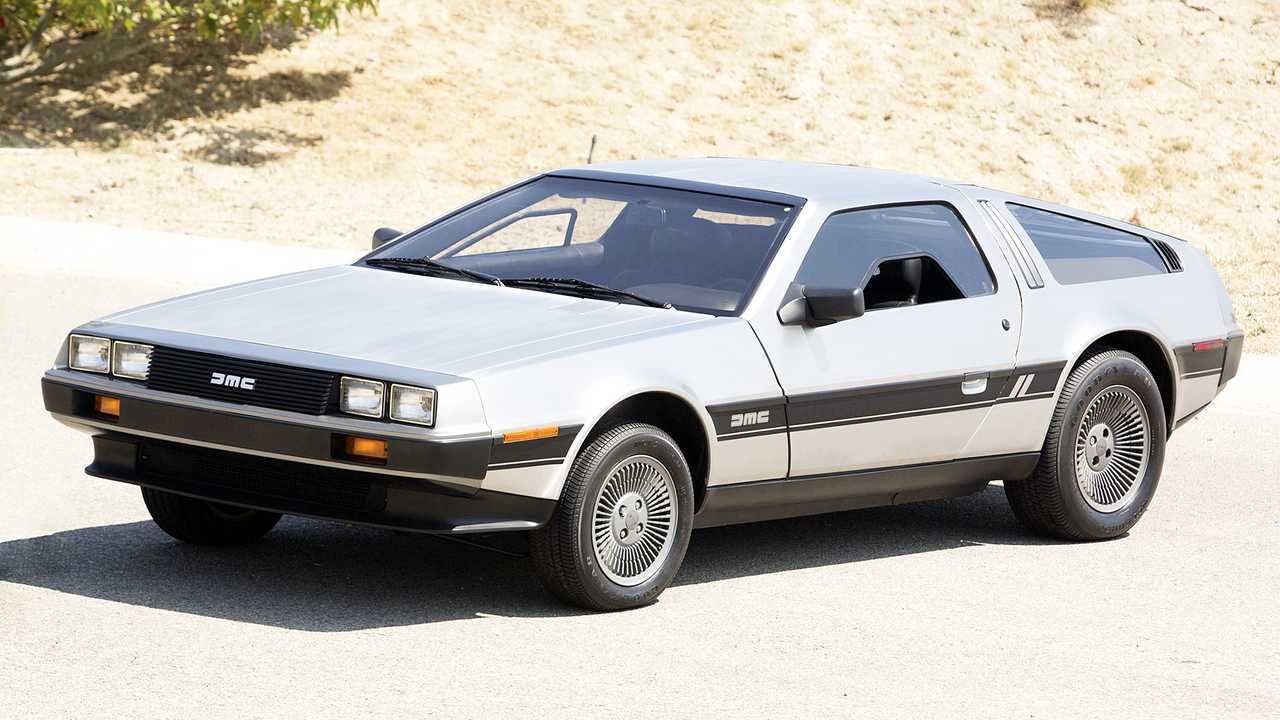
DeLorean DMC-12
The Engine Was The Biggest Problem
The PRV V6 wasn’t inherently a terrible engine. It powered a huge number of cars from Peugeot, Renault, Volvo, and others. But the version used in the DeLorean wasn’t exactly a performance powerhouse.
The US-market car’s emissions equipment contributed to the relatively low output, with the engine producing just 130 hp. Lotus engineers had to work around the powertrain and the rest of the car’s production constraints while getting the DMC-12 ready for the road.
DeLorean eventually pursued a twin-turbocharged version of the PRV V6 through Legend Industries. The setup reportedly targeted around 200 hp, which would have gone a long way toward giving the car the performance its styling suggested.
But DeLorean Motor Company went bankrupt before the project could become a production reality. The DeLorean that should have existed was considerably more interesting than the one customers actually received.
At Least Lotus Worked On The Chassis
If DeLorean had simply slapped a weak engine into a bad chassis, this would be an easy story. But that’s not what happened.
Lotus was brought in to engineer the production car, and much of the DMC-12’s chassis architecture was influenced by the Lotus Esprit. The car used independent suspension with double wishbones at the front and a multilink setup at the rear.
And the handling wasn’t actually awful.
Period testing from Road & Track found the DeLorean capable of 0.772 g on the skidpad, while its 700-foot slalom speed was 59.7 mph. The magazine described the handling as tidy and fun within its limits, although the rear-biased weight distribution could make the car behave differently if pushed too hard.
So calling the DMC-12 a “terrible car” isn’t really fair. It was more of a terrible mismatch between appearance and performance.
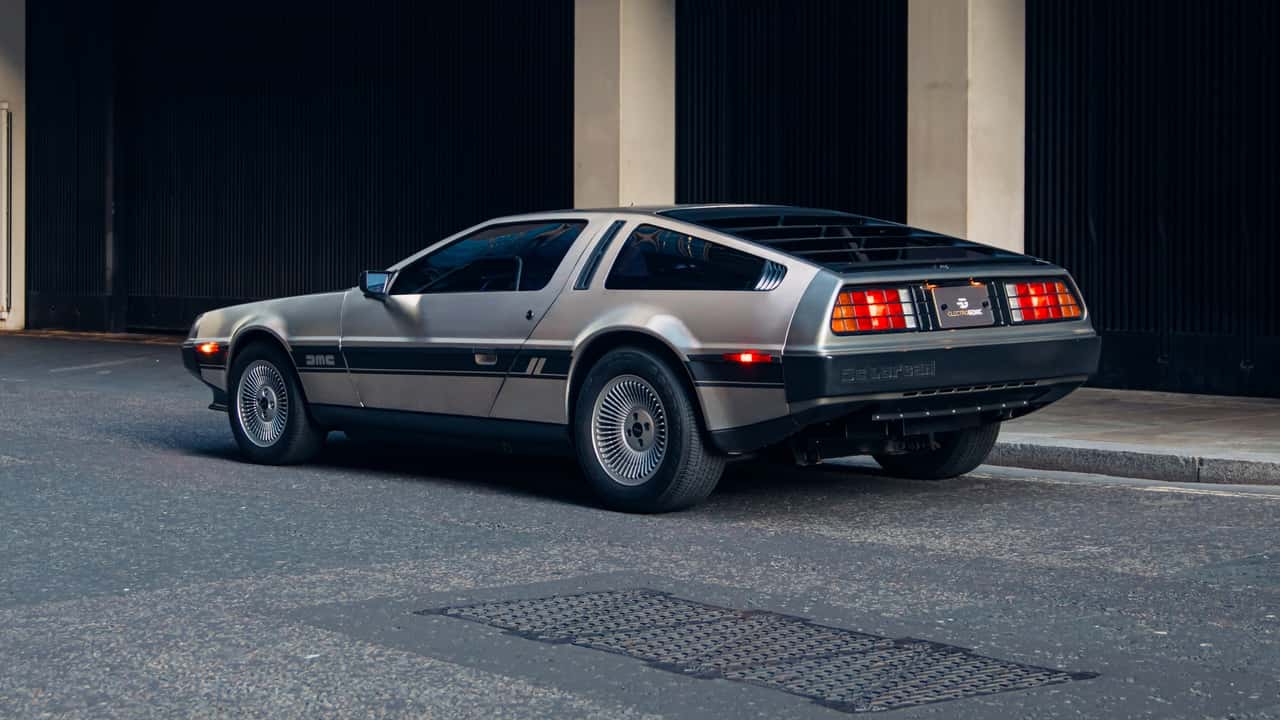
The Rear-Engine Layout Made Things Interesting
The DeLorean’s engine sits behind the rear axle, giving the car a roughly 35:65 front-to-rear weight distribution. That gave it plenty of traction at the rear, but it also meant drivers had to respect the car’s weight distribution when approaching corners aggressively.
Road & Track noted that the basic handling characteristic was understeer, but lifting off the throttle in a corner could cause the rear to come around. During aggressive slalom testing, the magazine observed a pendulum effect from the rear-heavy layout.
So it wasn’t a car that simply fell apart whenever the road got twisty. But it wasn’t a lightweight Lotus, either.
And Then There Were The Brakes
The brakes weren’t exactly a highlight, either. Road & Track found the DeLorean’s braking performance reasonably strong in a straight line, with stopping distances of 158 feet from 60 mph and 260 feet from 80 mph.
But the magazine also discovered rear-lock sensitivity, particularly during hard braking, which could cause the car to slew sideways. Braking while cornering required some caution and, potentially, quick steering correction.
That’s not exactly what you want from something that looks like it escaped from a futuristic racing game.
So Was The DeLorean Actually Terrible?
Not really.
The DeLorean was slow, especially considering its appearance and price. Its 130-hp V6 didn’t provide the acceleration people expected. The automatic was particularly lethargic. Its brakes had quirks, and its rear-heavy layout could bite an inexperienced driver who pushed too hard.
But the Lotus-developed chassis was competent, the ride was comfortable, and period testing found the car enjoyable within its limits. Road & Track ultimately viewed it more as a stylish GT than an outright sports car.
That’s probably the fairest way to look at the DMC-12: It was a pretty good GT wearing the visual identity of a supercar. And then Back to the Future came along and permanently rewrote the narrative.
Today, almost everyone sees a DeLorean and thinks of 88 mph, flux capacitors, and Doc Brown. Very few people see one and immediately think, “130-horsepower PRV V6.”
Maybe that’s for the best.
Why Do Cars Have Model Years?
What Is The ‘Death Wobble?’ And Why Does It Happen?
Why Are Racing Tires Smooth?
How The Ford Mustang Got Its Name