- A fresh New Jersey law cuts red tape, enabling residents to legally install solar panels that plug directly into a household outlet.
- The bill bars local governments and landlords from blocking residents and tenants from installing balcony solar systems.
- The legislation, signed by Gov. Mikie Sherrill, empowers people to cut their monthly energy bills after minimal investment.
Another American state is making it legal to install cheap balcony solar systems that can lower energy bills. New Jersey Governor Mikie Sherrill signed legislation this week that bars municipalities and landlords from restricting the installation of portable solar panels.
The law, which will go into effect six months from now, allows residents and tenants to install solar systems with a maximum power output of up to 1,200 watts without having to pay additional fees for installation or go through all sorts of approvals.
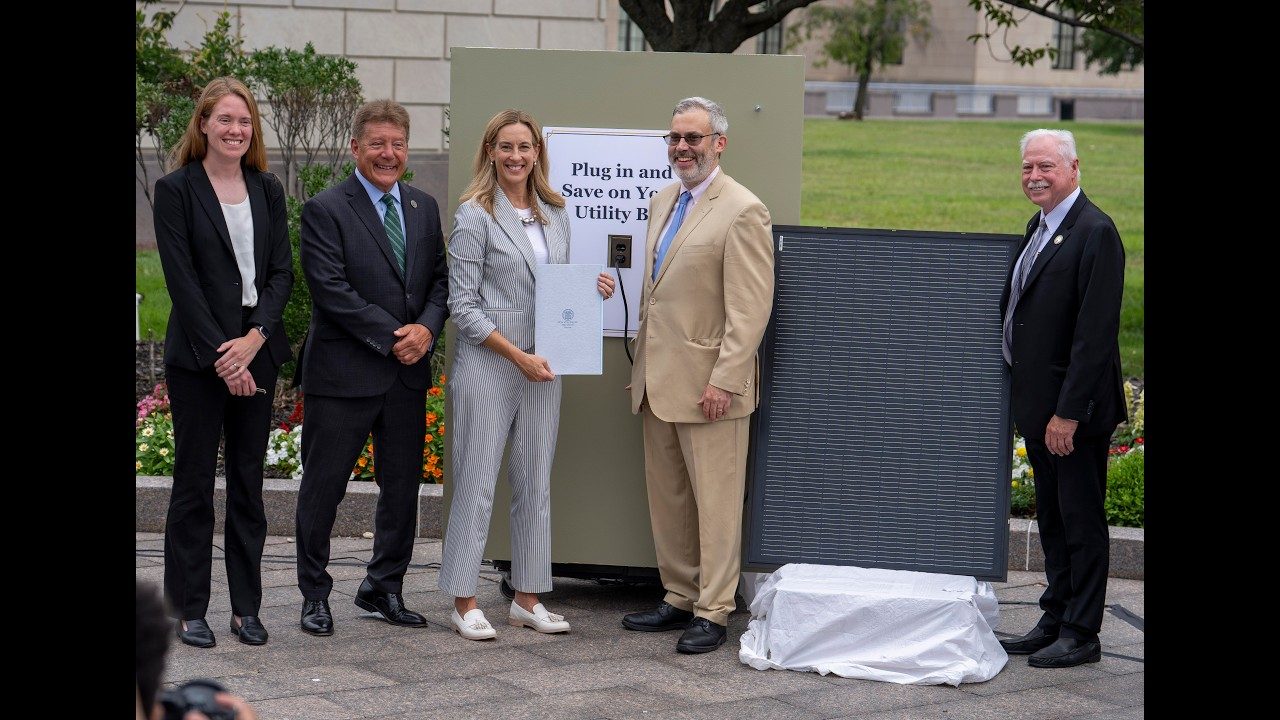
The legislation, which was approved unanimously in the Senate and Assembly in late June, is aimed at cutting residents’ power costs as electricity prices continue to climb across the state.
Landlords, homeowners associations, housing cooperatives, and similar entities must still be notified about the installation of a plug-in solar system 14 days in advance, and landlords are still allowed to restrict the placement and size of the solar units. However, the new law bars local governments from requiring licensing or approvals to install such systems.
“Balcony solar is the ultimate win-win,” said Gov. Mikie Sherrill (D) at a bill signing ceremony in Trenton. “It’s accessible, affordable, safe, and sustainable. These units cost a fraction as much as rooftop solar, but they can still shave up to $50 off the typical monthly bill.”
With a plug-in photovoltaic system, the solar panels are connected either to a microinverter or a bigger unit that also includes batteries for storage. The “brain” of the system is then plugged in directly into a household outlet, with the inverter making sure that no power is sent back to the grid when there’s an outage. That’s important for the safety of the linemen working to restore power for everyone affected.
Balcony solar systems, which are extremely popular in Germany, where over one million systems are online, require a much smaller initial investment compared to rooftop solar and a simpler installation. In New Jersey, for instance, the 1.2 kW limit means that two or three solar panels can be plugged into a compliant inverter, keeping costs down for apartment dwellers.
“Plug-in solar can save a family hundreds of dollars a year, every year, with no cost to the ratepayers,” said Hannah Birnbaum, Co-Founder and Chief of Advocacy at Permit Power. “Governor Sherrill has been going after energy costs since her first day in office, and this law hands families a tool they can use themselves, including the roughly 40 percent of New Jerseyans who rent or live in apartments and have never had a way to lower their own power bill.”