At first glance, racing tires look completely wrong.
Your road car has tires covered in grooves, channels, and tread blocks. You’re also told to replace those tires once the tread gets too low. Yet some of the fastest race cars in the world intentionally use tires that are completely smooth.
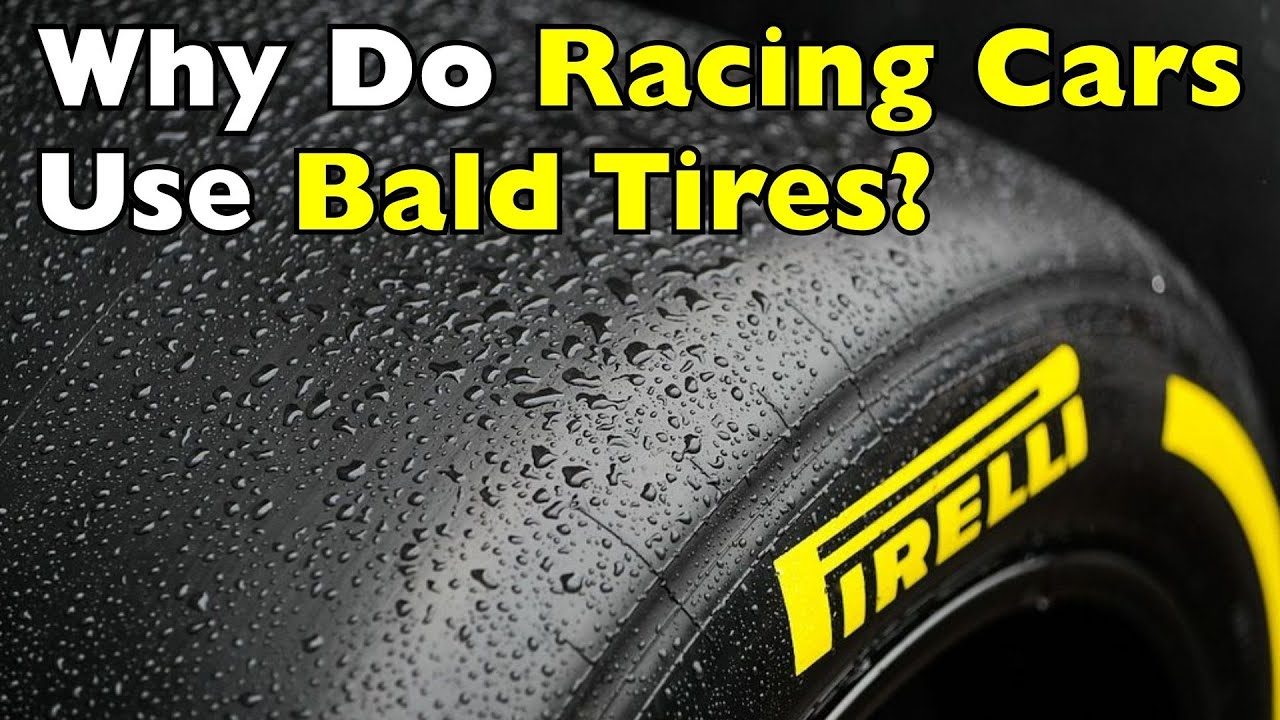
They’re called slicks, and on a dry racetrack, the lack of tread is a feature, not a problem.
Smooth Tires Put More Rubber To Work
The simplest explanation is that a racing slick doesn’t need grooves when the pavement is dry.
Instead of carving channels into the tread, tire manufacturers can use the entire tire surface to interact with the asphalt. There’s another benefit: no tread blocks means no tread squirm.
On a normal tire, individual blocks of rubber can flex slightly when the car accelerates, brakes, or changes direction. Removing those blocks gives a slick a more stable tread surface, which can improve steering response and consistency at the limit.
But the smooth surface is only part of the equation.
Racing Slicks Are Really, Really Sticky
A slick isn’t just a street tire without tread.
Racing tires use specialized rubber compounds engineered to produce tremendous grip once they’re within the proper temperature range. Softer compounds generally generate more grip but wear more quickly, while harder compounds sacrifice some outright performance for durability.
That explains why race cars sometimes weave during caution or formation laps and why teams obsess over tire temperatures. A racing tire that’s too cold can be dramatically less effective than one operating in its intended window.
As the tire heats up, its compound becomes capable of generating the mechanical grip the car needs to corner, accelerate, and brake at extraordinary speeds. Pirelli, for example, offers multiple slick compounds specifically tailored to different track surfaces and temperatures.
So Why Do Street Tires Have Tread?
Because racetracks offer something public roads don’t: relatively predictable conditions.
The biggest job of the grooves in a road tire is moving water away from underneath the tire. Without somewhere for that water to go, the tire can begin to ride on top of it rather than maintain contact with the pavement.
That’s hydroplaning.
Race slicks have the same problem. Once significant rain arrives, racing series switch to tires with grooves designed specifically to evacuate water. Formula 1, for example, uses intermediate and full-wet tires when conditions become too wet for slicks; Pirelli says its full-wet tires are specifically designed to resist aquaplaning.
Goodyear uses the same basic strategy in endurance racing: slick-style tires for dry running and treaded wet tires designed to channel water away from the contact patch when it rains.
A Bald Tire Is Not A Racing Slick
This is where things get confusing.
If removing tread helps a race tire grip better in the dry, wouldn’t driving your street tires until they’re bald accomplish basically the same thing?
Absolutely not.
A racing slick was engineered from the beginning to operate without grooves. Its compound, construction, temperature range, and internal structure were all designed around racing.
A bald road tire is simply worn out.
Once a road tire has lost its tread, it has also lost much of its ability to deal with rain and standing water, and it wasn’t engineered to behave like a racing slick in the first place.
That distinction comes up in a particularly relevant discussion on Reddit’s r/cars, where users dig into why intentionally smooth racing slicks and worn-out street tires are completely different things.
Slicks Are Specialized Tools
So racing tires aren’t smooth because tread somehow reduces traction in every situation.
They’re smooth because on a clean, dry racetrack, tread isn’t needed to evacuate water. Removing it allows tire engineers to optimize the rubber surface for dry grip, responsiveness, temperature, and enormous cornering loads.
Add rain, snow, dirt, cold temperatures, potholes, or thousands of miles of expected tire life, and that strategy stops making sense pretty quickly.
Which is why slick tires belong on a racetrack—and bald tires belong in the recycling pile.