- Nearly half of Oslo’s passenger cars are electric, making it one of the world’s most electrified cities.
- Around 78% of Oslo’s 4,519 public plugs are slower AC units installed where drivers already park.
- Since 2020, many Oslo apartment residents have had the legal right to install a plug at their parking space and it shows.
Nearly half of all passenger vehicles on the road in Oslo, Norway’s capital, are electric. The city predictably has plenty of public fast chargers, but they aren’t what keeps most of its EVs running. The city keeps them charged with thousands of simple AC plugs placed where drivers already park, and they make up the majority of its charging infrastructure.
Official data from Statistics Norway says Oslo had 4,519 public charging points at the end of 2025. Of those, around 78% (3,532) were chargers rated between 3.6 and 43 kW. Another 611 delivered 50 to 250 kW, and the remaining 376 were rated above 300 kW.
That means it has nearly 1,000 public plugs that can deliver at least 50 kW, providing essential coverage for taxis, commercial vehicles, road trips, and drivers who need a quick emergency top-up. But fast chargers aren’t doing all the heavy lifting, and this video from Out of Spec Roaming shows how Oslo’s slower, widespread network of AC chargers became the backbone of its EV transition.
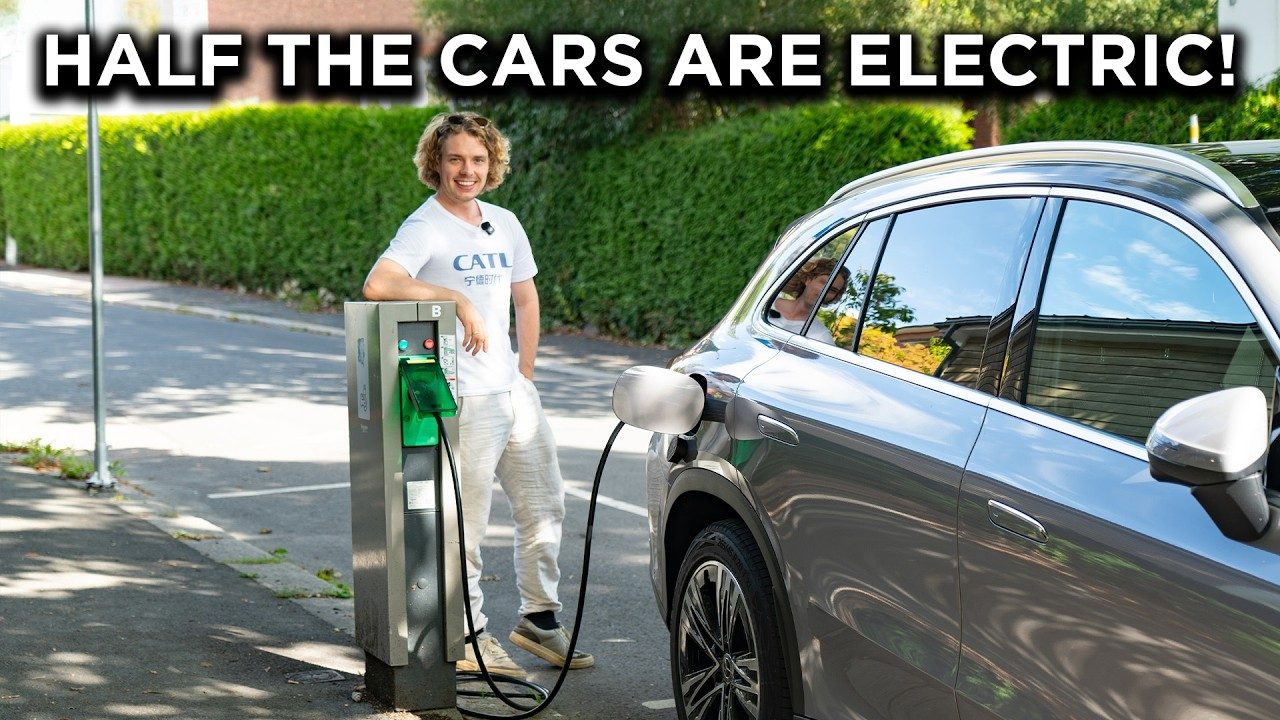
The high number of AC chargers can be explained by how Oslo dealt with one of the hardest parts of owning an EV: apartment charging. Since 2020, many residents have had the right to install a plug at their parking space. The city also drops its public-charger parking fees at night, making overnight AC charging more attractive.
This turns charging into something drivers don’t really have to think about. The video shows that even a modest 6-kW plug can add 36 kWh during a six-hour stay, which is 100 miles or more of range in many EVs, while the owner is working, sleeping, or running errands. Drivers typically bring their own Type 2 cables, and untethered posts reduce cable theft and maintenance needs.
Basically, Oslo has made dedicated charging stops largely unnecessary. People drive to where they need to go, knowing they can likely plug in wherever they go, and carry on with their day.
Statistics Norway counted 120,469 electric cars in Oslo at the end of 2025, out of 246,809 passenger cars overall. That works out to 48.8%, making Oslo unlike any other large city, and the share will keep rising since the vast majority of all new cars sold in Norway are now electric. Interestingly, it doesn’t have Norway’s highest EV share, as that goes to Bergen, where it’s 49.7%.
Just under 96% of all new cars sold in Norway last year were pure EVs. The share rose to 97.6% in the first half of 2026. That transition to electric now extends far beyond private cars: the video shows electric taxis, work vans, box trucks and even a battery-powered semi using the same charging ecosystem.
The video notes that Oslo residents never stopped being car people. Many still rely on personal vehicles not just for local errands, but also for longer trips to countryside cabins and remote parts of Norway that public transit can’t easily reach. They weren’t forced to give up their cars or radically change how they lived; Oslo simply made the electric alternative fit into their lives.