

The name every driver knows was actually the one advertising agencies told its inventor not to use.
There are certain automotive products whose names are practically interchangeable with their functions. WD-40. Armor All. Fix-a-Flat. And if you’ve ever driven through a heavy rainstorm, there’s a good chance you know Rain-X.
The little yellow bottle has been around for more than 50 years, promising to make water bead up and fly off your windshield. But where did that oddly specific name come from?
Turns out, Rain-X wasn’t dreamed up by some clever advertising agency. In fact, the advertising agencies reportedly hated it.
Ad Agencies Didn’t Want The Name Rain-X
Rain-X traces its roots to inventor Howard Ohlhausen, who founded the Unelko Company in Chicago in 1971. As Ohlhausen prepared to market his new glass treatment, he started looking for a name.
According to Rain-X’s own history, Ohlhausen came up with several possibilities, including Rain-Be-Gone and Rain Away. He sent those names, along with Rain-X, to advertising agencies in Chicago, New York, and Los Angeles.
None of the agencies recommended Rain-X.
Ohlhausen used it anyway.
That decision worked out pretty well.
Rain-X was trademarked and became commercially available in 1972, eventually growing into one of the most recognizable car-care brands in the world.
So What Does The ‘X’ In Rain-X Mean?
Here’s where things get a little less satisfying.
Rain-X itself doesn’t provide an official explanation for what the X is supposed to stand for. The company’s account of the naming process explains that Ohlhausen chose Rain-X despite the advice of advertising agencies, but it never says the letter is an abbreviation for a specific word.
You could interpret it as rain being “X’d out” or eliminated, which certainly fits what the product is supposed to do. But that’s an interpretation—not the documented origin of the name.
Sometimes a catchy name is just a catchy name.
Rain-X Actually Started With Aircraft
The story behind the product itself is more interesting.
Ohlhausen’s experience in the U.S. Air Force reportedly made him aware of the visibility problems aircraft could encounter in bad weather. He later experimented with coatings designed to repel water and improve visibility on glass.
That work eventually produced several extremely thin coatings for glass and other nonporous surfaces. Ohlhausen also trademarked Repcon, a rain-repellent surface treatment used for aircraft and military vehicles, before bringing Rain-X to the automotive market.
The basic concept remains largely unchanged today.
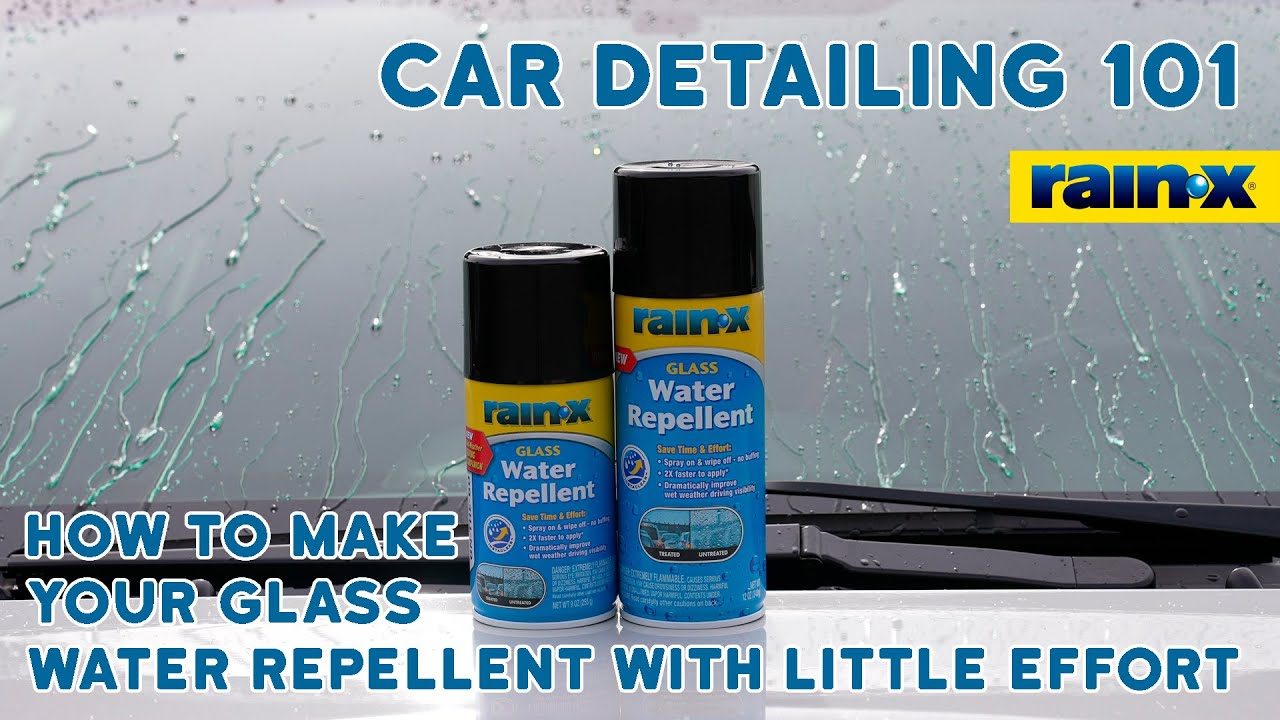
Rain-X says its windshield treatment creates an invisible bond on the glass that encourages water to bead up and roll away rather than spreading across the surface.
At speed, airflow helps push those beads upward and off the windshield—which is why a properly treated windshield can sometimes require surprisingly little help from the wipers in steady rain.
The Famous Yellow Bottle Wasn’t Original, Either
Even Rain-X’s packaging required some trial and error.
The original bottle was black and white, but Rain-X says retail testing showed it wasn’t getting enough attention on store shelves.
Ohlhausen switched to bright yellow, drawing inspiration from the color used on automotive warning and yield signs. The distinctive yellow packaging has remained a major part of the brand ever since.
So the two things we now immediately associate with Rain-X—the name and the yellow bottle—were both choices that ran counter to the initial marketing direction.
People Are Still Arguing About Rain-X 50 Years Later
Rain-X might be old-school car care, but enthusiasts still debate whether it’s the best option.
A popular 2024 thread on r/AutoDetailing asked whether Rain-X was still the best windshield water repellent compared with newer ceramic and glass coatings. Plenty of commenters said they’d tried more expensive alternatives only to keep coming back to the original stuff.
And there’s something fitting about that. More than five decades after advertising professionals advised Howard Ohlhausen against the name Rain-X, both the product and the name are still instantly recognizable.
Not bad for the name nobody wanted.
