A flat tire usually means one thing: stop driving! But there’s an important exception. If your vehicle is equipped with run-flat tires, a loss of air pressure doesn’t necessarily mean you’re stranded on the side of the road.
Thanks to reinforced sidewalls that allow run-flat tires to temporarily support the vehicle’s weight after losing air, the driver can reach a safe location or tire shop. For a conventional tire, however, the answer is much simpler: don’t drive on it.
Welcome to Motor101, our series dedicated to answering the internet’s biggest automotive questions. From the origins of iconic designs to the engineering breakthroughs that shaped the world’s greatest cars, we uncover the stories behind the vehicles you love.
Regular Tires: Stop Driving Immediately
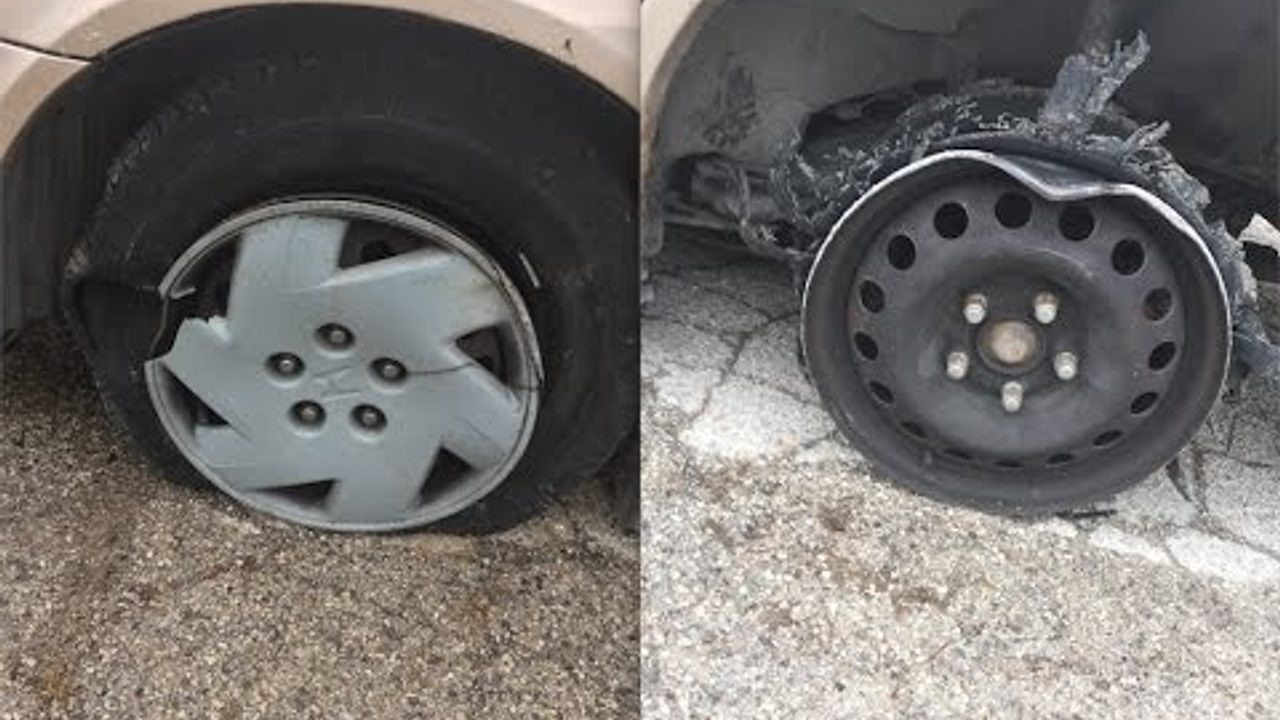
A conventional tire depends on air pressure to maintain its shape and support the vehicle. Once that pressure disappears, the tire’s sidewalls can flex excessively and the wheel can begin damaging the tire from the inside.
Michelin specifically says driving on a flat tire is not safe and warns that even a short distance can damage the rim and destroy the tire internally, potentially making it impossible to repair. (michelinman.com) That means the old idea of slowly driving a mile or two to the nearest tire shop isn’t a good strategy.
If you discover a conventional tire has gone flat, the better options are:
- Pull over somewhere safe as soon as possible.
- Turn on the hazard lights if you’re stopped near traffic.
- Install the spare tire if your vehicle has one and it’s safe to do so.
- Use the manufacturer’s tire mobility kit if equipped and appropriate for the type of damage.
- Call roadside assistance if you can’t safely change the tire.
The goal isn’t simply to protect the tire. Driving on a severely underinflated or flat tire can also affect handling and potentially damage the wheel.
Run-Flat Tires Change The Rules
Run-flat tires are specifically engineered for the situation that leaves conventional tires stranded. Their reinforced sidewalls are designed to support the vehicle even after a major loss of air pressure. That allows the driver to continue toward a safe location instead of immediately stopping to install a spare.
But run-flat doesn’t mean unlimited driving on zero pressure. The exact limits depend on the tire and vehicle. Michelin, for example, says its ZP run-flat tires can be driven at a maximum of 50 mph for up to 50 miles after a loss of pressure, depending on road and driving conditions. But if more than one tire is punctured, Michelin says you should not continue driving.
While that gives drivers a useful emergency buffer, don’t mistake it for permission to continue a normal road trip.
How Far Can You Drive On A Run-Flat?
There’s no universally accepted run-flat distance. The safe limit can be affected by several factors, including speed, vehicle load, ambient temperature, driving style, and the condition of the tire itself.
Higher speeds can reduce the distance a run-flat can safely cover, while a heavily loaded vehicle places greater demands on the tire. Extreme temperatures can also affect how the tire behaves while operating without normal inflation pressure.
Needless to say, driving style matters, too. Hard cornering, aggressive acceleration, and heavy braking can increase stress on a deflated run-flat. And a puncture isn’t necessarily the only concern; additional damage to the tire can reduce its ability to operate safely after losing pressure.
Bridgestone specifically warns that speed, load, maneuvering, the amount of pressure lost, tire damage, and temperature can all affect run-flat capability. Its general guidance cites a maximum of 50 mph and 50 miles for run-flat operation, but notes that actual capability can vary with the specific tire, vehicle, and conditions.
So if your owner’s manual or tire manufacturer says you have a 50-mile emergency range, don’t treat 50 miles as a target. The smartest move is to get somewhere safe and have the tire inspected as soon as possible.
Owners Have Mixed Feelings About Run-Flats
Run-flat tires sound like an ideal solution to a flat, but owners on Reddit have a more complicated view of the technology.
In a recent r/BMW discussion, drivers comparing run-flats with conventional tires repeatedly praised the improvement in ride comfort after switching away from run-flats.
One owner described the difference as a major improvement, while another pointed out the obvious trade-off: conventional tires simply can’t keep driving after losing their air pressure. That trade-off is exactly why run-flats continue to appeal to some drivers.
In another r/BMW thread, an owner with a flat run-flat tire asked whether it was safe to drive about 20 kilometers home. Commenters stressed that the purpose of a run-flat is to provide enough mobility to reach a garage, with discussion around the familiar 50-mile limit. Even so, the conversation leaned toward taking the shortest possible route to a tire shop rather than treating the run-flat’s emergency range as permission to keep driving normally.
The complaints about run-flats aren’t limited to ride quality, either. Some owners report harsh impacts, sidewall problems, and frustration with the cost or difficulty of replacing damaged tires. One discussion featured an owner who said switching from run-flats to conventional tires made the car feel like it had a completely different suspension.
That doesn’t make run-flats a bad idea. It highlights the compromise behind them: you give up some comfort and, in some cases, tire choice in exchange for the ability to keep moving after a loss of pressure.
And even fans of run-flat tires seem to agree that you shouldn’t drive around indefinitely on a flat tire. The technology is best viewed as an emergency escape route—a way to reach somewhere safe or a tire shop without immediately having to change a tire on the roadside.
Can You Repair A Run-Flat After Driving on It?
This is where things get complicated. A run-flat that has traveled with little or no air pressure can suffer internal damage that isn’t visible from the outside. That’s particularly important because the reinforced sidewall can continue supporting the vehicle even when the tire no longer has normal inflation pressure, meaning the tire may not look obviously flat.
That’s also why vehicles equipped with run-flat tires generally rely on a tire-pressure monitoring system (TPMS) to alert the driver when pressure drops. If the warning appears, don’t assume everything is fine simply because the tire still looks normal. Michelin says most vehicles with run-flat tires include TPMS, while Bridgestone notes that TPMS is required for its run-flat applications.
After a run-flat has been driven with little or no air, Michelin recommends removing it from the wheel and having it professionally inspected, even if there is no visible damage. Internal damage may not be detectable from the outside but can affect the tire’s safety and performance.
Whether the tire can be repaired depends on the specific tire, manufacturer, and damage. Michelin’s guidance is particularly strict: it says run-flat damage and any tire that has been driven flat require replacement rather than repair.
Bridgestone, meanwhile, says some of its run-flat tires may be repairable under specific restrictions and procedures, but only after a qualified professional has conducted a complete internal and external inspection.
In other words, reaching a tire shop doesn’t necessarily mean the tire can simply be reinflated and put back into service. The tire may need to be replaced—even if it looks fine from the outside.
What If You Don’t Have Run-Flats?
For drivers with conventional tires, a flat generally means the journey is over until the tire is repaired, replaced, or swapped for a spare.
A compact spare can get you moving again, but it has its own restrictions. Michelin says temporary spares have lower speed and mileage capabilities than normal tires, so drivers should follow the specific limits printed on the spare’s sidewall. (michelinman.com)
Some newer vehicles don’t have a spare at all. Instead, they may come with a tire mobility kit or rely on roadside assistance. That’s one reason it’s worth knowing what equipment your vehicle actually carries before you get a flat.
The Bottom Line
So, can you drive with a flat tire? If it’s a conventional tire, no. Stop as soon as it’s safe and deal with the tire rather than risking further damage to the tire, wheel, or vehicle.
If it’s a run-flat, possibly—but only within the manufacturer’s specified limits. Run-flats are designed to provide temporary mobility after a loss of pressure, not to turn a puncture into a problem you can ignore. The biggest mistake is assuming every flat tire works the same way.
Before your next warning light appears, check whether your car has conventional tires, run-flats, a spare, or a tire mobility kit. Knowing the answer could save you a lot of trouble when the TPMS light suddenly comes on.