If you came of age during Top Gear’s heyday, you probably remember Jeremy Clarkson’s review of the E60 BMW M5. “Amazing, isn’t it, that this is one of the ugliest and most annoying cars in the world, but at the touch of a button, it becomes one of the very best,” Clarkson concluded. That polarizing reputation has followed BMW’s fourth-generation super sedan ever since.
Controversial Bangle-era looks, a high-maintenance reputation, and the balky automated gearbox fitted to most examples have kept E60 M5s and their E63 M6 cousins relatively underappreciated. Until now.
Hagerty recently named the E60 M5 to its ‘Bull Market’ list of classic and near-classic cars likely to appreciate in value. An influx of interest from younger enthusiasts—plus robust aftermarket support—makes owning one of these 200-mph super sedans less daunting than you might think.
I spoke to an E60 M5 owner who’s lived with one for almost seven years to get his perspective on this once maligned, now ascendant near classic.
Tough Act to Follow
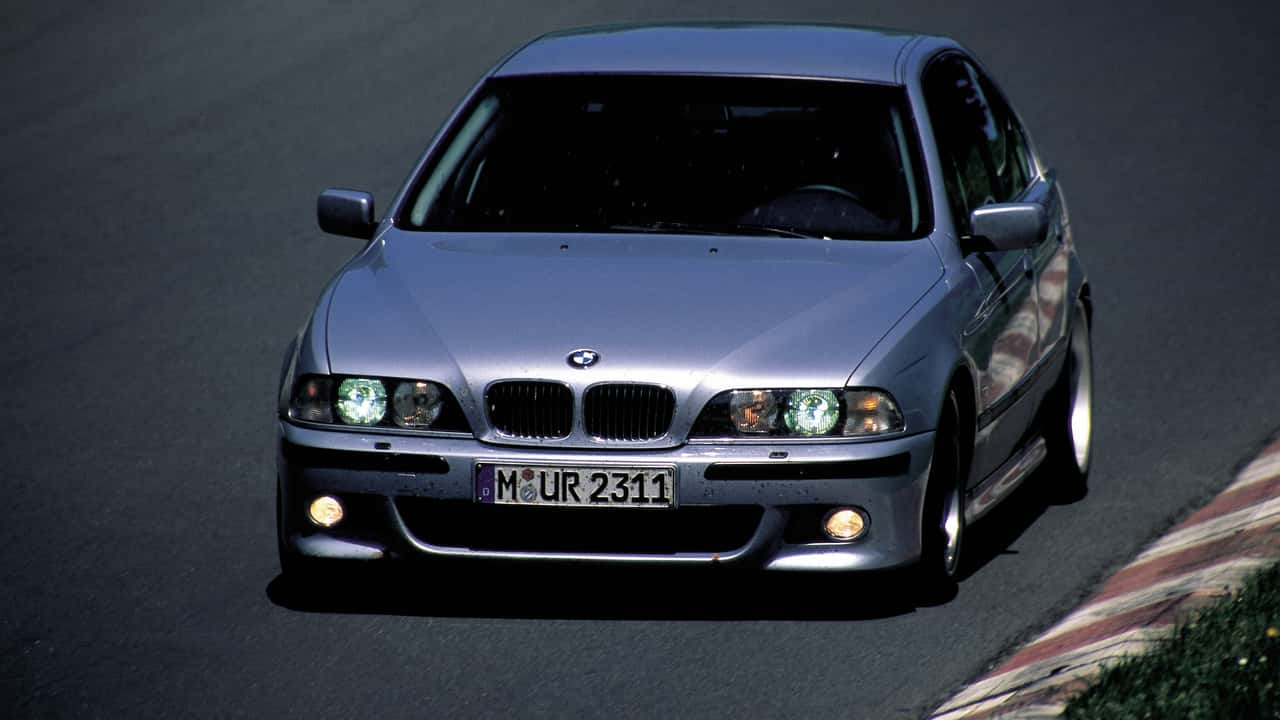
2000 BMW M5 (E39)
Photo by: BMW
BMW had its work cut out for it with the E60. The E39-chassis M5, sold from 1999 to 2003, is widely regarded as one of the best-looking and best-driving sedans of all time. Its simple exterior lines were classically beautiful, while its 4.9-liter S62 V-8 engine featured individual throttle bodies.


Adding to the timeless appeal, it came exclusively with an old-school six-speed manual. It’s a tried-and-true formula, and it was always destined to become a classic.
Debuting in 2005, the E60 M5 broke from that beloved mold. First, designer Chris Bangle’s flares and swoops are an acquired taste. The headlights’ extended edges somewhat resemble eyelashes, and the sculpted bumpers and “Bangle butt” trunklid aren’t for everyone.
Mechanically, the E60 M5 is a lot more high-tech than its predecessor, too. While the E39’s V8 was based on a more pedestrian engine from BMW’s non-M cars, the E60 got a racing-derived V10—the S85.
A Race Car’s Heart
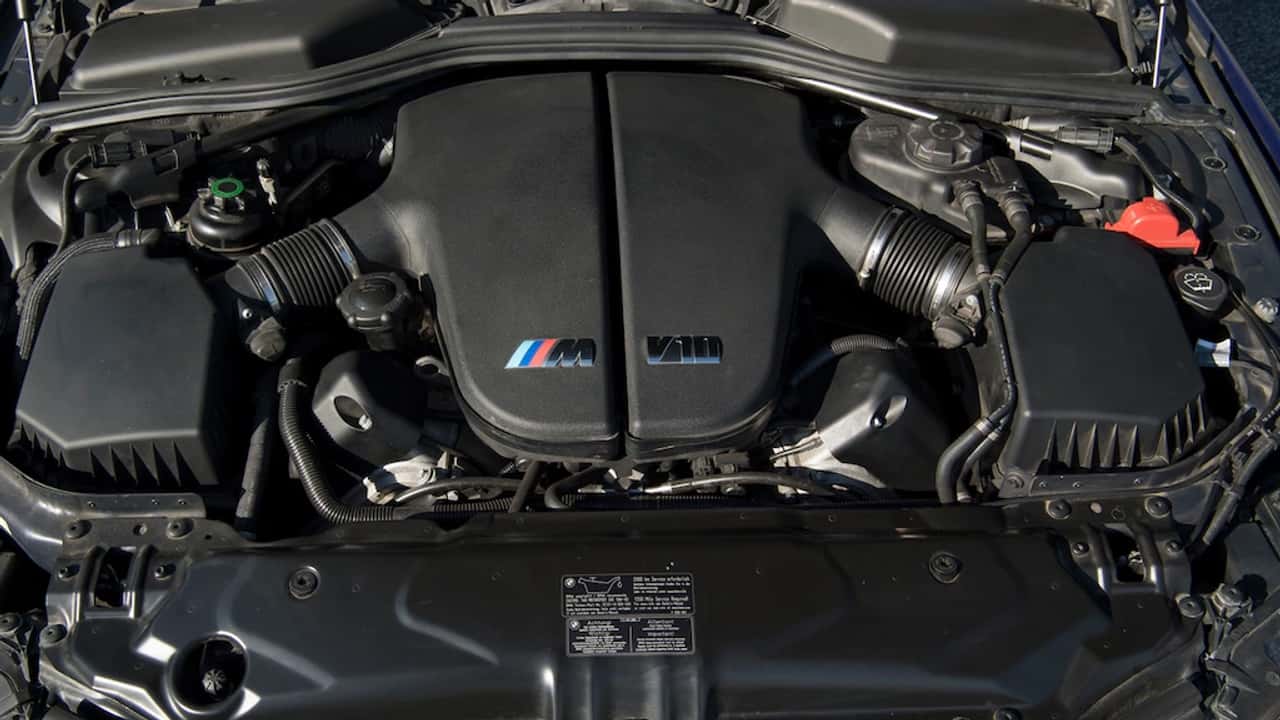
BMW S85 V10
Photo by: BMW
The S85 is BMW’s only V10 ever placed in a road car, and one of BMW M’s only engines not based on a regular production car powertrain. It used a short-stroke, oversquare design to make 507 horsepower at a staggering 7,750 rpm, while revving to a wailing 8,250-rpm redline. Like other M engines, it used individual, electronically-actuated throttle bodies for each of its 10 cylinders, giving the driver instant throttle response and precise control.
Though not technically related to BMW Motorsport’s racing engines, it was developed during the V10 era of Formula 1, when Porsche was stuffing ten cylinders in the Carrera GT. Later, BMW chopped two cylinders off to form the basis for the S65 V8 in the E90-generation M3.
That exotic heart propelled the M5 to 60 mph in 4.2 seconds on its way to an electronically-limited 190-mph top speed when equipped with the M Driver’s Package. Fully de-limited M5s have reached speeds in excess of 200 mph, making it among the fastest production four-doors in the world at the time.
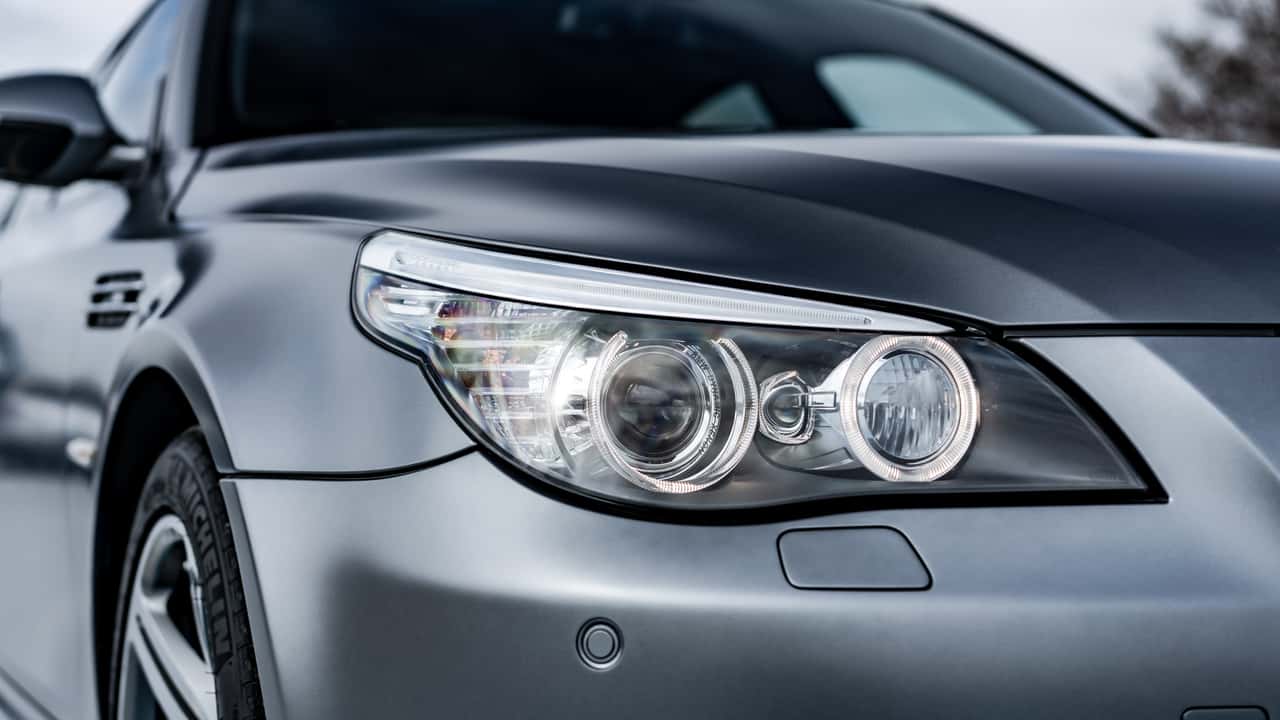
Photo by: BMW
Photo by: BMW
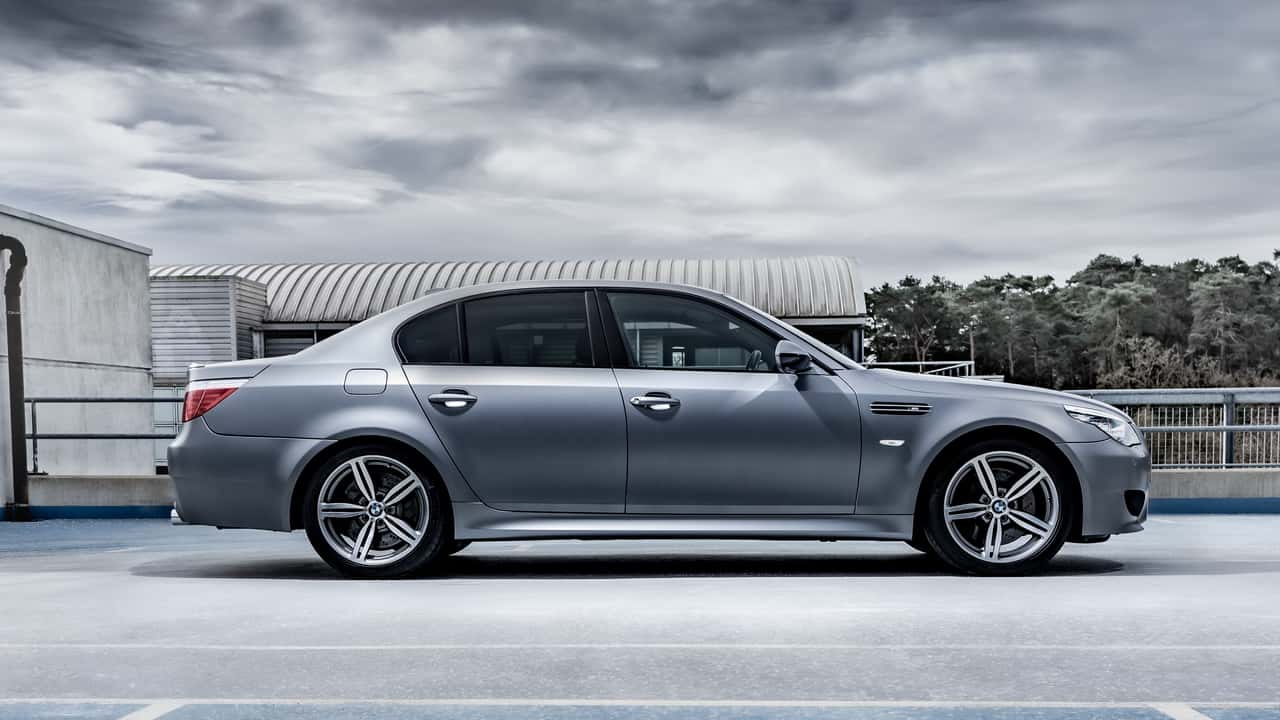
E60 BMW M5
Photo by: BMW
The engine famously had three drive modes: P400, the least-sporty setting in which it made 400 horsepower; P500, which unlocked the engine’s full output and quickened throttle response; and P500 Sport, which could’ve been called Max Attack.
The racy engine required some extra maintenance: rod bearings, VANOS solenoids, and throttle actuators can all require big-ticket repairs.
It’s a similar story with the SMG III seven-speed single-clutch automated transmission most M5s came with from the factory. Two-pedal automated manuals were all the rage in the mid-2000s, with Ferrari’s F1 and Lamborghini’s E-Gear leading the way.
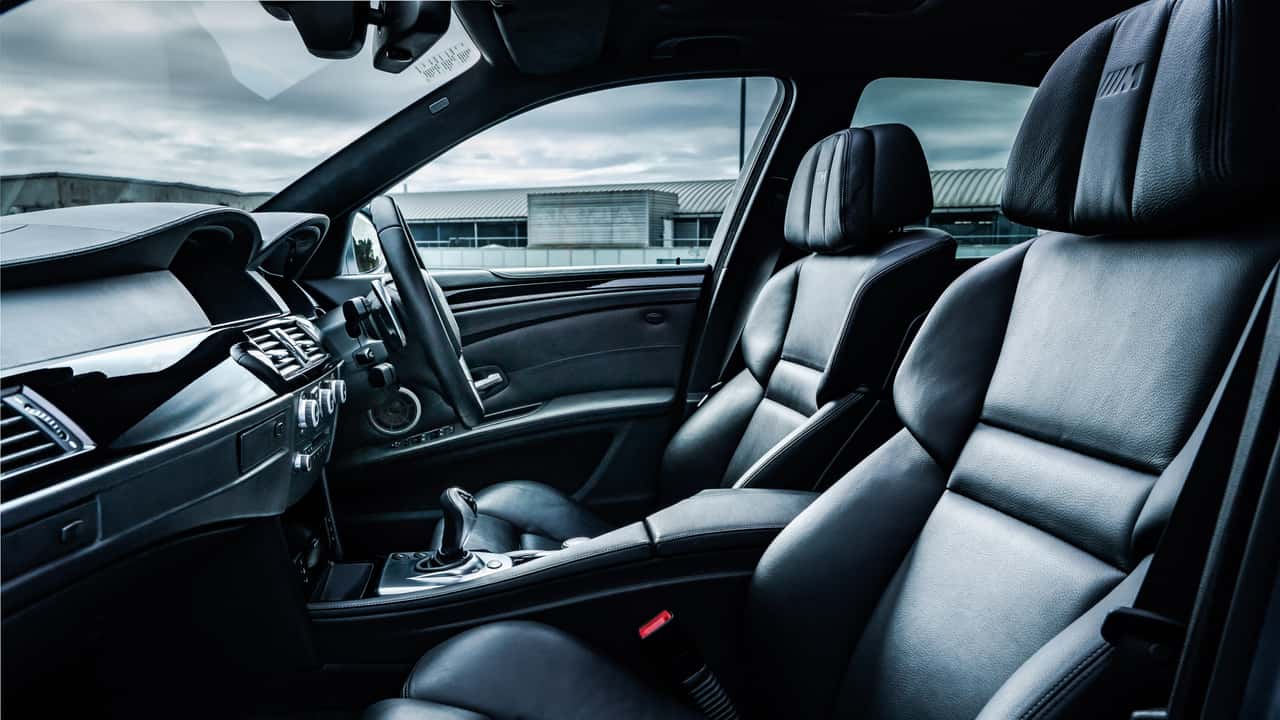
Photo by: BMW
While they were state-of-the-art when new, advances in both traditional torque-converter automatics and dual-clutch transmissions—as well as growing nostalgia for three-pedal manuals—leave them in a bit of an uncanny valley among enthusiasts.
Clumsy around town and in automatic mode, the SMG isn’t as refined as today’s automatics, and without a clutch pedal, it’s not as involving as a real manual. “I tried to leave it in auto mode, but I just couldn’t stand it,” Car and Driver said in a period comparison test. But to some, the gearbox’s lightning-fast shifts and configurable modes give it a unique character.
BMW heard enthusiasts’ and journalists’ complaints and added a six-speed manual to the E60 M5 for the 2007 model year, but only for the US market. Europe wasn’t so lucky, and any M5 or M6 originally sold there came with an SMG.
Rare And Coveted
According to the forum M5Board, BMW sold 34,741 V10-powered M5s and M6s across the cars’ 5-year production run, compared to 20,482 E39 M5s produced between 1998 and 2003. But if you want a manual transmission, that number falls drastically. BMW only built 2,065 stick-shift M5s and M6s. If you’re specifically looking for a four-door M5 with three pedals, there are only 1,364 out there, whereas all of the over 20,000 E39 M5s came with manuals from the factory.
That’s rarer than the Ferrari F430 Scuderia sold new around the same time. Figure in the fact that the M5 was marketed and sold as a daily-driver sports car while the Ferrari was a weekend toy for moneyed collectors, and you can imagine the number of clean, well-kept examples is in the three digits.
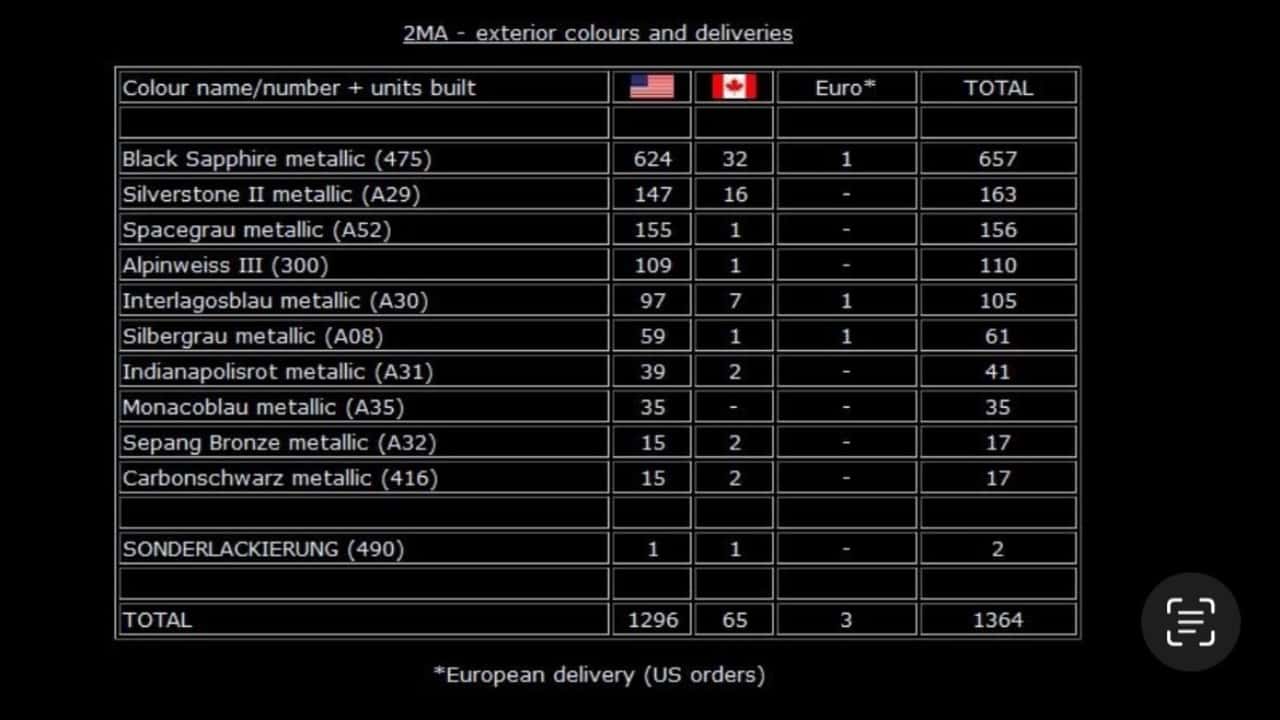
Breakdown of manual-transmission E60 M5s in North America by color.
Photo by: M5Portal.com
An Owner’s Perspective
To get a better sense of the highs and lows of E60 M5 ownership, I spoke to Petar Vrcelj Nikolic (@petarvnikolic). Petar is a dedicated car enthusiast who estimates he’s owned over 40 cars—maybe closer to 50.
His current fleet includes a 996 Porsche 911 Turbo convertible and a supercharged L322 Range Rover, but his longest-owned and favorite car is a manual-transmission E60 M5. He’s had the M5 for just over 7 years, in which time he’s added 55,000 miles between daily driving around the Seattle area and road trips to California and beyond. But his love for the E60 goes back further than that, to a childhood memory in Serbia.
“I can tell you the exact moment I first saw an E60 M5,” Petar tells me over e-mail. “Dad and I were on the highway when a black four-door that sounded like an F1 car flew by us at what must have been at least double our speed.”
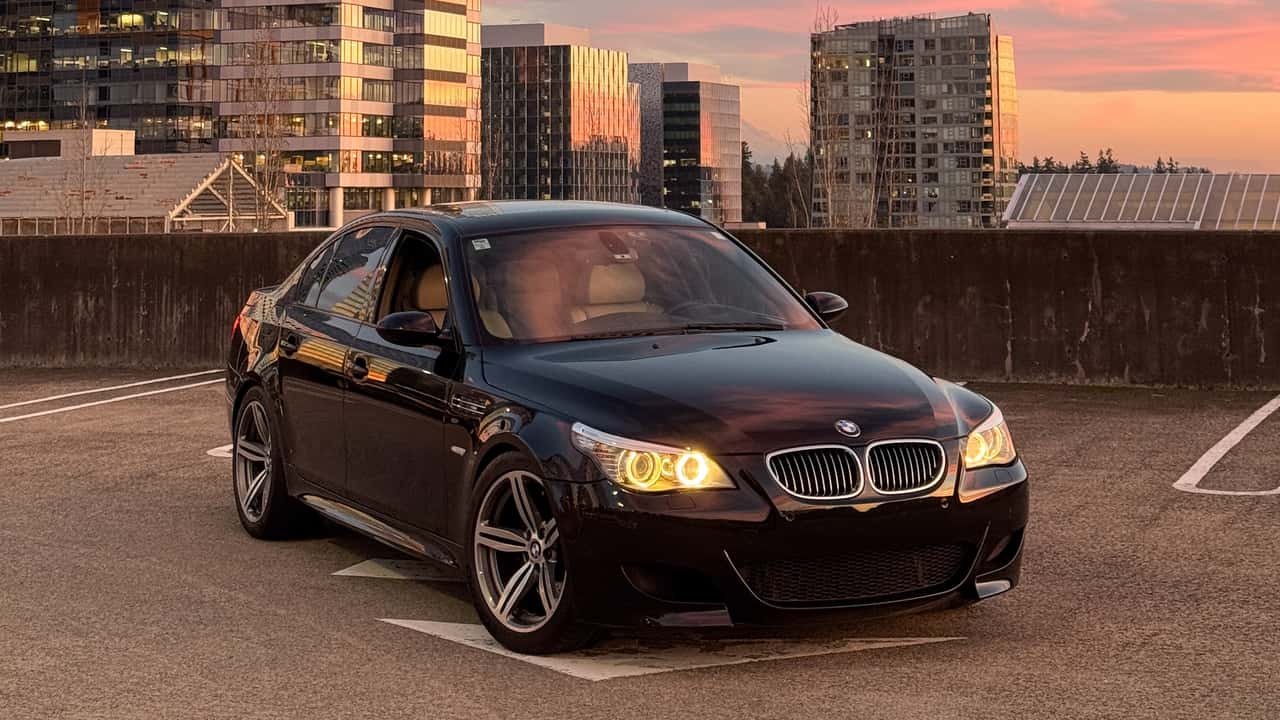
Petar’s 2008 BMW E60 M5
Photo by: Petar Vrcelj Nikolic
‘15 minutes after that, we pulled into a gas station, and lo and behold, sitting at the pump was the car that had flown by us. It was a then-brand-new, metallic black BMW M5, with large oval exhaust tips. The owner saw my dad and I and came up to talk, and he told me all about the M5. He told me all about how it had an F1-derived 500-horsepower V10, a sequential transmission, adaptive suspension, and could do 330km/h.’
Petar was smitten, and a seed was planted. “I was blown away! Here was a luxury sedan with enough firepower under the hood and technology in the chassis to wipe the floor with the Ferrari F430 and Lamborghini Gallardo that were on my wall. When we moved to the US in 2011, and I found out that manual ones existed, I just had to have one!”
‘Here was a luxury sedan with enough firepower under the hood and technology in the chassis to wipe the floor with the Ferrari F430 and Lamborghini Gallardo that were on my wall.’
The search for the right car was more involved than he had anticipated. Petar spent most of 2018 searching for the right car, and test driving an SMG-equipped example confirmed that only the manual would do. He turned to Facebook for help, posting a wanted ad in a local BMW group. Soon after, a friend of a friend reached out with a 90,000-mile example he’d owned since it was nearly new. A test drive and inspection sealed the deal, and Petar bought the M5 in January 2019.
So, how has the M5 treated him since then? “My E60 M5 has unironically been the single most reliable car I have owned,” Petar proclaims. In seven years, he says the only unplanned repair has been an ABS pump replacement, a common failure point on many BMWs, not just high-end M cars. “I wish people would tell the truth about these cars—they’re not scary to own in the slightest, if you budget accordingly for the maintenance they need,” he adds.
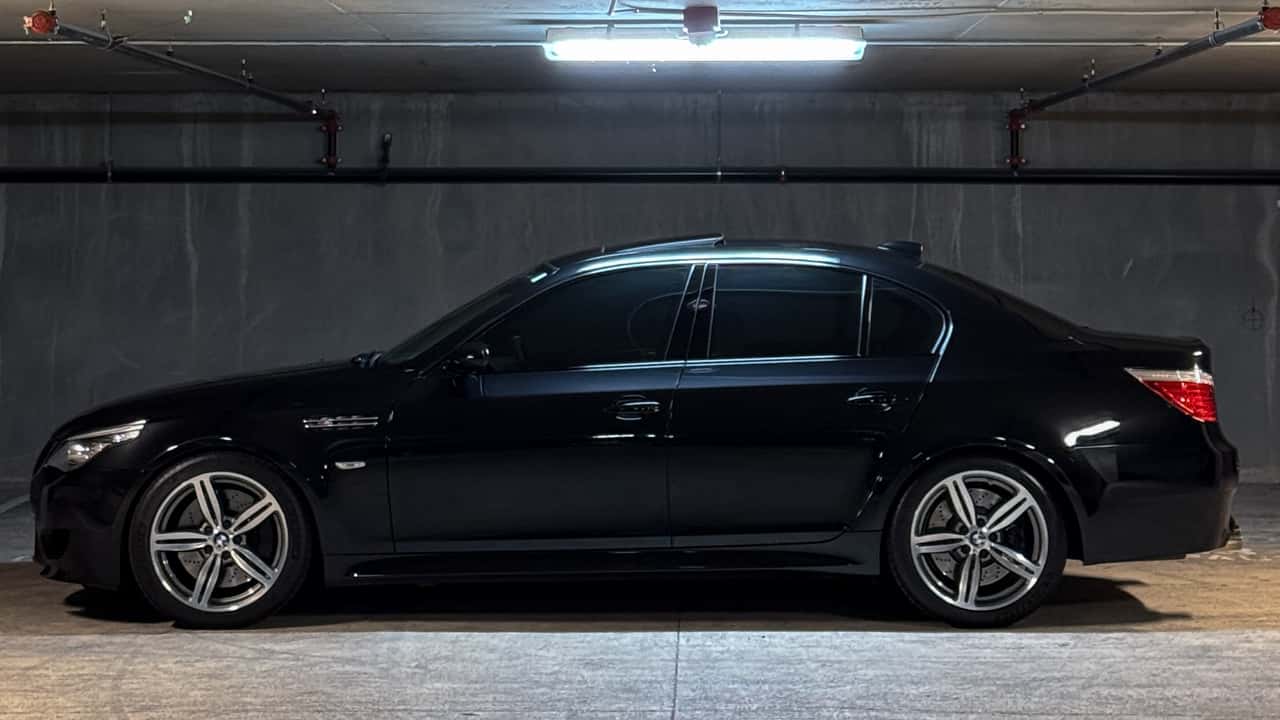
Photo by: Petar Vrcelj Nikolic
‘My E60 M5 has unironically been the single most reliable car I have owned.’
Asked what advice he’d give enthusiasts looking to buy an M5, Petar is blunt: “Budget $7,500 to make sure the car is bulletproof on Day 1 and don’t look back.”
He adds that it’s important, as with any car, for buyers to know the intricacies of different model years and options to make sure any buyer gets the car they really want. “For me, it absolutely had to be a manual … Beyond that, I wanted an LCI car due to the restyled interior, upgraded VANOS pump, and oil squirters on the engine, as well as the dual-drain oil pan/sump (early cars had a single-drain).”
A recent, documented rod bearing service at a reputable shop is a big plus. This service can run $2,500 – $3,500, including parts and labor, or around $1,200 – $1,600 for just the parts if you’re doing the work yourself. Much of this advice applies to the E63-generation M6 as well, as the cars share a powertrain.
According to Hagerty’s valuation tool, a 2008 BMW M5 in #3 “Good” condition is worth around $25,600, with an estimated 50 percent premium for manual-transmission variants. Online auction platform Bring A Trailer shows a broad range of sales in the $18,000 – $40,000 range, with a significant premium for later-model, low-mileage, and 6-speed manual cars.
Finally, don’t rush the search or be afraid to wait for the right one: “These cars are out there, but well-kept, lower-mileage examples are difficult to find!”
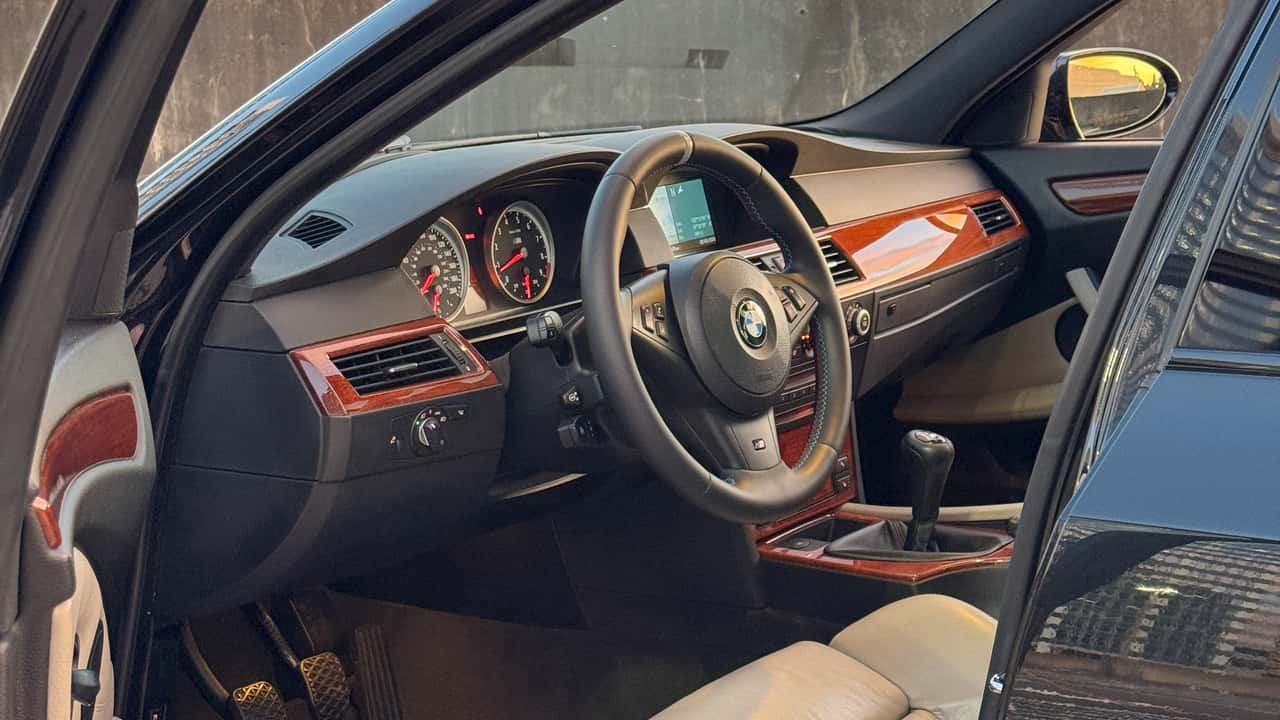
Photo by: Petar Vrcelj Nikolic
One Of A Kind
I ask Petar why he thinks these M5s are now becoming sought-after, 20 years after they were first built. “There is nothing else like them,” he tells me. “Sure, other cars have V10 engines, but how many luxury cars that you can drive day-in [and] day-out feature an 8,200-rpm, ITB-equipped screamer like the S85?”
Although beauty is in the eye of the beholder, there’s also something eye-catching about the provocative, Bangle-era design. Now over 20 years old, the E60’s design still looks as fresh as the day it rolled off the German assembly line.
‘Sure, other cars have V10 engines, but how many luxury cars that you can drive day-in [and] day-out feature an 8,200-rpm, ITB-equipped screamer like the S85?’
Looking back at the M5 lineage, the E60 wasn’t an evolutionary point between the E39 and later F10 and F90 models. Those were all V8-powered Autobahn cars with lots of torque and fairly conventional styling. The E60 is less a part of that history and more a momentary blip, when BMW’s biggest brains did something truly wild.
“I like cars with a dual purpose. The soul of a sports car with the comfort of a land yacht,” Petar explains. Few cars fit that mission, and perhaps none are as uniquely suited to it as the E60 M5.
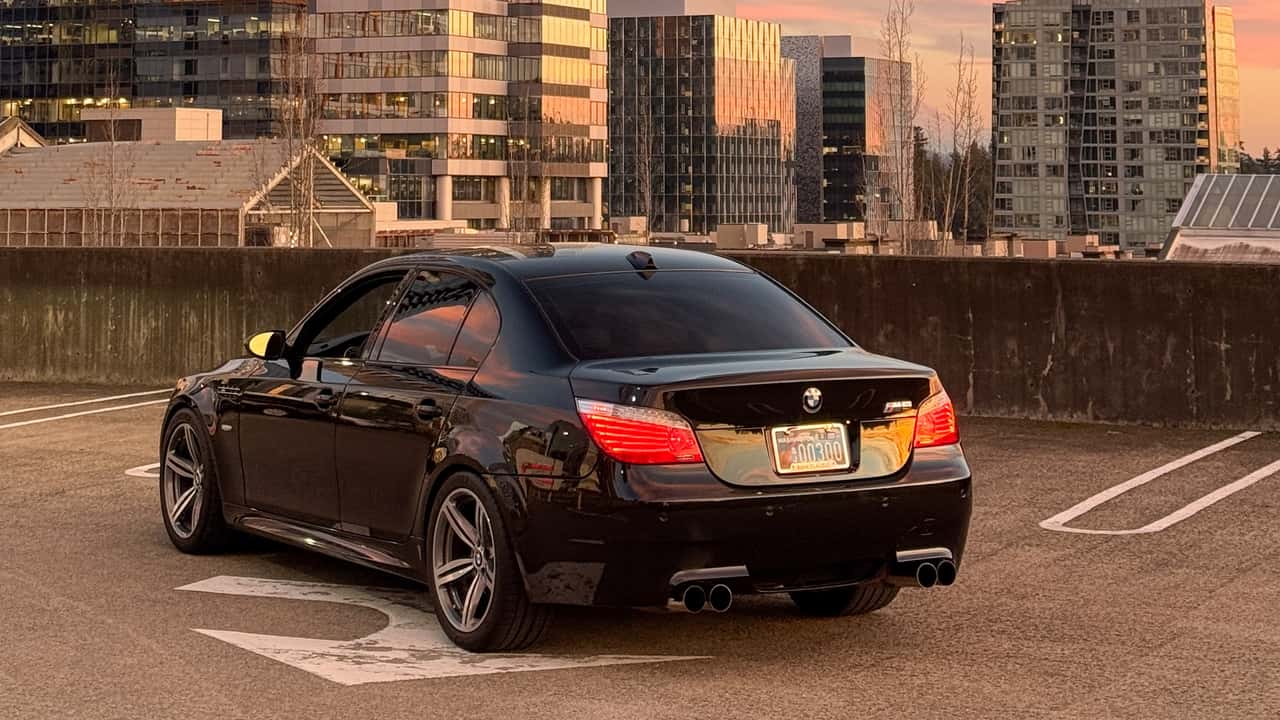
Photo by: Petar Vrcelj Nikolic
We’ve Reached Peak Horsepower. Now What?
In Defense Of Car Bloat: Why Performance Cars Must Get Fatter To Survive